Virtual Date Ideas: 38 Long-Distance Plans That Aren't Just a Video Call
A virtual date works when you're both looking at the same third thing. Not at each other — at a film, a recipe, a game, a map, a puzzle. That shared object is what an in-person date gets for free from being somewhere, and it's the exact thing a video call is missing. Watch something in sync, cook the same meal in two kitchens, play something forgiving, tour a museum together, or take each other through Street View of where you grew up. Then talk sideways, the way you would if you were actually in a room.
This is the long-distance branch of the wider date ideas guide.
Heads up: some links in this post are Amazon affiliate links — if you buy through them, Eventic earns a small commission at no extra cost to you.
Most virtual dates fail for one reason, and it's not the distance. It's that a "virtual date" usually means a phone call with the camera on, at the end of a day when you're both tired, and after twenty minutes there's nothing left to report. You've run out of day to describe.
The rule that makes virtual dates work
In person, the place does half the labour. You react to the food, the crowd, the terrible band, the dog outside the window. Nobody has to generate anything.
On a video call, there is no place. Two faces, two backgrounds, and an unspoken obligation to be interesting. That's why long calls drift into logistics and mutual scrolling.
So the whole design principle is: import a third thing. Something you can both look at, react to, and be bad at. Once you've got that, the call stops being a performance and starts being a hang.
Second principle, less obvious: shorter and more often beats longer and rarer. A structured forty-minute date twice a week does more than a three-hour Sunday marathon where both of you are half-scrolling by minute ninety.
Watch something together
The easiest category, and the one people do laziest.
- Synced streaming. Browser extensions handle this for most major services now, and several platforms have built-in watch-party modes. The chat sidebar matters more than the sync — that's where the commentary lives.
- Film club with picks. Each person chooses a film the other's never seen. Alternate weeks. Score it out of ten afterwards and defend the score properly.
- Bad film night. Choose something genuinely terrible on purpose. Terrible films generate ten times the conversation of good ones.
- Same show, one episode a night, no watching ahead. The no-cheating rule is what makes this feel shared. Breaking it is a genuine betrayal and you both know it.
- Live sport, both watching. Even if only one of you cares. Especially if only one of you cares.
- Documentary and a map. Watch something about a place, then plan a real trip there afterwards. Two dates in one.
Cook and eat together
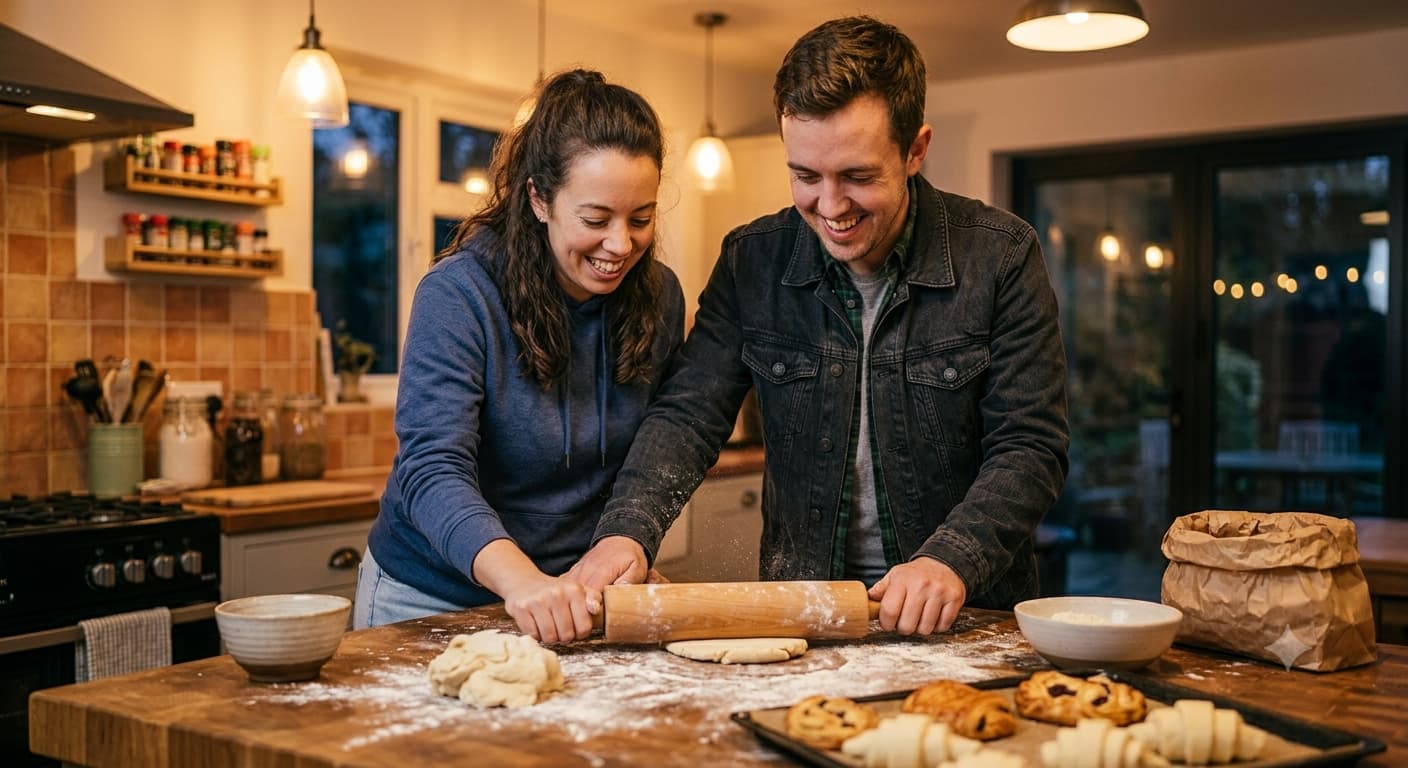
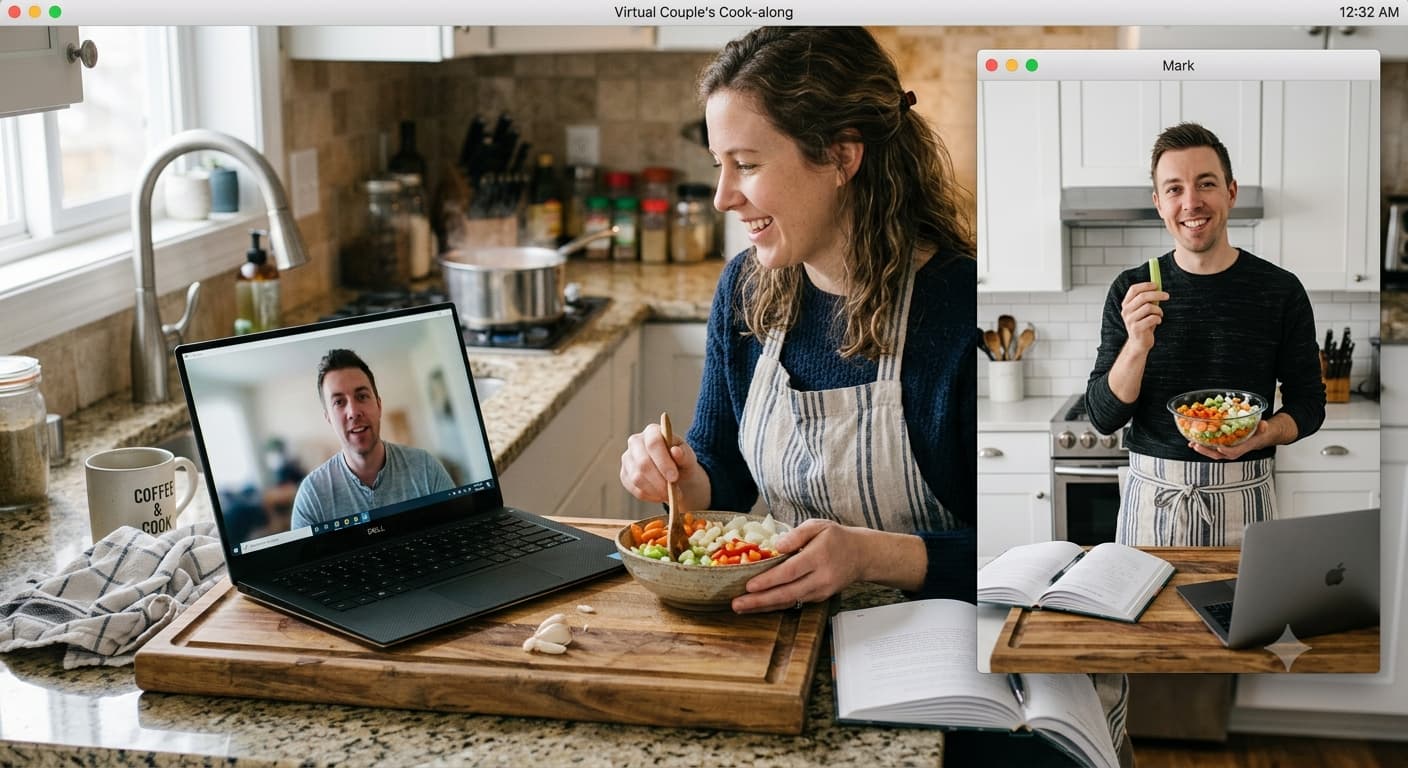
- Same recipe, two kitchens. Send the ingredient list in advance, cook at the same time, camera propped up. It's chaotic and it's the closest thing to being in a room together. A flexible phone tripod is the one cheap thing that transforms this — propping your phone against a jar means the camera falls into the sauce, which I have done.
As an Amazon Associate, we may earn from qualifying purchases.
- Order each other's dinner. You pick their delivery, they pick yours. No vetoes. Eat at the same time.
- Blind taste test, both ends. Each of you posts three snacks to the other. Open them live and rate them.
- Cocktail hour with the same recipe. Two ingredients, one method, compare results.
- Breakfast date across time zones. If you're eight hours apart, one of you having breakfast while the other has dinner is a feature, not a problem.
- Recreate a meal you had together. Same dish, both kitchens, tell the story of the first time while you cook it.

Play something together
- Online party games. The genre built for exactly this — short rounds, no skill barrier, easy to talk over.
- Co-op games, forgiving ones. Farming, building, puzzle-solving. Not ranked competitive anything unless you're both that person.
- Chess or cards over a shared app. Slow, gentle, background-appropriate.
- Online escape rooms. Real ones exist and they're genuinely good for two people who need something to solve.
- Geoguessing. Drop into a random street view, work out where you are together. Absurdly addictive.
- Quiz for two. One writes ten questions, the other answers, then swap.
- Puzzle race. Same puzzle, two boxes, cameras on, first done wins bragging rights and nothing else.
Make something together
- Draw each other, five minutes, no looking at the paper. Hold the results up to the camera. Never not funny.
- Shared playlist, built live. Alternate songs, explain one of them, no skipping.
- Write letters and post them. Physical mail across distance does something a message doesn't. It arrives late and that's the whole charm.
- Same paint-by-numbers kit, both ends. Two hours, low pressure, comfortable silence, and you both end up with a matching thing on the wall.
- A shared journal you post back and forth. One of you writes in it for a month, posts it, the other writes for a month, posts it back. A long-distance couples journal is about the price of two coffees and it turns waiting into something you're building instead of something you're enduring.

The Ultimate Fun Book for Couples: 60 Exciting and Lighthearted Quizzes, Games, and Challenges to Bring You Closer Than Ever
The Ultimate Fun Book for Couples: 60 Exciting and Lighthearted Quizzes, Games, and Challenges to Bring You Closer Than Ever. Professionally spiraled and resold by a third party. This spiraled book is not necessarily affiliated with, endorsed by, or authorized by the publisher, distributor, or author.
View on AmazonAs an Amazon Associate, we may earn from qualifying purchases.
Explore together
- Street View tour of where you grew up. Your school, your first job, the corner shop, the house. This is the single best long-distance date and hardly anyone thinks of it. Two hours, minimum, and you'll learn more than in a month of calls.
- Virtual museum tours. The Louvre, the Smithsonian, the Van Gogh Museum and dozens of others run proper walkthroughs. Pick a wing, not a whole museum.
- Plan a real trip. Not vaguely — actual flights, actual dates, actual arguments about whether to rent a car. Planning is a date.
- Google Earth roulette. Random coordinates, work out what country you've landed in.
- Property browsing. Look at houses you can't afford in cities you'll never live in. Assign rooms. This is a real date and I won't be told otherwise.
- Read the same book, one chapter a night. Call to discuss. It's a two-person book club with better stakes.
Talk, but with a structure
- The 36 questions. Three sets, escalating, about 45 minutes. The research is more nuanced than the headlines suggest, but the structure genuinely works — mutual disclosure with a prompt list removes the awkwardness of deciding what to reveal.
- Interview night. Twenty minutes each, one asks, one answers, no interrupting. The no-interrupting rule is what makes it different from a normal call.
- Camera roll from one specific month. Pick March. Go through both. Explain the weird ones.
- Highs and lows, but of a decade. Not of the day — you've done the day.
- The future game. Where do you want to be in five years, what would you do with a year off, what city would you move to tomorrow. Long distance forces these conversations early anyway. Might as well make them a date.
Send-something dates
The category people forget. A date doesn't have to be simultaneous.
- Care package with instructions. Not just stuff — stuff with a note saying when to open each thing.
- Surprise food delivery, arriving mid-call. The knock at the door while you're on a call is a genuine moment.
- Scheduled voice notes. One long voice note a day, sent whenever. For couples in brutal time zones this beats a call and nobody talks about it enough.
The long-distance problems nobody lists
Ideas are the easy part. These are the things that actually make or break it.
Time zones make everything worse than the maths suggests. A six-hour gap doesn't cost you six hours, it costs you almost every overlapping evening. Deal with it explicitly: find your two or three realistic windows a week, and protect them like appointments.
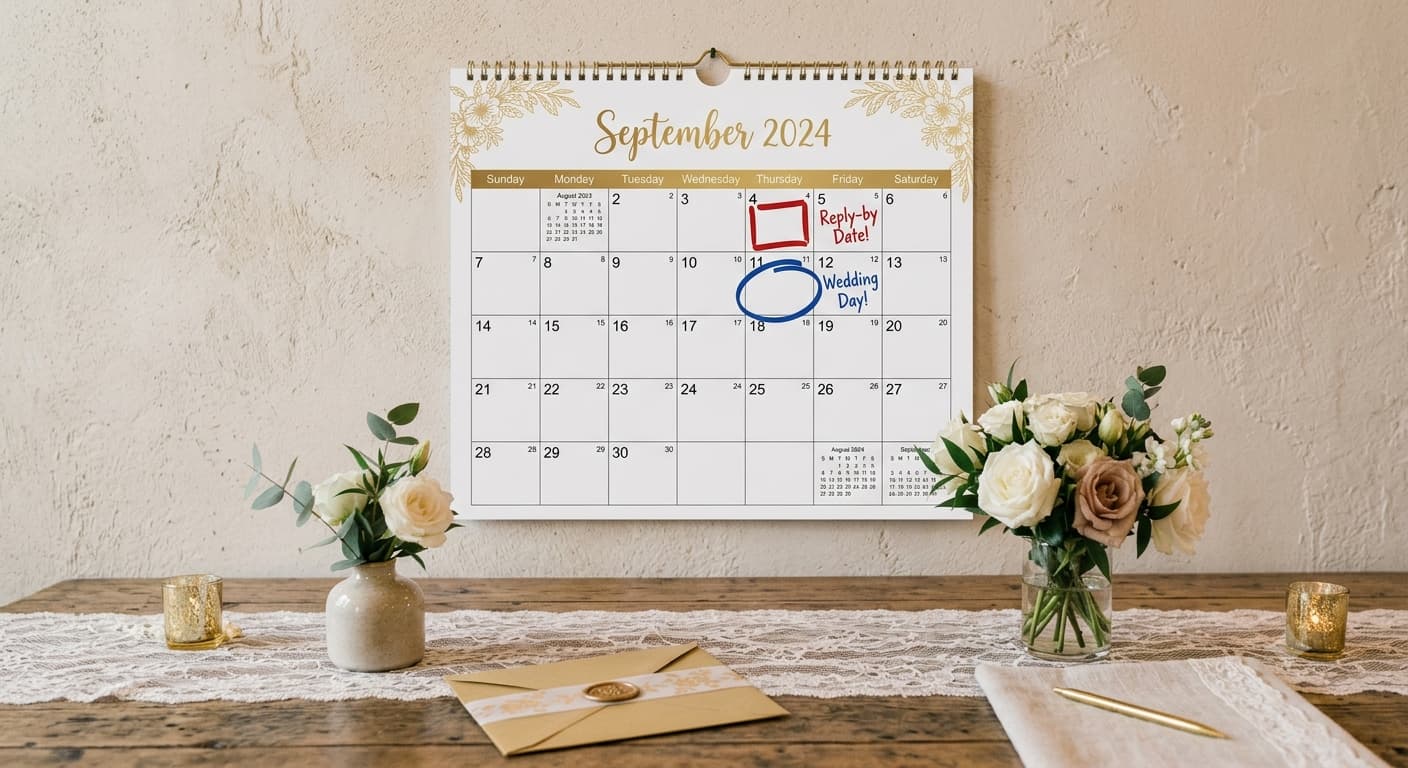
Scheduling is the actual killer. The most common long-distance failure isn't drifting apart, it's the slow accumulation of "let's do it tomorrow." Fix the day and time in advance, on a calendar, like a dentist appointment you're looking forward to.
Proposing a date across distance is oddly awkward. "Are you free Thursday" turns into eleven messages about time zones, and by the end nobody's excited. This is the one bit of admin worth automating — sending an actual date invite means you offer the plans you're up for, and they pick the one they want and lock the time in on a calendar rather than converting hours in their head. Free to make, and it turns a scheduling negotiation back into an invitation, which is what it's supposed to be.
Not every call has to be a date. If every conversation carries the weight of Being Quality Time, both of you will start dreading it. Some calls are just "I'm walking to the shop, talk to me."
Parallel presence is underrated. Call, both do your own thing, don't talk much. Working, cooking, cleaning, reading. That's what living together actually sounds like, and it's oddly reassuring.
Mail-based dates, in more detail
The asynchronous category deserves more than three lines, because for couples in brutal time zones it does more work than the calls do.
The instructed care package. Not a box of random items — a box with a note taped to each thing saying when to open it. "Open on a bad day." "Open when you can't sleep." "Open the night before we see each other." It turns one parcel into six small moments over a month.
The scent thing. Slightly odd, extremely effective. Send something that smells like your place — a candle you burn, the soap you use. Smell is the sense most directly wired to memory and everyone underestimates it.
A letter with a rule. Write it in one sitting, don't edit it, post it the same day. Unedited letters are better than composed ones. They read like the person rather than the performance.
A photo, printed. One physical photograph in an envelope. In a relationship conducted almost entirely through screens, a single object you can hold does a disproportionate amount.
Something half-finished. Start a drawing, a puzzle, a page of a journal — send it, they finish it, they send it back. It's slow and it accumulates, which is exactly what a long-distance relationship is short of.
A booking. The best thing you can post is a confirmation. A train ticket, a flight, a night somewhere for the weekend you're next together. Anticipation is the resource long distance runs on, and a date in a calendar generates more of it than any parcel.
Virtual dates by time zone gap
The gap changes what's possible more than anything else, so plan around it rather than fighting it.
1–3 hours apart. Basically a normal relationship with logistics. Evening dates work for both of you. Do the full range — synced films, games, cooking together. The main risk here is complacency, because it's easy enough that neither of you protects the time.
4–6 hours apart. One of you gets an early evening and one gets a late one. The move is to alternate who takes the inconvenient slot rather than always defaulting to whoever complains less. Shorter, higher-quality dates work better than long ones, because somebody is always tired.
7–9 hours apart. Your overlap is one person's morning and the other's evening. Lean into the mismatch instead of apologising for it: breakfast-and-dinner dates are genuinely charming, and asymmetric formats work well — one of you cooks while the other has coffee, one of you is winding down while the other is starting.
10+ hours apart. Synchronous dates are rare and precious, so don't waste them on logistics. Do asynchronous formats for the everyday — long voice notes, a shared journal, letters, care packages with instructions on when to open each thing — and save the live calls for real dates with a plan behind them.
Whatever the gap, write the overlap down once and stop recalculating it every week. Two or three fixed windows, agreed and protected, removes the most exhausting part of the whole arrangement.
What to do when the call has gone flat
It happens to everyone and it doesn't mean anything's wrong. Four fixes:
Add a task mid-call. "Hang on, I'm making tea, stay on." Doing something while talking beats sitting still and generating conversation. Wash up, fold laundry, walk to the shop with headphones in. The talking gets better instantly.
Change the format, not the topic. If you've been on a video call for forty minutes and it's dragging, switch to a game or put something on to watch. The problem is rarely that you've run out of things to say; it's that face-to-face-on-camera is a demanding format.
Go asynchronous for a day. A long voice note recorded while walking is often more interesting than a call, because you're not performing for a camera and there's no pressure to respond in real time.
End it early and well. A good forty-minute call is worth more than a mediocre two-hour one, and ending while you're still enjoying it makes the next one something to look forward to rather than something to schedule.
Keeping momentum between visits
The ideas above fill the time. These are the things that make the time feel like it's going somewhere.
Always have the next visit booked. Even roughly. "Late October" is enough. Long distance without a next date on the calendar is where drift starts.
Count down to something, not from something. A shared countdown to the next visit does more for morale than either of you expects.
Build one thing together over months. A journal that travels back and forth. A playlist that grows. A list of places to go when you're finally in the same city. Something that accumulates.
Have an end date for the distance, or a plan to make one. This is the hard conversation and it's the one that actually determines whether the relationship works. All the virtual date ideas in the world don't substitute for it.
If you haven't met in person yet
Different situation. If you matched on an app and you're doing a first video date, the rules change a bit — and this is common now, with roughly three in ten US adults having used a dating app and a good share of them meeting on video before meeting in person.
Keep it to 30–45 minutes. Say the limit out loud at the start: "I've got something at eight." It removes the pressure to keep going when you've both run out.
Pick a light shared activity. A quiz, a game, comparing camera rolls. Something that survives an early-stage awkward pause.
Do it earlier in the evening. Late-night first video calls have a specific energy that isn't always the one you want.
Have a plan for what happens next. A second call scheduled before you hang up, or an actual meeting proposed. Momentum matters more online than off. If you'd rather not do the "so when are you free" dance, an invite with the options laid out handles it without the back-and-forth.
Whatever the time difference is, one of you is about to be very sleepy and very charming. Enjoy that.
People Also Asked
Explore common questions related to this blog.
Thirty to forty-five minutes, with a light shared activity like a quiz or a game, earlier in the evening rather than late. State a soft end time at the start. It takes all the pressure off deciding when to stop.
Twice a week with a fixed slot beats once a week that keeps moving. Consistency does more for a long-distance relationship than duration — a reliable Wednesday matters more than a three-hour Sunday.
Cook, play party games, build a shared playlist live, do a puzzle race, plan a real trip in detail, or run the 36 questions. Anything with a task in it. And if you want the at-home half of this list for when you're finally in the same room, that's in the at-home date ideas guide.
Forty to sixty minutes for most, with a plan attached. Long unstructured calls tend to drift into logistics and mutual scrolling, and ending while you're both still enjoying it makes the next one something to look forward to.