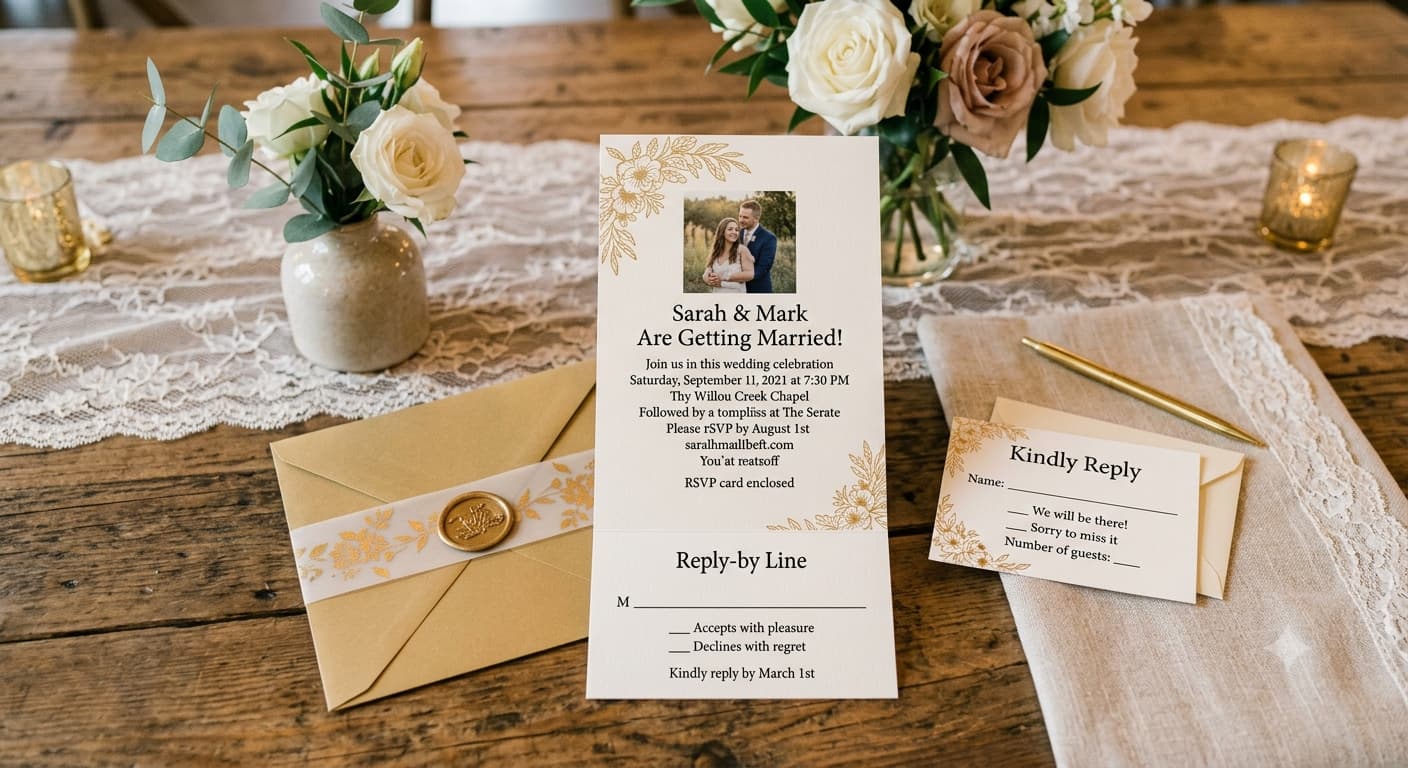
Three to four weeks before the event. That's the answer for most weddings, and two to three weeks covers almost everything else.
Now the part that actually determines whether that works: your RSVP deadline is not a date you choose, it's a date your caterer chooses for you. Work backwards from their final-numbers cutoff, add a buffer for the people who'll be late, and that's your deadline. Everything else is decoration.
The timeline, backwards
Start at the event and walk back.
| When | What happens |
|---|---|
| Event day | The number is what it is. |
| 3–7 days before | Final headcount to caterer, venue and anyone doing place settings. This is the hard wall. |
| 1–2 weeks before | Seating chart, place cards, favours. Needs a settled list. |
| 2–3 weeks before | Chasing non-responders. Budget a full week for this — you will need it. |
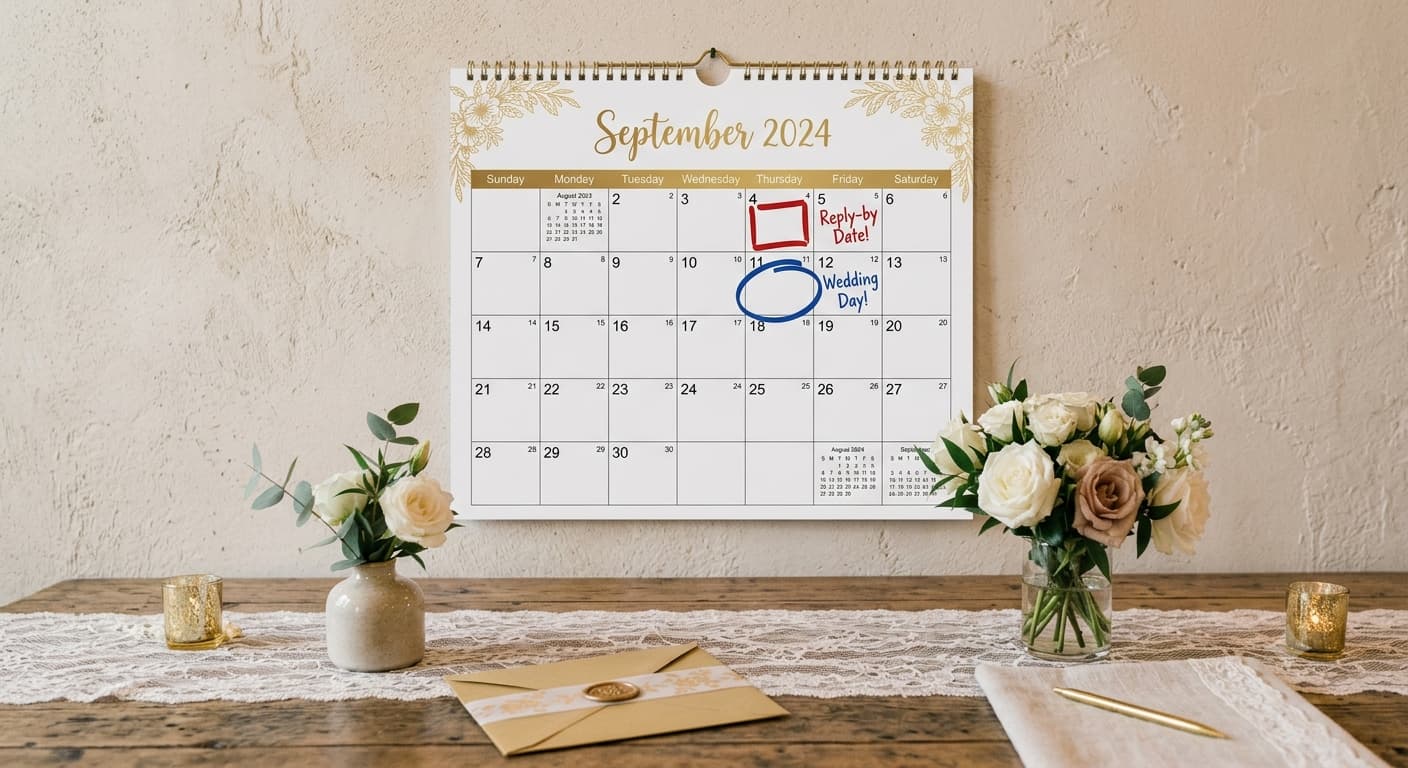
| 3–4 weeks before | RSVP deadline. |
| 6–8 weeks before | Invitations go out. |
| 6–12 months before | Save the dates, if you're sending them. |
The gap that people compress is the chasing week, and it's the one you can least afford to lose. Assume 20% of your list won't reply by the deadline. That's not pessimism, that's the base rate, and building for it is what stops the last fortnight from being unpleasant.
By event type
| Event | Send invitations | RSVP deadline |
|---|---|---|
| Wedding (local) | 6–8 weeks ahead | 3–4 weeks before |
| Wedding (destination) | 3–4 months ahead, plus a save the date 8–12 months out | 6–8 weeks before |
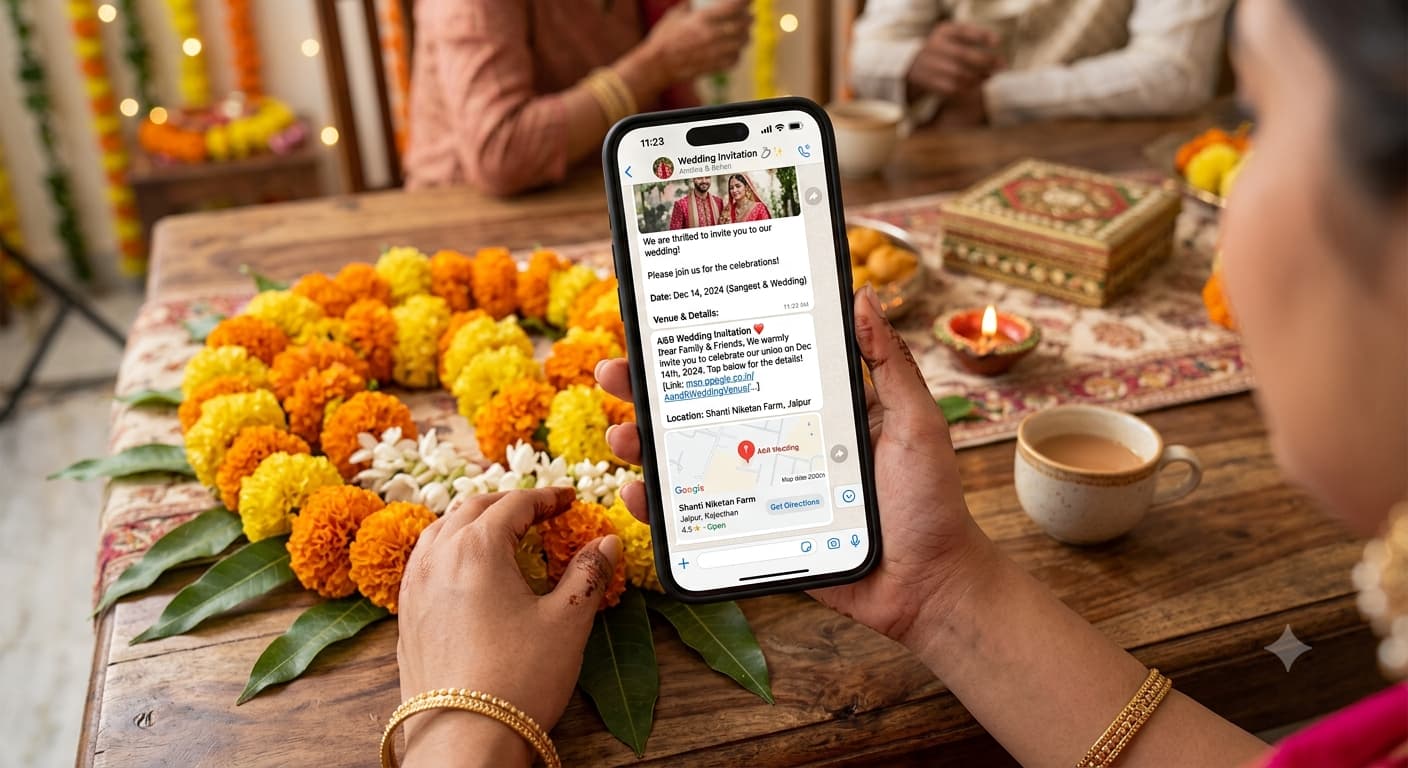
| Indian multi-day wedding | 6–8 weeks before the first function | 3–4 weeks before |
| Engagement party | 4–6 weeks | 2 weeks before |
| Birthday party (adult) | 3–4 weeks | 1–2 weeks before |
| Kids' party | 2–3 weeks | 1 week before |
| Baby shower | 4–6 weeks | 2 weeks before |
| Housewarming | 2–3 weeks | 1 week before |
| Formal dinner | 3–4 weeks | 1 week before |
| Corporate / office event | 3–4 weeks | 1–2 weeks before |
Two adjustments worth making. Add two weeks to everything if your event falls in a busy season — December, or the Indian wedding weeks from late November, when your guests have four other invitations competing for the same weekend. And add time whenever guests need to book travel or take leave; people can't say yes to a date they haven't cleared with work.
Why deadlines that are too late cost you money
A deadline one week out sounds efficient. It's the single most expensive mistake on this page.
Here's the sequence. Deadline lands seven days before. Twenty percent haven't replied. You now have to chase forty people, build a seating chart, and give a caterer a final number, all in the same week you're also doing everything else. So you guess high, because guessing low is embarrassing. And guessing high on a per-plate contract is where the money goes.
Give yourself three to four weeks and the chase becomes leisurely instead of frantic. Same guests, same replies, dramatically less cost and stress.
Why deadlines that are too early don't help either
The opposite failure is rarer but real. Set a deadline six weeks before a local wedding and a chunk of guests genuinely can't answer yet — leave hasn't been approved, childcare isn't confirmed, the other wedding they've been invited to hasn't announced its date.
You'll get a wave of "not sure yet" replies that you then have to chase a second time. One firm deadline in the right window beats two rounds of soft ones, every time.
Indian multi-day weddings need their own maths
If there are four functions across three days, "are you coming" isn't one question. It's four.
Guests routinely attend the sangeet and the wedding but skip the haldi, or fly in only for the reception. If your RSVP doesn't ask per function, you'll order full catering for every event and feed half-empty rooms twice.
So: 6–8 weeks before the first function, with a deadline 3–4 weeks out, and a reply mechanism that asks which functions each guest is joining. The RSVP wording for multi-function invitations has the exact line for this, and it's the highest-value sentence on any Indian wedding card.
There's also a hard seasonal constraint in play right now. The 2026 wedding calendar has no auspicious dates at all between mid-July and 20 November — Chaturmas blocks August through October. The season reopens on 21 November, with dates on 21, 24, 25 and 26 November, followed by a December window across the 2nd to 6th and the 11th to 12th. If your wedding falls on one of those, count backwards now: a 21 November wedding means invitations go out in the last week of September and your RSVP deadline is the last week of October. That's sooner than it feels.
What to do when you're already too late
It happens. The date moved, the printer was slow, an aunt's address was wrong for a month.
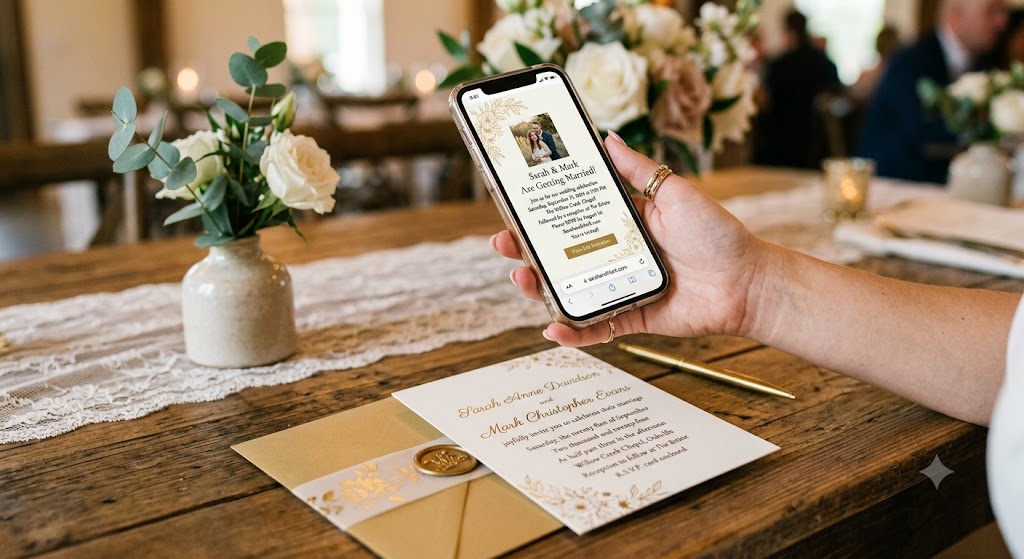
- Send immediately, digitally. Post is not an option inside three weeks. A link sent today beats a beautiful card that arrives on Thursday.
- Set the deadline at 10 days out, not the standard three to four weeks. Say clearly that it's short and why.
- Ask for a yes or no only. Drop the meal choices and the custom questions — collect those separately from the people who said yes.
- Chase in parallel, not after. Send the invitation and follow up individually with anyone silent after 72 hours. Don't wait for the deadline to pass.
- Call the older relatives. Do not rely on a link reaching someone who doesn't check WhatsApp.
Compressed timelines are survivable. What isn't survivable is a compressed timeline plus a phone number as your only reply method — the mechanism you choose matters more than the wording when time is short, and a one-tap link is the difference between replies arriving in two days versus two weeks.
Put your caterer's cutoff in your calendar first. Then count backwards. Every other date on this page falls out of that one.
(Not sure what RSVP obliges your guests to do in the first place? Start here.)
People Also Asked
Explore common questions related to this blog.
Three to four weeks between receiving the invitation and the deadline. Less than two weeks feels rushed; more than six and people forget.