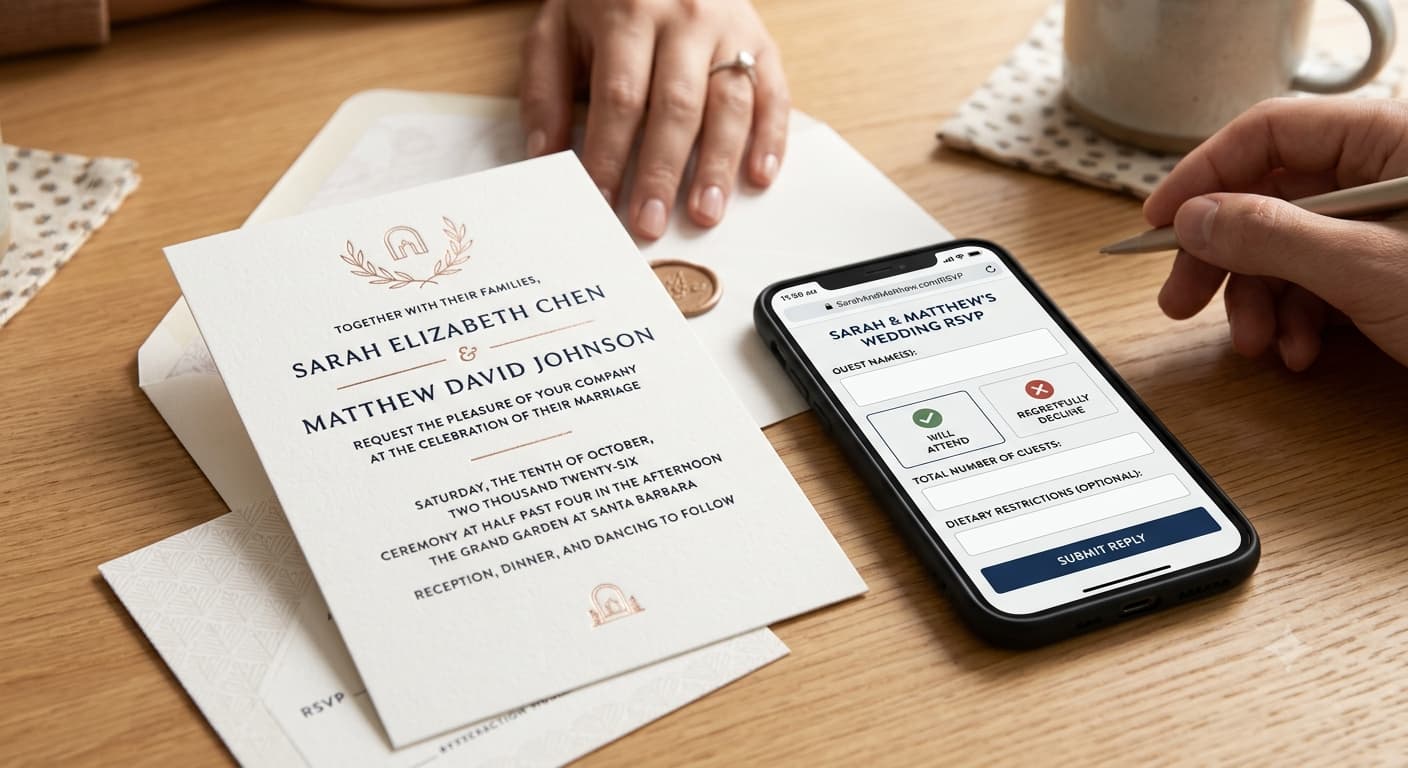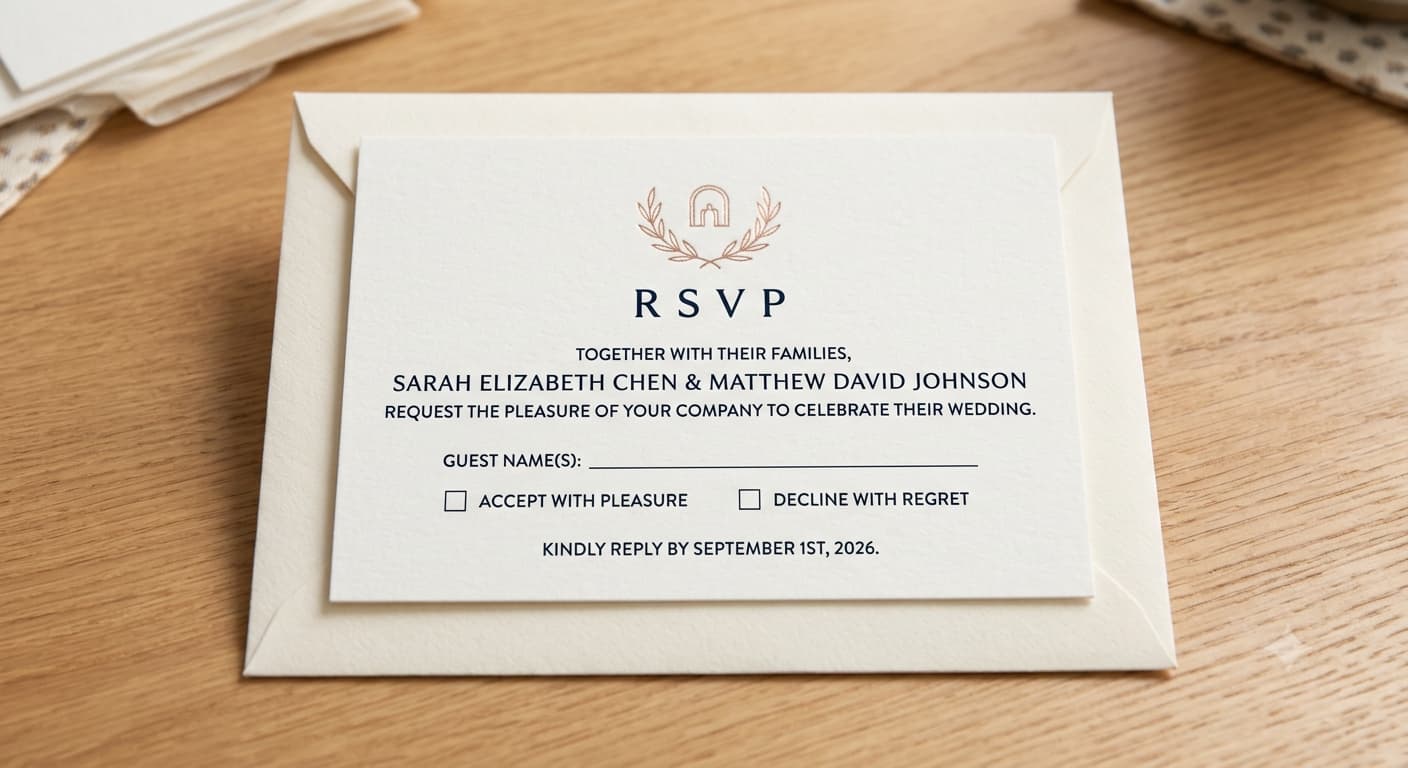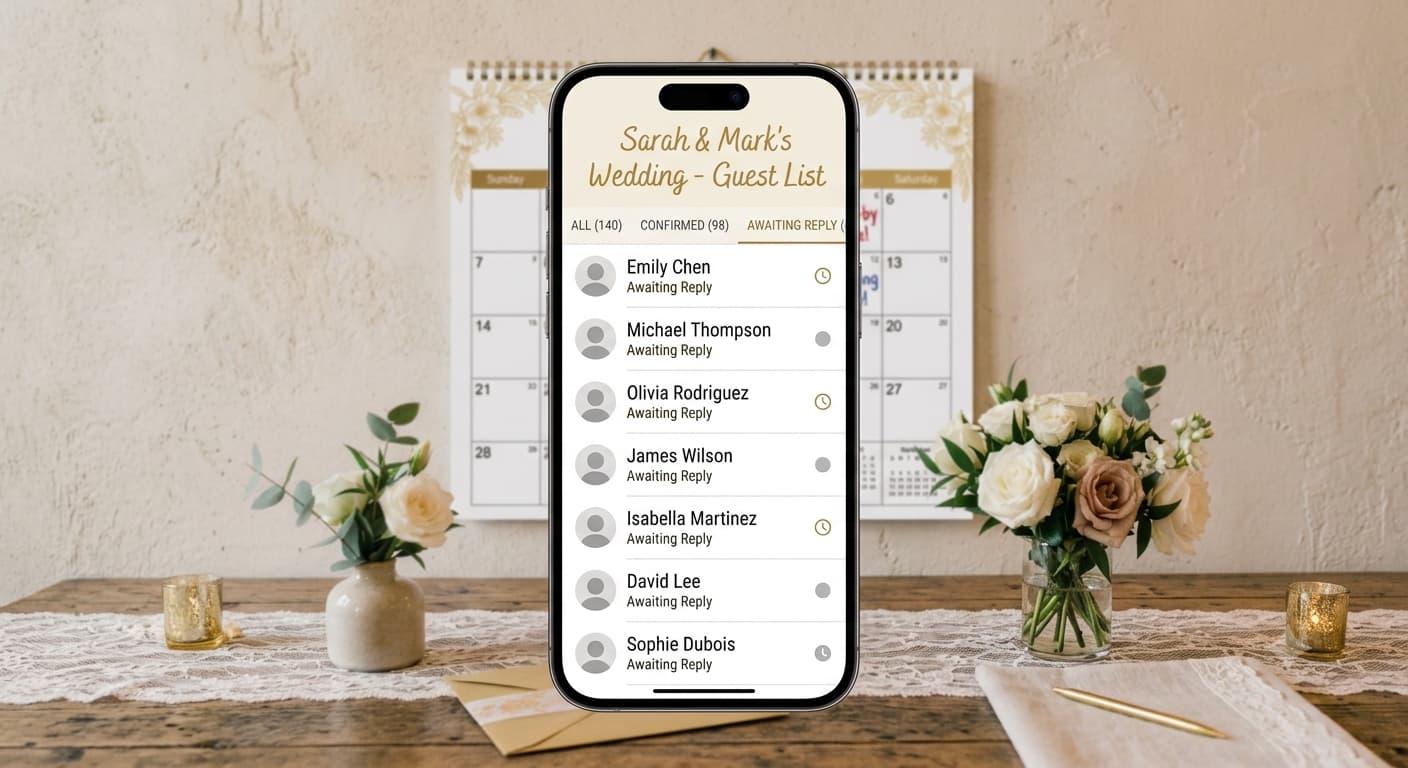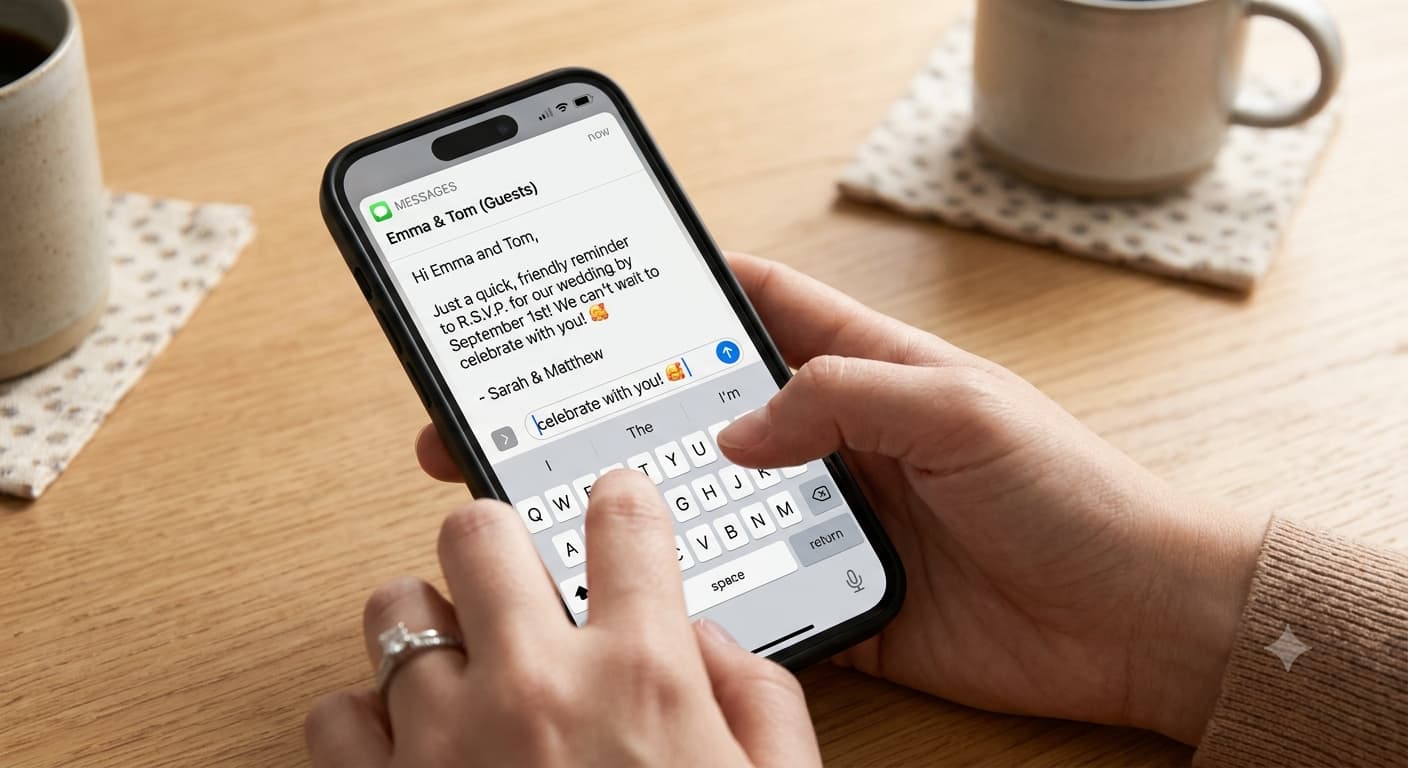
Chase in three waves. One week before the deadline, send a soft group nudge. On deadline day, send a last-call. After the deadline, go one-to-one — text or call, individually, never in a group. Keep it a check-in, not a complaint: "Hi Priya! Just closing our numbers this week — are you two able to make it?" If someone still hasn't answered a week after that, mark them as not attending, tell the caterer, and stop thinking about it. That last part is the hard one.
Part of our wider guide to collecting and comparing free RSVP options — this is the bit that happens after the invitations go out and the silence starts.
I once drafted the same reminder message eleven times. Deleted it, sent "hey! just checking 😊", then lay awake deciding whether the emoji had made it worse.
Why people don't reply (it's almost never about you)
Three reasons, in order of frequency:
They opened it, meant to reply, and got distracted. This is the overwhelming majority. The invitation arrived while they were on a train, they thought "yes obviously," and their brain filed it as done. It isn't hostility. It's the same reason you have four unanswered texts right now.
They can't answer yet. Childcare uncertain, work rota not out, waiting on a partner. Some of these people are agonising over it more than you are.
They're avoiding saying no. Rarer than you'd think, and worth naming: some guests would rather stay silent than decline. Which is why explicitly permitting the no, in writing, gets you more answers.
None of these are solved by waiting longer. All of them are solved by asking again.
The three-wave chase
Wave 1 — one week before the deadline (soft, group)
Low-stakes, no names. A story post, a WhatsApp broadcast, an email to everyone who hasn't replied — with the list bcc'd, so nobody sees who else is behind.
"Quick one — RSVPs close next Saturday (14 Oct). If you haven't had a chance yet, the link's here: [link]. Takes about ten seconds. And if you already replied, thank you, genuinely."
That last clause matters more than it looks. Without it, everyone who already replied reads the message as directed at them, and you'll get four apologetic texts from the people who were on time.
Wave 2 — deadline day (last call, group)
Same channel, shorter, with a real reason attached.
"Last call — we're giving final numbers to the caterer on Monday, so if you're still deciding, today's the day. [link] No hard feelings either way, promise."
Give the deadline a reason. "Because we said so" is a weak deadline. "Because the caterer needs it Monday" is a real one, and people respond to real ones.
Wave 3 — after the deadline (individual, one-to-one)
This is the wave that works, and the one people skip because it feels confrontational.
It isn't. Reach out to each non-responder individually, by text or phone. No group thread, no calling anyone out. The Emily Post Institute has held for decades that it's entirely proper for a host to contact a guest directly to ask whether they're coming — their invitation guidance is clear that replying promptly is the guest's obligation, not a favour they're doing you.
Scripts that work:
"Hi Marcus! Sorting our final numbers this week — are you and Jo able to make the 21st? Totally fine either way, just need to tell the venue something."
"Hey Nina — chasing the last few RSVPs. Should I put you down as a yes? One-word answer is plenty."
"Hi Auntie Ruth, hope you're well! We're finalising the guest list for the wedding — will you and Uncle Dev be joining us? Let me know when you get a chance."
Notice what all three have in common: they make no as easy as yes, they give a reason, and they ask for the smallest possible response. "Should I put you down as a yes?" gets answered because it can be answered with one word while walking.
What not to send
| Don't | Why |
|---|---|
| "Some people STILL haven't RSVP'd 🙃" | Public shaming. The people who reply to this are the ones who already replied. |
| "I guess you're not coming then?" | Reads as a test. Now they have to manage your feelings before answering. |
| A fourth, fifth and sixth reminder to the group | Group fatigue. People start muting you, which is worse than silence. |
| "It's really disrespectful not to reply" | True, arguably. Also guarantees an awkward wedding. |
| Anything at 11pm | It reads as more urgent and more annoyed than you mean it. |
Assuming guests will reply without a reminder is, respectfully, a little delulu — every couple who's done this will tell you the same thing. Plan for the chase from the start and it stops feeling like a failure when it happens.
Automate the boring part
The three-wave system is simple. Executing it manually across 40 non-responders is not. You're cross-referencing a spreadsheet against a phone, at night, while tired.
Most tools that collect replies can also send the reminder to exactly the people who haven't answered — which is the whole job, minus the cross-referencing. That's the feature worth checking for when you pick where to collect replies in the first place; a reply page that tracks who's outstanding turns wave 1 and wave 2 into a button rather than an evening. Wave 3 stays manual, and should — a personal message is the one that actually gets answered.
If you're already tracking replies somewhere, our notes on keeping the guest list in one system cover the setup side.
When to stop chasing
After wave 3, give it a week. Then mark them as not attending and move on.
This feels harsh. It isn't. You've asked three times, once personally. At some point the cost of not knowing exceeds the risk of being wrong, and that point is roughly a week after your final personal message.
Practical notes on closing it out:
- Tell the caterer your real number, not your hopeful one. At an average of $292 per guest in the US according to The Knot's 2026 Real Weddings Study, ten optimistic extra seats is close to three thousand dollars of food nobody eats.
- Ask your venue about the padding window. Most will take a small adjustment up to about 72 hours out. Know that number before you panic about it.
- If someone turns up anyway, there's almost always a seat. Weddings absorb one or two surprise guests. They do not absorb fifteen.
Emily Post's guidance puts it simply: reply within a day or two of receiving an invitation. Most of your guests will not. Chase them kindly anyway, and then go back to the fun parts of this — the tasting is next and it's genuinely the best appointment in the whole process.
People Also Asked
Explore common questions related to this blog.
Three, structured: soft nudge before the deadline, last call on the day, personal message after. More than that stops working.
No. Reaching out individually is standard host behaviour. Calling people out in a group chat is the rude version.
Mark them as not attending and give the caterer that number. If they appear on the day, you'll manage — one or two is survivable.