It's eleven days out, forty-one people have replied, and thirty-two have not. You've sent two messages to the group chat. Nothing. You're now doing the thing where you scroll the guest list at midnight and take it slightly personally.
Stop doing that. Here's the sequence that actually works, and why the group chat was never going to.
Why group reminders fail
Diffusion of responsibility. A message to forty people is a message to nobody in particular. Every recipient assumes it's aimed at someone else, and every recipient is right, because it's aimed at everyone.
A message addressed to one person, using their name, asking one closed question, is a completely different object. It's a small social obligation and people discharge it in seconds. In practice a single individual message converts a large share of non-responders on the first attempt — far more than any number of broadcasts.
So the rule is simple: stop broadcasting, start DMing. One person at a time, however tedious that sounds. Thirty individual messages take about twenty minutes and will resolve most of your list.
The three-touch sequence
Space these out. Don't do all three in a week.
Touch 1 — the deadline nudge (3 days before the RSVP date)
Short, friendly, no guilt, one question.
Hi Priya! Just doing a headcount for the 14th — are you able to make it? Yes or no is totally fine, I just need to give the caterer a number by Friday. 🙂
Hey Tom — RSVPs close Friday and I don't have yours yet. Coming or not? No pressure either way!
Hi both! Quick one — will you be joining us on the 14th? Just need to confirm numbers.
Why it works: it names a deadline, gives a reason, and makes "no" an explicitly acceptable answer. Guests often go silent precisely because they're embarrassed about saying no; giving them permission removes the block.
Touch 2 — the direct ask (2–4 days after the deadline)
Slightly firmer. Still warm. Still one question.
Hi Priya — sorry to chase! I have to send final numbers on Monday. Can you let me know either way before then? Completely fine if you can't make it.
Tom, gently nudging — final headcount goes in Monday. Are you a yes or a no?
Hi! Still need your reply for the 14th. If I don't hear back by Monday I'll assume you can't make it, which is absolutely fine — just don't want to leave a seat empty.
That last line is the strongest sentence in this entire article. Stating the default converts silence into a decision. People who were quietly avoiding the question will now answer, because ignoring you has a consequence they can picture.
Touch 3 — the close (final week)
Not really a chase anymore. A statement.
Hi Priya — no reply so I've put you down as unable to make it. If that's wrong, just say and I'll fix it. Either way, hope to see you soon! ❤️
Two things happen here. Genuine non-attendees are relieved and you've cleared them from the list. Guests who were coming and simply forgot reply within minutes, apologising. Both outcomes are what you needed.
Match the channel to the person
This matters more than the wording.
| Guest | Best channel | Avoid |
|---|---|---|
| Close friends | Voice note or DM | |
| Colleagues | Email or work chat | |
| Older relatives | Phone call, no question | A link |
| The group chat crowd | Individual DMs | The group chat |
| Anyone who's ignored two messages | A phone call | A third message |
That last row is the one people resist. If two written messages haven't landed, a third won't either. Call them. Thirty seconds, done, and it's almost always something mundane — they meant to reply, they lost the link, they were waiting to check with someone.
And with older relatives: don't send a link and hope. Call, ask directly, write the answer down yourself. That's not a workaround, it's just the correct channel for that guest.
The Indian guest list problem
Different failure mode entirely. In India you rarely get silence — you get "haan haan, aa jayenge."
Which is warm, sincere, and completely unusable as data. It might mean four people. It might mean eleven. It might mean nobody, because plans changed and nobody wanted to be the one to say so.
The fix isn't chasing harder, it's asking a closed question:
Namaste Sharma ji! Guest list finalise kar rahe hain — aapke ghar se kitne log aa rahe hain? Bas number bata dijiye, khaana confirm karna hai.
Bhai, seedha number bata de — kitne log? Caterer ko Monday tak batana hai.
Aunty, aap sab aa rahe hain na? Kitne members? Naam likhwa doon list mein?
Ask for a number, not a yes. "Kitne log" is answerable. "Aa rahe ho?" gets you "haan haan" forever.
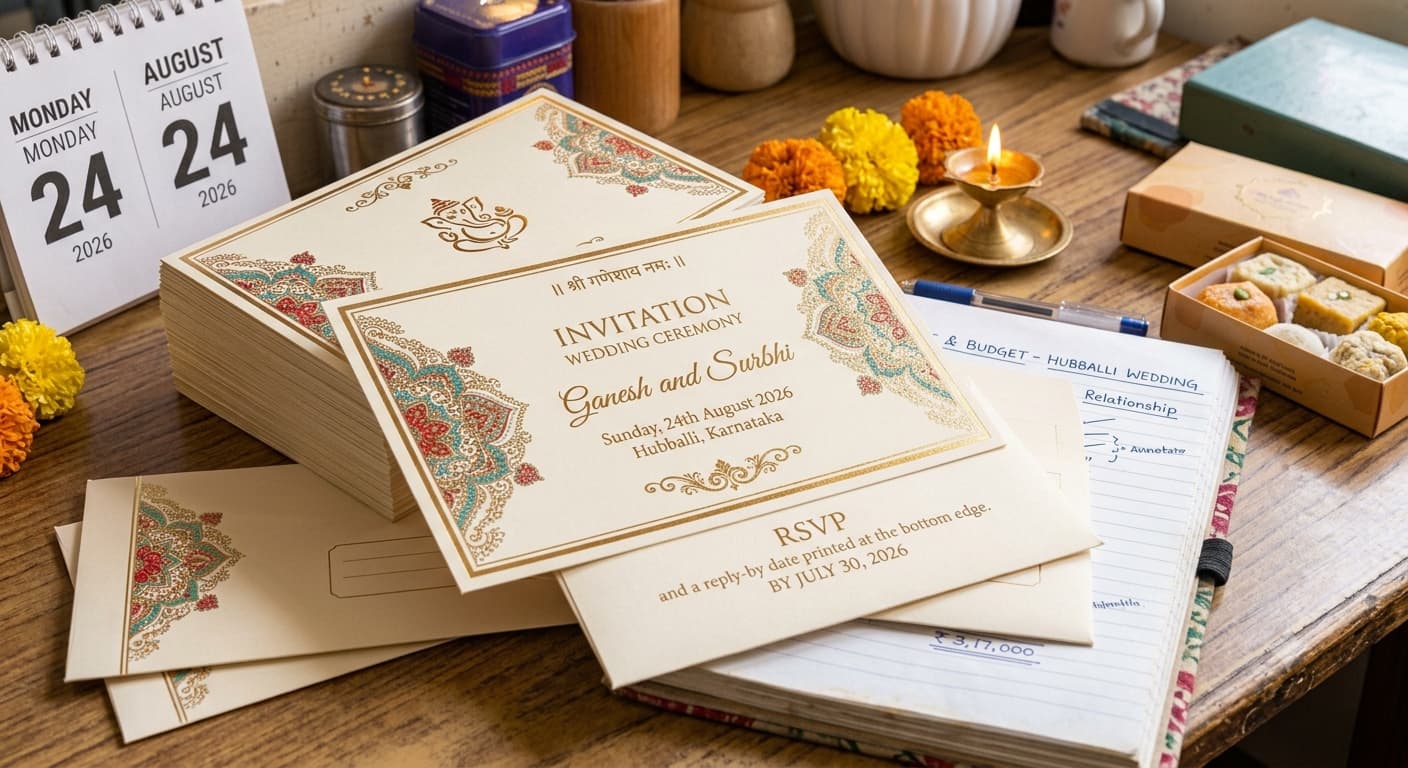
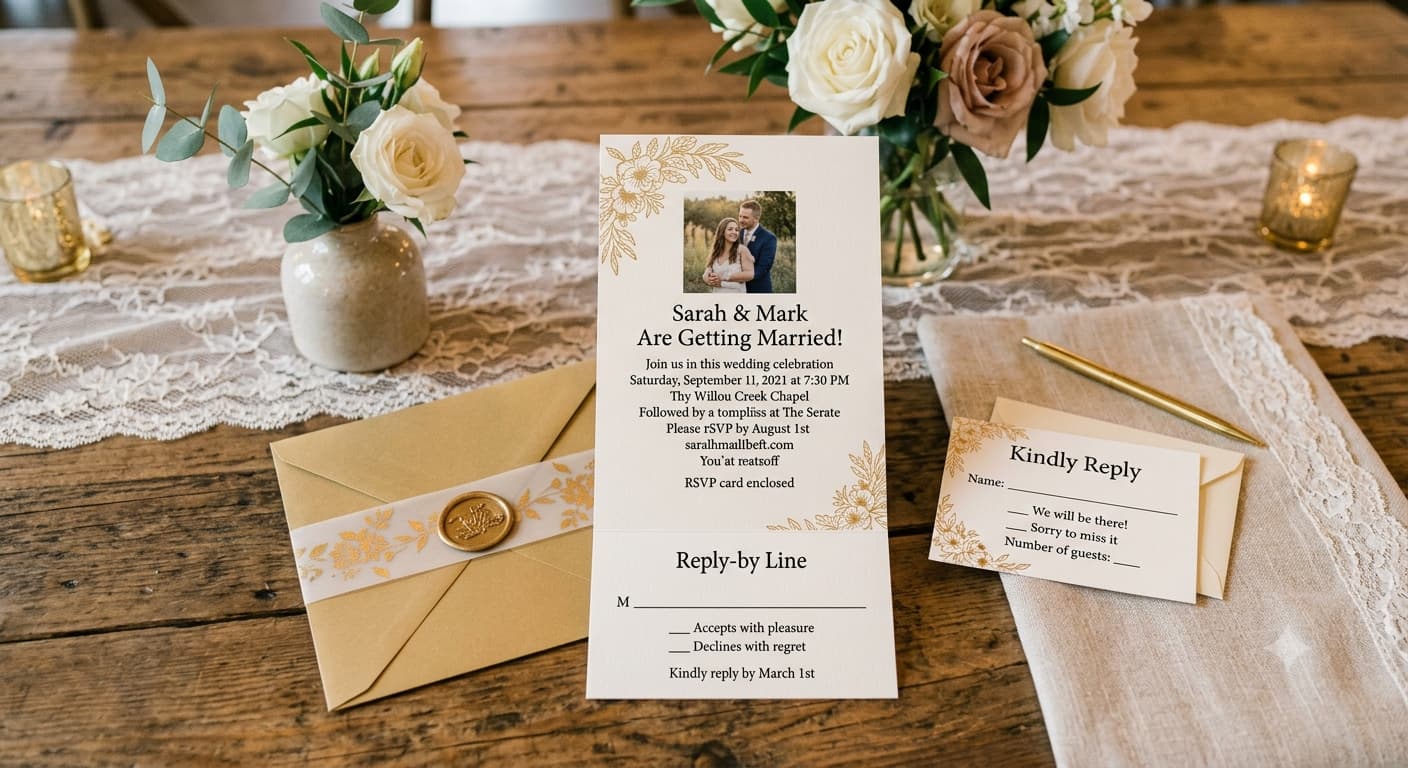
Multi-day functions need one more layer: ask which functions. Half your list will attend the sangeet and skip the haldi, and if you never ask, you'll cater both at full strength. The wording that asks this properly on the invitation itself prevents most of these follow-ups from being necessary at all.
What not to do
Don't send a fourth group message. It's read as noise by everyone who already replied and ignored by everyone who hasn't.
Don't guilt anyone. "We're really disappointed we haven't heard from you" produces a defensive yes from someone who won't turn up. That's worse than a no — you've paid for a plate and lost a seat.
Don't announce a public deadline in the group. "LAST CHANCE TO RSVP!!" reads as a mass mailing. Mass mailings get ignored.
Don't assume silence means no until you've said so. State the default first (Touch 2), then act on it. Acting on an unstated assumption is how someone turns up to a wedding with no chair.
Don't do this the same week as the event. If you're chasing forty people seven days out, the real problem was your deadline. Three to four weeks before is where it should sit — the full timeline is here if next time you'd like this week to be calmer.
Prevention beats chasing
Most of this job is created upstream, on the invitation.
Guests don't reply because replying was work. A phone number is work. An email is work. A four-field form is work. A single tap is not.
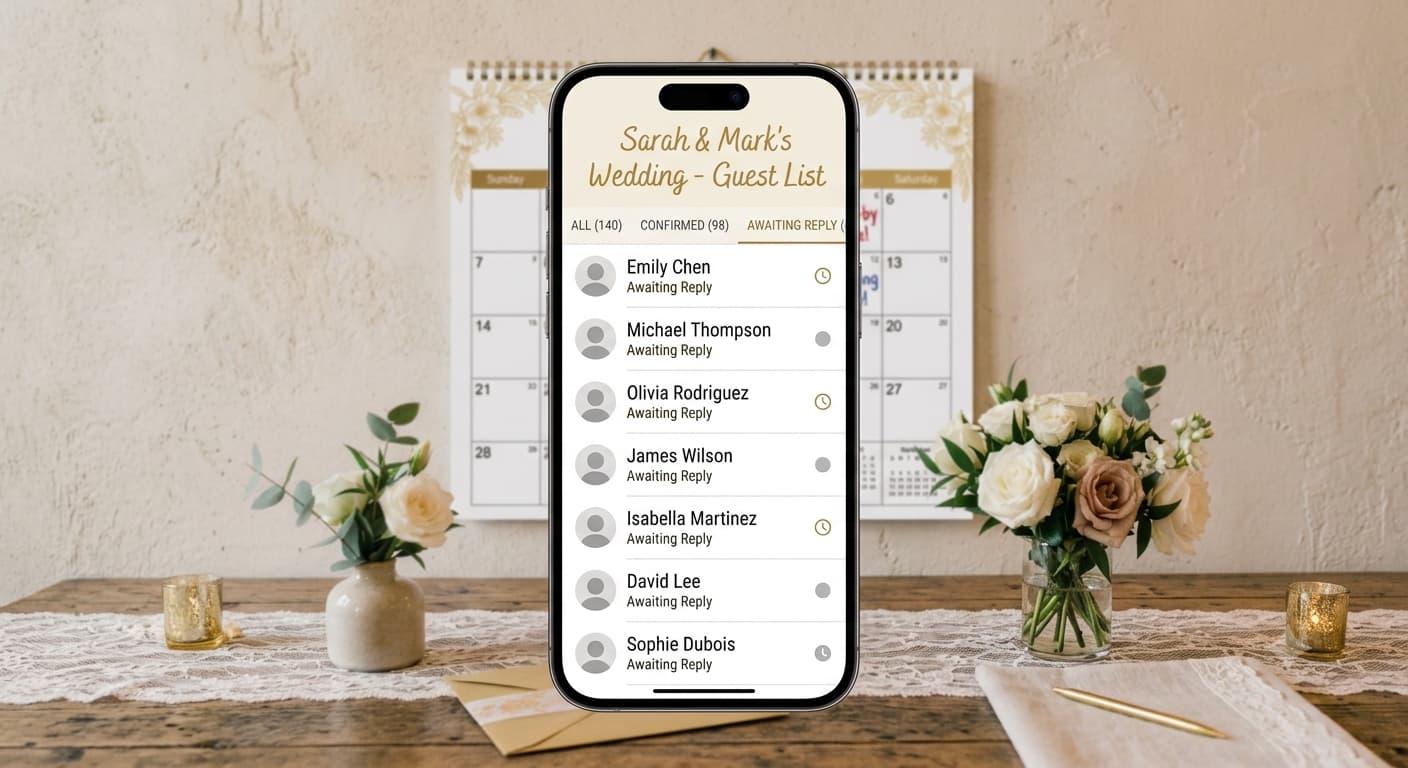
If every reply landed on one dashboard the moment it was made — attending, declined, still pending, with a running headcount — you'd know exactly who to message and you'd never build the list by hand. That's the whole job a free RSVP link does: guests tap once with no app and no account, and the pending column tells you precisely who Touch 1 is for.
It doesn't eliminate the chasing. About a fifth of any guest list needs a nudge regardless of how easy you made it. But it turns "who hasn't replied?" from an evening of cross-referencing into a filter you click.
Twenty minutes of individual messages tonight will clear most of your pending list. The group chat has had its chance.
People Also Asked
Explore common questions related to this blog.