RSVP Deadline: When to Set Yours and the Math Caterers Actually Use
Set your RSVP deadline three to four weeks before the wedding, working backwards from your caterer's final-numbers date rather than forwards from today. Standard timeline: invitations out 8 weeks before, RSVP deadline 3–4 weeks before, caterer's final count 1–2 weeks before. That gap between your deadline and the caterer's is your chasing window — protect it. Two weeks is comfortable. One week is tight. Three days is how couples end up paying for fourteen people who never existed.
This sits under our rundown of free RSVP tools and what they actually include, for the decision you have to make before you print anything.
At an average of $292 a head, a headcount you guessed at is the most expensive sentence in wedding planning.
Heads up: some links in this post are Amazon affiliate links — if you buy through them, Eventic earns a small commission at no extra cost to you.
Work backwards, always
Most couples pick an RSVP date by feel. "Four weeks sounds about right." Then the caterer asks for numbers eleven days out and suddenly there's no room to chase anyone.
Do it in this order instead:
- Ask your caterer and venue for their final-numbers deadline. Get it in writing. It's usually 7–14 days before, sometimes 21 for a large or plated event.
- Subtract your chasing window. Ten to fourteen days. This is non-negotiable and it's the step everyone skips.
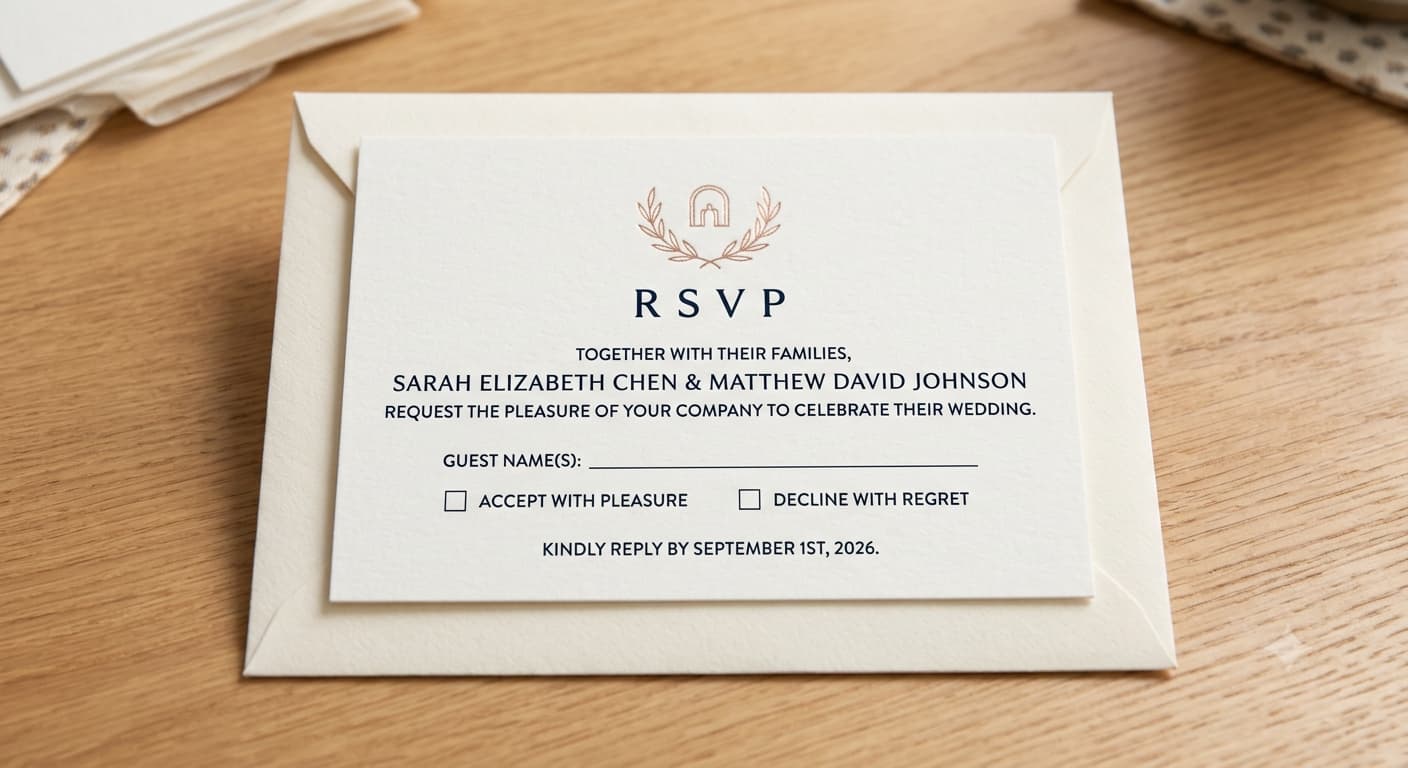
- That's your RSVP deadline. Put it on the card.
- Send invitations 8 weeks before the wedding, or about 4–5 weeks before that deadline.
Anna Post, working from the family's own etiquette tradition, has described the standard as invitations around eight weeks out with replies due two to three weeks before the day — noting the whole thing compresses or expands depending on travel. That's a floor, not a rule. Add time if your guests are flying.
The standard timeline
| When | What happens |
|---|---|
| 6–10 months out | Save the dates |
| 8 weeks out | Invitations sent |
| 4 weeks out | Soft reminder to non-responders |
| 3–4 weeks out | RSVP deadline |
| 2–3 weeks out | Personal chase, one-to-one |
| 1–2 weeks out | Final numbers to caterer and venue |
| 3–7 days out | Seating chart finalised |
Two adjustments worth making:
Destination or heavy-travel weddings: push everything earlier. Invitations 10–12 weeks out, RSVP deadline 5–6 weeks out. Guests booking flights need a decision window, and they'll take it whether you give it to them or not.
Short-notice weddings: compress freely. A six-week engagement can run invitations at 4 weeks and RSVPs at 2. It works because urgency does your chasing for you.
Why three to four weeks, specifically
Too early (6+ weeks out) and people genuinely can't answer. Work rotas aren't published, childcare isn't arranged. You'll get "maybe," which is worse than nothing because it feels like progress.
Too late (under 2 weeks out) and you've eliminated your own chasing window. The deadline passes, twelve people haven't answered, and the caterer wants numbers in four days. Now you're paying for guesses.
Three to four weeks is the band where guests can answer honestly and you still have room to work.
The math that costs money
Here's what the gap actually protects.
Say you invite 120 people. By your deadline, 84 have replied yes, 19 no, and 17 haven't answered. If your final count is due in three days, you'll do what everyone does — round up, assume most of the 17 are coming, and tell the caterer 95.
If eight of them don't show, you've bought eight meals nobody eats. At The Knot's 2026 average of $292 per guest, that's over $2,300 for empty chairs. Two weeks of chasing would have resolved almost all of those 17 into real yeses and noes.
The RSVP deadline isn't administration. It's the single highest-leverage date in your planning calendar, and it costs nothing to set correctly.
Multiple events, multiple deadlines?
The 2026 Real Weddings Study found that 37% of couples now host at least one additional event alongside the main day — a welcome party, a day-after brunch.
Use one deadline for all of them, with separate yes/no questions per event. Two deadlines means guests answer one and forget the other, and you end up chasing the same people twice. One date, several boxes.
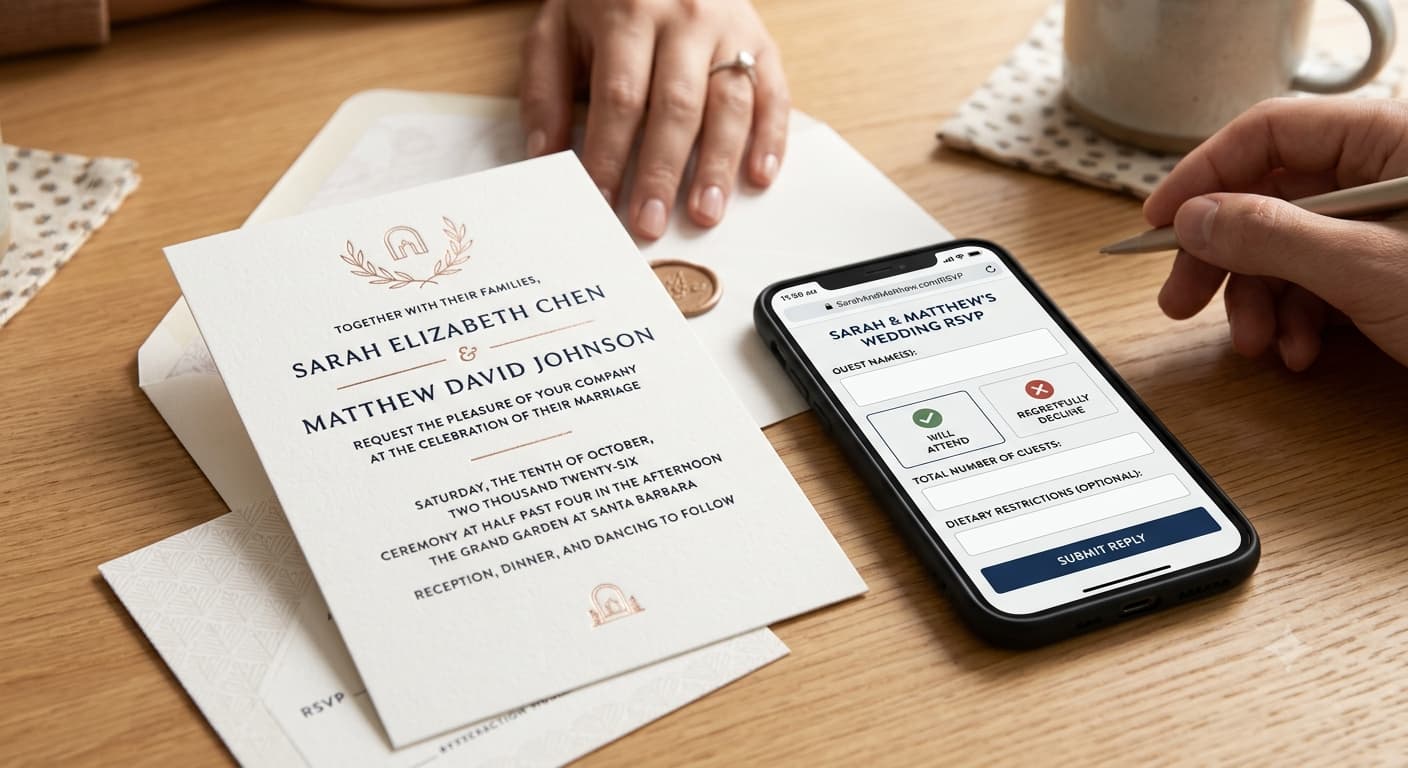
Whichever way you collect the answers, the form needs to distinguish between events rather than asking a single "attending?" — a reply form that handles more than one event saves you rebuilding a spreadsheet by hand, though a well-built Google Form does the same job if you're already set up there.
Making the deadline stick
The date on the card is a suggestion until you give it weight.
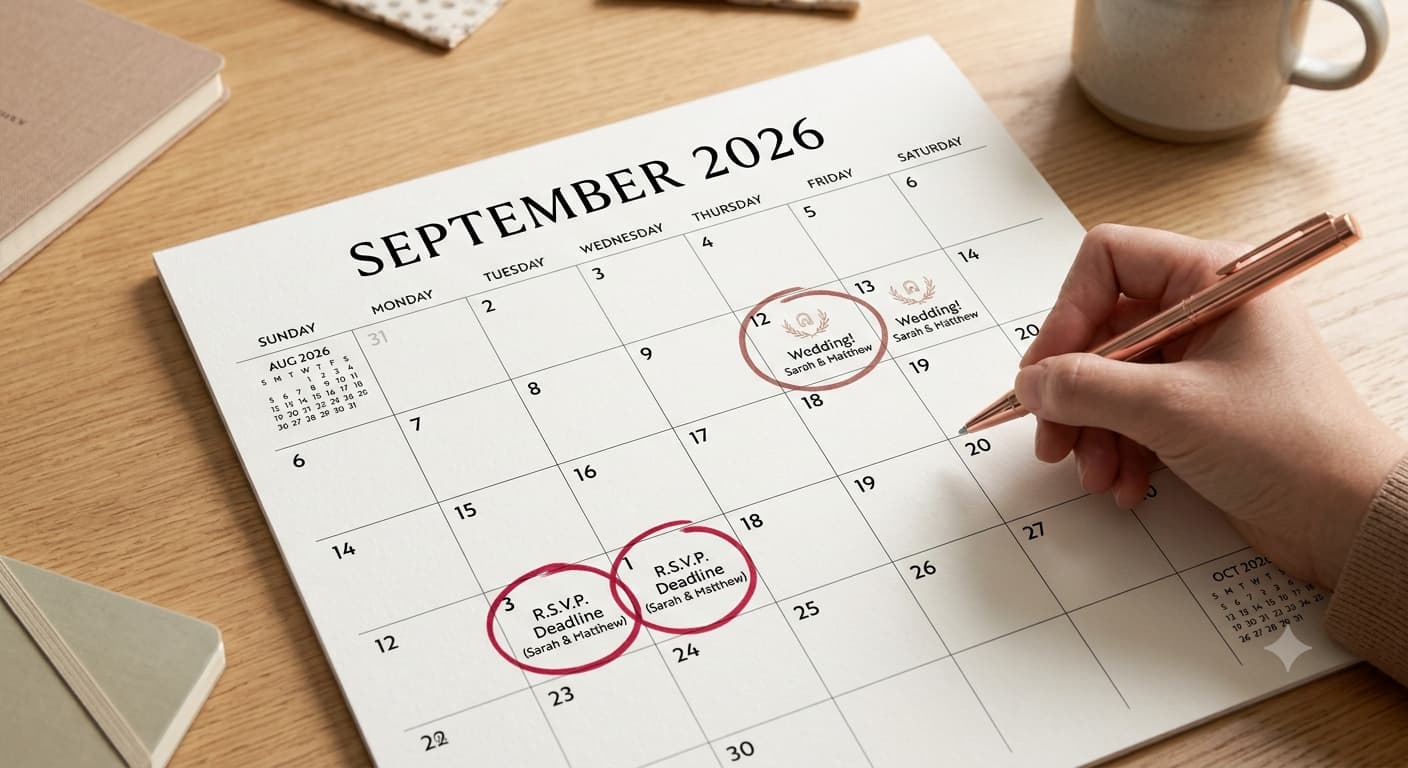
- Write it as a full date with the day. "Saturday 14 October" beats "14/10" beats "mid-October."
- Attach a reason. "So we can confirm numbers with the caterer" turns an arbitrary date into a real one.
- Make replying take under thirty seconds. Every extra field on the form pushes replies past the deadline.
- Say the no is welcome. Guests who can't come often delay because declining feels rude. Remove the friction and they'll answer sooner.
- Plan the chase before you need it. Three waves, mapped in how to chase guests who haven't replied.
And the wording on the card itself matters more than it should — deadline lines that actually get replies has the exact phrasings that outperform "at your earliest convenience."
If you're running this across a spreadsheet, a paper backup helps more than you'd expect. A cheap wedding planner and guest list organiser is genuinely useful here for one reason: you can hand it to your partner. A shared browser tab cannot be handed to anyone.

As an Amazon Associate, we may earn from qualifying purchases.
Pick the date, write it on the card, then genuinely forget about it until the reminders are due. Hope the yeses arrive early and the noes arrive politely.
People Also Asked
Explore common questions related to this blog.
Three to four weeks, set by working backwards from your caterer's final-numbers date and leaving a 10–14 day chasing window.
About 8 weeks before the wedding for a local event, 10–12 weeks if guests are travelling.
Then your RSVP deadline is five weeks out, and invitations go at 9–10 weeks. The chasing window stays fixed; everything else moves around it.