Meal Choice on RSVPs: How to Ask Without Creating a Catering Nightmare
Ask for meal choice per guest, not per household, keep it to two or three named options, and put dietary requirements in a separate free-text box rather than a checkbox list. So: "Meal choice for each guest — chicken / sea bass / mushroom risotto (v)" then "Any allergies or dietary needs we should know about?" Only ask at all if you're serving a plated meal with real alternatives. Buffet and family-style weddings don't need meal choices, and asking anyway lowers your reply rate for nothing.
This is a spoke off our look at free RSVP tools and what they can actually collect — the specific field that causes more chaos than the other four combined.
How do you collect 117 meal choices without ending up with a spreadsheet nobody can read and a caterer who hates you?
Heads up: some links in this post are Amazon affiliate links — if you buy through them, Eventic earns a small commission at no extra cost to you.
First: do you even need to ask?
| Service style | Ask for meal choice? | Ask about dietary needs? |
|---|---|---|
| Plated, set menu (no choice) | No | Yes |
| Plated with 2–3 options | Yes | Yes |
| Buffet | No | Yes |
| Family style | No | Yes |
| Food stations / trucks | No | Yes |
| Cocktail reception | No | Yes |
The right-hand column never changes. You always ask about allergies. The left-hand column is the one couples get wrong, adding a meal-choice field to a buffet wedding because it feels thorough.
It isn't thorough. It's a field that produces data nobody uses and costs you replies.
Per guest, not per household
This is the single most common mistake, and it's brutal to unpick later.
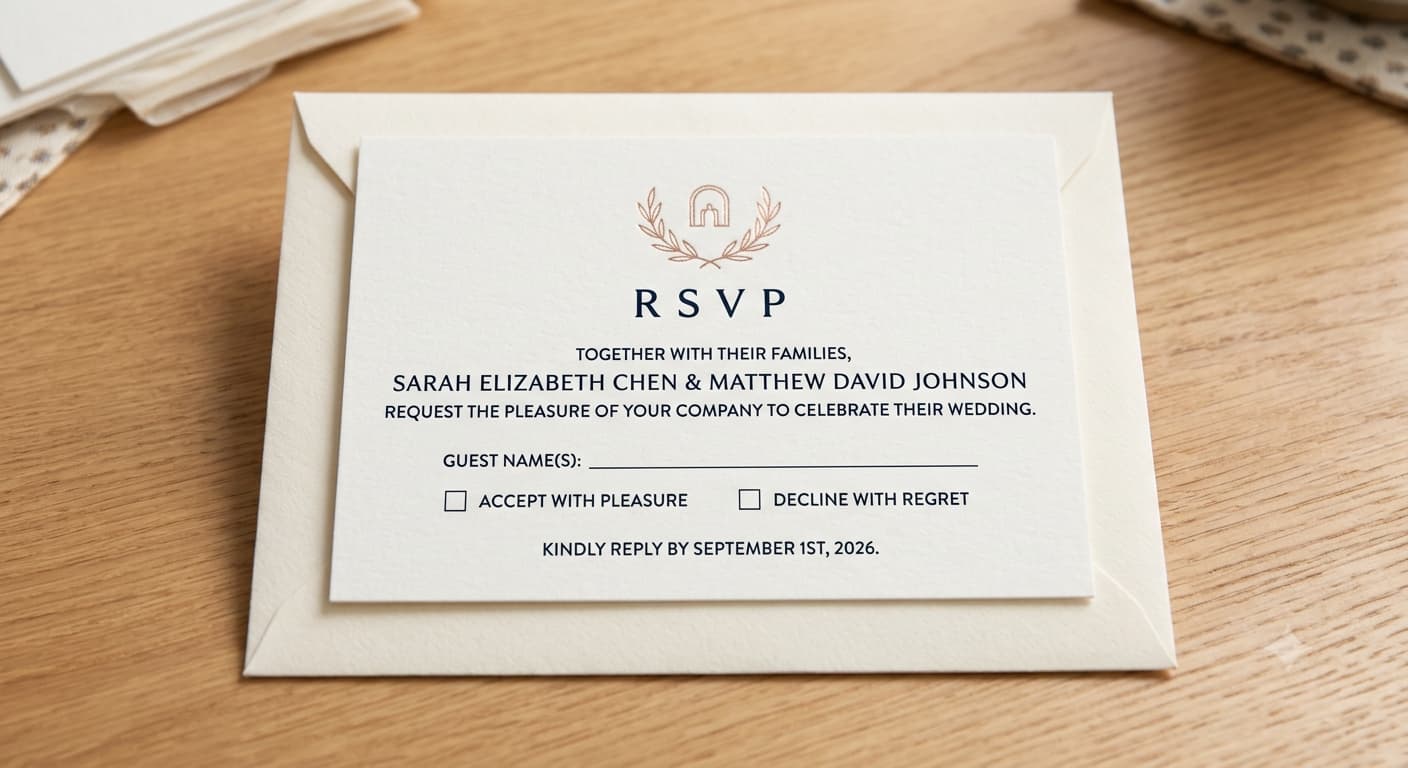
A card that says "Meal choice: ____" under a name line reading "M ____ and guest" gives you one answer for two people. You now have to contact them again, which means you've turned one reply into two conversations.
Do this instead:
Guest 1: ________________ · Meal: ☐ Chicken ☐ Sea bass ☐ Risotto (v) Guest 2: ________________ · Meal: ☐ Chicken ☐ Sea bass ☐ Risotto (v)
On a digital form, this means the meal question repeats for each attending guest. Any decent reply form does this automatically once you've said how many are attending — a form that asks per guest rather than per reply removes the entire follow-up round. If you're building your own in Google Forms, you'll need to create repeated question sets manually, which is tedious but works.
Two or three options, named properly
Two options is the sweet spot. A meat, and a vegetarian or fish. Fast to choose, easy to cater, cheap.
Three is the ceiling. Meat, fish, vegetarian. Beyond that your kitchen slows down and your costs climb.
Name the dishes properly. "Chicken / Fish / Veg" tells a guest nothing and makes your wedding sound like a hospital menu. "Herb-roasted chicken / Pan-seared sea bass / Wild mushroom risotto" takes the same space and reads like a meal someone chose to serve.
One practical note that saves real money: mark the vegetarian option clearly with (v) or (vg), and don't make it the default selection on a digital form. Whatever sits at the top of a dropdown gets over-selected by people who didn't read the options, and you'll cater forty risottos for a room of eleven vegetarians.
Dietary requirements: free text, not checkboxes
Tempting to offer a tidy list — gluten free, dairy free, nut allergy, vegan. Don't.
Checkbox lists fail in two directions. They miss things (coeliac versus gluten-sensitive, shellfish versus all fish, religious requirements that aren't allergies), and they flatten severity. "Nut allergy" as a checkbox doesn't distinguish between a preference and anaphylaxis, and your caterer badly needs that distinction.
Ask this instead:
Any allergies or dietary requirements we should know about? Please include how serious it is.
That last sentence does enormous work. It gets you "severe peanut allergy — carries an EpiPen" instead of "no nuts."
For reference when you brief the caterer, US labelling law recognises nine major allergens — milk, eggs, fish, crustacean shellfish, tree nuts, peanuts, wheat, soy and sesame. Sesame joined the list in 2023 and still gets missed by older catering paperwork, so it's worth naming specifically when you hand over your list. The FDA's food allergy page has the full detail if you're dealing with a serious case.
What to do with the answers
Collecting is the easy half.
Build one table, not three. Guest name, table number, meal choice, dietary note. That single table is what the caterer gets, what the venue gets, and what your place cards are generated from. Anything living in a second spreadsheet will be out of date within a week.
Flag severe allergies separately and in bold. Don't bury an anaphylaxis note in row 84 of a CSV. Put it in an email as well, and mention it verbally at the final venue meeting.
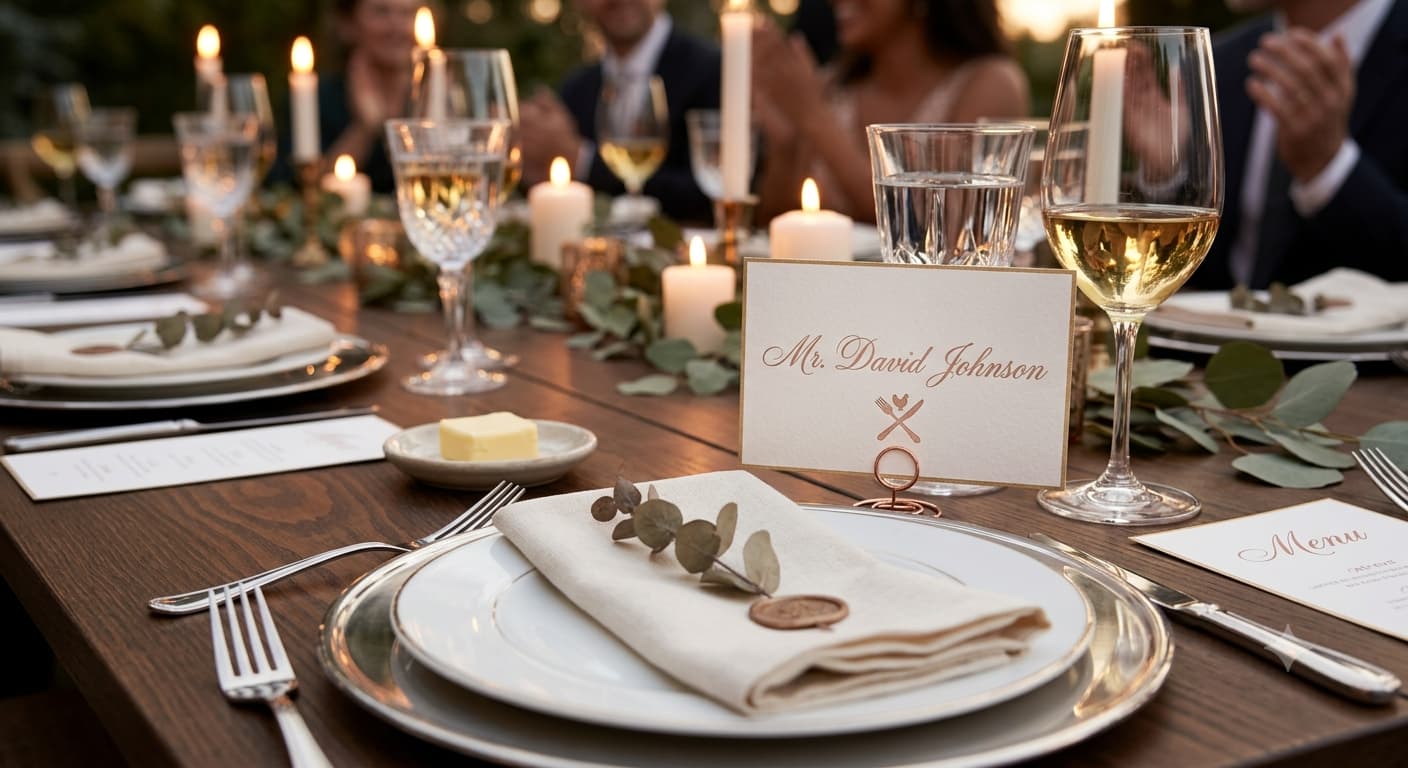
Get meal choices onto the table. Most caterers want a visual indicator so servers aren't asking each guest. A discreet symbol on the place card is standard — a small sticker, a coloured dot, a printed initial. Sets of wedding meal choice place cards and stickers cost very little and save your caterer twenty minutes of confusion at service, which is exactly when nobody has twenty minutes.

As an Amazon Associate, we may earn from qualifying purchases.
Ask what the caterer's format is before you build anything. Some want a CSV, some want a count by table, some want a printed list. Building the wrong thing and rebuilding it is a genuinely miserable Sunday.
Handling the awkward cases
Guests who reply with no meal choice. Common. Chase them with everyone else during the post-deadline personal round, or assign them the most-ordered option and note it. Most people don't mind.
Kids' meals. Ask separately, as its own option, and only if you're inviting children. Don't make parents pick a sea bass for a four-year-old.
Plus-ones whose names you don't have. Ask for the name and the meal in the same field. "Guest name and meal choice" as one line gets you both, and gets you a name you can put on a place card.
Late changes. They happen — someone brings a different partner, someone goes vegetarian in November. Ask your caterer how late a swap is possible and write that date down. It's usually more flexible than the headcount deadline.
That headcount deadline is a different date and a stricter one; where to set your RSVP deadline has the backwards math.
Get this field right and the whole catering conversation stops being stressful. Get it wrong and you'll spend a weekend rebuilding a spreadsheet — so do it once, per guest, with proper dish names. Then go and eat the tasting menu, which is the entire reward for this part.
People Also Asked
Explore common questions related to this blog.
Only for a plated meal with genuine alternatives. Buffet and family-style weddings don't need them.
Two is ideal, three is the maximum. More slows the kitchen and raises costs without improving anyone's evening.
One open text box asking for allergies and dietary needs, plus a request to say how serious it is. Not a checkbox list.