The best first date ideas are short, public, cheap and easy to leave. A coffee walk, a drink somewhere with a menu worth discussing, a Saturday market, a free museum evening, mini golf if you're both relaxed enough to be competitive. Plan for about an hour — if it's going well, extending feels like a win; if it isn't, an hour is a complete and civil date rather than an endurance event. Skip the cinema (two hours of not speaking) and skip anything you can't politely leave, like a four-hour boat tour with someone you met on Tuesday.
This is the first-date corner of the much bigger collection of date ideas, which covers everything after date one too.
The best first date I've been on cost nine dollars. Two coffees and a walk that was supposed to be twenty minutes and lasted until the shops shut. The worst one cost about a hundred and forty and involved a tasting menu, which meant three hours of enforced conversation with someone I'd known for ninety minutes and a waiter appearing every eleven minutes to explain a foam.
That contrast is basically the whole article.
The three rules that decide whether a first date works
Rule one: something to do besides talk. Conversation is the point, but it shouldn't be the task. When you're both badly playing mini golf, the talking happens sideways — commentary, teasing, mock outrage. When you're sitting across a table with a candle between you, every silence gets a spotlight on it.
Rule two: an exit inside an hour. This is the most underrated feature of a good first date and almost nobody plans for it. A date you can comfortably end after an hour is a date both of you can agree to without dread. Book three hours and you've removed that option from both people before either of you knew whether you wanted it.
Rule three: somewhere you can hear each other. A loud bar means an evening of "sorry, what?" and you'll both leave knowing nothing. Atmosphere is worth much less than audibility on a first date.
Anything scoring two out of three is fine. The cinema scores zero, which is why it's a bad first date and always has been.
30 first date ideas that work almost anywhere
The reliable ones
- Coffee to go, then walk. The best first date in the world. Walking side by side removes the eye-contact pressure, the street supplies conversation topics, and there's no fixed end time.
- A drink at a bar with a menu worth discussing. Something to point at when the conversation dips — and it will dip, twice, and that's normal.
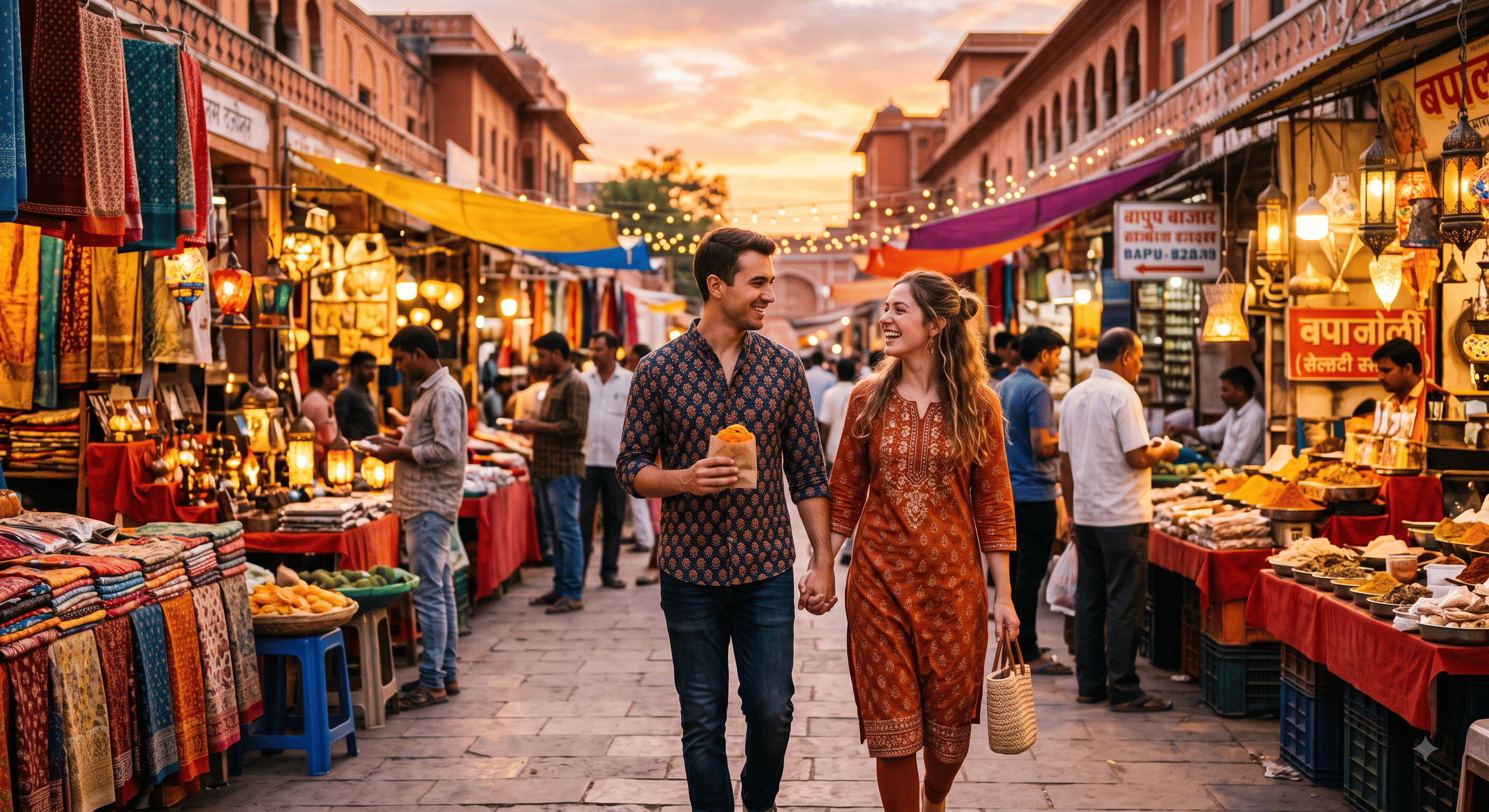
- Saturday market. Free, busy, endless small-talk fuel, easy to leave.
- Free museum evening. Most major museums have one. Check the museum's own site, not a listicle — the aggregator lists go stale fast.
- Mini golf. Built-in commentary, terrible windmills, over in an hour.
- Bookshop, then coffee across the road. Twenty minutes, pick a book for each other, explain the choice. A personality test disguised as browsing.
- Botanical garden or park. Slow walking is a conversational gift, and everybody whispers in a greenhouse, which is oddly intimate.
- Food hall or night market. Varied enough that nobody's stuck with a bad choice, and you can leave after one plate.
- Ice cream and a wander. Under ten dollars and it has never once been a bad idea.
- Art gallery opening. Free wine, free art, low commitment, and you look like a person with a life.
If you're both comfortable enough for an activity
- Bowling, one game. Two people who are bad at something bond faster than two who are good at it.
- Arcade with a $20 cap. Split the money, race to spend it, loser buys the ice cream.
- Pub trivia night. You're a team against the room. Instant "us."
- Batting cages. Twenty minutes, twelve dollars, weirdly excellent for nerves.
- Board game café. Pick something short — a two-hour rules explanation kills any date.
- Roller or ice skating. Everyone's slightly undignified, which is a good leveller.
- Arcade bar. The city version of mini golf. Something to do, something to lose at, easy to talk over.
- Comedy open mic. Low stakes, and the bad sets are more fun to debrief than the good ones.
Daytime
- Farmers' market and breakfast. Casual, cheap, easy to extend.
- A neighbourhood neither of you knows. Pick a stop three or four along on the train, get off, see what's there. Novelty reads as effort even when it cost nothing.
- The weird local museum. Every city has one — pinball, sewers, medical oddities, something.
- Dog park spectating. Rank them. Assign them jobs. Don't touch other people's dogs.
- Bakery crawl. Three small things at two places, ranked with unearned seriousness.
- Library event. Genuinely underrated — author talks, screenings, language exchanges, all free and all badly marketed.
Slightly bolder
- Bouldering day pass. Requires encouragement and trust. Fast bonding, cheap, and you'll both be bad at it.
- Record store, play each other one song. That's a whole personality reveal in four minutes.
- Thrift store challenge. $15 each, twenty minutes, buy the other person something. Charming with the right person and a disaster with the wrong one, which is useful information.
- Live music, small venue. Loud during, talkable between sets.
- Blue-hour drink somewhere with a view. The twenty minutes after sunset. The light does an enormous amount of unpaid work.
- Sunrise date. Almost nobody does these, which is exactly why they get remembered.
Good first date ideas, ranked by how nervous you are
The right pick depends less on what's objectively fun and more on how much conversational pressure you can carry on the night.
Very nervous — pick something side by side. The coffee walk, again, and I'll keep saying it. Walking removes eye contact, the environment supplies topics, and nothing has been booked, so the date can be twenty minutes or two hours without either of you having decided in advance. Also on this tier: a market browse, a botanical garden, a bookshop.
Moderately nervous — pick somewhere with a menu or a wall. Things to point at. A bar with an interesting drinks list, a gallery, a food hall. When the conversation stalls there's an object to discuss and the silence never gets a spotlight.
Comfortable — pick something with a task. Mini golf, bowling, an arcade, trivia. Low-skill activities where you're both slightly rubbish produce commentary and teasing, which is far more revealing than an interview across a table.
Whatever tier you're on, keep it under 90 minutes. The most common first-date mistake isn't picking the wrong activity. It's picking one that can't end early.
Best first date ideas in the city
City dates have one advantage worth using: you can put two things next to each other. A drink, then a walk. A market, then a coffee. That structure makes a date feel designed rather than defaulted, and it gives you a natural exit point in the middle.
The city picks that work almost anywhere: a drink somewhere with a view then a walk; a food hall or night market; a museum on a free evening; a neighbourhood neither of you has been to; a rooftop for exactly one drink before moving on; an arcade bar; a bookshop with a café across the road.
How to find what's actually on where you live. Search your city's subreddit rather than Google — site:reddit.com r/[yourcity] date night returns real places, messily and honestly. Check three event calendars almost nobody checks: your public library, your parks department, your nearest university. And look for anything with a deadline attached, like a closing exhibition or a one-weekend pop-up, because a deadline turns "we should go sometime" into an actual plan.
First date ideas by time of day
Morning. Underused and quietly excellent. Coffee, a market, a walk. Low pressure, naturally short, and nobody's drinking, which some people much prefer for a first meeting.
Afternoon. The sweet spot for app first dates. Daylight, public, easy to end, and it can roll into the evening if it's going well.
Early evening. The default, and fine. Just don't book a table for 8pm and nothing else — have somewhere to move to afterwards.
Late. Skip it for a first date. Late-night first meetings have a specific energy that isn't always the one either person actually wanted.
First dates worth avoiding
The cinema. Two hours of enforced silence on an occasion whose entire purpose is finding out about someone. It's also stopped being cheap — a movie for two with popcorn now runs north of fifty dollars on average.
A long, expensive dinner. Three hours across a table, plus an unspoken invoice on it. With the average all-in US date now around $189, a first-date tasting menu is a big bet on a stranger.
Anything you can't leave. Boat tours, escape rooms with a fixed 90-minute slot, a gig two hours from home, a hike where you're the lift. If leaving requires a negotiation, it's the wrong first date.
Meeting your friends. Six people evaluating someone on their first evening is a lot to put a person through.
Their house or yours. Public first, always. Safety aside, home first dates carry an ambiguity that makes plenty of people uncomfortable and nobody wants to be the one to name it.
Anything they'd have to spend real money on. Suggesting a first date with a $70 ticket price puts someone in the position of either spending it or explaining why they can't.
The logistics people get wrong
Tell someone where you're going. Location shared with a friend, plus when you expect to be done. This is standard advice because it's correct, and it costs nothing. Dating apps are how a lot of people meet now — about three in ten US adults have used one — and meeting a stranger in public with someone knowing your plans is just sensible.
Get yourself there and back. Don't rely on a lift from someone you've never met. It removes your ability to leave.
Don't text for three weeks first. Long pre-date texting builds a version of a person that the real one has to compete with. A few days of conversation, then meet.
Have a rough plan for after. Not a booking — just an awareness that there's a bar around the corner if 9pm arrives and neither of you wants to go home.
On paying: offer, split if they'd rather, don't make it a thing either way. Whoever suggested a specific expensive place should expect to cover it, which is one more argument for keeping first dates cheap.
Confirm the day before. One message. It isn't needy, and it prevents the specific misery of standing outside somewhere alone.
How to actually propose the first date
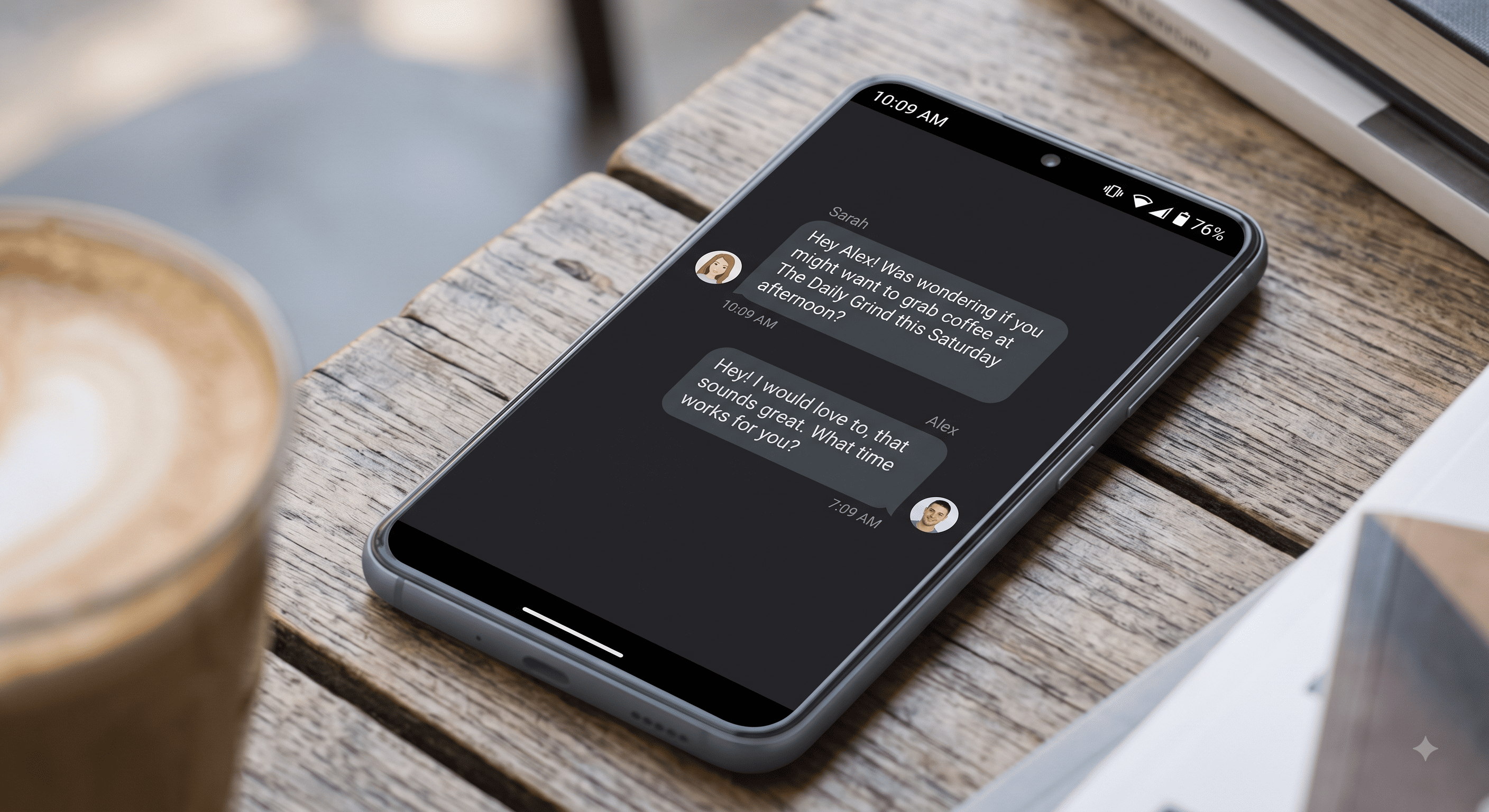
More first dates die in the message thread than on the night. Two polite people take turns handing the decision back — "what do you want to do?" "I don't mind, what do you fancy?" — until the energy drains out and the plan quietly expires.
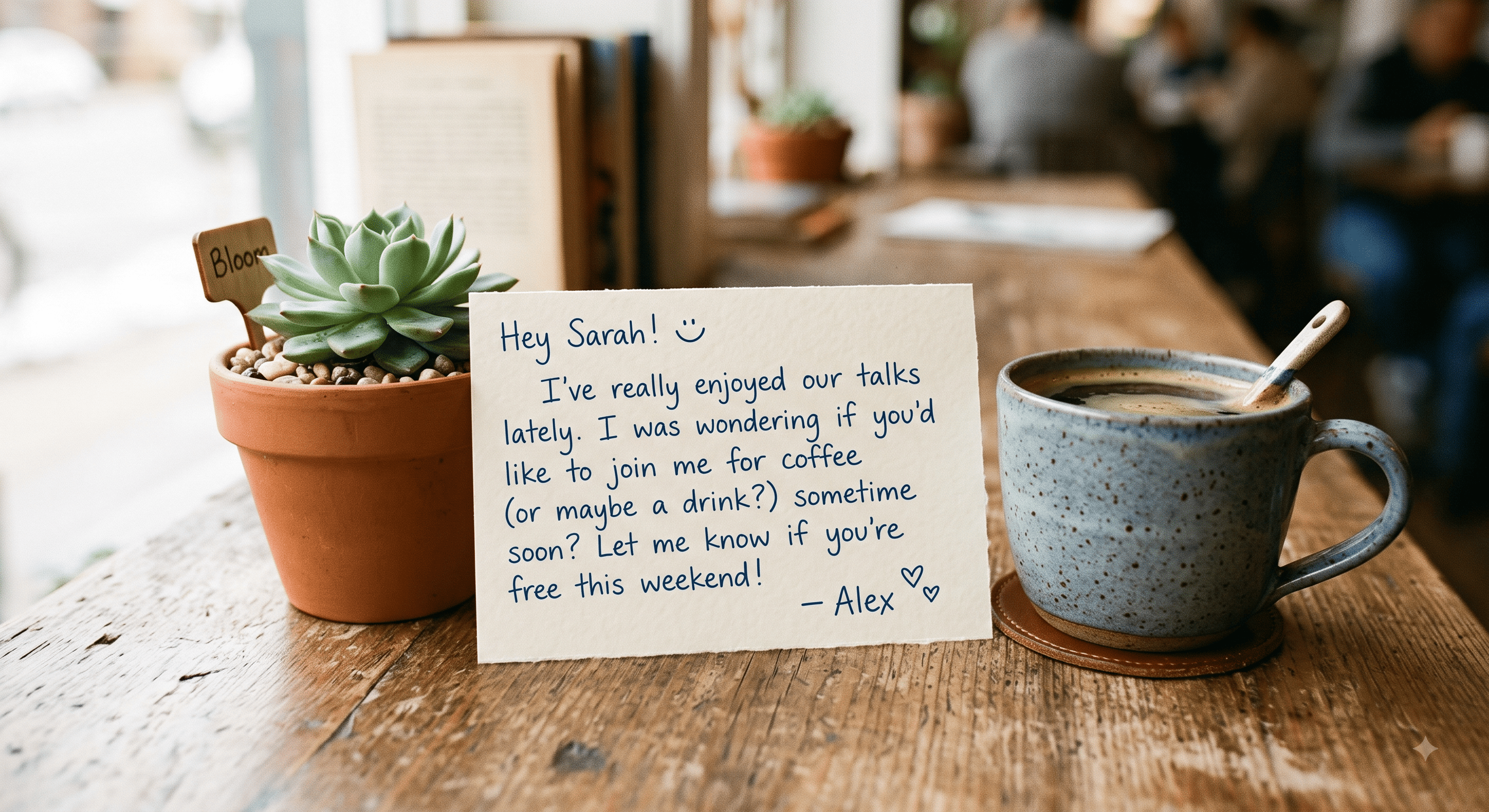
The fix is one sentence with three parts: an activity, a day, and an exit that isn't a rejection.
"There's a night market on Friday — want to come? Saturday works too if Friday's bad."
That's it. Specific enough to answer, flexible enough to say yes to.
If a plain text feels flat — and when you're actually nervous about someone, it often does — an interactive date invite covers the same ground with more charm. You write the question, offer two or three plans you're up for, and they tap the one they want and pick a time on a calendar. It's free, takes about two minutes, and skips the "when are you free / whenever works for you" exchange entirely. Not necessary. Just better than a message that says "hey so".
For the wording itself, there's a lot to steal from the full guide to asking someone out.
What to talk about (and what to leave alone)
The activity does most of the work, but there's a difference between a first date that stays polite and one that actually goes somewhere.
Ask about the why, not the what. "What do you do?" gets you a job title and a dead end. "How did you end up doing that?" gets you a story, and stories are where people actually live. Same with films, cities, hobbies — the why answer tells you something, the what answer tells you nothing.
Go first occasionally. Twenty questions in a row is a screening call, not a conversation. Every few exchanges, offer something of your own without being asked — a real opinion, a small embarrassment, something you got wrong. Mutual disclosure is the mechanism that builds closeness, and it's the entire basis of the well-known 36-questions research. Somebody has to go first, and it may as well be you.
Have one question with a bit of heat in it. Not intense, just not neutral. What's overrated? What have you changed your mind about? What's the best thing you've spent money on this year? Real questions get real answers, and real answers are what you came for.
Let the silences happen. Two of them, at least. Rushing to fill every pause is the most common nervous behaviour on a first date and it's exhausting for both people. A three-second gap is not a failure.
Leave alone: the full relationship history, anything about where this is going, money in detail, and the running commentary on how the date is going. A passing mention of an ex is normal and fine — a chronology is not.
And don't interview-prep. Arriving with a list of questions produces a date that feels like a process. Ask about whatever they just said. That's it. That's the technique.
Afterwards
If it went well, say so and propose the next one within a day or two. Waiting three days to seem busy is a rule from a different decade and mostly reads as disinterest now. The trap on date two is repeating date one with less to say — the second date ideas guide covers why it should escalate the activity rather than the budget.
If it was fine but not electric, a second date is often worth it anyway. First dates are heavily distorted by nerves and some people are meaningfully better company once that clears. Pick an activity-led plan rather than another sit-down conversation.
If it wasn't there, say so kindly and directly rather than fading out. A short honest message costs you ten seconds and saves the other person a week of wondering.
Nine dollars and a long walk. Genuinely, that's the bar to beat, and almost anything clears it if you actually turn up.
People Also Asked
Explore common questions related to this blog.
About an hour. If it's going well, extending is easy and feels like a small win. If it isn't, an hour is a complete and polite date rather than an endurance event.
Anything side by side and unbooked — a coffee walk, a market, a bookshop, a botanical garden. Avoid anything with a reservation, because a booking creates an obligation to stay for a set length of time.
Not bad, just harder than it needs to be. A table with nothing to do but talk makes conversation the entire job, and a long dinner removes your ability to leave early. Drinks with dinner as a possible second act works far better than dinner as the whole plan.
Coffee and a walk, a market, a free museum evening, mini golf, a library event. Under $30 is completely normal for a first date and arguably ideal — spending more creates an obligation neither of you asked for. There are 45 more in the cheap date ideas guide.
A loose one, yes. Not a second booking — just knowing there's a bar around the corner or a park across the road. Second acts happen naturally when there's an obvious option and almost never when there isn't, and standing on a pavement at 8:40pm trying to invent one is where a lot of good first dates quietly end.