Wedding Invitation Dress Code Wording: What Each Phrase Really Means
"Cocktail attire" means eleven different things to eleven different guests. That's the entire problem with wedding dress codes, and no amount of elegant phrasing fixes it.
Heads up: some links in this post are Amazon affiliate links — if you buy through them, Eventic earns a small commission at no extra cost to you.
If you're still assembling the full suite, the main wedding invitation wording guide covers where every piece of information belongs.
What each dress code actually means
| Dress code | What men wear | What women wear | Rough formality |
|---|---|---|---|
| White tie | Tailcoat, white bow tie, waistcoat | Floor-length gown | Highest. Rare outside state occasions |
| Black tie | Tuxedo, black bow tie | Floor-length gown or very formal midi | Very formal, evening |
| Black tie optional | Tuxedo or dark suit and tie | Long gown, formal midi, or dressy separates | Formal, but flexible |
| Formal / Black tie invited | Dark suit, tie | Long or midi dress | Formal |
| Cocktail | Suit, tie optional | Knee-length or midi dress, dressy jumpsuit | Semi-formal — the most misread of all |
| Semi-formal | Suit or blazer and trousers | Midi dress, smart separates | Slightly below cocktail |
| Dressy casual | Blazer, no tie, chinos or dark denim | Sundress, skirt and top, jumpsuit | Relaxed but considered |
| Garden party | Light suit or blazer, loafers | Floral midi, block heels or flats | Semi-formal, outdoors |
| Beach formal | Linen suit or shirt and trousers | Flowing midi or maxi, flat sandals | Semi-formal, hot weather |
| Festive | Suit with seasonal color | Dress with sparkle, velvet, jewel tones | Cocktail with permission to be fun |
| Casual | Chinos and a shirt | Sundress or nice separates | Genuinely casual — say so plainly |
Two honest observations. "Cocktail" is the single most misunderstood phrase on this list, because a lot of guests read it as "a bit dressy" and arrive in something they'd wear to brunch. And "black tie optional" gives you a room that photographs as half tuxedos, half suits — beautiful for some couples, mismatched for others. If you want uniformity, say "black tie" and mean it.
The wording, by tone
Formal invitations — bottom right corner, no label, just the phrase:
- Black tie
- Black tie optional
- Formal attire
Semi-formal and modern — details card, one line:
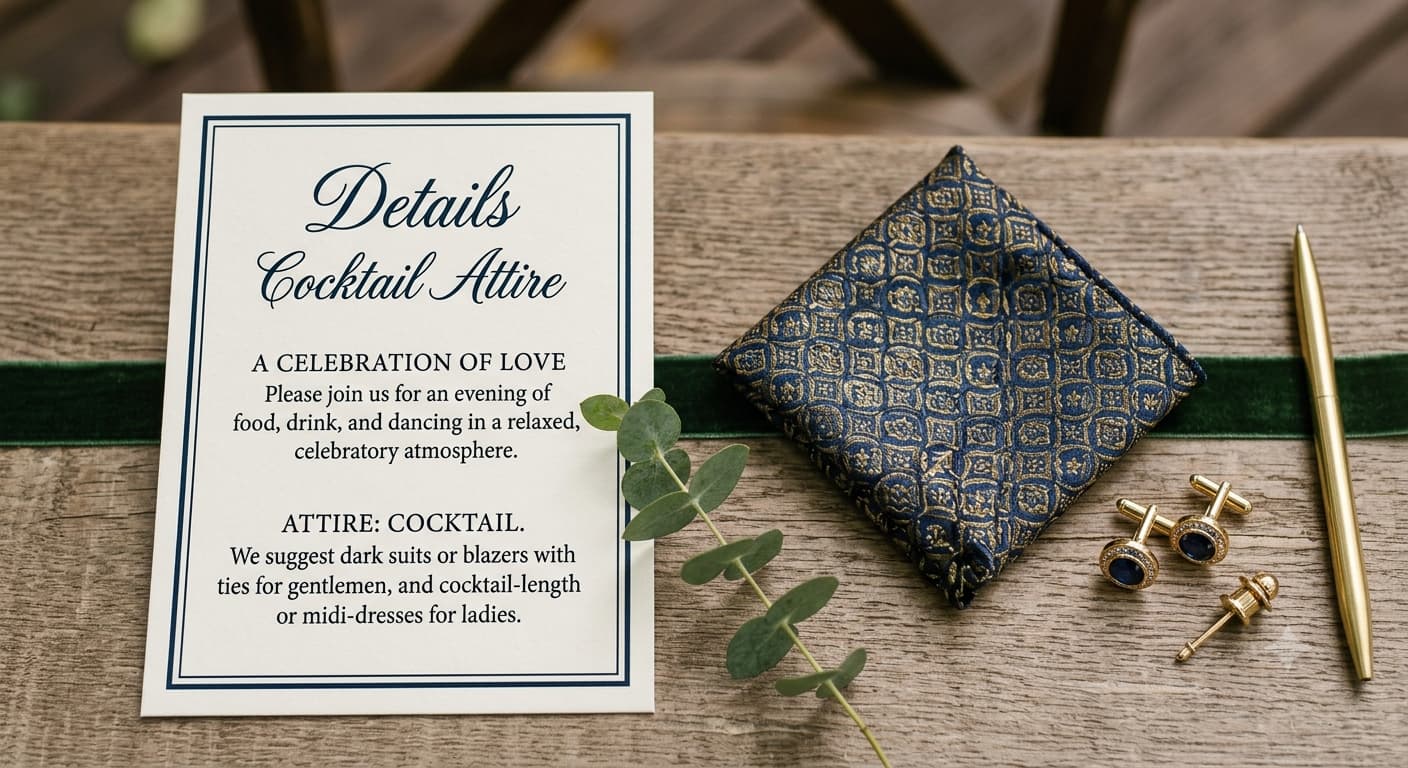
- Cocktail attire
- Semi-formal attire requested
- Dressy casual
- Garden party attire
- Beach formal — flat shoes recommended
Casual and playful — where you can add a clue:
- Dress code: your Sunday best, minus the tie
- Cocktail attire — the dance floor is concrete, choose accordingly
- Festive attire encouraged. Sparkle is welcome.
- Come as your most dressed-up self
- Smart casual — no need for a tux, but maybe skip the shorts
- Dress to feel great, not to impress the seating chart
When there's a color or theme:
- Guests are invited to wear shades of sage and cream
- Black-and-white attire requested
- We'd love to see you in color — no black, please
- Please avoid white, ivory or cream
That last one is fair to state if it matters to you, though it's better placed on the website than the invitation, where it reads a little defensive next to your names.
Where the dress code goes
| Placement | When to use it |
|---|---|
| Bottom right of invitation | Formal weddings, when the phrase alone is enough |
| Details / information card | Most weddings — the standard spot |
| Website FAQ | Always, with a real explanation and ideally photos |
| RSVP card | No. Keep that card doing one job |
| Save-the-date | Only if it's black tie or destination — people budget for those |
Two to four words on paper, a full paragraph on the website. That's the split that works. Guests who care will look it up; guests who don't will follow the two words and land close enough.
The website paragraph nobody writes but everybody needs
Here's a template you can adapt:
What should I wear? Cocktail attire. For most guests that means a knee-length or midi dress, a dressy jumpsuit, or a suit — tie optional. The ceremony is on grass, so stilettos will sink; block heels or flats are a much better bet. The reception is indoors and air-conditioned, so bring something for your shoulders if you run cold.
Notice the specifics. Grass, air conditioning, sinking heels. That paragraph prevents more wardrobe problems than the phrase "cocktail attire" ever will, and it's the difference between guests who feel prepared and guests who spend the ceremony standing on their toes.
Add anything else guests physically need to know: a long walk from parking, a gravel path, a rooftop that gets cold after 9pm, a temple or church that requires covered shoulders. This information is a kindness, and it costs you one paragraph.
Digital suites make this easier, since the dress code and the explanation can live on the same page as the invitation itself — Eventic's wedding templates let you link the details straight from the invite instead of hoping guests remember a separate URL from a card they've since recycled.
Season and venue change what your dress code means
"Cocktail attire" at a July garden wedding in Texas and "cocktail attire" at a November wedding in a stone church mean two very different outfits, and guests will get it wrong in both directions unless you help.
Things worth stating explicitly on the website:
- Outdoor ceremony on grass or sand. Say so. Heels sink, and guests who find out on arrival spend the ceremony on tiptoe.
- Temperature swings. A rooftop reception that's 28°C at 5pm and 12°C at 10pm needs a warning. "Bring a layer for the evening" is one sentence and saves a lot of shivering.
- Long walk from parking or drop-off. Especially relevant for anyone with mobility issues, who need to know well in advance rather than at the gate.
- Religious venue requirements. Covered shoulders, head coverings, no bare legs — state these plainly and without apology. Guests want to get it right and are usually grateful to be told.
- Winter weddings. Say whether there's a cloakroom. It determines whether people bring a coat they'll be happy carrying.
None of this belongs on the invitation. All of it belongs on the website, in the same FAQ answer as the dress code, and it's the part guests actually screenshot.
Should you enforce it?
Mostly, no. A guest in the wrong outfit is having a worse day than you are, and pulling them aside about it is a memory neither of you needs.
What you can do in advance:
- Tell your wedding party the dress code explicitly, in writing, twice.
- Ask parents and close family to model it — guests take cues from the front rows.
- Put one photo on the website. A single reference image communicates more than 200 words.
- Mention it on the save-the-date if it's black tie, so nobody is surprised by a rental cost six weeks out.
If you're printing a sign for the entrance restating the attire and the schedule, a plain acrylic wedding sign runs $25–40 and gets reused for the seating chart at the reception. Two jobs, one purchase — worth it if you're already renting easels.

As an Amazon Associate, we may earn from qualifying purchases.
Common mistakes
- Writing a paragraph on the invitation. Two to four words. The website holds the rest.
- Inventing a dress code name. "Elevated boho garden luxe" means nothing and guests will panic-text each other.
- Saying "black tie" when you mean "please dress up." Black tie means tuxedos, and some guests will rent one. Don't put them through that unless you mean it.
- Putting it only on the website. A meaningful share of guests never open the site.
- Contradicting the venue. Black tie in a barn confuses people. Match the code to the setting.
- Announcing a color scheme late. If you want guests in specific colors, say so on the save-the-date, not four weeks out.
Pick two words, explain them properly online, and then let it go. Nobody remembers what the guests wore — they remember whether the bar had a queue.
People Also Asked
Explore common questions related to this blog.
No, but the formality of your wording sets an expectation anyway. If you don't state one, guests read the invitation's tone and the venue — so a plain invitation to a hotel ballroom gets suits regardless.
Bottom right corner, in smaller type than the rest, with no label. Just the words.
Very little, honestly. Cocktail leans slightly dressier and more evening. Pick one and explain it on your website; don't use both.
Yes, on your website. It reads better there than on the invitation itself.
Only for black tie or destination weddings, where guests need lead time to buy, rent, or pack.