No Plus One Wedding Invitation Wording: How to Say It Without the Drama
Unpopular opinion: you should not put "no plus ones" on your wedding invitation at all. The best wording for a no plus-one policy is no wording — it's how you address the envelope.
Heads up: some links in this post are Amazon affiliate links — if you buy through them, Eventic earns a small commission at no extra cost to you.
For the rest of the card — host line, formats, dress code placement — the complete wedding invitation wording guide has the full structure.
Why a printed "no plus ones" line backfires
Three reasons, and I've watched all three happen.
It reads as a rule aimed at someone. Guests who did get a plus-one won't notice the line. Guests who didn't will read it twice and feel singled out, even though every invitation says the same thing.
It invites negotiation. A stated policy is something to be argued with. A name on an envelope is a fact.
And it takes up prime real estate. You have about seven usable lines on an invitation suite before it starts to feel like a form. Spending one on a restriction is a poor trade.
The envelope does this job silently and completely, which is exactly why the Emily Post Institute treats the envelope as the guest list rather than the printed card.
The wording, when you do need it
Sometimes you need something in writing — large families, a lot of digital invitations, or a group of guests who genuinely will assume otherwise. In that case, keep it neutral and put it on the details or RSVP card.
Neutral, works for most weddings:
- We're only able to accommodate the guests named on your invitation.
- Due to limited space, we can only accommodate those listed on your invitation.
- Seats have been reserved for the guests named on this invitation.
- Our guest list is at capacity, so we're unable to offer additional seats.
- Please note that only named guests can be accommodated.
Warmer:
- We wish we could invite everyone's favorite person — our venue had other ideas.
- We've kept the guest list small so we can actually talk to everyone. Thank you for understanding.
- Small venue, big love. Only named guests, please.
On the RSVP card, which is where it works best:
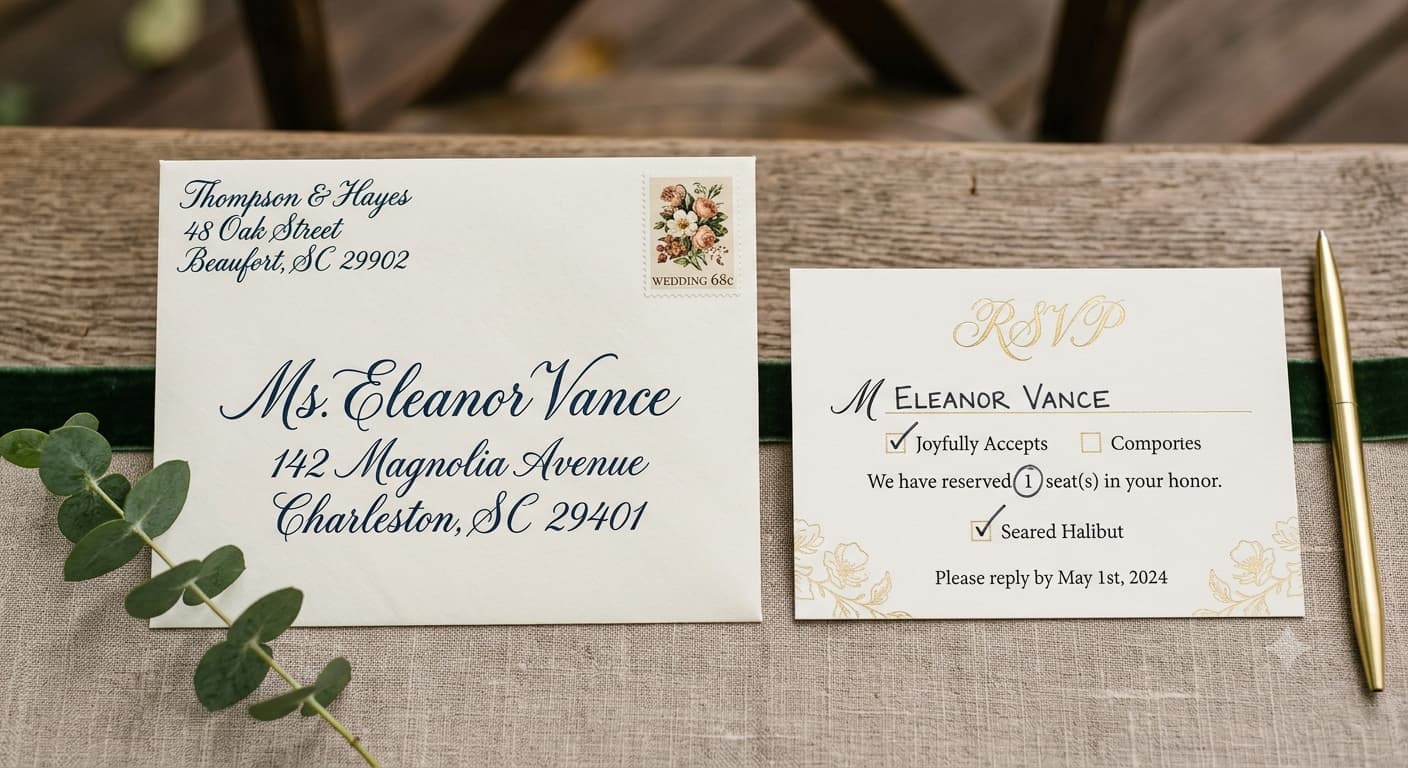
We have reserved 2 seats in your honor. Kindly reply by the first of May.
Handwrite the number. A "1" in your own pen is the single most effective piece of no-plus-one communication that exists, and it never reads as unfriendly.
How to decide who gets one
Have a rule and apply it identically. The unfairness people feel isn't about being denied a plus-one — it's about suspecting someone else got one on different terms.
Common rules that hold up:
| Rule | Who gets a plus-one |
|---|---|
| Ring on it | Married and engaged guests only |
| The one-year rule | Anyone in a relationship of 12+ months |
| Do we know them? | Partners you've met or spoken to |
| Wedding party | Every member of the wedding party, regardless |
| Nobody-knows-anybody | Any guest attending who won't know other guests |
| Live-in | Anyone cohabiting with a partner |
Most couples end up combining "ring on it" with "wedding party" and "nobody-knows-anybody." That last one is worth keeping — a guest attending alone in a room of 100 strangers has a genuinely bad night, and that's the case where a plus-one buys you a happier guest for the price of one plate.
At around $292 per guest by The Knot's 2026 Real Weddings Study, each plus-one is a real decision, not a formality. Fifteen of them is more than $4,000. That's the honest constraint most couples are working with, and it's a perfectly good reason.
Addressing the envelope so it's unmistakable
This is the whole game.
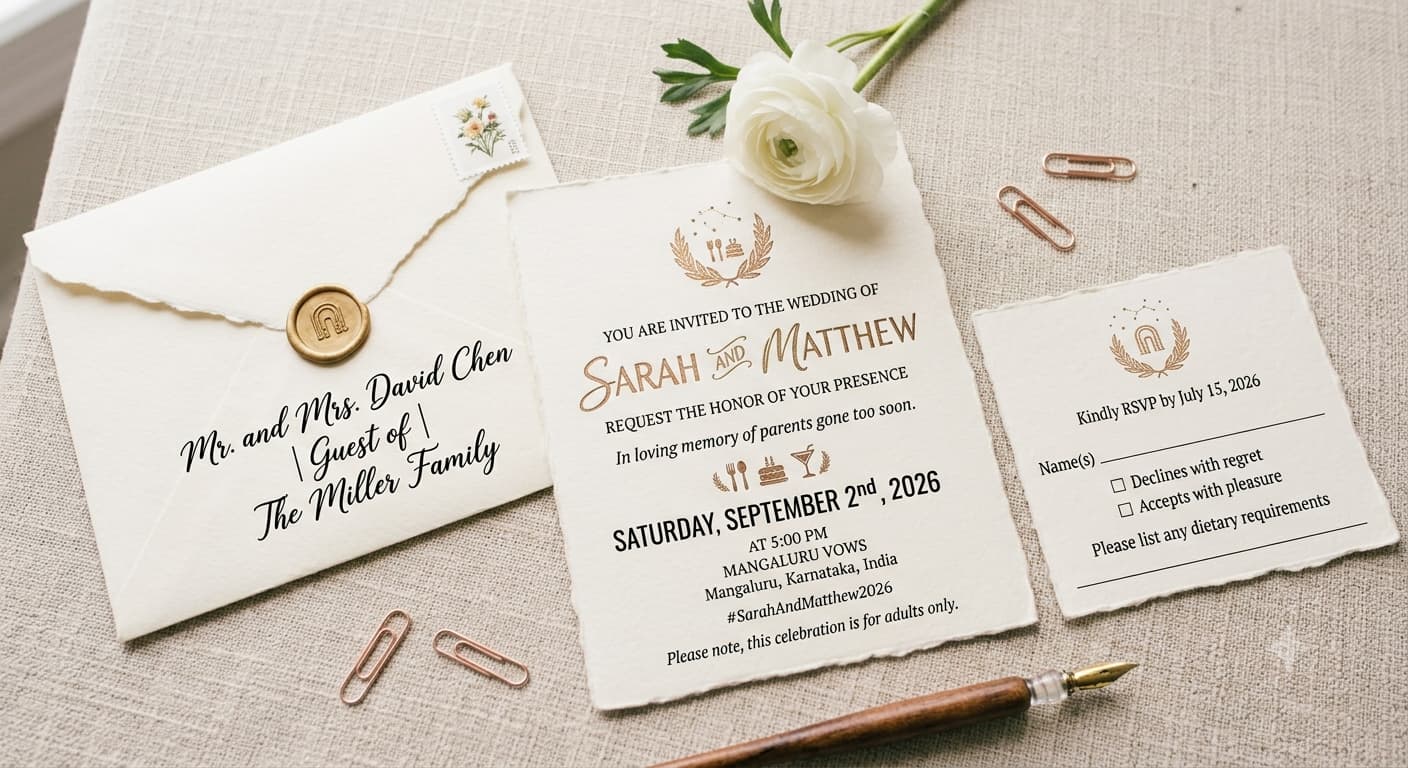
- One guest: Ms. Amelia Chen
- Guest with a named partner: Ms. Amelia Chen and Mr. Jonah Patel
- Guest with a plus-one you haven't met: Ms. Amelia Chen and Guest
- Never: Ms. Amelia Chen and Family, or The Chen Household
"And Guest" is the explicit grant. If it isn't there, there is no plus-one, and most guests read that correctly without ever thinking about it consciously.
Get the names right, too — misspelling a partner's name or using an ex's name is the kind of error that gets screenshotted into a group chat. Write the list out, check it against social media if you have to, then address them. If you're hand-addressing, a decent calligraphy pen set runs about $20 and makes single-name envelopes look intentional rather than sparse, which is a small psychological thing that genuinely helps.

As an Amazon Associate, we may earn from qualifying purchases.
Digital suites need the same discipline. Send to individuals, not to a shared household contact, and cap the response count per invite — Eventic's RSVP tracking fixes the seat number to each invitation, so a guest physically can't add a second name. Open-count digital RSVPs are how couples end up 14 people over budget without a single conversation happening.
The conversation, when it comes
It'll come by text, and it'll be phrased apologetically. Reply the same day. A gap of three days reads as hesitation, and hesitation reads as negotiable.
"Ah I wish we could! We're really tight on numbers at the venue so we've had to stick to named guests only across the board — I promise you'll know loads of people there, I'll make sure you're on a good table."
What's doing the work there: same-day reply, a constraint rather than a preference, "across the board," and an immediate reassurance about the actual underlying worry, which is usually "I don't want to be alone at a wedding where I don't know anyone."
If they push again, repeat the same sentence with different words and don't add new reasons. New reasons are new things to argue with.
Special cases
Wedding party members. Give them plus-ones. They're working all day and it's the standard courtesy.
Long-distance guests. Someone flying in and paying for a hotel is making a real investment. A plus-one here is generous, and generosity to the people who traveled is money well spent.
A guest who just started dating someone. This is where the one-year rule saves you. Apply it without exception and it stops being personal.
A guest who brings someone anyway. Rare, but it happens. Have your coordinator or a bridesmaid handle it — you will not be dealing with it, you'll be getting married. Keep two extra place settings in reserve and let it go. It's one seat; your day is worth more than that argument.
What to put on your website
The invitation stays clean; the website carries the explanation. One FAQ answer does it:
Can I bring a guest? We've kept our guest list to the people named on each invitation — our venue caps us at 120 and we couldn't stretch it further without cutting people we love. If your invitation says "and Guest," you're very welcome to bring someone. If you're worried about not knowing anyone, message us and we'll make sure you're seated with people you'll get on with.
Three things that make this land. It names a constraint rather than a preference. It tells guests exactly how to check their own status, which stops them guessing. And it addresses the actual fear underneath the question, which is almost never "I want to bring a date" and almost always "I don't want to spend a wedding standing alone by the bar."
That last offer is worth making genuinely. Seating a solo guest well costs you nothing and converts your least enthusiastic attendee into one of the people who stays until the end.
Common mistakes
- Printing "no plus ones" on the main invitation. Cold, prominent, negotiable.
- Addressing envelopes to households. Contradicts the policy in three words.
- Applying the rule inconsistently. Guests compare notes. They always compare notes.
- Leaving the RSVP seat count blank. Guests fill it in with hope.
- Waiting days to reply to an ask. Silence reads as "maybe."
- Announcing it only on your website. Half of them won't look until the week before.
One last tip: write your plus-one rule down on paper before you address a single envelope. When someone asks why, being able to say "our rule was X, we applied it to everyone" ends the conversation in one sentence.
People Also Asked
Explore common questions related to this blog.
No. It's normal, budget-driven, and expected at most weddings. Consistency is what makes it feel fair.
Don't, if you can avoid it. If you must: "We're only able to accommodate the guests named on your invitation," placed on the details card.
Yes, if you're granting one. Without it, there's no plus-one, and that's how experienced guests read it.
Reply the same day with a warm no and a reason based on capacity. Don't offer alternatives or you've reopened it.
Not strictly, but you should. It's the one exception nearly everyone considers standard.