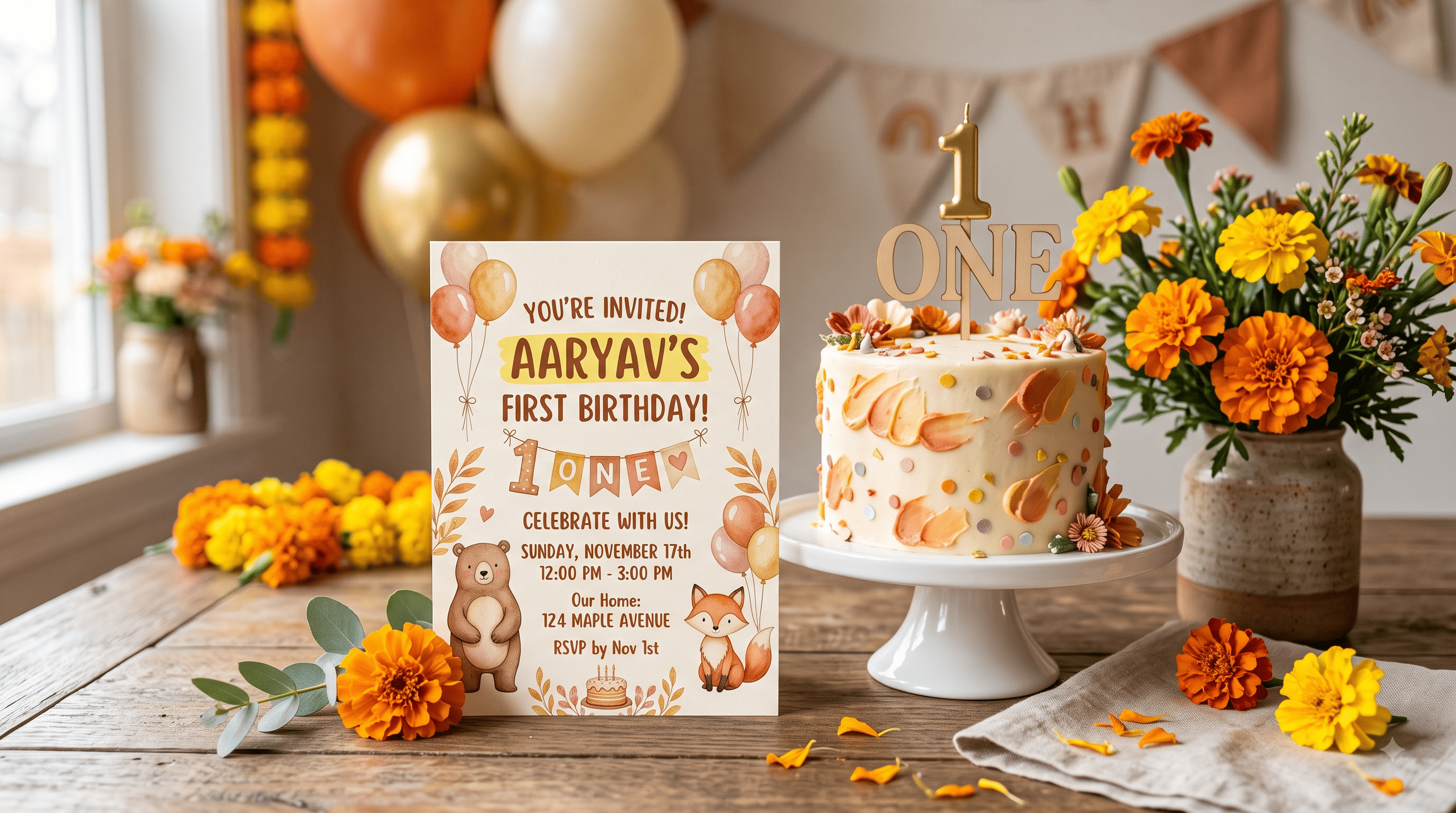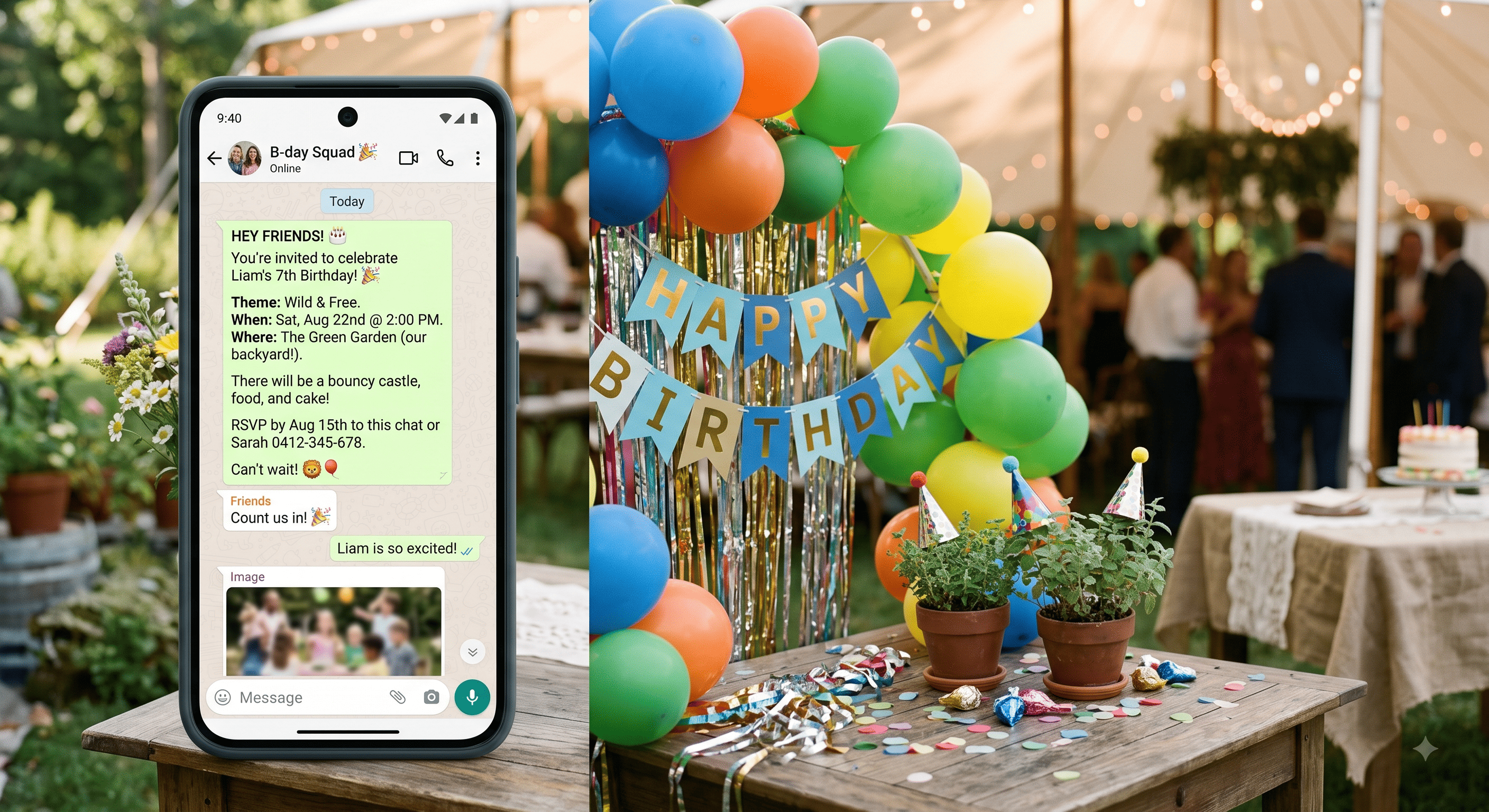
The greenest birthday invitation is the one you don't print. But "just send a text" isn't an idea, it's a shrug — so here are fifteen options that actually give you something to send, ranked roughly from lowest impact to most traditional:
- Digital invitations with an RSVP link
- Seed paper cards you plant afterwards
- Recycled kraft card
- Plantable herb tags
- Fabric scrap invites
- Handwritten postcards (no envelope)
- Wooden veneer cards
- Cotton rag paper
- Voice-note invitations
- Reusable chalkboard invites for repeat parties
- Newspaper or map-print cards
- Soy-ink printing on FSC stock
- Video invitations
- Group e-card with a shared photo wall
- A single printed card per household, not per guest
Below: what each one costs, how green it genuinely is, and which ones are worth the effort.
Indian birthday parties, particularly first birthdays and milestone celebrations, generate a surprising amount of throwaway paper: the invitation itself, the envelope, sometimes a separate map or menu insert, and a matching thank-you card afterwards. Multiply that by the guest count and it adds up. Here's how to trim it without making the party feel cheap.
Eco-friendly birthday invitation ideas for kids' parties
Kids' parties are where the paper waste really piles up — twenty-five invites for a class of twenty-five, most of which end up in a school bag and then a bin by Thursday.
Digital works better here than people expect, because you're inviting parents, not children. Parents are the ones with the phones and the calendars. Send the invite to them and let the kid deliver the excitement in person.
If you want something physical for the kid to hand out, seed paper is the one that earns its cost — the child gets to plant it afterwards, which turns the invitation into the first party activity. Plantable cards run roughly ₹25–60 each in small batches, so a class-sized set stays under ₹1,500.
Cheaper still: one printed invite per household rather than per child. Same information, a third of the paper. And if you're still working out numbers, how many kids to actually invite matters more for waste than the material you print on.
Are digital invitations actually better for the environment?
Yes — but not for the reason most people assume.
The saving isn't really the paper. It's everything attached to the paper: the printing, the ink, the envelopes, the courier or postal runs, and the fact that most cards get handled once and discarded. A digital invitation skips that whole chain. The energy your invite uses sitting on a server is real, but it's tiny next to physically moving a hundred cards around a city.
Where digital loses is honesty about volume. Sending the same invite four times to four groups isn't greener than one well-timed card, it's just invisible waste instead of visible waste.
The nuance is worth understanding properly, and we broke it down separately in the digital vs paper invitation footprint comparison — including where the "digital is always greener" claim gets oversold.
Cheapest eco-friendly invitation options
Ranked honestly, cheapest first:
Free. A digital invite with an RSVP link. Zero material cost, zero postage, and responses land in one place instead of across four chat threads. If you want something that looks designed rather than typed out, Eventic's birthday templates are free to send, though a decent Canva template and a shared link does the same job.
Nearly free. A voice note or short video invite. Costs nothing, and for a small party it's warmer than any card. Works especially well on WhatsApp, where a well-written birthday invitation message does more than a graphic anyway.
₹10–20 each. Recycled kraft card, printed at home, no envelope. Postcard format — write the address straight on the back.
₹25–60 each. Seed paper. The most expensive option here, and the only one guests keep. Worth it for a milestone birthday, hard to justify for a Tuesday party.
Skip anything marketed as "eco" with a plastic sleeve. That's not a saving, that's a sticker.
Why go paperless (and when paper still makes sense)
A printed birthday card in India typically costs anywhere from ₹15 to ₹60 per card depending on paper and finish, and that's before you factor in the courier or the petrol spent hand-delivering them. For a 40-guest party, you're looking at ₹600–₹2,400 just on invitations that most people glance at once and bin.
Digital invitations remove the paper, the printing, and the delivery emissions in one go. That said, paper isn't automatically the villain. A single beautifully made card that a child keeps in a memory box has a different footprint than 40 flimsy ones that get thrown out by evening. So the honest rule is: if the card is a keepsake, print one or two. If it's just conveying date, time, and venue, go digital.
Digital invitation ideas that look nothing like a boring text message
"Paperless" doesn't have to mean typing the details into a WhatsApp broadcast. A few ways to make a digital birthday invite feel special:
- Animated video invites. A 15–30 second clip with the child's photo, a bit of music, and the party details. These get forwarded and re-watched far more than a static image.
- Themed image cards matched to the party — jungle, princess, superhero, space. You send a single image or link, guests screenshot it, done.
- A shared invite link with RSVP built in. Instead of counting "yes" replies scattered across your chats, a link that tracks who's coming saves you re-reading 40 messages the night before. Most digital invitation makers, Eventic included, generate this link and handle the RSVP list for you.
- Calendar-friendly invites. Add an "Add to Calendar" button so guests don't lose the date. Fewer "sorry, what time again?" messages the morning of.
The one gotcha with digital: older relatives. A grandparent who doesn't use WhatsApp still needs a phone call or a printed card. Plan for a handful of exceptions rather than assuming everyone's online.
Not sure what to actually write? Here are 50+ WhatsApp birthday invitation messages you can copy for kids' parties, first birthdays and milestones.
Low-waste printed invitations, if you still want something physical
Some families want a physical card for a first birthday — it's sentimental, and that's fair. You can still make it greener:
| Choice | Greener option | Why it helps |
|---|---|---|
| Paper | Recycled or seed paper | Seed paper can be planted afterwards and grows herbs or flowers |
| Quantity | One keepsake card + digital for the rest | Cuts 90% of the paper for a big guest list |
| Ink | Soy or vegetable-based ink | Fewer harsh chemicals than standard printing |
| Envelope | Skip it, or use a folded self-mailer | The envelope is often the first thing thrown away |
| Embellishments | No plastic glitter, foil, or lamination | Laminated cards can't be recycled at all |
Seed-paper invitations are the standout here. They're cards embedded with real seeds — after the party, guests plant the card in soil and it grows. For a child's birthday, it doubles as a little activity. They cost more per card (roughly ₹40–₹90 in India), which is exactly why you'd print a small number and send the rest digitally.
A simple low-waste invitation plan
Here's a step-by-step you can copy for almost any birthday:
- Split your list. Mark who's comfortable with WhatsApp/digital versus who needs a physical card or a phone call.
- Send digital to the majority. One themed image or short video invite with an RSVP link.
- Print one or two keepsakes on recycled or seed paper — for the child's memory box or a grandparent.
- Track RSVPs in one place so you're not chasing replies across chats.
- Send a digital thank-you afterwards instead of paper thank-you cards, using a group photo from the party.
That's it. You've gone from 40 printed cards down to two, kept the sentiment, and saved a fair bit of money.
Small eco touches beyond the invitation
Since the invitation sets the tone, it's worth matching it with a couple of low-effort choices at the party itself:
- Ask for blessings or a contribution to a cause instead of gifts if the child already has plenty — you can word this gently right on the invite (see the FAQ below).
- Skip plastic-wrapped return gifts in favour of a single plantable sapling, a book, or a reusable item.
- Use the digital invite to share carpool or metro details so fewer cars turn up.
None of this needs to be preachy. A line like "Your presence is the only present we need" does the job without lecturing anyone.
A quick recap
For a genuinely low-waste birthday, send digital invites to most of your list, print one or two keepsakes on recycled or seed paper only if you want something physical, and use an RSVP link so you're not drowning in replies. You'll cut the paper, save money, and honestly make your own life easier on party week.
People Also Asked
Explore common questions related to this blog.