Disclosure: This post contains affiliate links. If you buy through them, we earn a small commission at no extra cost to you. Eventic also makes digital invitations, so we have a commercial interest in this topic — we've tried to be straight with you about where paper is the better choice.
Most advice on eco-friendly invitations is either vague ("choose sustainable options!") or quietly selling you something. Here's the practical version
What actually makes an invitation eco-friendly
Four things, roughly in order of impact:
Paper source. Virgin pulp from managed forests versus post-consumer recycled content. Recycled uses substantially less water and energy.
Printing method. Digital and letterpress with soy or vegetable inks are cleaner than offset with petroleum-based inks. Foil stamping, glitter, and plastic lamination make an invitation unrecyclable entirely.
Shipping. Often the largest single component, and the one nobody counts. A 100-guest wedding means printing, shipping to you, then 100 individual mailings.
What happens after. Guests keep one or two invitations and bin the rest. Paper is actually the most-recycled material in US municipal waste — the EPA puts paper and paperboard recycling at 68.2%, higher than any other material. But that only applies to plain paper. Anything with foil, glitter, or plastic coating goes to landfill.
That last point matters more than most people realise: an elaborate "luxury" invitation on virgin stock with foil detailing is far worse than a plain recycled one — and both are worse than the embellishment you skip.
The options, honestly compared
| Option | Cost per invite | Genuinely greener? |
|---|---|---|
| Digital | $0–$2 | Yes, by a wide margin at scale |
| Recycled paper, plain print | $2–$4 | Yes |
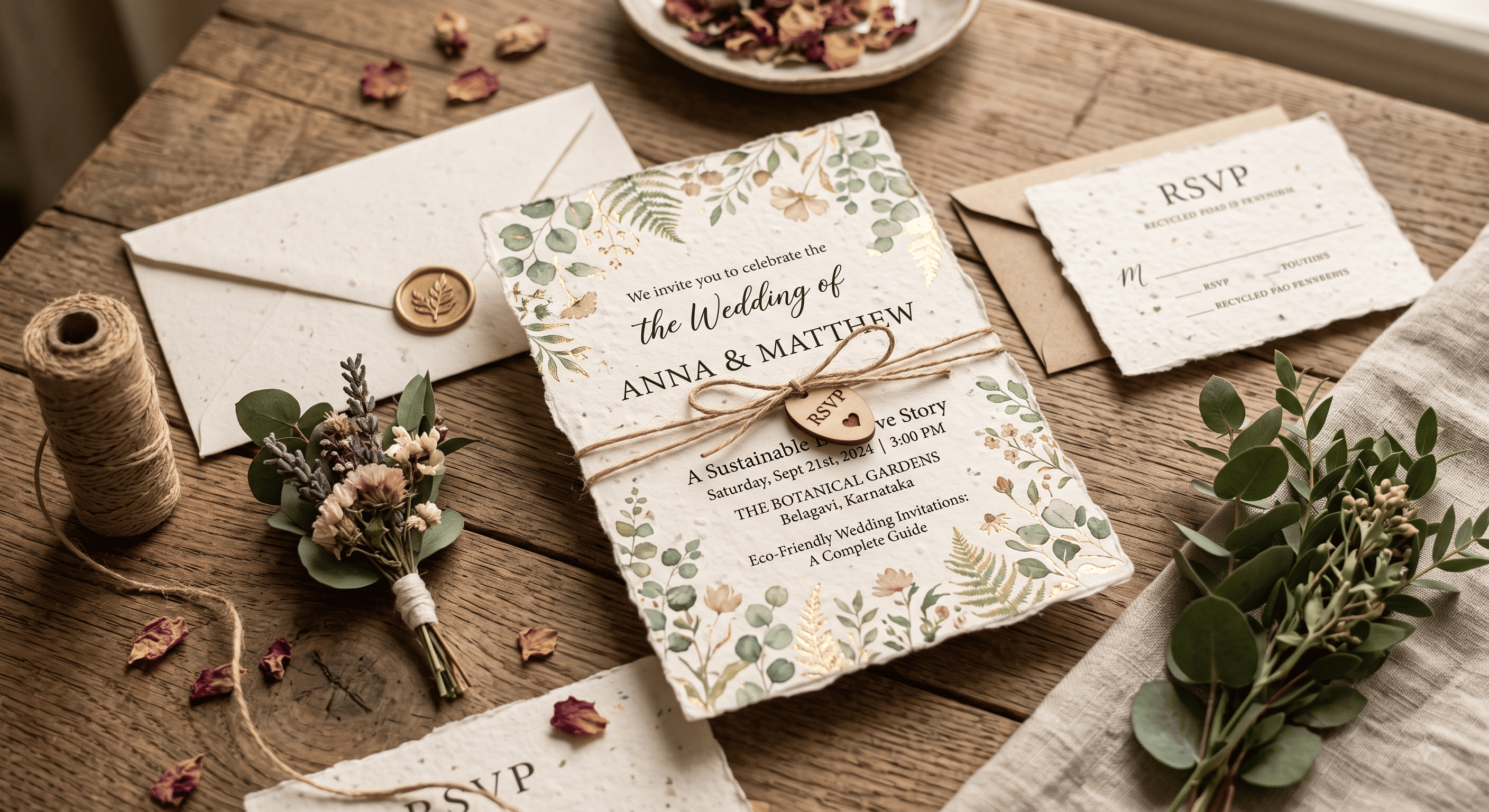
| Seed/plantable paper | $3–$7 | Somewhat — see below |
| Letterpress on cotton rag | $6–$12 | Marginal |
| Standard paper with foil/glitter | $4–$10 | No |
On seed paper
Seed paper is lovely and it's the most over-claimed option in this category. The honest picture: it's made from recycled pulp, so the paper itself is fine. But germination rates vary a lot, most guests never plant them, and the ones that do get planted often contain species unsuited to the local climate.
It's a good choice. It's not the environmental slam dunk it's marketed as. Buy it because it's charming and biodegradable, not because you think you're reforesting anything.
On letterpress and cotton rag
Cotton rag paper is made from textile waste rather than trees, which sounds great — but cotton processing is water-intensive, and letterpress printing involves significant setup waste. It's beautiful and it's fine. It isn't a green choice in any meaningful sense.
When paper is genuinely the right call
We make digital invitations, and we'll still tell you to print in these situations:
- Small guest lists. For 20 people, the environmental difference is trivial. Print something nice.
- Older guests. If a meaningful share of your list doesn't use email or smartphones comfortably, a digital-only invitation creates real exclusion. That's a worse outcome than the paper.
- Cultural or family expectations where a physical invitation carries genuine weight. This is a real consideration, not a failure of environmental commitment.
- You want a keepsake. Wanting one beautiful thing to frame is legitimate. Print one, send the rest digitally.
The hybrid is underrated: digital invitations for the full list, with a handful of printed keepsakes for parents, grandparents, and yourselves. You get the RSVP tracking, the guests who need paper get paper, and you've cut 90% of the printing.
What to look for when buying paper
FSC certification. The Forest Stewardship Council mark means the pulp is traceable to responsibly managed forests. It's the most credible certification in this space.
Post-consumer recycled content, stated as a percentage. "Made with recycled materials" is meaningless. "100% post-consumer recycled" is a claim. Anything under 30% is mostly marketing.
Soy or vegetable-based inks, stated explicitly.
No foil, glitter, lamination, or plastic-lined envelopes. These make the whole piece unrecyclable, which undoes everything else.
Ask where it ships from. A carbon-neutral printer 2,000 miles away may have a larger footprint than a conventional local one.
Supplies worth buying
If you're printing at home or assembling yourself — which cuts shipping considerably — these are the categories to shop. Vet the specific products yourself; we've linked to searches rather than picking for you.
Plantable seed paper sheets — Printable seed paper in letter size runs roughly $1–$2 per sheet. Check the seed species against your region before buying; wildflower mixes sold nationally often contain plants that won't establish where your guests live, and in some states include species considered invasive.
100% post-consumer recycled cardstock — The workhorse option. Look for stated PCW percentage on the packaging, not just "eco" branding. Around $0.15–$0.30 per sheet.
Recycled kraft envelopes — A7 is the standard invitation size. Avoid anything with a plastic window or poly lining.
Soy-based ink stamp pads — If you're hand-stamping details rather than printing them. Genuinely lower-impact and it looks better than most home printing.
One honest note: home printing on textured recycled stock often looks worse than people expect, and a failed print run wastes more than it saves. Test a single sheet before committing to 100.
Greenwashing red flags
- "Eco-friendly" with no specifics. No certification, no percentage, no method.
- "Tree-free" as the whole claim. Often means bamboo or cotton, which have their own water and processing costs.
- Carbon offset badges with no detail on what's being offset or through whom.
- "Biodegradable" on anything laminated. It isn't.
- Seed paper marketed as reforestation. It's wildflower seed. It's nice. It is not a forest.
People Also Asked
Explore common questions related to this blog.