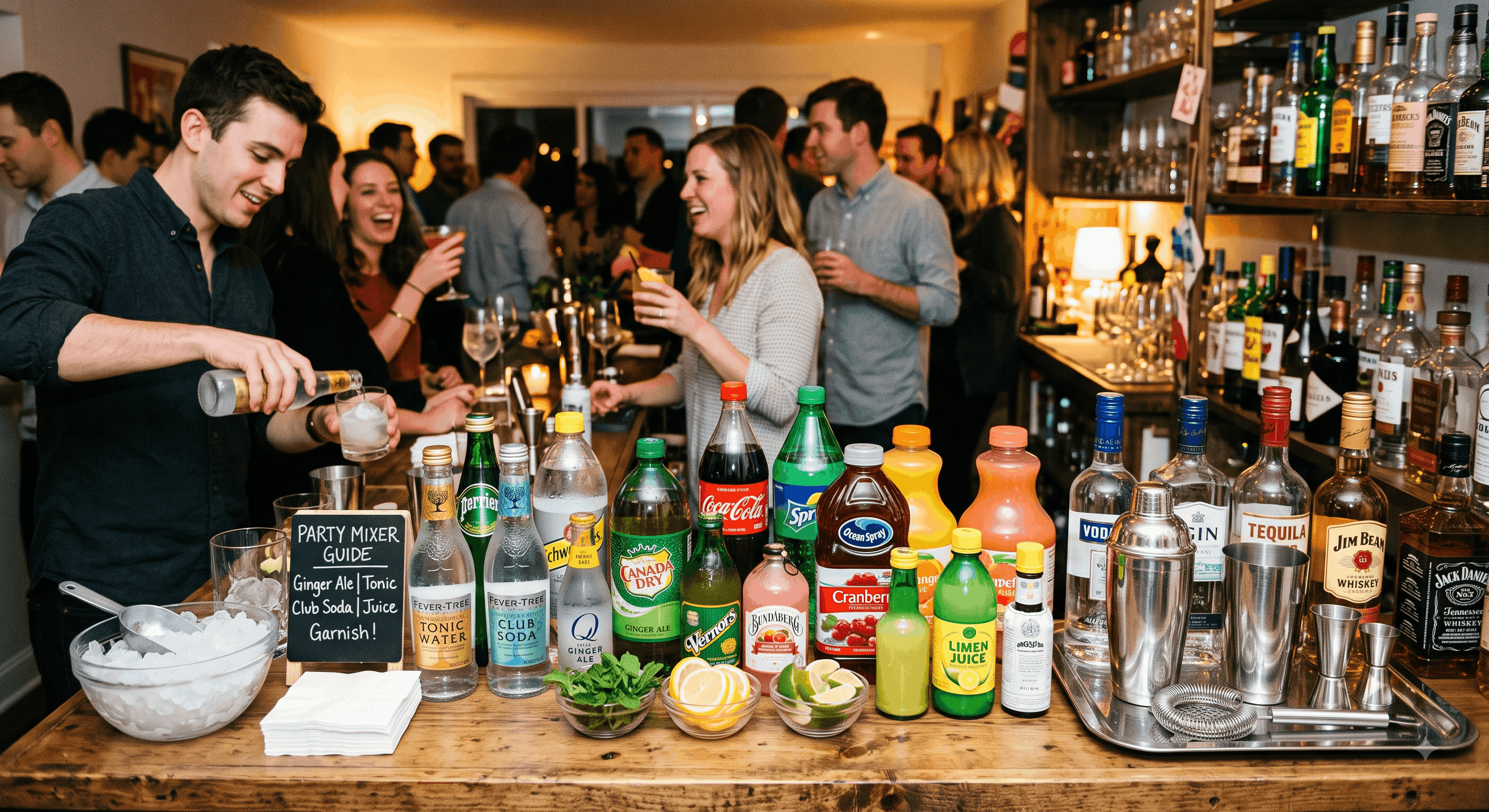
Plan 1 liter of mixer for every 3 spirit drinkers, per mixer type. For 100 guests with a full bar, that's roughly 12 to 15 two-liter bottles across cola, tonic, soda water, ginger ale, and juices.
Mixers are where bar planning quietly falls apart. People calculate the alcohol carefully, then discover at 9pm that the tonic ran out an hour ago and forty people are drinking gin over ice. Garnishes, glassware, and non-alcoholic options fail the same way — not because they're hard to work out, but because nobody works them out at all.
This is the complete non-alcohol side of the bar: quantities, a printable checklist, and the items that only get noticed by their absence. For the alcohol itself, the party drink calculator sizes your order and the complete alcohol guide covers the per-person math.
How much mixer per person
The base rule
1 liter per 3 spirit-drinking guests, per mixer type. A standard cocktail uses 4 to 6 oz of mixer, so a 2 L bottle yields roughly 12 drinks.
Count spirit drinkers, not total guests. At a full bar with a 50/30/20 split, only about 20% of your drinks are spirits — so of 100 guests, you're mixing for maybe 25 people, not 100.
Quantities by guest count
Four-hour full-bar event, assuming standard drink ratios:
| Guests | Cola | Diet cola | Tonic | Soda water | Ginger ale | Juices |
|---|---|---|---|---|---|---|
| 25 | 2 L | 2 L | 2 L | 2 L | 1 L | 2 L |
| 50 | 4 L | 3 L | 4 L | 4 L | 2 L | 3 L |
| 75 | 6 L | 4 L | 5 L | 6 L | 3 L | 5 L |
| 100 | 8 L | 6 L | 7 L | 8 L | 4 L | 6 L |
| 150 | 12 L | 8 L | 10 L | 12 L | 6 L | 9 L |
Adjust for your cocktail list
These are general-purpose numbers. If you're serving signature cocktails instead of an open request bar, work backwards from the recipes instead — it's far more accurate and usually cheaper.
Two signature cocktails for 100 guests, at roughly 60 servings of each:
- Margaritas: 5 L lime juice mix, 2 L triple sec
- Moscow mules: 12 L ginger beer, 1 L lime juice
Predictable, batchable, and no guessing. Signature cocktails are also the most effective cost lever available on the bar, as the open bar cost comparison works through in detail.
Which mixers actually get used
If you're cutting the list down, this is the order of usage at a typical American party:
- Soda water — highest volume, pairs with everything
- Cola — whiskey and rum
- Tonic — gin and vodka
- Ginger ale or ginger beer — mules, whiskey highballs
- Cranberry juice — vodka drinks
- Orange juice — screwdrivers, mimosas at daytime events
- Lemon-lime soda — lower demand than people assume
Six mixers covers essentially every standard drink order. Beyond that you're buying bottles that go home unopened.
Garnishes
| Item | Per 50 guests | Notes |
|---|---|---|
| Limes | 12 | The one you'll run out of |
| Lemons | 10 | Wedges and twists |
| Oranges | 4 | Old fashioneds, sangria |
| Olives | 1 jar | Martinis only |
| Maraschino cherries | 1 jar | |
| Mint | 2 bunches | Only if mojitos are on the list |
| Simple syrup | 500 ml | Easy to make, easy to forget |
| Bitters | 1 bottle | Lasts years, buy once |
Cut them the morning of
One lime yields 8 wedges. Twelve limes is around 96 wedges, which sounds excessive until you watch a bartender go through them. Cut everything the morning of the event and keep it covered — garnishes cut the night before dry out and look tired by the time anyone sees them.
Non-alcoholic drinks
The half of the bar most likely to be an afterthought, and the one your non-drinking guests will remember.
Quantities
2 servings per hour per non-drinking guest, plus drinkers taking soft drinks and water throughout. For 100 guests over four hours, plan 250 to 300 non-alcoholic servings.
| Item | 100 guests, 4 hours |
|---|---|
| Bottled water | 200 |
| Sparkling water | 48 cans |
| Soft drinks | 60 cans |
| Juice | 6 L |
| Iced tea or lemonade | 8 L |
| Non-alcoholic beer | 24 cans |
Water is not optional
One bottle per guest every two hours is the minimum, plus a visible water station somewhere people naturally pass. Guests who drink water between drinks consume less alcohol and leave the evening in better shape — it's the cheapest responsible-hosting measure available.
Offer something better than cans
A jug of something made — a citrus cooler, a mocktail, a good non-alcoholic sparkling — costs almost nothing and changes how included non-drinkers feel. It matters more at events with pregnant guests, designated drivers, or people who don't drink for religious reasons, which is to say most events.
Non-alcoholic beer and spirits have also improved enormously in the last few years and no longer read as a consolation prize.
Glassware and supplies
How many glasses
2.5 per guest. People set glasses down, lose track, and take a fresh one. If you're renting, this is the number to give the rental company — not your headcount.
| Guests | Glasses to have |
|---|---|
| 25 | 63 |
| 50 | 125 |
| 100 | 250 |
| 150 | 375 |
Which types
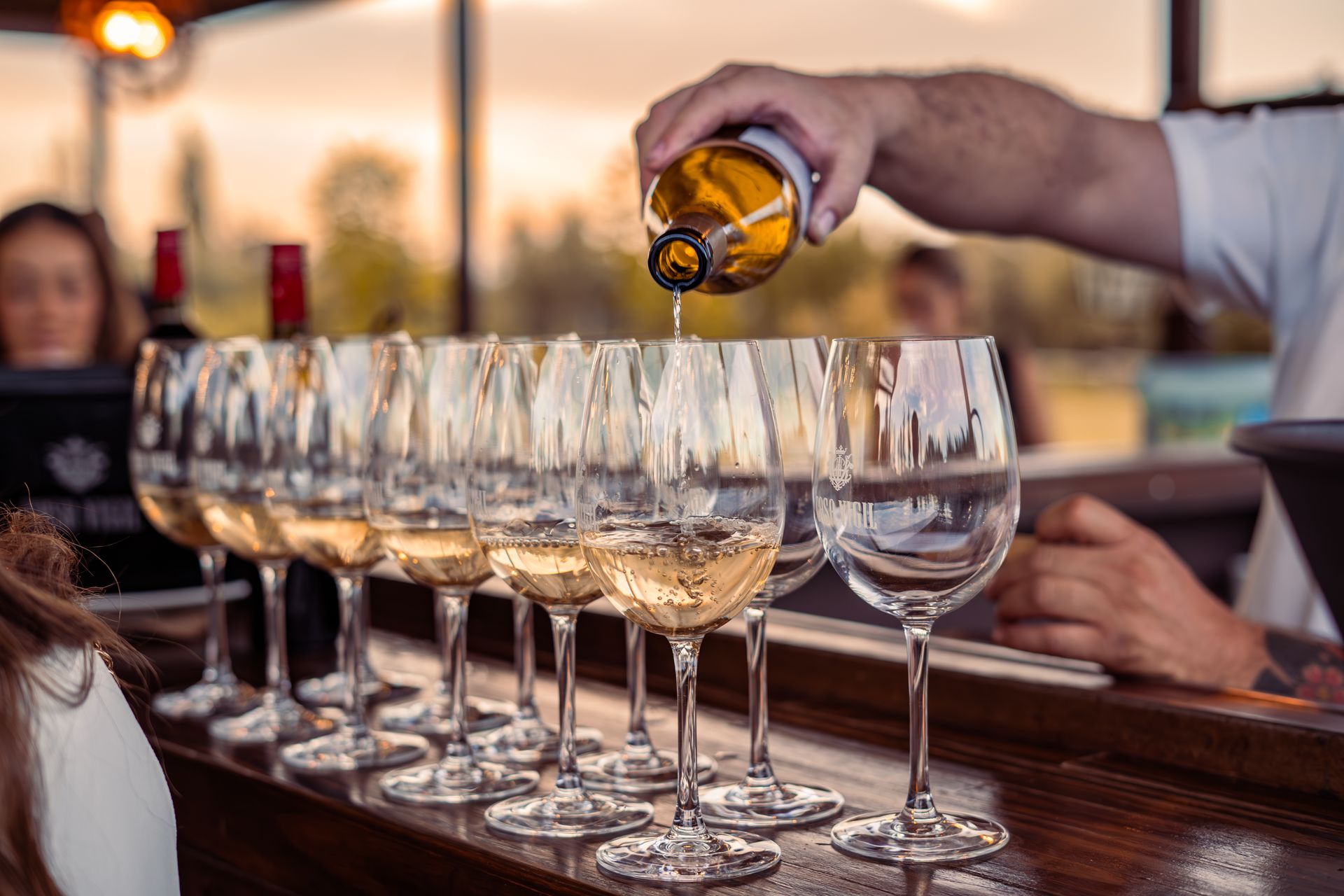
A universal wine glass, a highball, and a rocks glass covers everything. Add flutes only if there's a toast. Specialised glassware for every drink type is a rental line item with almost no return.
For quantities by wine type and what changes if guests pour their own, the bottles of wine per person breakdown goes deeper on the glass side.
Everything else
| Item | 100 guests |
|---|---|
| Cocktail napkins | 300 |
| Bottle openers | 4 |
| Corkscrews | 3 |
| Ice bucket and tongs | 2 sets |
| Jigger or measure | 2 |
| Cocktail shaker | 2 |
| Bar spoon | 2 |
| Strainer | 2 |
| Cutting board and knife | 1 set |
| Pitchers | 3 |
| Trash bags | 8 |
| Bar towels | 6 |
Bottle openers and corkscrews disappear at every party ever held. Buy four of each and accept that you'll finish with one.
Ice
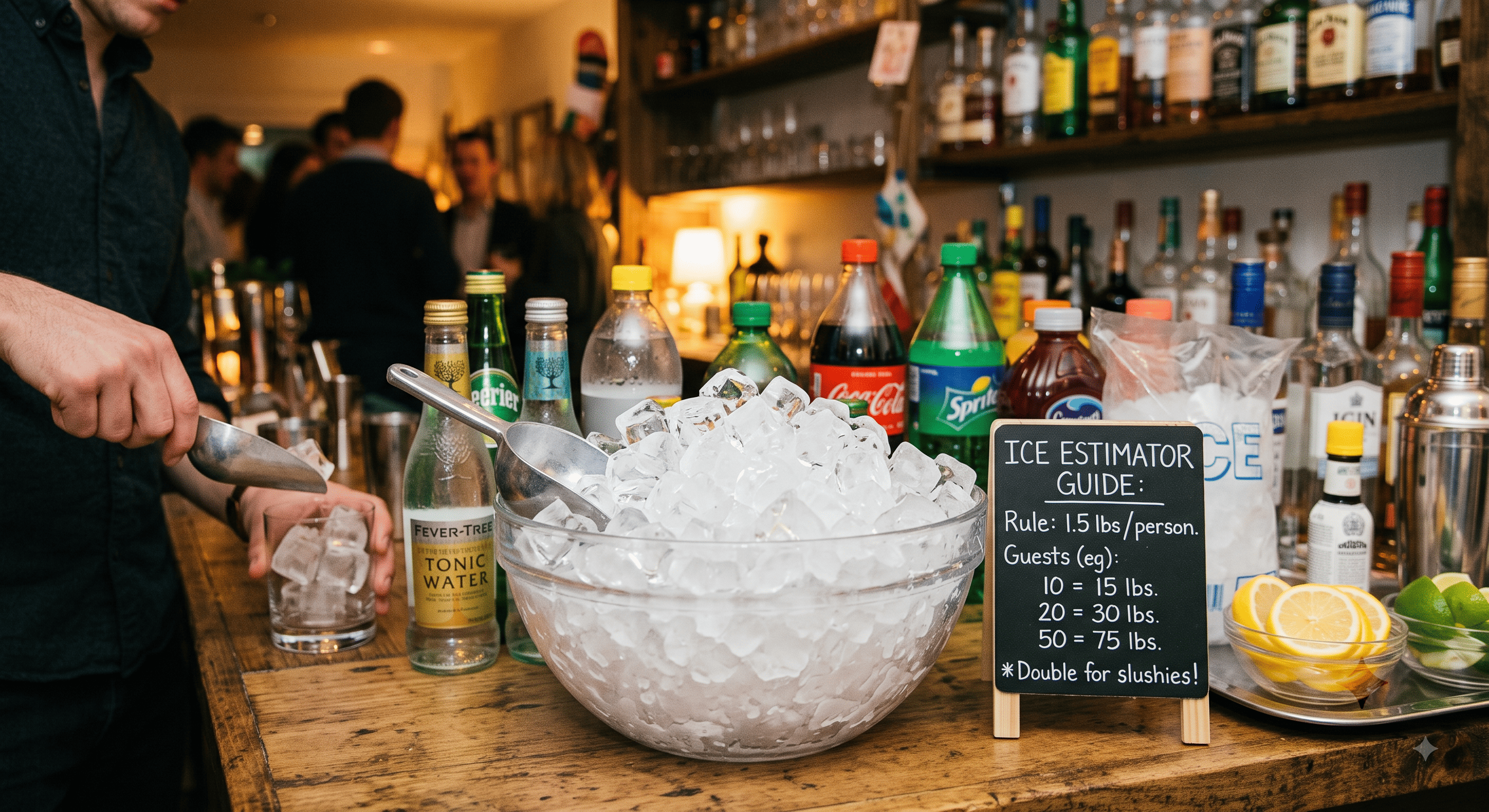
1.5 lbs per person, or 2 lbs for a summer outdoor event — and add half a pound per person if you're mixing cocktails, since a properly made drink uses ice three times over.
For 100 guests that's 150 to 200 lbs, which is 15 to 20 bags and considerably more than a home freezer holds. Buy it the morning of, and keep drinking ice separate from the ice chilling your bottles. Full logistics, including how to stop a tub turning into lukewarm water by hour two, are in the ice quantity guide.
The complete checklist: 100 guests, 4 hours
Mixers
- Cola 8 L, diet cola 6 L
- Tonic 7 L, soda water 8 L
- Ginger ale 4 L
- Cranberry juice 3 L, orange juice 3 L
Garnishes
- 25 limes, 20 lemons, 8 oranges
- Olives, cherries
- Simple syrup 500 ml, bitters
Non-alcoholic
- 200 bottled water
- 48 sparkling water, 60 soft drinks
- 8 L iced tea or lemonade
- 24 non-alcoholic beer
Ice
- 150–200 lbs
Glassware
- 250 glasses across 2–3 types
Supplies
- 300 napkins, 4 openers, 3 corkscrews
- 2 shakers, 2 jiggers, 2 strainers, 2 bar spoons
- Cutting board, knife, 3 pitchers, 6 towels, 8 trash bags
Estimated cost of everything above: $250–$400. Roughly 10–15% of what the alcohol costs, and the part that determines whether the bar actually functions. The 100-guest alcohol shopping list covers the other side of the order.
Setup and timing
Two days out
Buy mixers, juices, and non-perishables. Confirm glassware rental.
The day before
Chill everything you have fridge space for. Make simple syrup. Batch any cocktails that improve with resting.
Morning of
Buy ice. Cut all garnishes and cover them. Chill remaining bottles in ice tubs with water and a handful of salt — 15 to 20 minutes rather than three hours.
Two hours before
Set up the bar. Fill tubs. Put the water station somewhere visible. Set out openers, and put a spare set somewhere only you know about.
Bar layout
Work in three zones: glassware and ice at the front where guests reach, spirits and mixers in the middle where the bartender works, garnishes and tools within the bartender's arm span. A queue at a party bar is almost always a layout problem rather than a staffing one.
Above 50 guests, hire a bartender — one per 50. Beyond speed, a professional pours measured drinks, which is where self-serve bars quietly run through twice the spirits you planned for.
Food safety at the bar
Ice for drinks is regulated as a food by the FDA, and the handling standards are the same as anything else you serve. Use a scoop or tongs rather than hands or a glass, keep the drinking ice covered and separate from bottle-chilling ice, and don't let guests dip a used glass into the bin.
Cut garnishes are ready-to-eat food. Keep them covered, out of direct sun, and refresh rather than top up — the same safe handling basics that apply to your buffet apply to a tray of lime wedges sitting out for four hours.
People Also Asked
Explore common questions related to this blog.