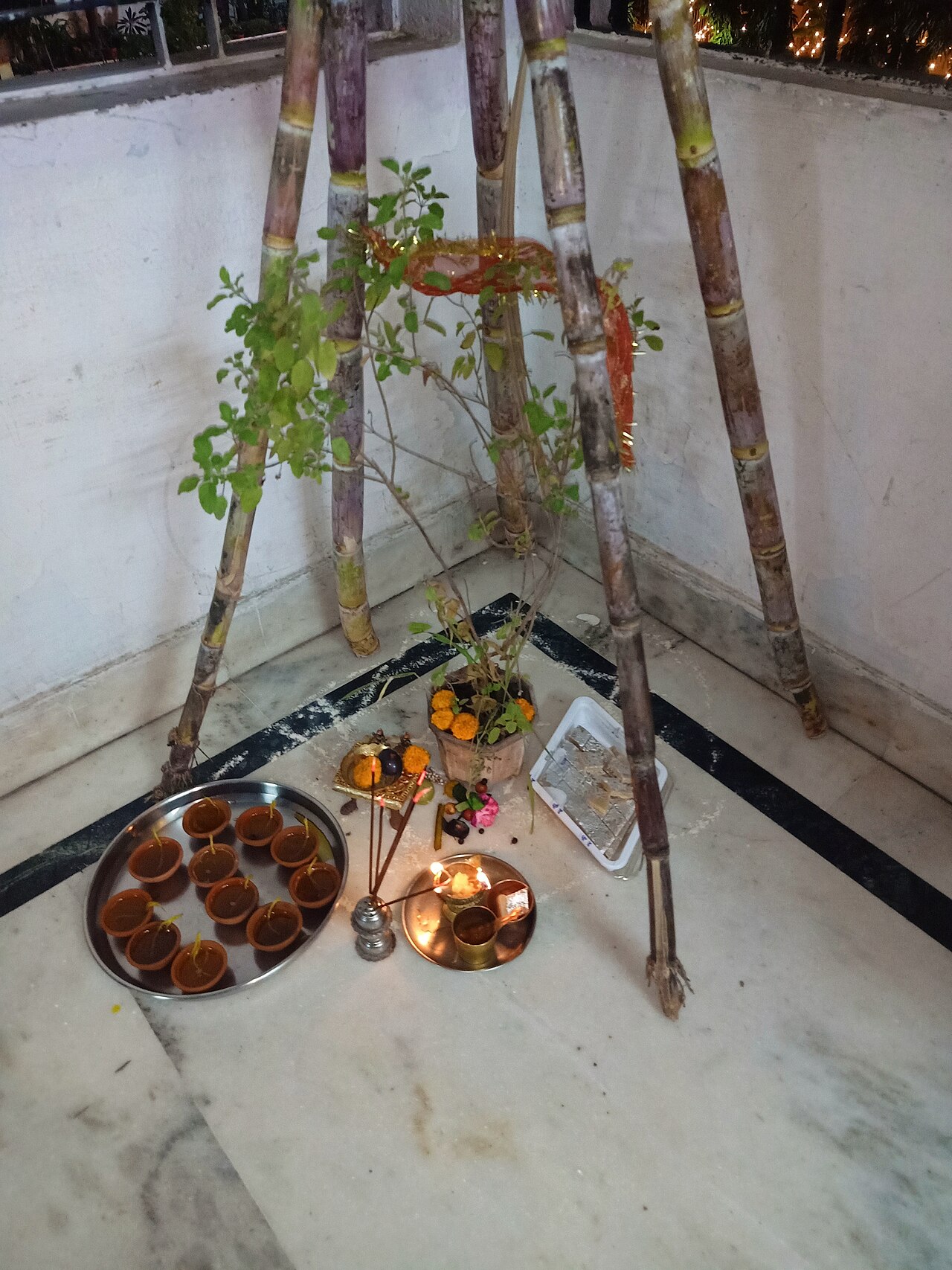
Quick answer: Dress the tulsi as a bride, build a sugarcane mandap over her, seat the Shaligram beside her as the groom, worship both, tie the gathbandhan, carry the Shaligram around the tulsi seven times, do the kanyadaan and aarti, and share the prasad. In 2026, do it on the evening of Saturday, 21 November.
It's 4 pm on Saturday, the sugarcane is leaning against the wall, and someone is asking if the Shaligram needs a janeu. Breathe. This is the whole ritual, in order, and it's part of our Dev Uthani Ekadashi 2026 guide.
Tulsi Vivah 2026 is on Saturday, 21 November, the day after Dev Uthani Ekadashi. Most families do it in the evening, after breaking the Ekadashi fast. Allow about an hour, plus however long the aunties take to agree on the saree.
Tulsi Vivah samagri list
| For the bride (Tulsi) | For the groom (Shaligram) | For the puja |
|---|---|---|
| Tulsi plant in a pot | Shaligram, or a Vishnu or Krishna idol | 4 sugarcane stalks for the mandap |
| Red chunri or small saree | Yellow cloth or dhoti | Chowki and a clean cloth |
| Bangles, bindi, sindoor | Janeu (sacred thread) | Kalash with water and mango leaves |
| Mehendi, kajal, mirror, comb | Chandan and tilak | Ghee diya, dhoop, camphor |
| Flower garland | Flower garland | Haldi, kumkum, roli, akshat |
| Small jewellery (optional) | Tulsi leaves | Singhara, shakarkand, amla, ber, seasonal fruit |
| Panchamrit, sweets, coconut, paan and supari |
How to prepare the tulsi and the mandap
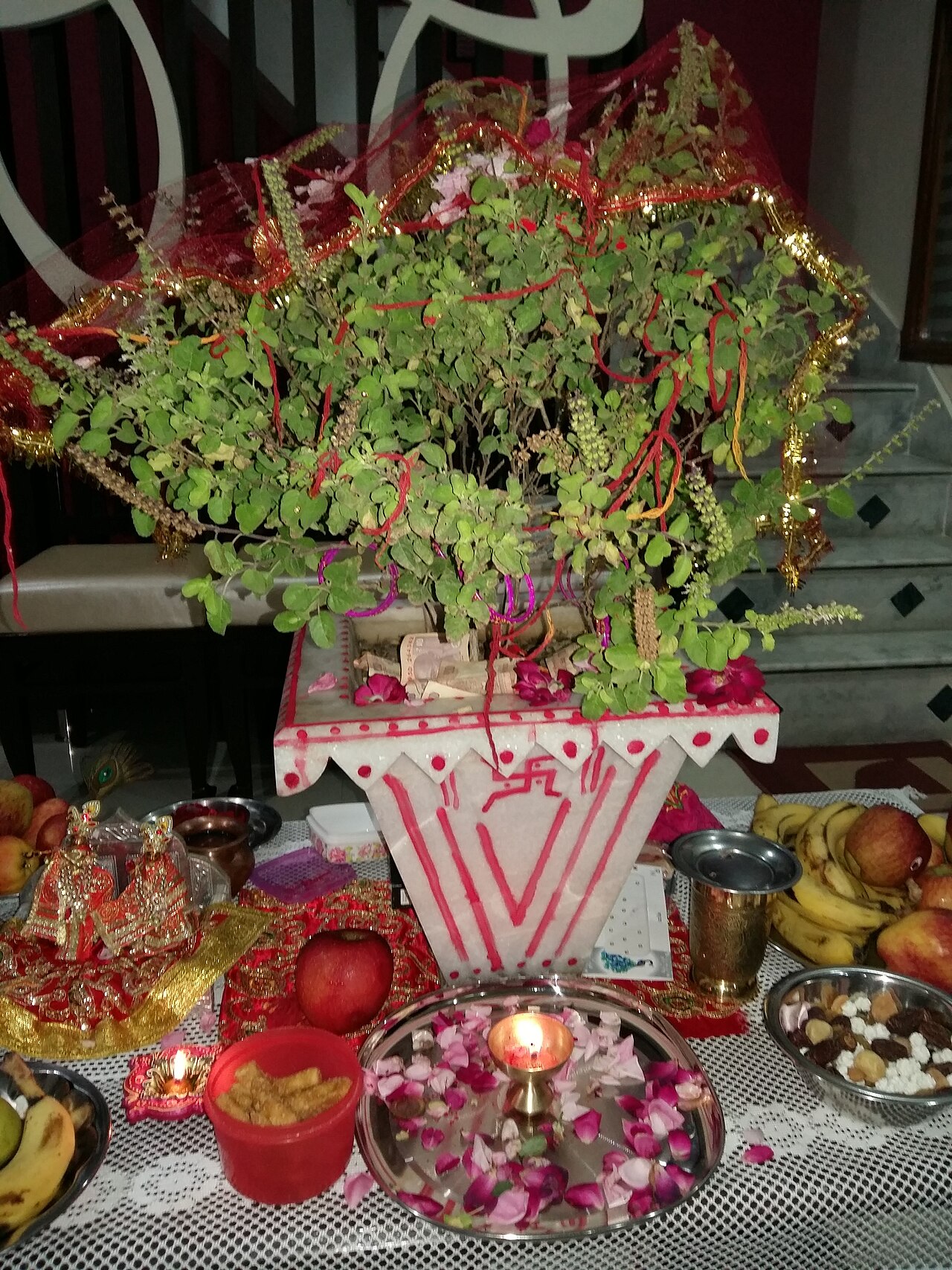
- Clean the area around the tulsi and wash the pot. Make a rangoli in front of it.
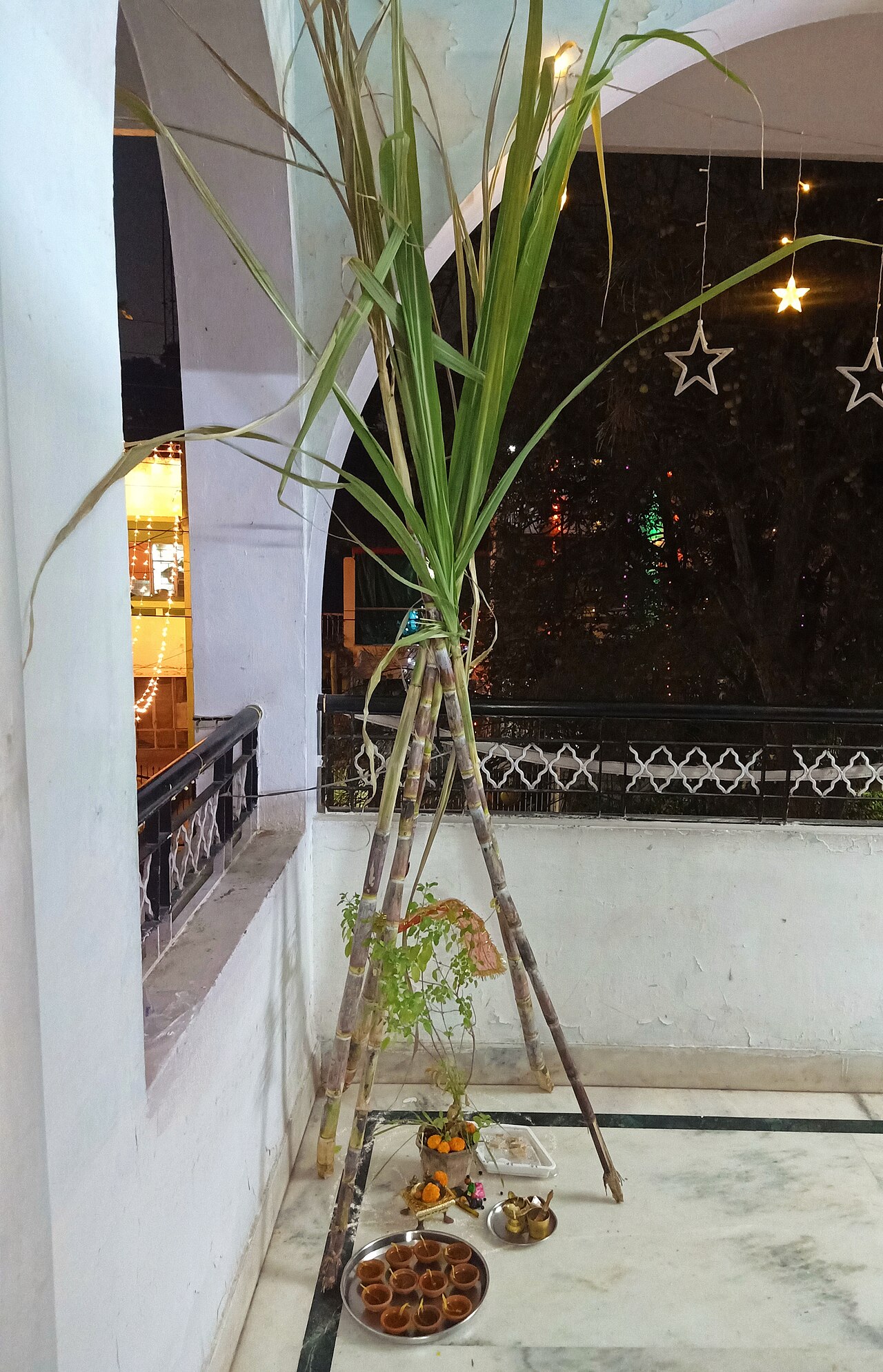
- Tie the four sugarcane stalks around the pot so they meet above the plant, forming the mandap. Decorate with marigold strings.
- Apply haldi and kumkum to the pot. Drape the red chunri over the plant and add bangles, bindi and a garland. She's the bride, so go all out.
- Place the chowki to the right of the tulsi with a yellow cloth, and seat the Shaligram or Vishnu idol on it.
- Set the kalash, diya, and the thali of offerings within easy reach.
Need ideas for the floor? We collected 15 Tulsi Vivah rangoli designs, from ten-minute flower circles to full tulsi pot designs.
Tulsi Vivah puja vidhi, step by step
Step by step
Ganesh puja and sankalp
Begin with Ganesh ji, then take a sankalp stating your name, gotra and intention to perform Tulsi Vivah.
Kalash and Vishnu puja
Worship the kalash, then bathe the Shaligram with panchamrit and clean water, apply chandan, offer the janeu, yellow cloth, tulsi leaves and flowers.
Tulsi puja
Offer water to the tulsi, then haldi, kumkum, akshat, flowers and the shringar items. Light the diya and dhoop.
Haldi and tilak
Apply haldi to both, the bride and the groom, as in any wedding. Family members can apply a little too.
Gathbandhan
Tie a knot between the tulsi's chunri and the Shaligram's cloth with a sacred thread or a strip of the chunri.
Pheras
Lift the Shaligram (usually the man of the house does this) and walk around the tulsi seven times, while everyone sings mangal geet or chants.
Kanyadaan
The family that "gives away" the tulsi offers her hand, symbolically, to the Lord. In many homes this is done by a couple who don't have a daughter.
Aarti and bhog
Do the aarti of Tulsi and Vishnu, offer the bhog of fruits, sweets and the seasonal produce, and distribute prasad.
Mantras for Tulsi Vivah
You don't need a pandit to do Tulsi Vivah at home, though many families invite one. These are the mantras most commonly used:
ॐ नमो भगवते वासुदेवाय
वृन्दा वृन्दावनी विश्वपूजिता विश्वपावनी।
पुष्पसारा नन्दिनी च तुलसी कृष्णजीवनी॥
The first is the twelve-syllable Vishnu mantra. The second lists the eight names of Tulsi: Vrinda, Vrindavani, Vishwapujita, Vishwapavani, Pushpasara, Nandini, Tulsi and Krishnajivani. Chant it during the tulsi puja and the pheras.
Common mistakes to avoid
- A wobbly mandap. Tie the sugarcane at two points, near the pot and at the top, so it doesn't topple during the pheras.
- Diyas too close to the chunri. Keep flames at least a hand's width from cloth and dry leaves. Fire plus a dupatta is not the plot twist you want.
- Plucking tulsi during the puja. Use leaves you collected the day before.
- Rushing the pheras. Walk slowly and let everyone sing. This is the part the kids will remember.
- Forgetting the neighbours. Tulsi Vivah prasad is meant to be shared. Make extra.
Doing it in a flat?
A balcony tulsi works perfectly. Use shorter sugarcane pieces for the mandap, a small chowki for the Shaligram, and LED diyas if your society is strict about open flames. The devotion is the same at any size.
After the wedding
Keep the diya lit through the evening. Distribute the prasad, especially the sugarcane and singhara, to neighbours. Many families leave the mandap up until Kartik Purnima and keep the chunri on the tulsi as long as it stays fresh.
And then, the real-life weddings begin. The first vivah muhurat of the season falls on the same day, 21 November. If someone in your family is getting married soon, our guide to sending wedding invitations on WhatsApp will save you a hundred phone calls.
Photos: Tulasi Vivah Pooja 2 and Tulasi Vivah Pooja by Suyash.dwivedi; Tulsi Vivah by Antrabhardwaj2; all CC BY-SA 4.0 via Wikimedia Commons.


Shubh vivah, Tulsi Mata. May every home that marries her this week hear its own shehnai soon.
People Also Asked
Explore common questions related to this blog.
Get trusted event guides in your Google feed.