Quick answer: The most popular Tulsi Vivah rangoli designs are a tulsi pot (vrindavan) rangoli, a sugarcane mandap outline, Vishnu's footprints (charan), a lotus, a swastik with diyas and a simple kalash. Use red, yellow, green and white, keep the design in front of the tulsi so it frames the wedding, and place diyas on the outline in the evening. Short on time? A round flower rangoli with marigold petals takes ten minutes and still looks wedding-ready.
Hot take: the tulsi is the bride, but the rangoli is the first thing every guest sees. Get it right and the whole angan looks like a wedding venue. Get it wrong and, well, at least the prasad is good.
Here are 15 rangoli ideas made for Tulsi Vivah on 21 November, sorted from simple to showstopper. For the date, puja timings and the story behind the festival, see our complete Dev Uthani Ekadashi and Tulsi Vivah 2026 guide.
Where should the Tulsi Vivah rangoli go?
Make it directly in front of the tulsi, where the pheras happen and where people stand for aarti. A second, smaller rangoli at the main door welcomes guests. Keep a clear path around the tulsi so whoever carries the Shaligram for the pheras doesn't walk through your work. Ask us how we know.
Simple Tulsi Vivah rangoli designs (10 to 20 minutes)
1. Round flower rangoli
Draw two circles with chalk, divide them into eight petals and fill alternate petals with red and yellow. Finish with a white outline. It's forgiving, quick and looks great in photos.
2. Marigold petal rangoli
No colours? No problem. Pull apart marigold flowers and lay the petals in rings: orange outside, yellow inside, a few rose petals in the centre. It smells as good as it looks.
3. Dot (kolam-style) rangoli
Place a grid of 7 by 7 dots and join them into a lotus or star. Dot rangolis are perfect for beginners because the dots do the measuring for you.
4. Swastik with four diyas
A red swastik in the centre, a yellow square border and a diya at each corner. Simple, auspicious and very traditional.
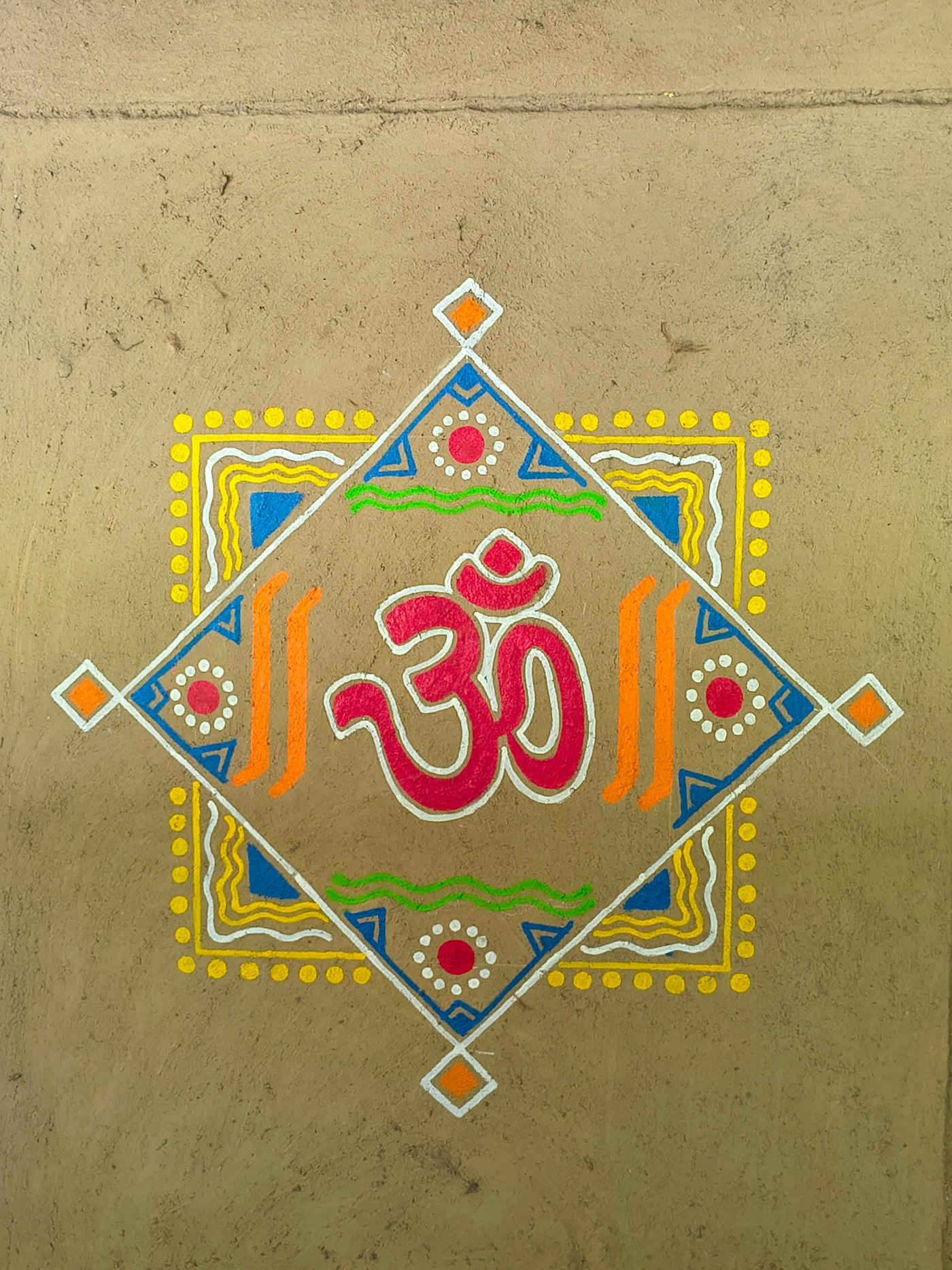
5. Om rangoli
An Om in saffron inside a ring of green leaves. Draw the Om first with a thin chalk line, then fill.
Tulsi Vivah themed rangoli designs
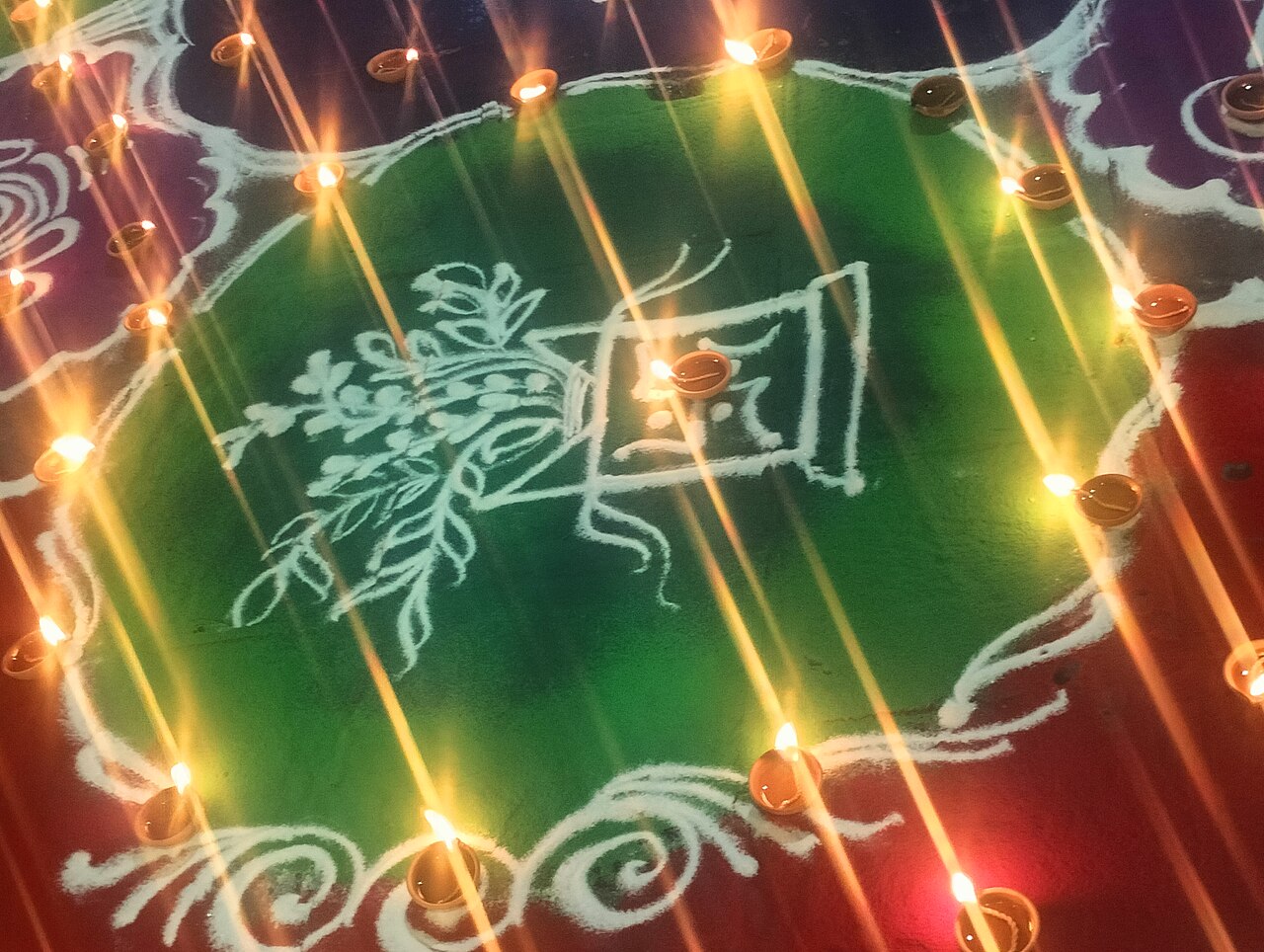
6. Tulsi pot (vrindavan) rangoli
The signature design. Draw the tulsi vrindavan as a tall pot with a decorated border, add green leaves rising from it and a small swastik on the front. Green and white on a dark base, like the one pictured above, looks stunning once the diyas are lit.
7. Sugarcane mandap rangoli
Draw four sugarcane stalks meeting in a point, with the tulsi pot underneath. Use green for the stalks with darker green nodes, and a red chunri drape at the top. It mirrors the real mandap behind it.
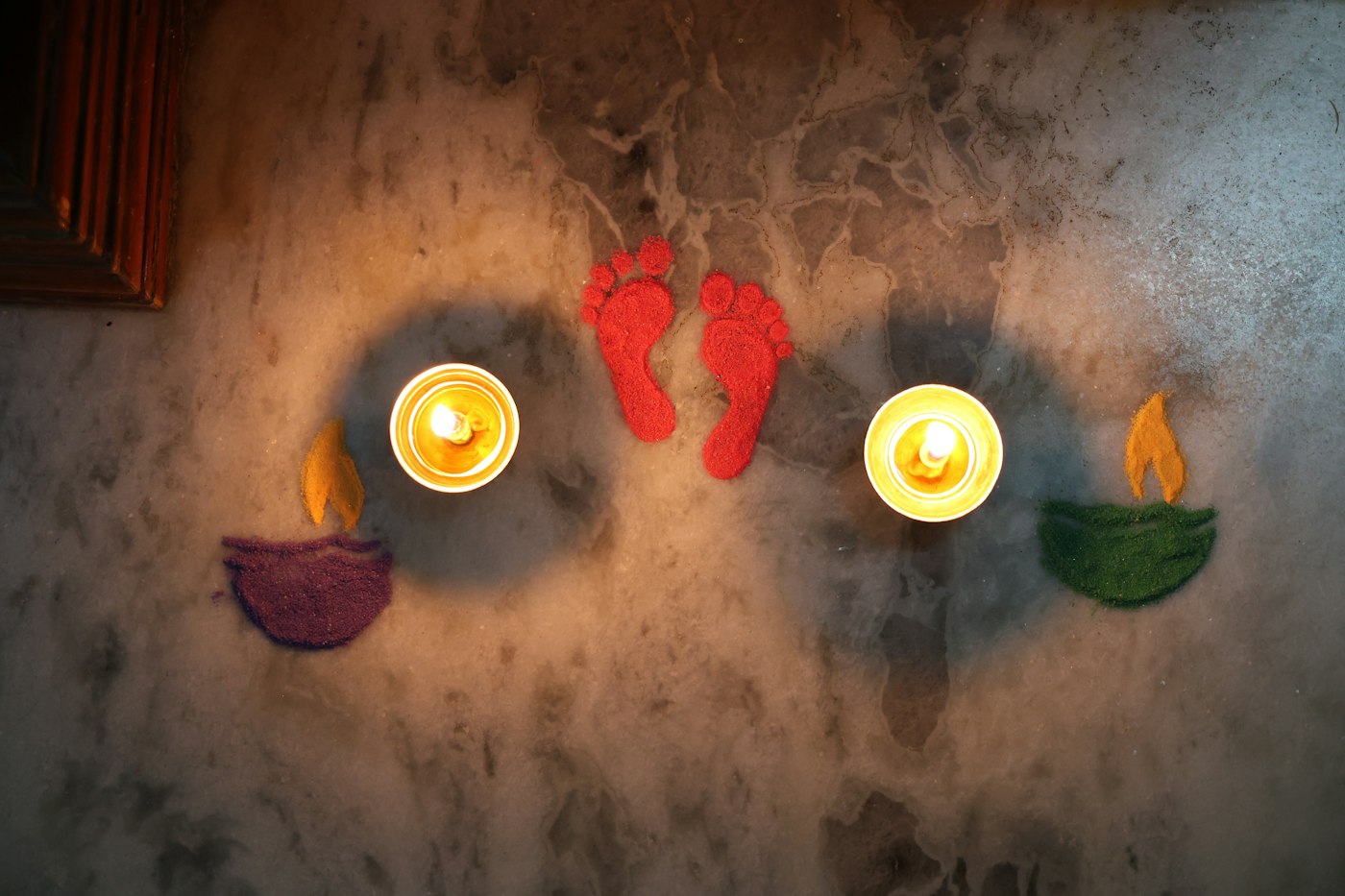
8. Vishnu charan (footprints) rangoli
Two small footprints in red or white, walking towards the tulsi, with tiny flowers around them. It's a lovely nod to the Lord waking up and coming to his wedding.
9. Shaligram and tulsi pair
A small black oval for the Shaligram on one side, a tulsi pot on the other, joined by a red gathbandhan ribbon. Cute, meaningful and great for the main door.
10. Kalash rangoli
A kalash with mango leaves and a coconut, in yellow and red. It's auspicious for any puja, so you can reuse the idea for Diwali next year.
11. Wedding couple outline
A simple bride and groom facing each other in profile, with the bride's chunri in red. It turns the rangoli into a wedding card on the floor.
Big rangoli designs for a family celebration
12. Lotus mandala
Three rings of lotus petals in pink, yellow and green around a central diya. Lotus is Lakshmi's flower and Vishnu's too, which is about as on-theme as it gets.
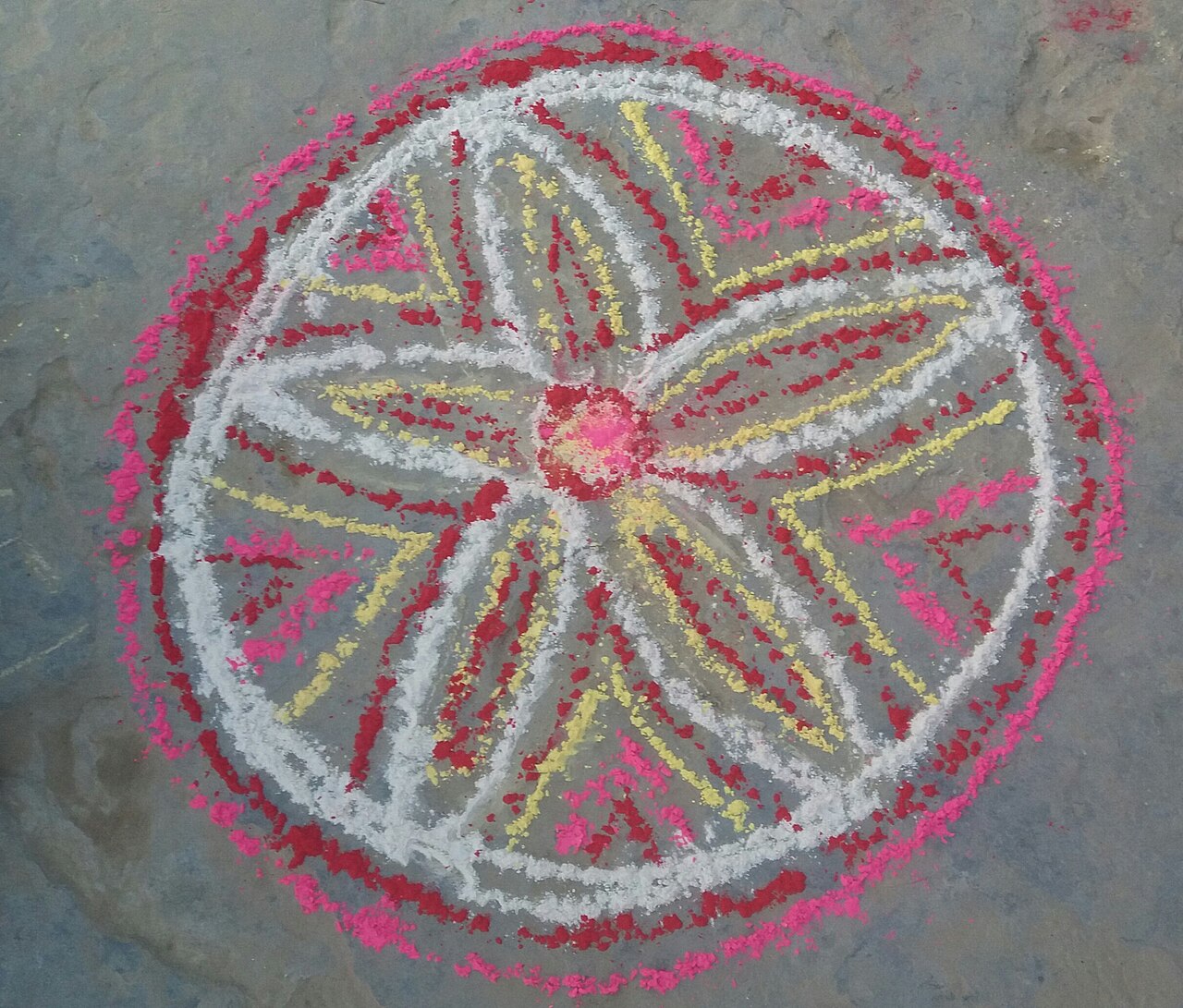
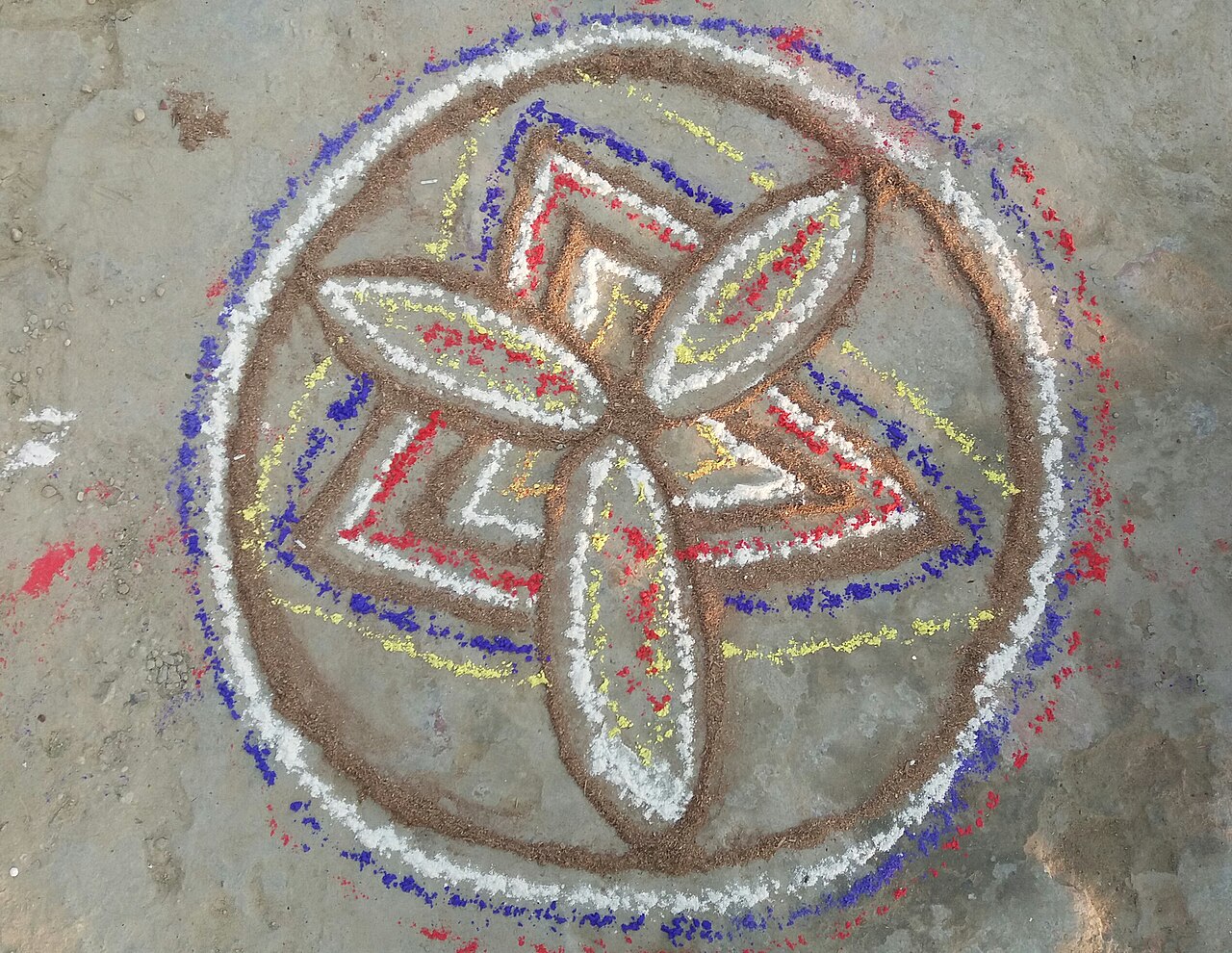
13. Star petal rangoli
A five-pointed star of petals, each filled with a different colour, like this traditional design. It covers a big area without needing fine detail.
14. Peacock rangoli
A peacock with its tail curving around the tulsi. Blue and green feathers with gold eyes. It takes an hour, but it's the one people photograph.
15. Diya pathway
Not a single rangoli but a path: small flower rangolis from the gate to the tulsi, each with a diya in the centre. At night it looks like a baraat route, which is exactly the point.
Colours and tips for a neat rangoli
- Colours: red and yellow for auspiciousness, green for the tulsi, white for outlines. Keep it to four or five colours.
- Outline first: sketch with chalk, then fill. Mistakes in chalk are free.
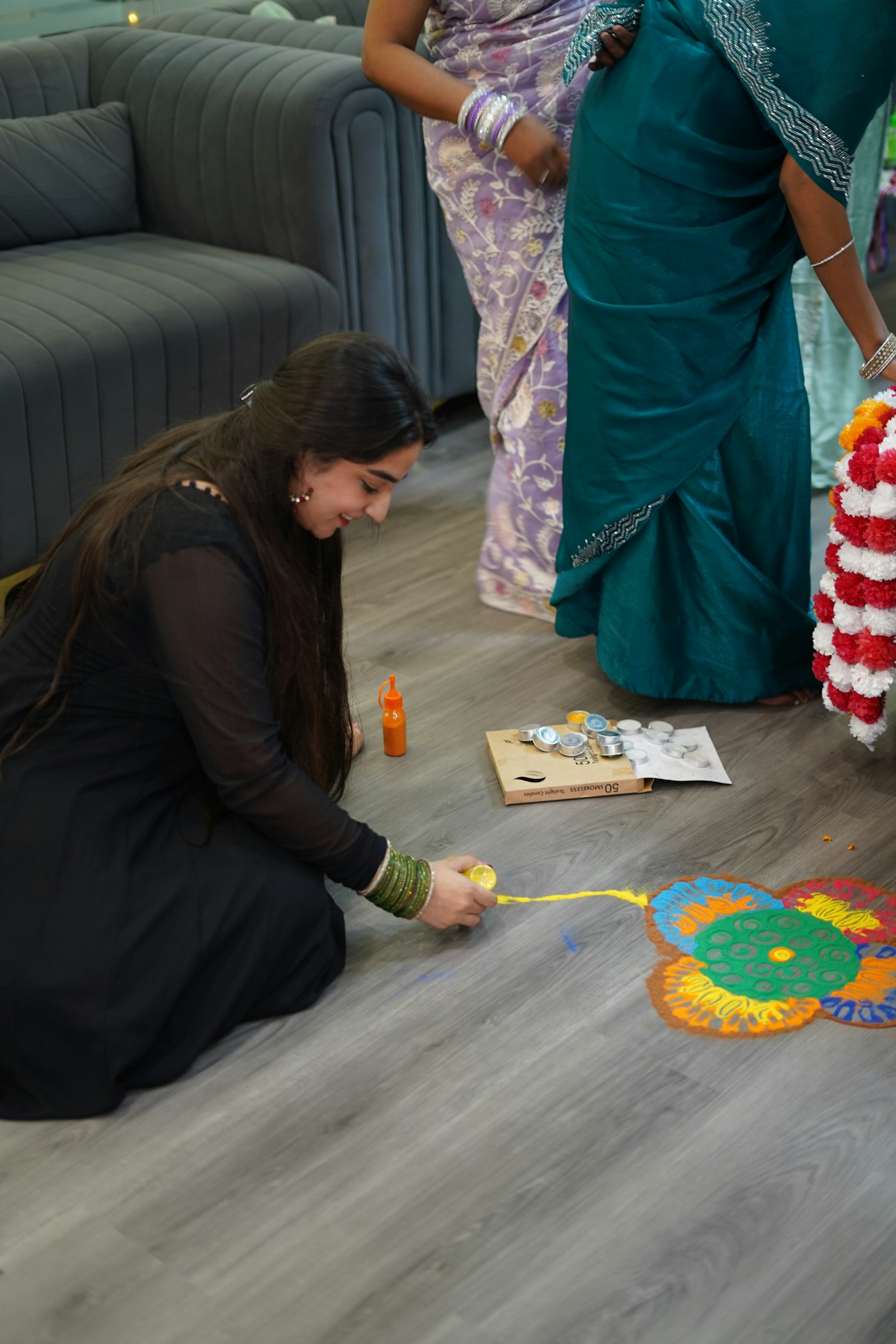
- Pinch, don't pour: hold colour between thumb and fingers and let it fall in a thin line.
- Make it after the floor dries: on a damp floor the colours clump.
- Add diyas last: place them just before the evening puja so the colours don't scorch.
- Kids' corner: give the children a small square of their own. Peace is priceless.
Living in an apartment?
Make a smaller rangoli on a wooden board or a sheet of chart paper in front of the balcony tulsi, so you can move it after the puja. Flower and petal rangolis also work well indoors because there's no colour powder to sweep out of the grout.
Reuse the ideas for the wedding season
The lotus, kalash and diya pathway designs work beautifully for haldi and mehendi too, and you'll need them soon, because the first wedding muhurat falls on the very same day. For more wedding decor that fits the Ram-Sita and Vishnu theme, see our Sita Ram wedding decor ideas.
Once the angan is ready, let the family know. Our Tulsi Vivah invitation messages in Hindi and English are ready to copy, and the Tulsi Vivah puja vidhi has the full samagri list for the evening.
Photos: Tulsi Vivah 2 by आर्या जोशी; Traditional Rangoli and Traditional Rangoli in Janakpur by Tulsi Bhagat; all CC BY-SA 4.0 via Wikimedia Commons. Other photos via Unsplash.


May your colours stay put, your diyas stay lit and nobody's dupatta drag through the lotus.
People Also Asked
Explore common questions related to this blog.
Get trusted event guides in your Google feed.