Engagement Season 2026: Lab-Grown Diamonds Hit 61% of Rings as Natural Diamonds Push Back for the Holidays
Pin it
Quick answer: Engagement season, roughly Thanksgiving to Valentine's Day, is starting with the diamond industry split in two. The Knot's 2026 Real Weddings Study found 61% of engagement rings now have a lab-grown center stone, and average spend fell to $4,600 in 2025, from $6,000 in 2021. Meanwhile, De Beers and the Natural Diamond Council are running holiday campaigns for natural "Desert Diamonds." Yellow gold (39%) and oval stones (25%) are the trends to watch, and Christmas Day remains the most popular day to propose.
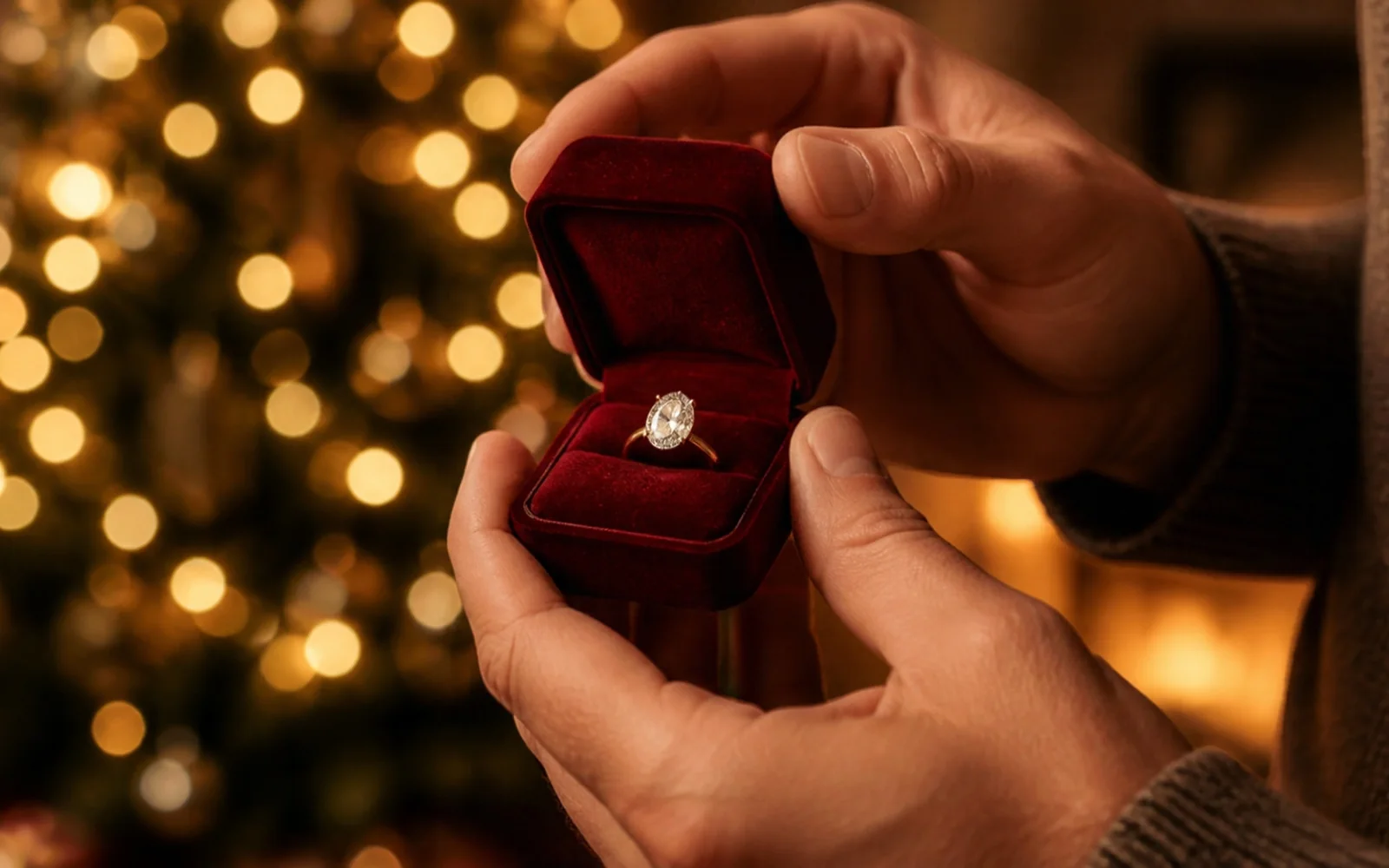
If you're planning to propose between now and Valentine's Day, you're in good company. This is engagement season, the stretch when more couples get engaged than at any other time of year, and the ring you buy this year looks very different from the one your parents shopped for.
Two things are happening at once. Lab-grown diamonds have quietly become the default, and the natural diamond industry has launched its holiday marketing to win shoppers back. Here's what the latest numbers say, and what they mean for your budget.
What's happening this engagement season
On October 27, National Jeweler reported that De Beers Group is extending its "Desert Diamonds" marketing with a holiday campaign called "Icons." It features four classic styles (stud earrings, the eternity band, the tennis bracelet and the halo solitaire pendant) set with natural diamonds in warm whites, sunlit yellows and smoky whiskey tones. The campaign launched in September and runs through the holidays, with 65 designers creating pieces in the same palette.
The Natural Diamond Council's "A Diamond Is Forever" program is pushing the same message. Its holiday campaign announcement pitches natural diamonds to Gen Z and millennial shoppers as symbols of individuality, and the campaign kicked off at the U.S. Open with Venus Williams and Naomi Osaka in Desert diamond jewelry.
De Beers's Lynn Serfaty summed up the pitch: for younger shoppers, "true luxury lies in self-expression." The subtext is hard to miss. Natural diamonds are competing on personality and story, because they've lost the price argument.
The numbers: lab-grown is now the majority
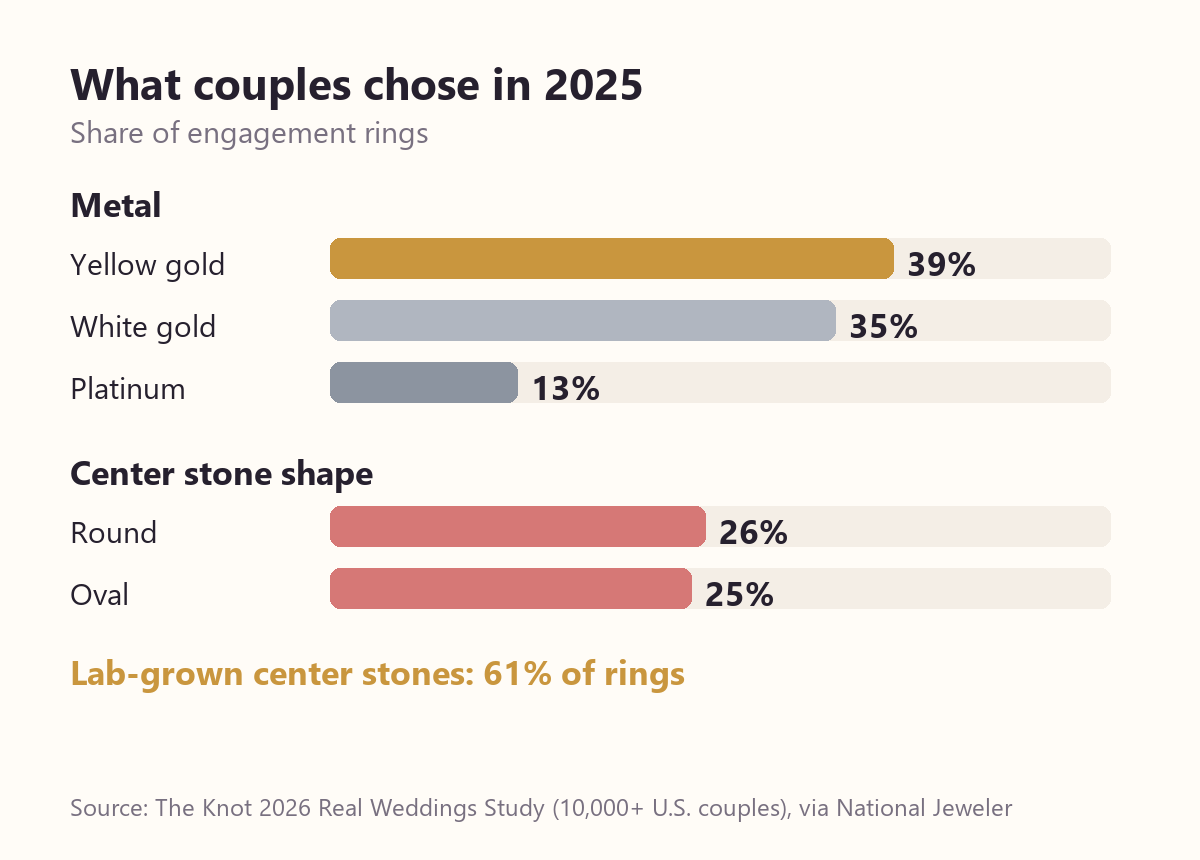
The Knot's 2026 Real Weddings Study, a survey of more than 10,000 U.S. couples, found that 61% of engagement rings now have a lab-grown center stone. Industry analyst Edahn Golan of Tenoris told National Jeweler that his own sales data puts the figure at more than 50%. Either way, lab-grown is no longer the alternative. It's the norm.
The study also shows how couples are shopping:
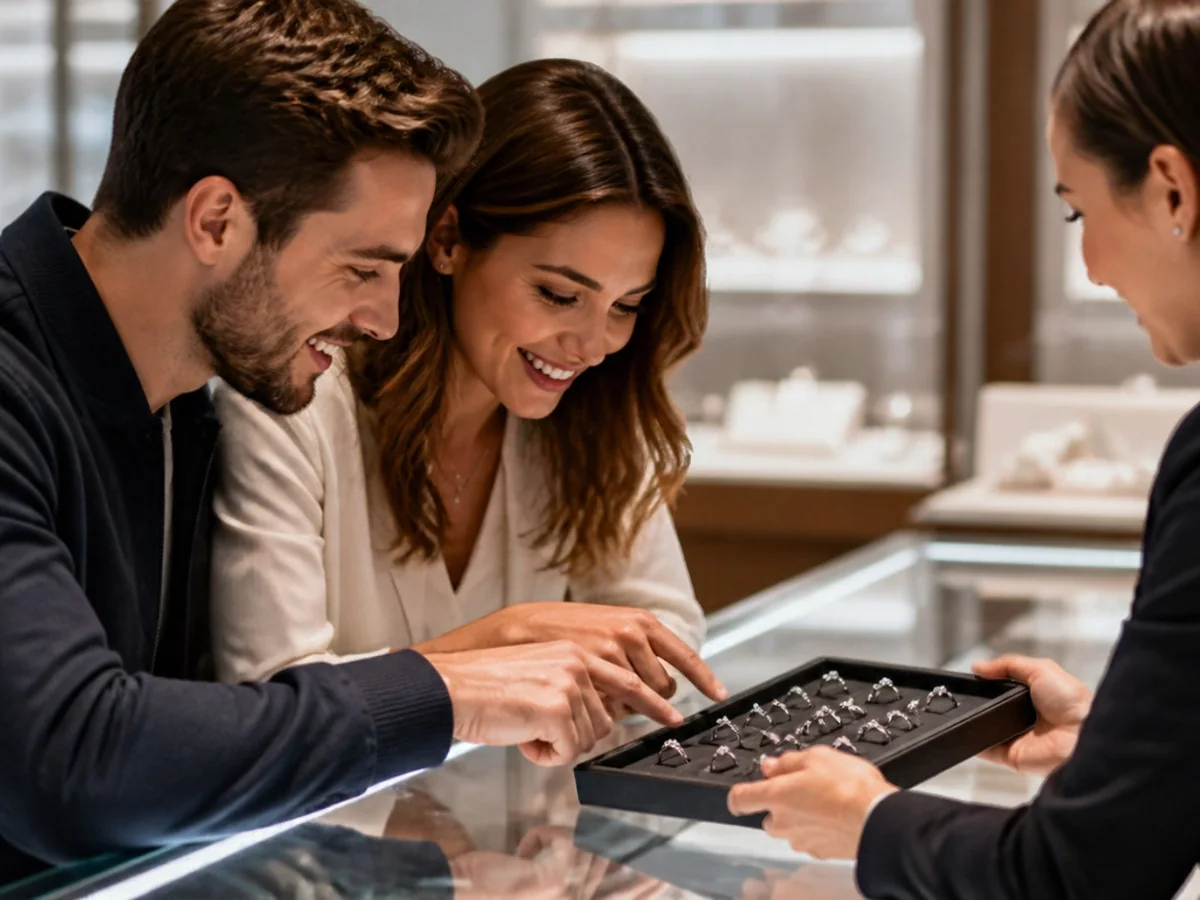
- 79% said the person receiving the ring took part in choosing it.
- 25% shopped for the ring together.
- 70% lived together before getting engaged, and half already owned a pet together.
In other words, the surprise ring chosen in secret is becoming the exception. Most proposals now come after a conversation, or a shopping trip, about the ring.
How much does an engagement ring cost in 2026?
Less than it used to. According to The Knot, the average engagement ring cost $4,600 in 2025, down from $6,000 in 2021, even as average stone size went up.
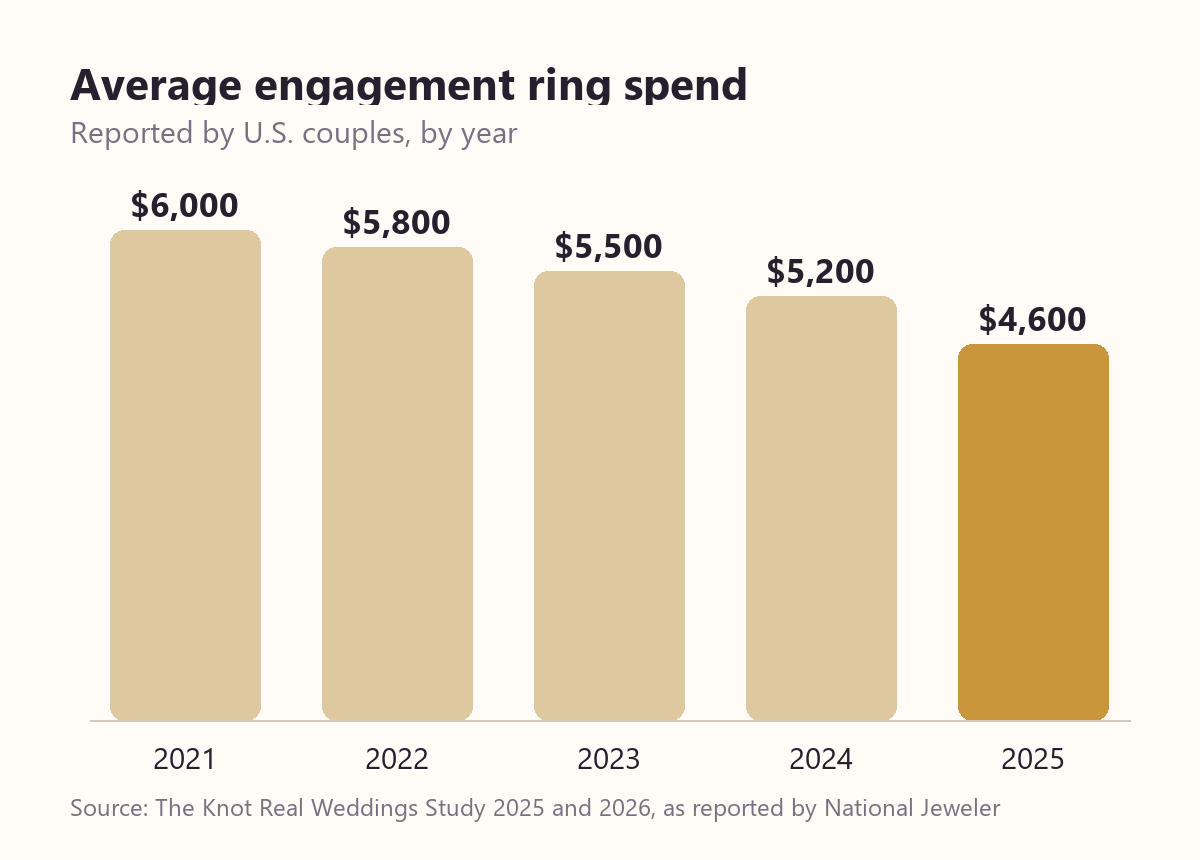
The drop has two causes. Lab-grown stones cost far less than natural ones of the same size, and couples who shop together tend to spend more carefully. As Golan put it to National Jeweler, shopping together means "the pressure to spend is therefore reduced."
So how much should you spend?
Forget the old "three months' salary" rule; it began as jewelry advertising, not financial advice. A better approach is to set a number you could pay in cash, or within a few months, without touching your emergency fund. Then decide what matters most to you: size, a natural stone, a designer setting or simply the budget. You can usually have two of those, rarely all four.
Lab-grown vs. natural diamonds: what actually differs
A lab-grown diamond is a real diamond. It's the same carbon crystal as a mined stone, grown in weeks instead of formed over millions of years, and you can't tell the two apart by eye. The differences are about money and meaning.
| Lab-grown | Natural | |
|---|---|---|
| Looks and hardness | Identical | Identical |
| Price for the same size | Much lower | Much higher |
| Resale value | Low | Higher, but well below what you paid |
| Origin story | Made in a lab | Mined, often with origin tracking |
| Best for | Bigger stone on a budget | Buyers who value rarity and tradition |
If you choose lab-grown, ask for a grading report from a recognized lab, and make sure it says "laboratory-grown." If you choose natural, ask about the stone's origin. Either way, get the ring insured once it's in your hands; our guide on insuring an engagement ring explains how.
Not set on a diamond? The main alternatives
Most couples still choose a diamond, but a few alternatives are worth knowing about if budget or style points elsewhere:
- Moissanite. A different mineral (silicon carbide) with more sparkle and fire than a diamond and a much lower price. It's hard enough for daily wear.
- Sapphire. Blue is classic, but sapphires also come in pink, yellow, teal and white. At 9 on the Mohs hardness scale, against a diamond's 10, they hold up well.
- Lab-grown colored diamonds. Pinks, yellows and blues that would be unaffordable as natural stones.
Whatever you choose, ask for the stone's hardness and how it's set. A softer gem in a high, exposed setting will show wear within a few years.
How to find their ring size without asking
Since most couples now pick the ring together, this matters less than it used to. If you're still planning a surprise, try one of these:
- Borrow a ring they already wear on the right finger, and take it to a jeweler to be measured. Wear it on your own finger to mark how far it slides if you can't take it.
- Ask their closest friend or sibling to find out, or to go "window shopping" with them.
- Guess slightly large. Making a ring smaller is usually easier than making it bigger, and many jewelers include one free resize.
Engagement ring trends for 2026
The study and the designers National Jeweler interviewed point to the same shifts:
- Yellow gold is back. It's now in 39% of engagement rings, and the share of couples choosing it has more than doubled in five years. White metals still lead overall at 48% (white gold 35%, platinum 13%).
- Ovals have caught rounds. Oval diamonds (25%) are now almost as popular as round ones (26%). Cushion and radiant cuts sit at 6% each.
- Thicker bands and bezel settings. Designers report more chunky bands and bezel-set or flush-set center stones, which protect the diamond and suit everyday wear.
- The marquise is rising. Benny Blanco proposed to Selena Gomez with a marquise diamond in December 2024, and designers say the shape was gaining ground even before that.
- Colored and warm-toned diamonds. The Desert Diamonds push is aimed at exactly this: stones with a little warmth, rather than icy white.
When is the best time to propose?
According to The Knot, Christmas Day is the single most popular day to get engaged, and December is the busiest month for proposals. New Year's Day and Valentine's Day also rank among the top days. If you're aiming for a December proposal, a few practical points:
- Order early. Custom and resized rings can take several weeks, and jewelers are at their busiest in December. Ask for a firm delivery date before you pay.
- Think about the guest-free moment. A crowded family Christmas isn't everyone's idea of romantic. A quiet walk on Christmas Eve can mean more than a living-room audience.
- Plan the call list. Decide who you'll tell first, so nobody hears it on social media before their phone rings.
Need an idea for the moment itself? Our list of romantic date ideas has plenty of settings that work for a proposal.
What to do if you're shopping now
- Set the budget first, before you see a single ring.
- Decide lab-grown or natural together if you can. It's the biggest price decision you'll make.
- Pick the shape and metal, then let the stone size fit the budget.
- Ask for the grading report and a written return or resize policy.
- Insure it the day you pick it up, not after the proposal.
And once the answer is yes, the planning starts. Our look at wedding trends for 2027 covers what couples are choosing next.
Sources: The Knot Worldwide, 2026 Real Weddings Study; National Jeweler, Engagement Ring Trends 2026 (March 5, 2026); National Jeweler, De Beers 'Desert Diamonds' holiday campaign (Oct 27, 2026); A Diamond Is Forever holiday campaign announcement, via National Jeweler; The Knot, most popular days to get engaged.
People Also Asked
Explore common questions related to this blog.
The Knot's 2026 Real Weddings Study found 61% of engagement rings have a lab-grown center stone. Analyst Edahn Golan's sales data puts it above 50%.
The Knot reported an average of $4,600 for rings bought in 2025, down from $5,200 the year before and $6,000 in 2021.
Roughly from Thanksgiving to Valentine's Day. December is the busiest month, and Christmas Day is the most popular day to propose.
Yes. They're the same carbon crystal as mined diamonds and look identical. The main differences are price, resale value and origin.
Yellow gold (39% of rings), oval diamonds (25%, nearly level with round), thicker bands, bezel settings, marquise cuts and warmer-toned diamonds.