Most homeowner's policies cap jewelry theft coverage somewhere between $1,000 and $2,500. Most engagement rings cost considerably more than that. That gap — between what people assume is covered and what actually is — is the entire reason this topic exists.
Why a standard policy isn't enough
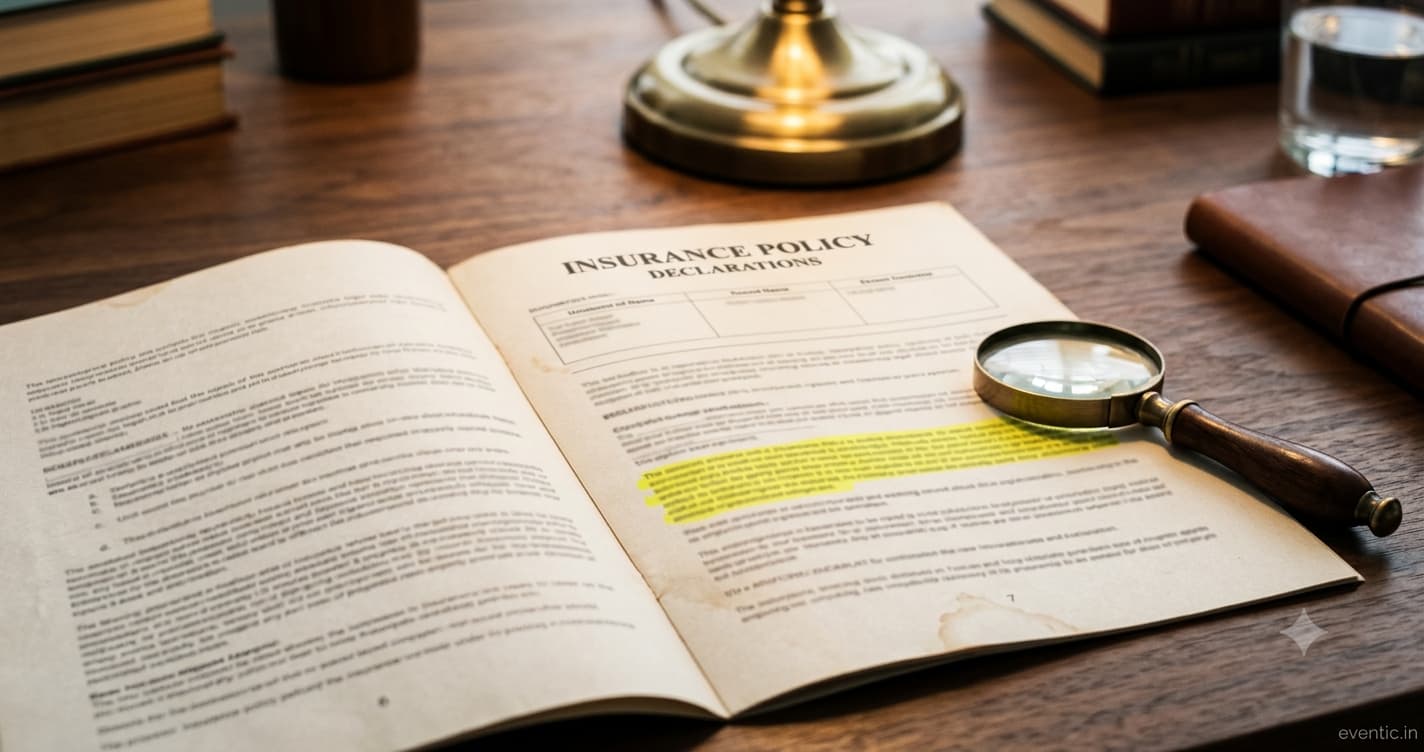
Homeowner's, renter's, and condo insurance policies bundle jewelry into general personal property coverage, which is built to handle a broad category of household belongings, not a single high-value item. Depending on the specific policy tier, jewelry theft coverage typically caps around $1,000 to $2,500 total — not per item, but often as a combined limit across all jewelry you own. Some policy tiers exclude coverage for lost or simply misplaced jewelry entirely, only paying out if the item was stolen or damaged, not if it slipped off a finger and was never found again. A deductible applies on top of whatever the payout would be.
For a ring worth a few hundred dollars, this might be adequate. For anything in the thousands — which describes most engagement rings and plenty of wedding bands — the base policy limit is a fraction of what you'd actually need to replace it.
What a Scheduled Personal Property endorsement actually does
This is the fix, and it's a genuinely simple one. A Scheduled Personal Property endorsement (sometimes called a jewelry floater or Personal Articles Floater) is an add-on to your existing homeowner's, condo, or renter's policy that insures a specific, named item — your ring — up to its full appraised replacement value, rather than relying on the small blanket jewelry limit built into the base policy.
The practical differences from standard coverage: it typically carries no deductible, meaning a covered claim pays out in full rather than requiring you to absorb the first several hundred dollars yourself. It usually covers "mysterious disappearance" — the ring simply isn't there anymore, with no evidence of theft — which most base policies specifically exclude. And it insures the ring at its actual appraised value rather than the base policy's flat jewelry cap, so a $10,000 ring is actually insured for something close to $10,000, not capped at whatever the underlying policy's blanket jewelry limit happens to be.
What it costs
Pricing runs roughly $10 to $20 per $1,000 of the ring's appraised value per year, which works out to about 1% to 2% of the ring's value annually — a $5,000 ring lands around $50–$100 a year; a $15,000 ring runs closer to $150–$300. This is a genuinely small ongoing cost relative to what it protects, especially compared to how much attention and anxiety often goes into keeping an expensive ring safe day to day.
You need an appraisal first
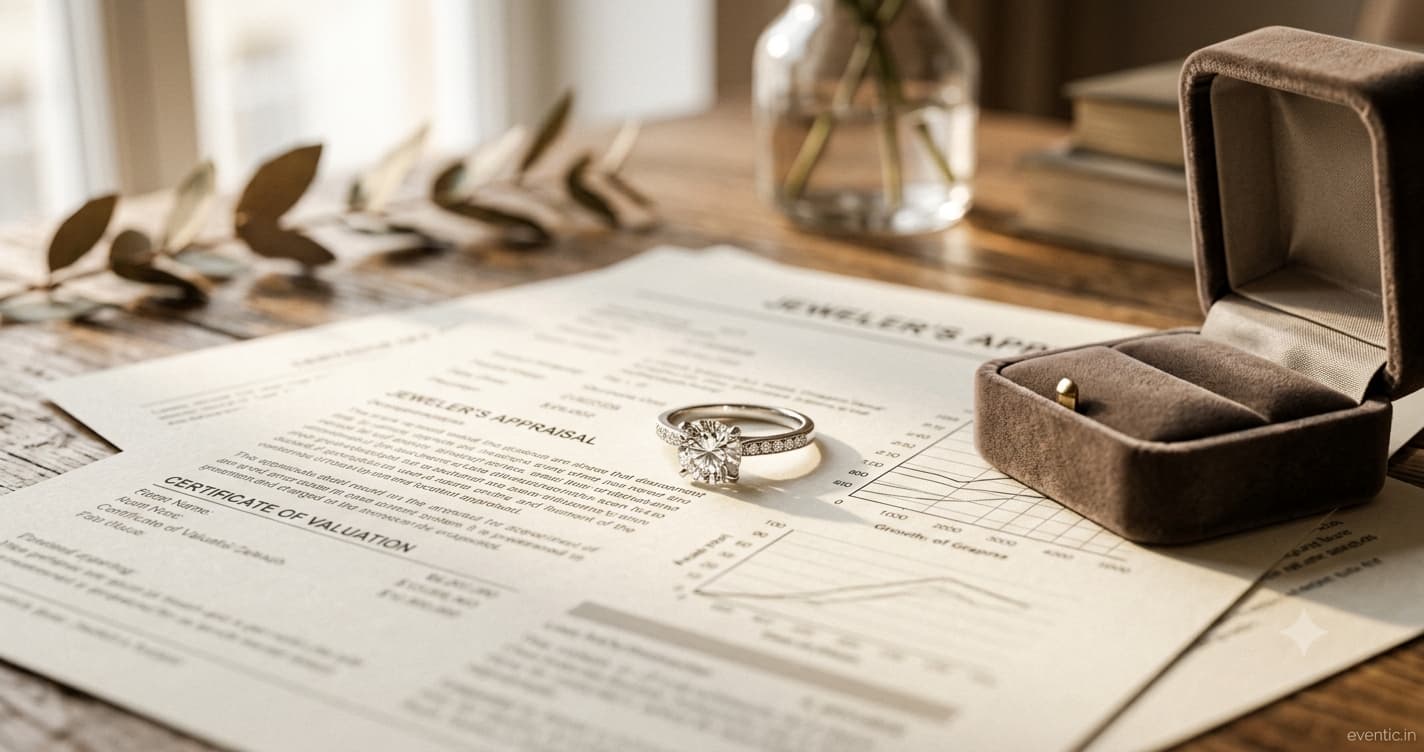
Every carrier will want a current, professional appraisal before scheduling the ring — not the receipt from the jeweler necessarily, but a formal appraisal document that describes the setting, the stone's specific characteristics (cut, clarity, color, carat weight), and its assessed replacement value. If you bought the ring somewhere that didn't automatically provide one, most jewelry stores offer appraisal services, and it's worth comparing a couple of options, since a genuinely thorough appraisal (multiple pages, photographs, detailed stone documentation) is worth paying slightly more for than a quick one-page estimate — it's the document your claim would eventually rely on if something happened.
What about wedding gifts, not just the ring?
This is a separate but related question, and it comes up more than people expect: guests often give genuinely valuable gifts — cash, jewelry, electronics — and a decent pile of them sitting in one place (a gift table at the reception, or a hotel room the night of the wedding) is a real theft target, sometimes literally covered by local news stories about wedding gift tables being robbed during a reception. Standard wedding liability insurance sometimes includes a modest gift-theft coverage limit as part of a combined policy, though it's usually a smaller add-on rather than the primary reason people buy the policy. If gift protection matters specifically to you — say, you're expecting unusually generous cash gifts or know valuable items are likely — ask your carrier directly what the gift-coverage limit actually is within your specific policy, since it's often a modest sub-limit rather than a broad blanket protection.
A far cheaper practical step, regardless of what your policy covers: don't leave a gift table unattended for hours during the reception, and designate someone specific (not the couple, who are busy being the couple) to move gifts to a secure location — a locked car, a hotel safe, a trusted family member's house — well before the reception winds down, rather than leaving everything sitting out until the very end of the night.
Does this connect to your wedding liability policy at all?
Not directly — ring and gift insurance through a homeowner's/renter's endorsement is a completely separate transaction from your wedding liability or cancellation policy, handled through your regular home insurer rather than a wedding-specific carrier. Some wedding-specific cancellation policies do bundle in a modest rider for lost or stolen rings and gifts as part of the overall coverage, which is worth checking, but it's typically a much smaller, narrower benefit than a dedicated jewelry floater specifically built for exactly this purpose. If you're figuring out your overall wedding insurance picture, the exclusions guide is useful context for understanding what a standard wedding cancellation policy's gift and ring add-ons typically do and don't stretch to cover.
Timing matters here too
Get the ring scheduled on your homeowner's or renter's policy as soon as you have the appraisal in hand — ideally well before the wedding, not the week of, since a lost or stolen ring in the chaotic final days of wedding prep (a common moment for jewelry to get momentarily set down and forgotten, in a hotel bathroom or a getting-ready suite) is exactly the kind of scenario this coverage exists for. If you're getting married somewhere without a lot of built-in venue security — a backyard or private-property wedding, for instance, where dozens of guests' bags and belongings are scattered around a house rather than a staffed venue — the practical theft risk for both rings and gifts is genuinely a bit higher, which makes having this coverage sorted out in advance worth the extra bit of planning attention.
Traveling with the ring — honeymoons, destination weddings, and everything in between
A ring that's insured at home isn't automatically insured the same way once it leaves the country, and this is exactly the kind of detail that's easy to overlook in the rush of finishing wedding planning and immediately jumping into honeymoon packing. Most scheduled personal property endorsements do extend worldwide, but "most" isn't "all," and the specific terms — whether there's a reduced coverage limit while traveling, whether certain higher-risk destinations are excluded, whether you need to notify the carrier before an international trip — vary by company. Confirm this specifically with your carrier before a honeymoon or destination wedding, rather than assuming the coverage that applies at home automatically follows the ring everywhere it goes.
If you're having a destination wedding specifically, this connects directly to the broader travel insurance versus wedding insurance question — some travel insurance policies offer limited jewelry coverage as part of their baggage protection, but the coverage limits tend to be considerably lower than a dedicated jewelry floater built specifically for a single high-value item, so it's rarely a substitute for scheduling the ring properly through your home insurer beforehand.
A simple habit that prevents most of the actual losses
Separate entirely from insurance, the single most common way rings go missing during a wedding and honeymoon period has nothing to do with theft — it's simply setting the ring down somewhere in the chaos of getting ready, showering, or swimming, and forgetting exactly where. A small, unglamorous habit that genuinely prevents a lot of this: designate one specific spot — a particular pocket in a travel bag, a specific dish by the hotel bathroom sink — as the ring's "off-finger" home, every single time, rather than setting it down wherever's convenient in the moment. This costs nothing and, anecdotally, prevents more actual losses than any insurance policy ever gets a chance to pay out on.
The ring is arguably the single most emotionally loaded object in the entire wedding, and it's also, structurally speaking, the easiest thing on this whole list to actually insure properly. It's one phone call, one appraisal, and a genuinely small annual cost — worth doing before the wedding, not after a scare makes you wish you had.
People Also Asked
Explore common questions related to this blog.
Most scheduled personal property endorsements cover the item wherever it goes, not just at home — worth confirming with your specific carrier, especially if you're planning to wear the ring on a honeymoon abroad.
A professional appraisal solves this — it establishes the current replacement value independent of the original purchase price or receipt, which is what carriers actually rely on for scheduling and claims.
Generally less urgent than an engagement ring with a significant stone, though if it's meaningful enough that losing it would genuinely hurt (sentimental value aside from replacement cost), a modest floater is cheap enough that some couples do it anyway.