The standard formula is one drink per guest per hour, with two in the first hour. For 100 guests at a four-hour party, that's 500 drinks — split roughly 50% beer, 30% wine, 20% spirits for a full bar.
That's your starting number. It's also almost always wrong for your specific party, because three things move it substantially: not every guest drinks, the crowd and season change consumption meaningfully, and most hosts forget mixers, ice, and non-alcoholic options until the day before.
This guide covers the full method — how to count drinkers, convert drinks into bottles and cases, stock the rest of the bar, and what it all costs. The party drink calculator runs these numbers against your guest list and drink mix if you'd rather skip the arithmetic.
The baseline formula
One per hour, two in the first
Guests drink faster at the start of an event. They arrive thirsty, there's a queue at the bar, and the first drink goes down while people are still finding their table. Consumption then settles to roughly one per hour.
| Party length | Drinks per drinking guest |
|---|---|
| 2 hours | 3 |
| 3 hours | 4 |
| 4 hours | 5 |
| 5 hours | 6 |
| 6 hours | 7 |
So for 80 drinking guests at a five-hour reception: 80 × 6 = 480 drinks.
What counts as a drink
The formula assumes standard servings, which matters when you're converting to bottles. NIAAA defines a standard drink as any beverage containing about 14 grams of pure alcohol — a 12 oz beer at 5% ABV, a 5 oz glass of table wine, or a 1.5 oz shot of 80-proof spirits.
Worth knowing that a home-poured cocktail frequently contains two or three standard drinks rather than one. If you're serving mixed drinks and pouring generously, your guests are consuming more alcohol than your count suggests, even though your bottle math still works out.
Step 1: Count drinkers, not guests
This is the adjustment that saves the most money, and almost nobody makes it.
| Guest type | Share who drink |
|---|---|
| General adult crowd | 70–75% |
| Wedding, mixed ages | 65–75% |
| Corporate event | 50–60% |
| Younger crowd (21–35) | 80–90% |
| Older crowd (55+) | 55–65% |
| Family event with kids present | 55–65% |
Everyone under 21 is a non-drinker by law, and pregnant guests, designated drivers, people who don't drink for religious or personal reasons, and anyone on medication all reduce the count further.
Worked example
A 100-guest wedding: 12 children, 88 adults. Of those adults, roughly 70% drink.
88 × 0.70 = 62 drinking guests
At a four-hour reception that's 62 × 5 = 310 drinks, not 500. You've just cut your alcohol order by nearly 40% before choosing a single bottle.
The other 38 guests still need beverages, and that's a separate calculation covered further down.
Step 2: Split by drink type
Standard ratios
| Bar type | Beer | Wine | Spirits |
|---|---|---|---|
| Full bar | 50% | 30% | 20% |
| Beer and wine only | 70% | 30% | — |
| Wine-forward / formal | 25% | 60% | 15% |
| Daytime event | 40% | 45% | 15% |
| Cocktail-focused | 30% | 25% | 45% |
Applying the full-bar split to our 310 drinks: 155 beers, 93 glasses of wine, 62 spirit servings.
Adjust for season and time
Warm weather
Beer and white wine consumption rises sharply, red wine falls. Shift toward 60% beer, and split your wine 70/30 white to red rather than 50/50. Total consumption also rises about 10–15% in the heat because people drink faster when they're warm.
Cold weather
The reverse — red wine and spirits climb, beer drops. Shift toward 40% beer and flip your wine ratio.
Daytime versus evening
Afternoon events run lighter and skew toward wine, sparkling, and seltzer. Reduce total consumption 20–25% for anything starting before 3pm.
Step 3: Convert drinks into bottles
This is where planning falls apart, because nobody buys drinks — they buy cases, bottles, and kegs.
Beer
| Format | Servings |
|---|---|
| Case (24 bottles or cans) | 24 |
| Sixtel keg (1/6 barrel) | 55 × 12 oz pours |
| Quarter barrel (pony keg) | 82 pours |
| Half barrel (full keg) | 165 pours |
155 beers = 7 cases, or one half-barrel keg with a case in reserve.
Kegs become cheaper than bottles somewhere around 100 servings, but they commit you to one beer and require a tap, a tub, and ice. For a crowd with varied taste, cases usually win.
Wine
One 750 ml bottle pours 5 glasses at 5 oz each. A case is 12 bottles, or 60 glasses.
93 glasses = 19 bottles, so round to 20, or a case and a half.
Bar staff pour more generously than 5 oz in practice — if you're using large-bowl glasses, plan 4 pours per bottle instead of 5. The bottles of wine per person breakdown covers glass size, sparkling for toasts, and how the math shifts for a wine-forward reception.
Spirits
| Bottle | 1.5 oz servings |
|---|---|
| 750 ml | 16 |
| 1 liter | 22 |
| 1.75 L handle | 39 |
62 spirit servings = 4 × 750 ml bottles, or two handles.
Which spirits to stock
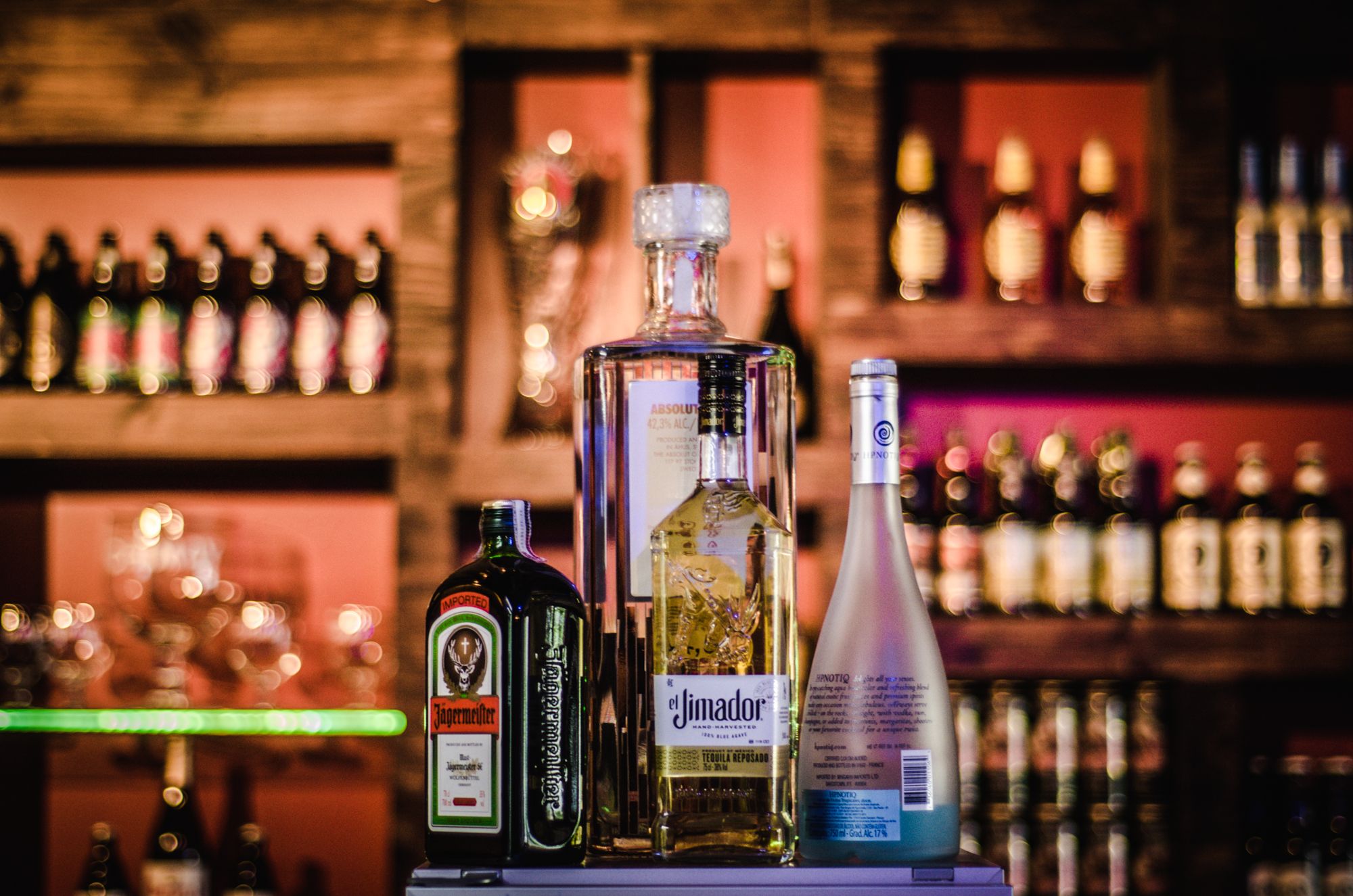
For a standard full bar, split roughly: vodka 30%, whiskey or bourbon 25%, rum 15%, gin 15%, tequila 15%. Adjust for what you know about your crowd — a tequila-heavy group is a real thing and worth planning for.
A signature cocktail simplifies everything. One or two well-chosen drinks means one or two spirits, predictable mixer quantities, and a bar that moves faster.
Step 4: Everything that isn't alcohol
The forgotten half of the bar, and the reason someone always ends up at the store at 8pm.
Non-alcoholic drinks
Non-drinkers need 2 servings per hour, and drinkers take one or two across the evening as well. For 100 guests over four hours, plan around 250–300 non-alcoholic servings across soda, juice, sparkling water, and mocktails.
Give non-drinkers something better than warm cans on a side table. A mocktail or a good sparkling option costs very little and changes how included people feel.
Water
Non-negotiable, and the item most worth over-buying. Plan one bottle per guest every two hours at minimum, plus a visible water station near the bar. Guests who drink water between drinks consume less alcohol and leave in better shape.
Mixers
Roughly 1 liter of mixer per 3 spirit-drinking guests, per mixer type. Standard stock: cola, diet cola, tonic, soda water, ginger ale, orange juice, cranberry juice, lime juice.
Ice
1.5 lbs per person — and that's not just for drinks. It covers chilling bottles in tubs, the beer cooler, and replacement through the evening. For an outdoor summer event, go to 2 lbs.
Ice is the single most underestimated item at any party. For 100 guests that's 150 lbs, which is 15 to 20 bags and considerably more cooler space than most people have thought about. The ice quantity guide covers storage, bag counts, and how to keep it from melting into a tub of water by hour two.
Garnishes and supplies
- Limes: 2–3 per 10 guests
- Lemons: 2–3 per 10 guests
- Olives, cherries, oranges: as your cocktail list requires
- Cups or glasses: 2.5 per guest — people set them down and lose them
- Cocktail napkins: 3 per guest
The full stocking list, including glassware types and what you can skip, is in the bar stocking checklist.
Adjustments by event type
| Event | Adjustment |
|---|---|
| Wedding reception | +10% |
| Milestone birthday (30th, 40th) | +15% |
| Corporate holiday party | baseline |
| Corporate daytime event | −30% |
| Baby or bridal shower | −40% |
| Graduation party | −20%, and check IDs |
| New Year's Eve | +20% |
| Backyard summer BBQ | +10% |
Whether food is served changes everything
A party with a full meal runs about 15% lower on alcohol than one with only snacks. Guests eat, slow down, and stay longer without drinking faster. A cocktail-hour-only event with light appetizers is the highest-consumption scenario there is.
This works in both directions — plan food and drink together rather than sequentially. The food quantity guide works off the same guest count and event length, so the two calculations share their inputs.
What it costs
| Approach | Per person |
|---|---|
| Beer and wine only, self-stocked | $10–$15 |
| Full bar, self-stocked | $15–$25 |
| Beer and wine, catered | $15–$25 |
| Full open bar, catered | $25–$45 |
| Premium open bar | $45–$80 |
Self-stocking runs roughly half the cost of a catered bar, but you're handling purchase, transport, chilling, ice, and cleanup — and many venues don't permit it, or charge a corkage fee that erases the saving.
The Knot's Real Weddings Study is a useful benchmark here: US wedding catering averages $80 per person, with bar service typically adding $25–$45 on top depending on package. Whether an open bar is worth that premium over beer and wine is a real question with a real answer, and the open bar cost comparison works through it with the hidden line items included.
Buy returnable where you can
Many US liquor retailers accept returns on unopened bottles bought for events. Ask before you buy, and if they do, order 15% over your estimate without hesitation. It converts the whole over-buying question into a non-issue.
Hosting responsibly
Running out of drinks is an inconvenience. The alternative failure mode is more serious, and a few things are worth building into the plan rather than improvising.
Serve food. Food genuinely slows alcohol absorption, and a party with a proper meal sees measurably lower consumption.
Make water obvious. A visible, well-stocked water station near the bar does more than any amount of encouragement.
Stop service before the event ends. Last call 45–60 minutes before the finish, with coffee and dessert after, gives people time before they leave.
Don't serve anyone underage. At events where families attend, this needs actual attention rather than assumption — graduation parties in particular.
Plan rides. Have rideshare information visible, or arrange transport for anyone who needs it. If you're hosting at home in a state with social host liability laws, you may carry real legal exposure for a guest who drives away impaired. Worth knowing where your state stands.
Hire a bartender for larger events. One bartender per 50 guests is the working standard. Beyond the service speed, a professional pours consistently and is far better placed than you are to notice when someone's had enough.
Worked example: 100 guests, 4 hours
Guests: 100 total, 88 adults, 70% of adults drink = 62 drinkers
Drinks needed: 62 × 5 = 310
Split (full bar): 155 beer, 93 wine, 62 spirits
| Item | Quantity |
|---|---|
| Beer | 7 cases (or 1 half-barrel keg) |
| Wine | 20 bottles (12 white, 8 red) |
| Spirits | 4 × 750 ml, or 2 handles |
| Mixers | 6–7 liters across types |
| Non-alcoholic | 250–300 servings |
| Water | 200 bottles |
| Ice | 150 lbs |
| Limes and lemons | 25 each |
| Cups | 250 |
Self-stocked cost: roughly $1,600–$2,400.
For a step-by-step version of this at the most-searched guest count, with brand-level shopping suggestions, see how much alcohol for 100 guests.
Two things carry most of the accuracy here: count drinkers rather than guests, and buy more ice than feels reasonable. Get those right and the rest is conversion arithmetic.
People Also Asked
Explore common questions related to this blog.