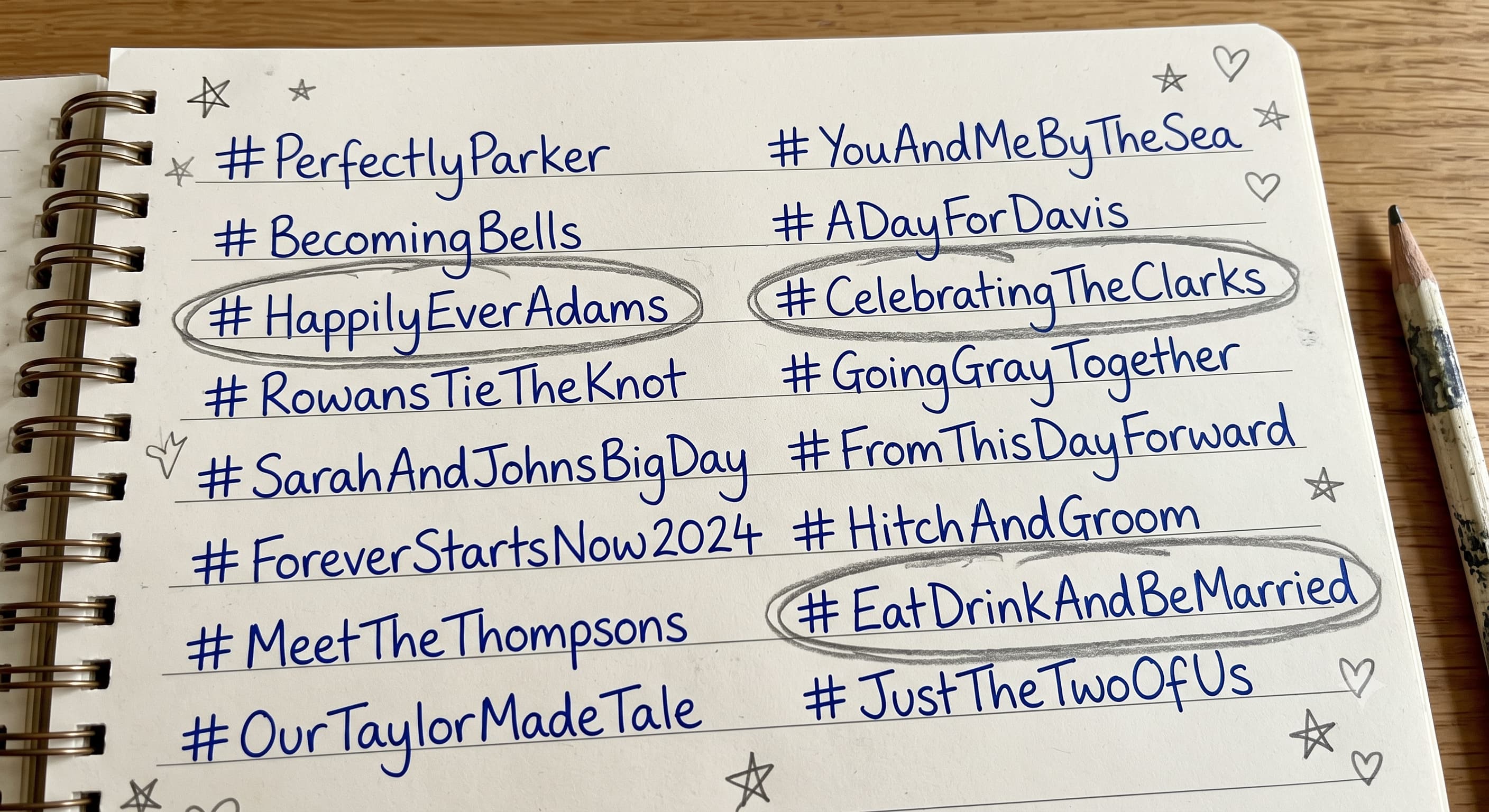
You've got the sign quoted, the save the dates half-designed, and a hashtag you're genuinely proud of. Then a bridesmaid taps it out of curiosity and finds 6,000 posts from a CrossFit gym in Ohio. This happens constantly, and it's avoidable in a minute and a half.
Here's how to check properly — and, more usefully, how to decide whether "taken" actually matters in your case. Because sometimes it doesn't.
What "taken" means now (it changed)
Nobody owns a hashtag. There's no registry, no way to reserve one, and no way to remove other people's posts from it. So "taken" isn't a yes or no — it's one of three states.
| State | What you'll see | Verdict |
|---|---|---|
| Clean | 0–50 posts, unrelated or ancient | ✅ Use it |
| Crowded | Hundreds to thousands of posts, actively being used | ⚠️ Fixable — add a year or location |
| Poisoned | Another wedding using it this year, a business campaign, or content you don't want your grandmother scrolling past | ❌ Pick something else |
Crowded is the common one and couples panic about it more than they should. Your guests aren't browsing the tag hoping to stumble on you — they're typing your exact hashtag on purpose. A busy tag makes your photos harder to retrieve later, which is annoying but survivable. Poisoned is the real problem.
One thing that used to make crowding worse no longer applies: Instagram removed the ability to follow hashtags in December 2024, so nobody is passively receiving the tag's contents in their feed anymore. Tags are search terms now, not channels.
The 90-second check
Do all four. Skipping one is how people get caught.
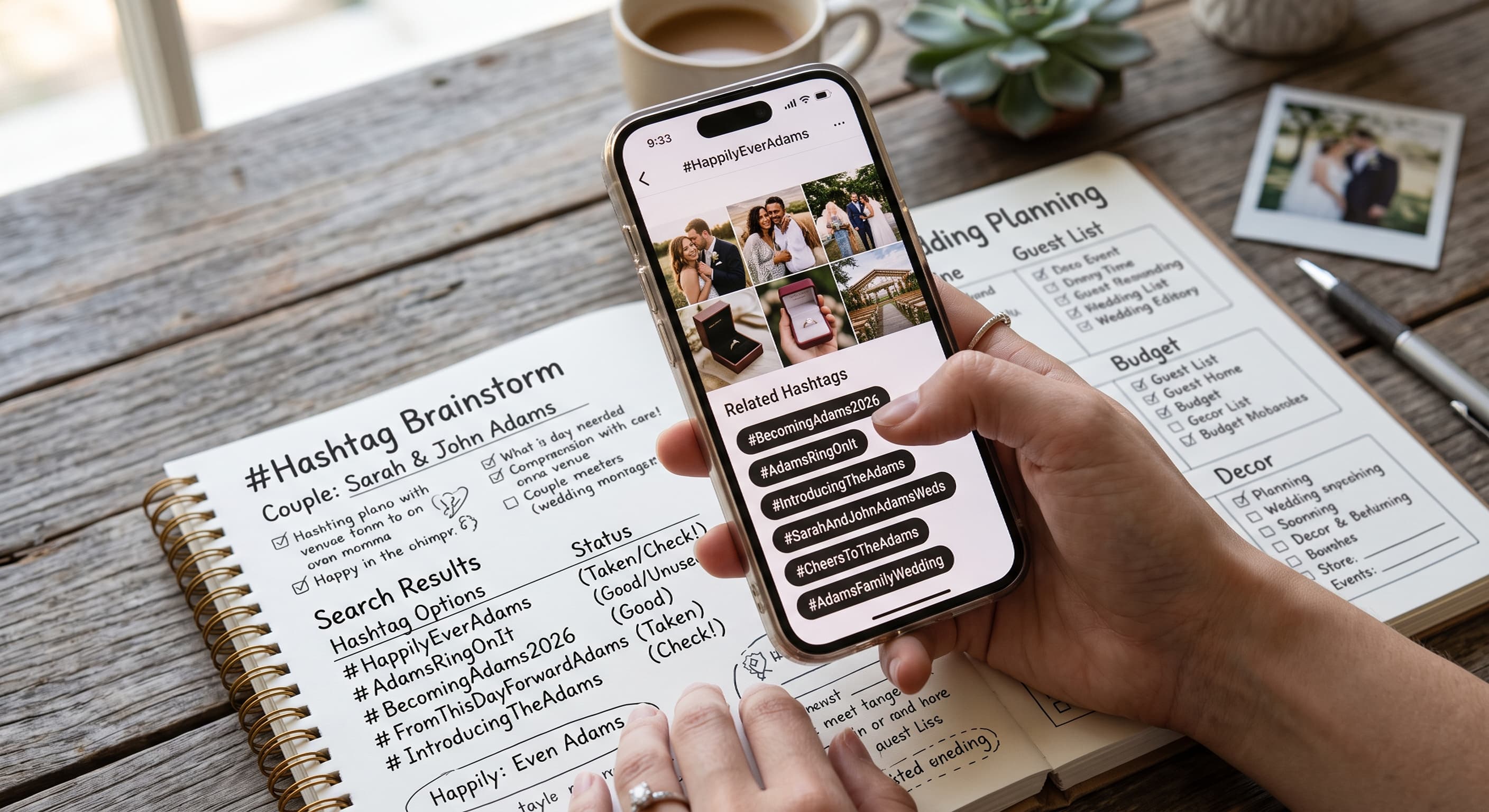
- Instagram. Search the tag in the app, then open the Tags tab — not the top results blend, which mixes in accounts and keyword matches. Read the post count and scroll the top row. Ten seconds tells you which of the three states you're in.
- TikTok. Same search. TikTok tags run separately and a hashtag that's dead on Instagram can be very much alive here, especially anything punny.
- Facebook. Quick search, mostly to catch business campaigns and older weddings. Low hit rate, worth the five seconds.
- Google, with quotes. Search
"#YourHashtag"in quotation marks — Google treats quoted terms as an exact match, which surfaces blog posts, event pages and news that the apps won't show you. This is the step that catches a hashtag belonging to a charity 5K or a regional beer brand.
Total: about ninety seconds per candidate. Do it for all three of your shortlist, not just your favourite, because your favourite is the one most likely to be gone.
The check nobody runs
Say the hashtag out loud, run all the letters together, and listen.
The classic disasters aren't taken hashtags — they're hashtags where two innocent surnames create a third word nobody noticed until it was printed on a four-foot welcome sign. Capitalisation hides it on the page and does nothing at all when the MC reads it into a microphone.
Also worth thirty seconds: if your surname or the pun means something in another language your guests speak, check that too. Weddings with guests across two countries hit this more than you'd expect.
And check the misspelling. Every hashtag has one obvious wrong version — Mc versus Mac, Reid versus Ready, single versus double letters — and a chunk of your guests will type it. If that variant is clean, brilliant, your stray photos are still findable. If it belongs to something unpleasant, you've just learned something important about a sign you were about to order.
It's taken. Now what?
Don't abandon a hashtag you love. Adjust it.
- Add the year. #SetInStone → #SetInStone2027. Instantly unique, still reads well, and it dates your photos usefully.
- Add the location. #SetInStoneInSavannah. Better than the year if you're having a destination wedding.
- Add "The" and pluralise. #TheStonesSaidIDo. Small change, completely different tag.
- Switch which name leads. If the surname mashup is taken, flip to first names entirely.
- Change formula. If the pun's gone, the A–Z of last-name structures has four or five alternatives for almost any name shape, and running your names through a hashtag generator after a failed check is more productive than the first time — you now know exactly what to avoid.
What not to do: bolt on a random number (#Stone1122 reads like a password), or add an underscore (people forget it, and half of them will type the version without).
Claim it the moment it clears
There's no reservation system, so the closest thing is to occupy it.
Post one photo with the hashtag today — the ring, the venue, the two of you looking pleased. Now the tag has your face at the top of it, and a guest searching it in March lands on you rather than an empty page that looks broken.
Then put it where it can't be lost: on your wedding website, and on your save the dates. If you're building digital ones, Eventic's wedding templates have a details block the hashtag drops into, and any design tool does the same job — the point is that the hashtag goes out with the first thing you send, not the last.
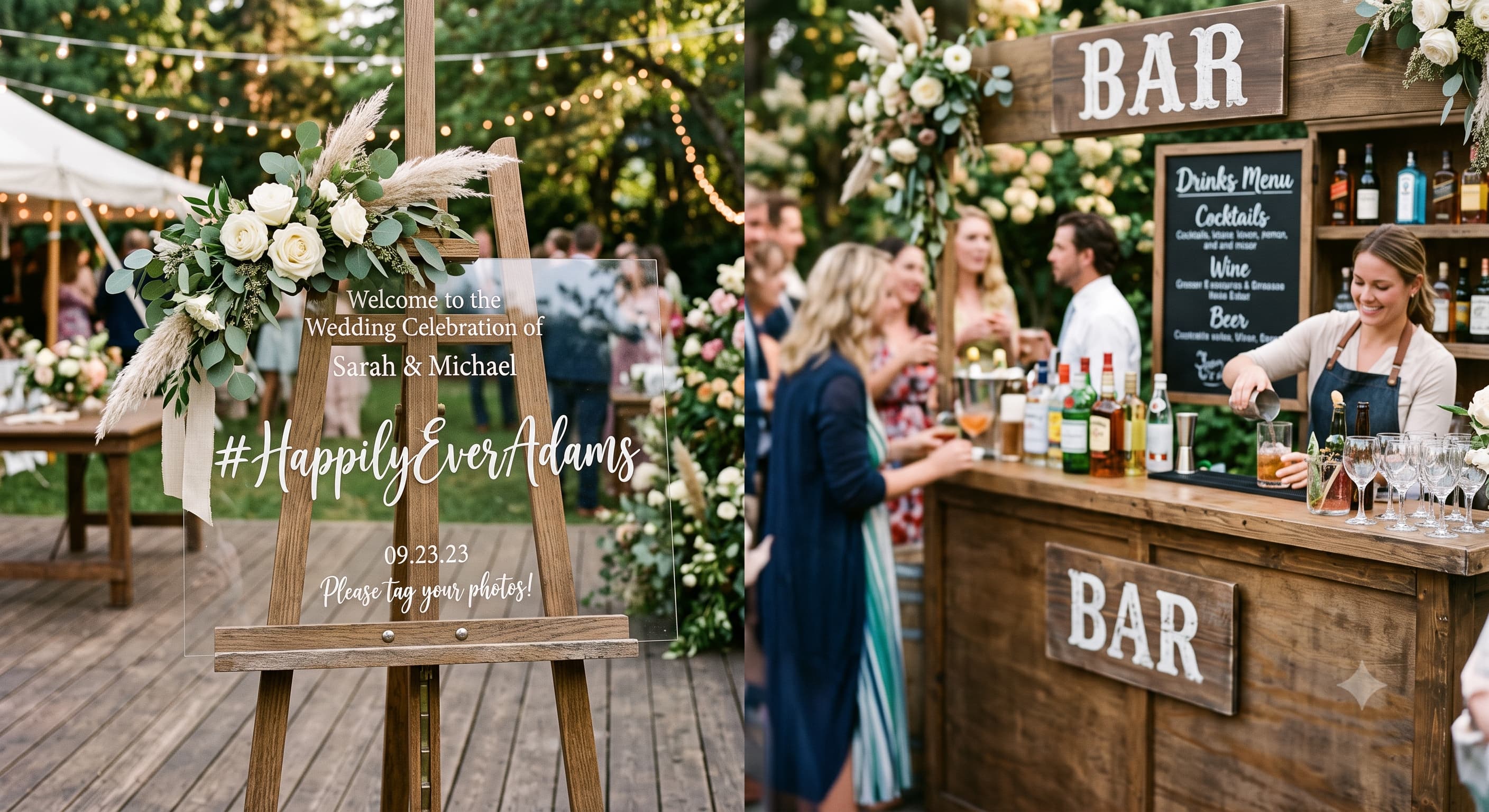
After that, the placement list matters more than the checking did. A perfect, unclaimed hashtag on a sign at the entrance collects fewer photos than a mediocre one on a card at the bar.
Run the check before you spend money on anything printed. It costs ninety seconds now or a reprint later, and the reprint is never the cheap option.
People Also Asked
Explore common questions related to this blog.