1. The couple caricature is now the default, not the novelty
Five years ago a cartoon version of the couple was a fun extra on the sangeet card. Now it's often the main artwork on the wedding invite itself — the two of you drawn mid-dance, on a scooter, holding chai, whatever fits.
What's changed is the style. The generic big-head-tiny-body clip art look is out. Couples are commissioning soft-line illustrations with real detail: her actual nose pin, his actual glasses, the dog. Freelance illustrators in India charge roughly ₹1,500–₹4,000 for a single couple portrait and ₹6,000–₹15,000 for a full set covering haldi, mehendi, sangeet and wedding with matching outfits in each.
A tip most couples learn too late: ask the artist for a transparent PNG of the couple separate from the background. You'll want to reuse them on the welcome board, the return-gift tags, and the Instagram countdown posts. Paying twice for the same drawing is the most avoidable expense in this whole category.
2. Vertical reel-format video invites
The 30–45 second vertical video has quietly beaten the horizontal cinematic trailer. Reason is boring but decisive: it fills a phone screen and it plays automatically in a WhatsApp status. A 90-second landscape "wedding trailer" with a two-second black intro gets skipped.
Rates in India sit around ₹1,000–₹3,000 for a template-based video and ₹5,000–₹12,000 for something custom with your photos and a bespoke voiceover. Anything above that is usually paying for animation quality you can't see on a 6-inch screen.
Keep the actual information on screen for at least four seconds. Lovely animations where the date swishes past in half a second cause the exact phone call you were trying to avoid.
3. The "our story" mini-timeline
Instead of one card, a short scroll: how you met, the proposal, then the ceremony details. It works beautifully as a digital invite and terribly on paper, where it turns into a four-page booklet nobody reads past page one.
Three or four beats maximum. "Met at a cousin's mehendi, 2019. He took four months to text. Married, finally, 2027." That kind of thing. The temptation is to write a whole memoir — resist it, because the venue details sit at the bottom and every extra line pushes them further down.
4. The audio note invite
For close friends and cousins, a designed graphic plus a genuine 20-second voice note has replaced the formal forwarded card. It costs nothing and it lands completely differently from a PDF.
This one has an obvious limit. Send a voice note to your father's colleagues or your nani's side of the family and it reads as casual to the point of rude. Use it for the friend circle, send the proper card to everyone else. Most couples end up running both tracks anyway.
5. Colour: pastels are receding, saturated Indian palettes are back
The blush-and-sage phase peaked. What's rising for the 2026–27 season is Rani pink with indigo, turmeric yellow with deep green, and rust-and-cream for daytime functions. Not the heavy maroon-and-gold of traditional cards — brighter, flatter, more graphic.
If you want a middle path, keep the layout minimal and the palette loud. Clean sans-serif type, huge amounts of empty space, one saturated colour block. Reads modern without looking like it was designed in another country.
6. Pets, and one ceremony-wise card per function
Two smaller trends, both growing. Dogs and cats now appear in the artwork routinely, usually with a line like "and their supervisor, Simba." And instead of one card listing five functions in small print, couples send a separate mini-card per function to the relevant guest list — so the 60 people invited to mehendi aren't parsing reception details they don't need.
The second one genuinely reduces confusion. It also means designing five things, so decide early whether you have the patience.
Format comparison: what to actually pick
| Format | Typical cost (India) | Best for | Main drawback |
|---|---|---|---|
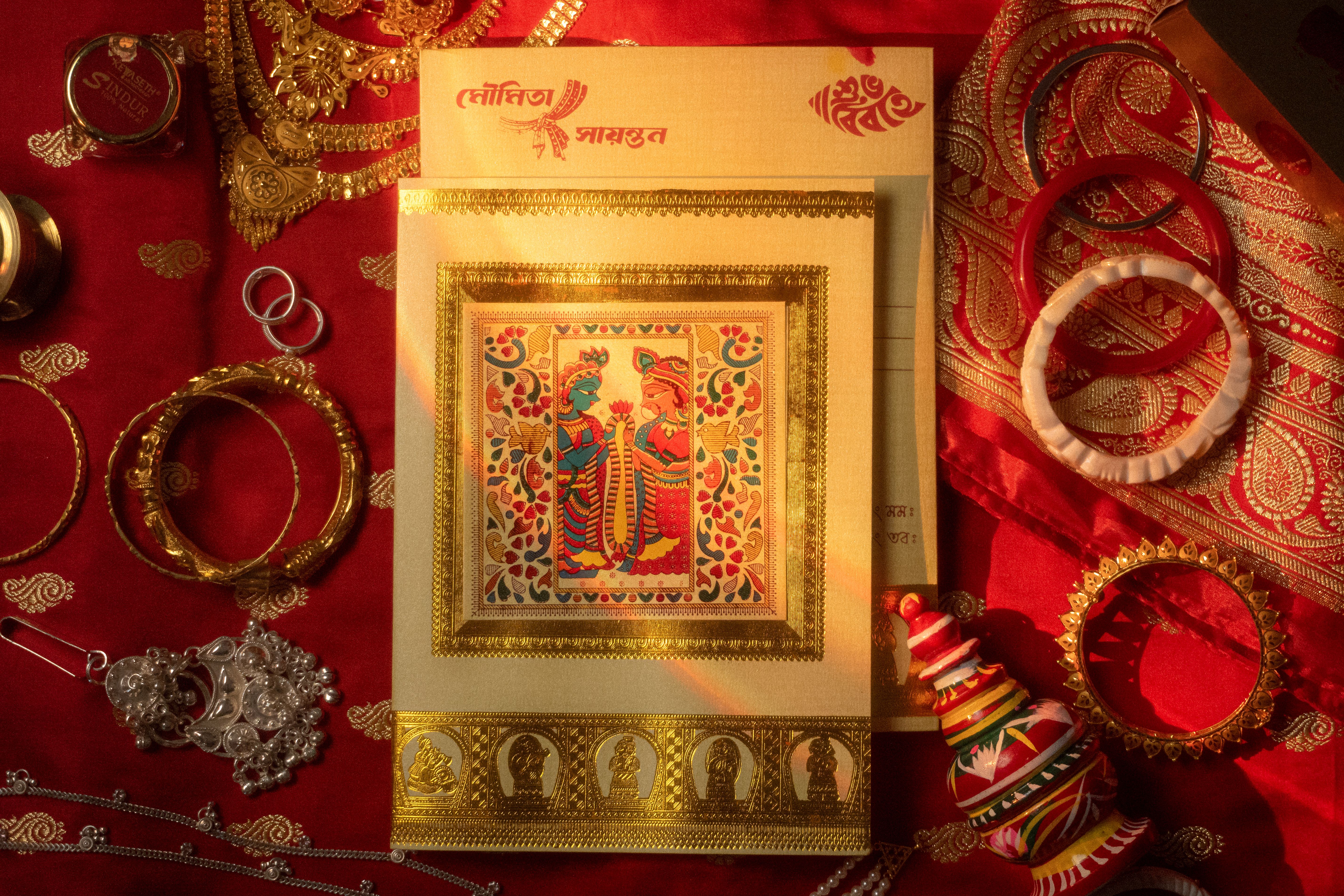
| Illustrated static card (JPG/PDF) | ₹1,500–₹5,000 | The main wedding invite, all age groups | Easy to lose in a chat scroll |
| Vertical reel video | ₹1,000–₹12,000 | Friends, social media, save-the-date | Older relatives may not open it |
| Invite web page with RSVP | ₹0–₹4,000 | Multi-function weddings, outstation guests | Needs someone to check the responses |
| Voice note + graphic | Free | Close friends and cousins only | Too informal for elders |
| Printed card | ₹40–₹300 per card | Elders, formal invitations, temple/gurudwara customs | Slow, and reprints for typos hurt |
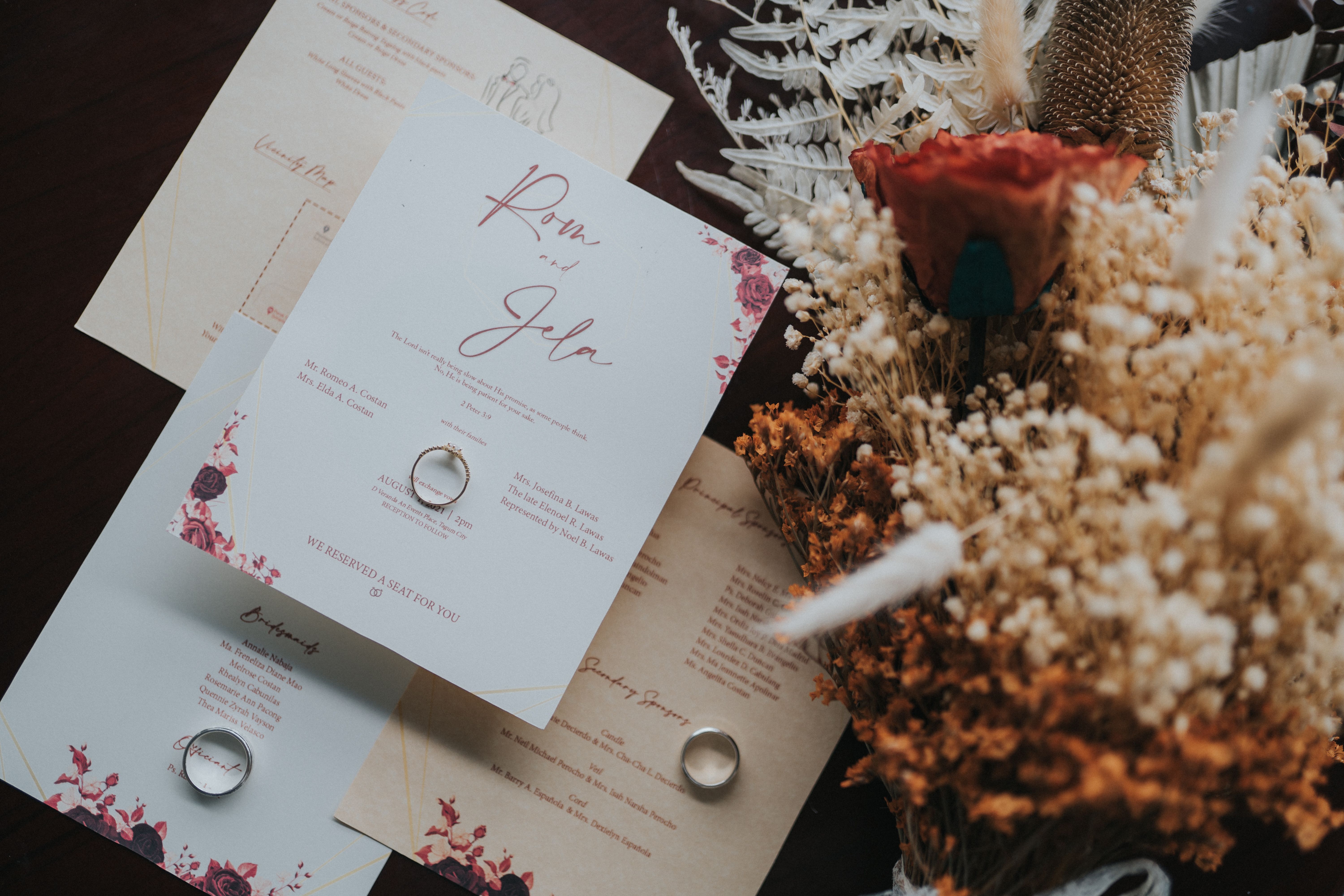
Most 2026-27 weddings run a combination: a printed card for about 40 key families, a digital invite for everyone else, and one link that holds all the schedule details. Whether you build that link on a wedding-website builder, a designer's package, or a platform like Eventic, the thing that matters is that the link works on a slow connection and doesn't demand a login before showing the date.
Copy-paste wording that isn't stiff
The cute-design trend fails when the artwork is playful and the text still says "solicit your gracious presence." Match the tone. Some starting points:
Friendly English
Aarav & Ishita are getting married.
A lot of dancing, some crying, excellent food.
14 February 2027 · Bengaluru
Full schedule and RSVP: [link]
Hinglish, for the friends' list
Shaadi pakki hai.
Ishita ne finally haan bol diya (four months lag gaye, but theek hai).
Sangeet 12 Feb · Wedding 14 Feb
Aana zaroor hai. Details: [link]
Warm but respectful, works for elders
With the blessings of our families, we invite you to the wedding of
Aarav, son of Mr. & Mrs. Rakesh Mehta
and Ishita, daughter of Mr. & Mrs. Suresh Nair
Saturday, 14 February 2027
Please join us — it won't feel complete without you.
That last line does most of the work. It's warm without being casual, and it lets an otherwise traditional card feel like it came from a person.
Design carries the first impression; the reply line carries the logistics. Wording that actually gets answers is here.
Two practical gotchas
QR codes on printed cards. Anything under about 2 cm square, or printed in gold foil on a dark background, scans badly. Test it with three different phones before you approve a print run of 300.
File size on WhatsApp. A video above 15 MB gets compressed hard, and text-heavy frames turn to mush. Export at 1080×1920, keep it under 12 MB, and check it on a phone rather than your laptop.
People Also Asked
Explore common questions related to this blog.