For a 50-guest buffet dinner, plan on roughly 90–110 lbs of total food across mains, sides, starch, and dessert. That's about 2 lbs per person once you account for kids eating less and teenagers eating considerably more. The exact number moves a lot depending on whether you're serving buffet or plated, how many dishes are on the table, and whether people are standing around for four hours or eating and leaving.
Below is the breakdown by course, a full shopping list you can copy, and the two adjustments most people get wrong.
Worth saying before you shop: 50 invited is not 50 attending. Confirm who's actually coming and you'll usually find you're catering for fewer.
The quick answer, by course
These are per-person amounts for a buffet dinner where a full meal is served. Multiply by 50.
| Course | Per person | For 50 guests |
|---|---|---|
| Main protein, boneless | 6 oz (170g) | 19 lbs |
| Main protein, bone-in | 8 oz (225g) | 25 lbs |
| Vegetarian main (tofu, paneer, beans) | 4 oz (115g) | 12.5 lbs |
| Vegetable sides | 4 oz (115g) | 12.5 lbs |
| Starch (rice, potatoes, pasta — dry weight) | 2.5 oz (70g) | 8 lbs |
| Salad | 2 oz (55g) | 6 lbs |
| Bread / rolls | 1.5 pieces | 75 pieces |
| Dessert (non-cake) | 4 oz (115g) | 12.5 lbs |
| Appetizers | 6 pieces | 300 pieces |
Raw weights, before cooking. Meat loses roughly 25% of its weight on the grill or in the oven, so 19 lbs of raw chicken breast lands closer to 14 lbs on the plate. Running these numbers against your own menu is what the party food calculator is built for — it applies every adjustment below automatically instead of leaving you to do it in a notes app at midnight.
Your 50 guests aren't 50 eaters
This is the single biggest source of over-ordering. A headcount of 50 is rarely 50 adult appetites, and treating it as one is why hosts end up with a fridge full of foil trays.
Count in eater-equivalents instead:
- Adult — 1.0
- Teenager (11–17) — 1.25
- Child under 10 — 0.5
- Senior — 0.75
Teenagers really do out-eat adults, and it's not close. A backyard graduation party with 50 guests where 15 are teenagers needs more food than a 50-person dinner party of adults, not less.
Two examples with the same headcount:
- Family reunion: 30 adults, 8 teens, 10 kids, 2 seniors → 30 + 10 + 5 + 1.5 = 46.5 eater-equivalents
- Adult dinner party: 50 adults → 50 eater-equivalents
That's a 7% swing before you've touched service style. The full method behind this — and how it scales to any guest count — is covered in the guide to food quantities per person.
More dishes means less of each — not more overall
The second mistake: people plan three mains by calculating "6 oz of protein per person" three separate times, and end up with triple the food they need.
Guests sample when there are options. They don't eat a full portion of every dish. The practical rule is that each additional dish in a course reduces the amount needed of each one, while the course total climbs slowly rather than multiplying.
For 50 guests:
| Mains on the menu | Per dish | Course total |
|---|---|---|
| 1 main | 19 lbs | 19 lbs |
| 2 mains | 11 lbs each | 22 lbs |
| 3 mains | 8.5 lbs each | 25.5 lbs |
| 4 mains | 7 lbs each | 28 lbs |
Four mains needs about 47% more food than one main — not 400% more. The same logic applies independently to appetizers, sides, and desserts.
Service style changes the total by up to 20%
| Service style | vs. a plated meal | Total for 50 guests |
|---|---|---|
| Buffet | +20% | ~110 lbs |
| Family style | +15% | ~105 lbs |
| Plated / served | baseline | ~92 lbs |
| BBQ / grill | +15% | ~105 lbs |
| Boxed / packed | baseline | ~92 lbs |
| Potluck (host's share) | −40% | ~55 lbs |
Buffets run high because guests serve themselves and consistently over-portion the first item they reach — which, incidentally, is why smart hosts put the cheapest side at the front of the line and the protein in the middle. Plated meals are portion-controlled by design, so they use the base numbers directly.
If you're hosting a potluck, you're only providing about 60% of the total. The other trap there is coordination: eleven people bringing pasta salad is a real outcome if you don't assign courses.
Appetizers for 50: it depends on whether they're the meal
| Situation | Pieces per person | For 50 guests |
|---|---|---|
| Appetizers are the whole meal | 10–12 (first hour) | 500–600 |
| A full meal follows | 6 | 300 |
| Each additional hour | +2 | +100 |
A three-hour cocktail party for 50 with no dinner service needs somewhere near 700 pieces. That number shocks people, but a "piece" is one meatball or one shrimp, and guests standing with a drink in hand graze continuously.
Cake and dessert for 50
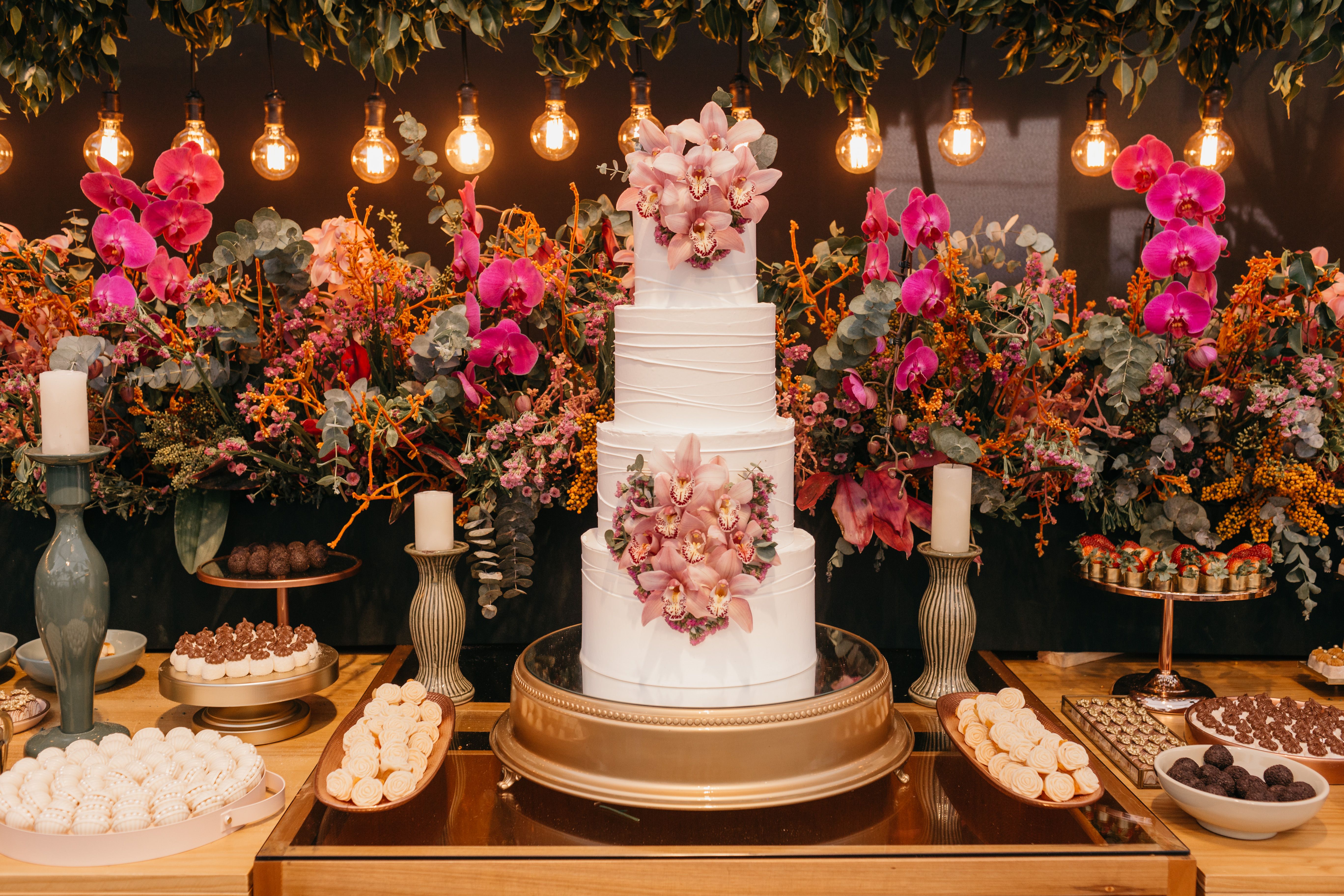
A 12-inch round serves about 40 party slices or 56 smaller wedding-style slices, so for 50 guests it's a 12-inch round or a half sheet — and the full cake sizing guide covers which standard your baker is quoting, a 12-inch round or a half sheet is your size. If you're also putting out a dessert table, the cake only needs to cover about 60% of the room, and an 8- to 10-inch round will do.
Wedding-style slices are cut roughly half the size of a party slice, which nearly doubles what the same cake serves. Worth knowing before you pay for a tier you don't need.
A copy-paste shopping list: 50-guest BBQ buffet
Menu: pulled pork and grilled chicken thighs, mac and cheese, coleslaw, corn, rolls, sheet cake.
- Pork shoulder, bone-in — 25 lbs
- Chicken thighs, bone-in — 15 lbs
- Barbecue sauce — 1 gallon
- Dry pasta for mac and cheese — 6 lbs
- Shredded cheese — 4 lbs
- Cabbage for slaw — 12 lbs
- Corn — 60 ears
- Burger buns / rolls — 75
- Half sheet cake — 1
- Ice — 50 lbs
- Napkins — 150 (plan three per guest, always)
Rough US grocery cost: $450–$650, or $9–$13 a head. Catered, the same menu typically runs $25–$45 per person depending on the market, before service charges. If you're weighing self-catering against hiring out for a bigger event, the wedding budget calculator breaks that trade-off down alongside the rest of the spend.
Two things that ruin the math
Not confirming the headcount. Every quantity here multiplies off one number, and "about 50" is not a number. Chase RSVPs — a digital invite with a built-in RSVP list means the count updates itself instead of living in your text messages. If you haven't sent yours yet, the invitation wording generator will draft the wording, and the responses feed you a real figure to plan against.
Forgetting drinks entirely. Food gets all the attention and then someone runs to the store for ice at 8pm. For 50 guests over four hours you're looking at roughly 200 drinks total, plus 50 lbs of ice. Run it properly with the party drink calculator — it carries your guest count across.
Keep it safe once it's out
Cooked food shouldn't sit at room temperature for more than two hours, and that drops to one hour if it's above 90°F outside — a genuine constraint at a summer barbecue, not a theoretical one. The USDA's food safety guidance lists safe internal cooking temperatures worth checking before you pull pork off the smoker, and the FDA's storage guidance covers what's still good the next morning.
Practical version: put out half the food, keep the rest chilled or warm, and refill. It also stops the buffet looking picked-over at hour three.
People Also Asked
Explore common questions related to this blog.