The working answer for a buffet dinner is about 2 lbs of food per person total — roughly 6 oz of protein, 4 oz of vegetables, 2.5 oz of dry starch, 2 oz of salad, and 4 oz of dessert. Multiply by your guest count and you have a starting figure.
But that figure is a starting point, not an answer, because four things change it significantly: who's actually eating, how you're serving, how many dishes are on the table, and how long people are staying. Most over-catering comes from ignoring all four and just multiplying.
This guide walks through the full method, then breaks it down by course and guest count. If you'd rather have the arithmetic done for you, the party food calculator applies every adjustment below to your specific menu and headcount.
Every quantity on this page multiplies by one number, so it's worth getting that number right rather than estimating. A free RSVP link gets you a confirmed count instead of a hopeful one.
The baseline: per-person amounts by course
| Course | Per person | Notes |
|---|---|---|
| Main protein, boneless | 6 oz (170g) | Raw weight |
| Main protein, bone-in | 8 oz (225g) | Raw weight |
| Vegetarian main | 4 oz (115g) | Tofu, paneer, beans |
| Vegetable sides | 4 oz (115g) | Combined across dishes |
| Starch (dry weight) | 2.5 oz (70g) | Rice, pasta, potatoes |
| Salad | 2 oz (55g) | Undressed |
| Bread / rolls | 1.5 pieces | With other starch present |
| Dessert | 4 oz (115g) | Excluding cake |
| Appetizers | 6 pieces | With dinner to follow |
Meat loses roughly 25% of its weight cooking, so 6 oz raw lands around 4.5 oz on the plate. That shrinkage is already accounted for in the numbers above — don't subtract it twice.
Step 1: Count eater-equivalents, not heads
Fifty guests is rarely fifty adult appetites, and this is where most plans go wrong before they've started.
| Guest type | Counts as |
|---|---|
| Adult (18–64) | 1.0 |
| Teenager (11–17) | 1.25 |
| Child (4–10) | 0.5 |
| Toddler (under 4) | 0.25 |
| Senior (65+) | 0.75 |
Teenagers genuinely eat more than adults. A graduation party with 60 guests where 20 are teens needs more food than a 60-person adult dinner, not less.
Worked example
A family reunion with 60 people: 32 adults, 10 teens, 12 kids, 6 seniors.
32 + 12.5 + 6 + 4.5 = 55 eater-equivalents
You're catering for 55, not 60. At scale that's a meaningful saving, and it's the number every subsequent step multiplies against.
Step 2: Apply your service style
| Service style | Adjustment | Why |
|---|---|---|
| Plated / served | baseline | Portion-controlled by the kitchen |
| Boxed / picnic | baseline | Fixed portions |
| Family style | +15% | Guests serve themselves, but at the table |
| BBQ / grill | +15% | Casual pacing, guests linger |
| Buffet | +20% | Self-served portions run large |
| Food stations | +25% | Guests sample everything |
| Potluck (host's share) | −40% | You're providing about 60% |
Buffets run high because people over-portion the first thing they reach — which is exactly why experienced hosts put the cheap side at the front of the line and the protein in the middle.
That +20% is worth understanding properly, because it doesn't translate into a bigger bill the way you'd expect. A buffet uses more food but costs less to serve than a plated dinner, since labor rather than ingredients drives a catering invoice. The buffet versus plated cost comparison breaks down where the money actually goes.
Step 3: Adjust for how many dishes you're serving
This is the adjustment almost every online guide gets wrong. Serving three mains does not mean three times the protein. Guests sample across options rather than taking a full portion of each.
Mains
| Number of mains | Protein per person, each | Course total |
|---|---|---|
| 1 | 6 oz | 6 oz |
| 2 | 3.5 oz | 7 oz |
| 3 | 2.7 oz | 8 oz |
| 4 | 2.2 oz | 8.8 oz |
Four mains needs about 47% more protein than one — not 400% more. The course total climbs slowly while the per-dish amount falls sharply.
The same rule applies everywhere
Sides, starches, appetizers, and desserts all follow this pattern independently. With two starches on the table, plan about 65% of each individual amount; with three, about 50%. That's covered in detail in the rice, pasta and bread quantities guide, which also handles the water ratios that stop working once you're cooking rice in a 20-quart pot.
Step 4: Duration, timing, and alcohol
Event length
- Under 2 hours: baseline
- 2–4 hours: +10%
- 4–6 hours: +20%
- All day: +35%, and plan a second service
Time of day
Evening events run hungrier than afternoon ones. Reduce by 15–20% for anything starting before 3pm; increase by 10–15% for anything after 6pm. A 2pm baby shower and a 7pm dinner with identical guest lists need noticeably different amounts.
Alcohol
Drinking guests eat more and stay longer. Add 10% across the board if there's an open bar, and take the top of every range rather than the middle.
"October is its own animal — Halloween party food runs smaller and later than a normal dinner party, so plan the portions differently."
Course by course
Appetizers
Six pieces per person when dinner follows, 10–12 when appetizers are the meal, plus two more per person for every hour past the first. A three-hour cocktail party for 50 guests with no dinner runs to roughly 700 pieces — a figure that sounds absurd until you've watched a tray disappear in four minutes.
America's Test Kitchen lands in the same range in its party appetizer guidance: three to four pieces per person when a meal follows shortly, ten to twelve across five or six options for a cocktails-only gathering.
How many different appetizers to make is a separate question with its own answer — guest count divided by ten, floor of three, ceiling of eight. The appetizer quantity guide covers bite size, passed versus stationary service, and how boards and dips get measured by weight rather than pieces.
Protein
The single largest line on your budget and the one worth getting right.
| Protein | Per person, raw |
|---|---|
| Boneless chicken, beef, pork | 6 oz |
| Bone-in chicken, ribs | 8 oz |
| Whole roast turkey or ham | 12 oz |
| Fish fillet | 6 oz |
| Shrimp, peeled | 5 oz |
| Ground meat (burgers, meatballs) | 5 oz |
| Tofu, paneer, halloumi | 4 oz |
| Beans or lentils, dry | 2 oz |
Bone-in versus boneless
Bone-in cuts weigh more for the same amount of edible meat — plan 8 oz instead of 6. Whole birds and bone-in roasts need more again, since you're also carrying skin, cavity, and carving loss.
Starches
2.5 oz dry per person as a side, 4 oz if the starch is the main event. Practical shortcut: dry weight in pounds ≈ guest count ÷ 8 for a side.
Starches are the cheapest thing you'll put out — under $1 a head for the whole evening — which makes them the right place to round up and the wrong place to economize.
Vegetables and salad
4 oz of cooked vegetables and 2 oz of undressed salad per person. Salad is consistently over-ordered; a large bag of greens goes much further than it looks, and a wilted half-full bowl at hour three helps nobody.
Bread
1.5 pieces per person when there's another starch on the table, 2 to 2.5 when bread is the only one. Buy in whole packs and stop thinking about it — leftover rolls are the least regrettable leftover at any party.
Dessert and cake
4 oz of non-cake dessert per person, or 1.25 cupcakes.
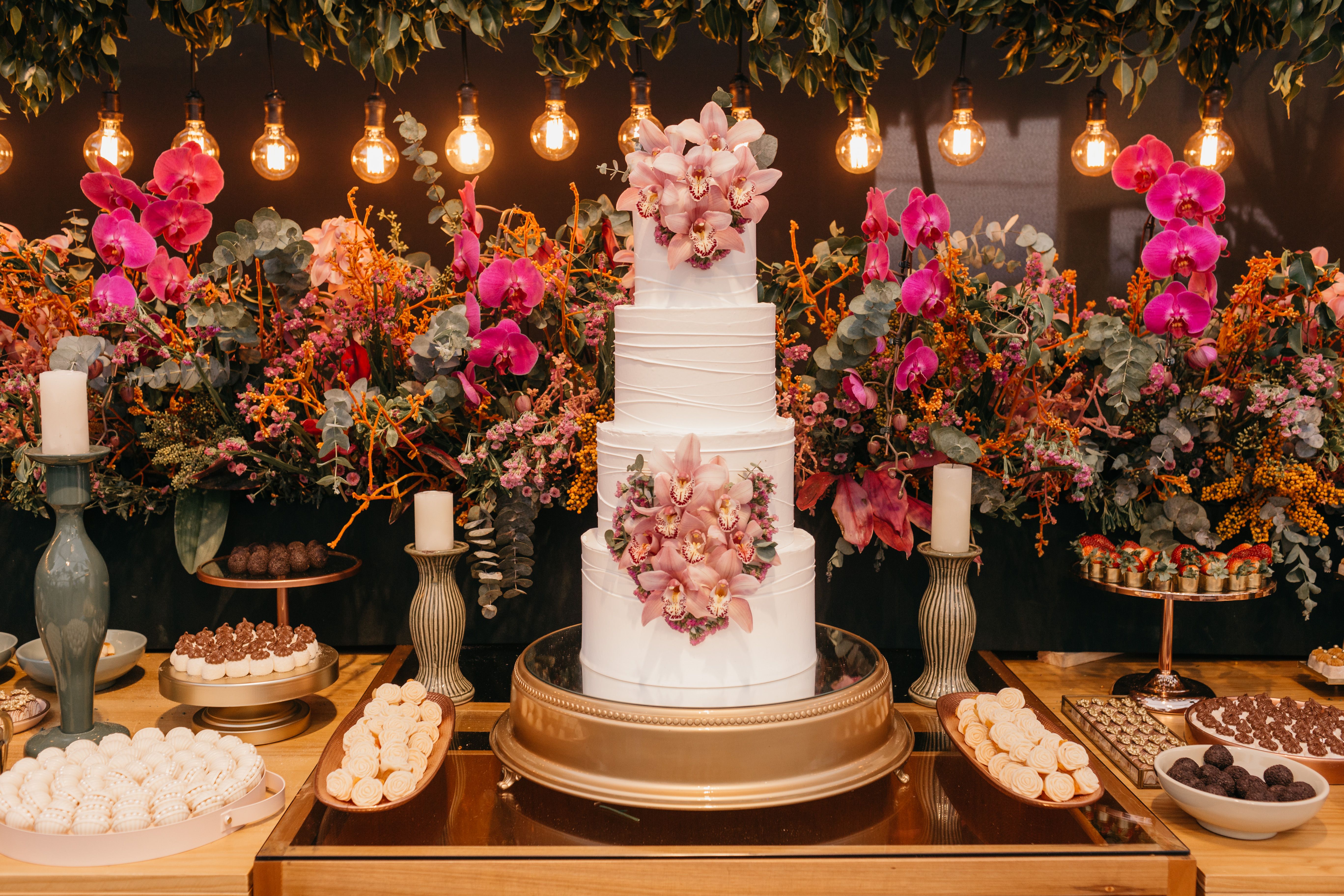
Cake is measured differently, in servings rather than weight, and the answer depends entirely on which slice standard your baker uses. A 12-inch round is 40 party servings or 56 wedding servings — the same cake, quoted two ways. The cake sizing guide has the full round, square, sheet, and tiered charts, plus the question to ask a bakery before you compare quotes.
If there's a dessert table alongside the cake, plan for only 65–70% of guests taking a slice.
Totals by guest count
Buffet dinner, mixed adult crowd, three mains, two sides, one starch:
| Guests | Protein | Vegetables | Starch (dry) | Salad | Bread | Total food |
|---|---|---|---|---|---|---|
| 10 | 5.5 lbs | 2.5 lbs | 1.5 lbs | 1.25 lbs | 15 | ~22 lbs |
| 25 | 14 lbs | 6.25 lbs | 4 lbs | 3 lbs | 38 | ~55 lbs |
| 50 | 27 lbs | 12.5 lbs | 8 lbs | 6 lbs | 75 | ~110 lbs |
| 75 | 41 lbs | 19 lbs | 12 lbs | 9.5 lbs | 113 | ~165 lbs |
| 100 | 55 lbs | 25 lbs | 16 lbs | 12.5 lbs | 150 | ~220 lbs |
For a full menu-by-menu breakdown at the most common headcount, including a copy-paste shopping list, see how much food for 50 guests.
What it costs
| Approach | Per person |
|---|---|
| Self-catered casual buffet | $9–$14 |
| Self-catered upscale menu | $18–$30 |
| Drop-off / boxed catering | $18–$35 |
| Basic catered buffet | $35–$60 |
| Plated catering | $75–$160 |
The Knot's Real Weddings Study puts average US wedding catering at $80 per person, ranging from $62 to $123 by region — Midwest cheapest, Mid-Atlantic most expensive. Service style moves you within that range about as much as geography does.
Don't forget the drinks. For 50 guests over four hours you're looking at roughly 200 drinks and 50 lbs of ice, and the party drink calculator carries your guest count across so you're not recalculating from scratch.
Serving safely
Put out about 60% of the food at the start and hold the rest back. Two reasons: the spread still looks intentional at hour two, and you stay inside safe holding times.
The USDA's food safety basics sets the rule — perishable food shouldn't sit at room temperature beyond two hours, dropping to one hour above 90°F, with hot items held at 140°F or above and cold at 40°F or below. At an outdoor summer party that one-hour limit is a genuine constraint, not a technicality.
Practical setup: chafing dishes or slow cookers for hot food, serving bowls nested in ice for cold, and small platters replaced often rather than one enormous tray topped up all evening.
Five mistakes that cost the most
- Multiplying every dish by the full per-person amount. Guests sample. Scale each dish down as you add options.
- Treating the headcount as adult appetites. Run eater-equivalents first.
- Ignoring service style. Buffet versus plated is a 20% swing before you've chosen a single dish.
- Not confirming the guest count. Every number here multiplies off one figure, and "about 50" isn't one. Chase RSVPs properly — a digital invite with a built-in response list gives you a real number instead of a text-message tally, and the invitation wording generator will draft the wording if you haven't sent yours.
- Forgetting the drinks until the day before. Someone always ends up at the store buying ice at 8pm.
If you only remember two things: work out your eater-equivalents before anything else, and scale each dish down as you add more of them. Those two adjustments account for most of the difference between a table that looks generous and a fridge full of foil trays you'll be eating for a week.
People Also Asked
Explore common questions related to this blog.