A buffet costs roughly 25–35% less per person than a plated dinner — despite the buffet using about 20% more actual food. For 100 guests, that gap is usually $2,500 to $4,000.
That contradiction is the whole story, and it's why most cost comparisons online get this wrong. You are not paying for food. You're paying for labor, and plated service needs two to three times as many people to execute.
Below is where the money actually goes, what each style costs in 2026, and the four line items that show up on the final invoice after you've signed.
If you're still working out quantities rather than pricing, the party food calculator adjusts totals by service style automatically, and the full guide to food per person covers the underlying math.
The counterintuitive part: buffets use more food
Guests serve themselves at a buffet, and self-served portions are consistently larger than what a kitchen plates. People also come back. So caterers build in roughly 20% more food for a buffet than a plated meal covering the same headcount.
| Service style | Food volume vs plated | Cost per person vs plated |
|---|---|---|
| Buffet | +20% | −30% |
| Family style | +15% | −15% |
| Food stations | +25% | −10% |
| Plated | baseline | baseline |
| Boxed / picnic | baseline | −45% |
More food, less money. The food itself is typically only 30–40% of what you're charged — labor, rentals, and service charges make up the rest, and that's where the two styles genuinely diverge. Because food is the cheap part, the cheapest thing on the table — rice, pasta, potatoes, bread — is also the most effective way to pad a buffet without moving the bill.
What each style costs per person
The Knot's 2025 Real Weddings Study, which surveyed nearly 17,000 US couples, put average wedding catering at $80 per person, with regional averages spanning $62 to $123 — the Midwest cheapest, the Mid-Atlantic most expensive. Service style moves you within that range as much as geography does.
| Service style | Typical range, per person |
|---|---|
| Boxed / drop-off | $18–$35 |
| Basic buffet | $35–$60 |
| Upscale buffet | $60–$90 |
| Family style | $65–$100 |
| Food stations | $70–$120 |
| Plated, two-course | $75–$110 |
| Plated, three-course | $95–$160 |
| Plated, high-end | $160–$250 |
Add 18–25% on top of every figure above for service charge, which is not a tip and usually not negotiable.
Where your money actually goes
The rough split
| Component | Buffet | Plated |
|---|---|---|
| Food and ingredients | 40% | 30% |
| Kitchen labor | 15% | 22% |
| Service staff | 12% | 28% |
| Rentals and equipment | 13% | 12% |
| Overhead and margin | 20% | 8% |
Note that the food percentage is higher for a buffet even though the total is lower — because the labor line is so much smaller.
Staffing is the real variable
Plated service
One server per 10–12 guests, because every plate is carried to a specific person, cleared, and replaced between courses. A 100-guest plated dinner needs 8–10 servers plus additional kitchen staff for the plating line. At $35–$45 an hour for a six-hour call, that's $2,000–$2,700 in service labor alone.
Buffet service
One server per 25–30 guests. Staff replenish trays, clear plates, and manage the line. The same 100 guests need 3–4 servers — roughly $800–$1,000.
That single difference accounts for most of the price gap between the two styles.
Rentals differ less than you'd think
Plated meals need more china — a separate plate per course — and more glassware. Buffets need chafing dishes, sternos, serving utensils, and buffet tables. It roughly evens out, though plated pulls slightly ahead on dish rental and dishwashing.
The line items that show up later
These are the four things that turn a $75-per-person quote into a $110-per-person invoice.
Service charge
18–25% of the food and beverage subtotal, applied automatically. It covers staffing overhead and is legally distinct from gratuity in most states — meaning a tip may still be expected on top. Ask explicitly whether gratuity is included.
Cake cutting fee
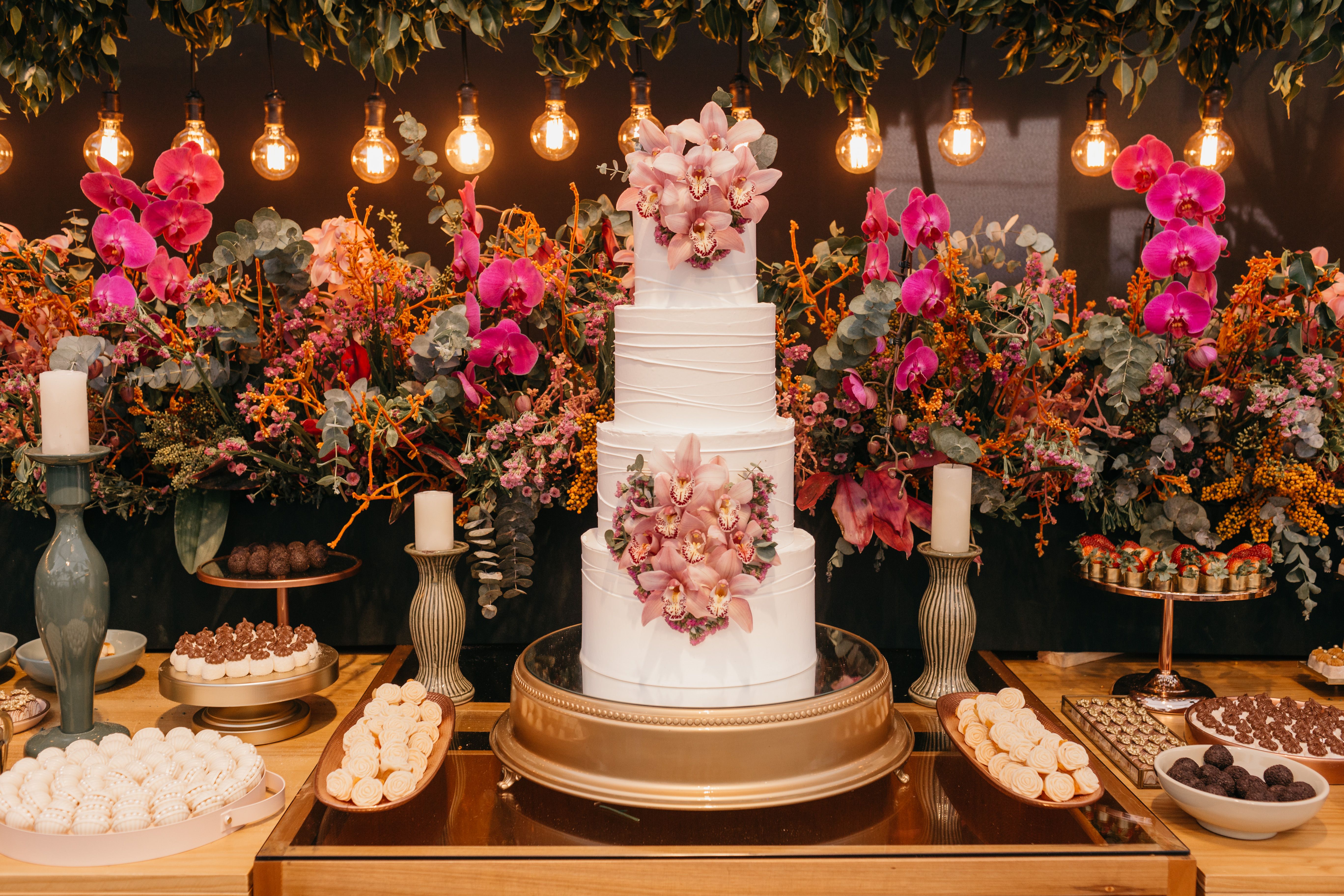
$2–$5 per guest if you bring in a cake the caterer didn't make. For 100 guests that's $200–$500 to slice a cake you already paid for. Some venues waive it if you order dessert through them. Worth factoring in before you size the cake, since a full sheet cut in the kitchen sidesteps the fee at some venues where a display cake doesn't.
Plate or chair fee
Some venues charge per place setting regardless of what's on it — $5–$15 per guest, quietly listed as "service ware."
Overtime
Staff are booked for a set number of hours. Running an hour past is typically billed at 1.5× the hourly rate across every person on the floor.
Worked example: 100 guests
Same menu, same venue, same evening.
| Line item | Buffet | Plated |
|---|---|---|
| Food | $4,500 | $5,000 |
| Kitchen labor | $1,200 | $2,000 |
| Service staff | $900 | $2,400 |
| Rentals | $800 | $1,300 |
| Subtotal | $7,400 | $10,700 |
| Service charge (20%) | $1,480 | $2,140 |
| Total | $8,880 | $12,840 |
| Per person | $89 | $128 |
Difference: $3,960. That's a photographer, or a meaningful chunk of the bar. Running this against your own numbers alongside venue and flowers is what the wedding budget calculator is for — catering is usually 20–30% of the total, so a decision this size ripples.
Which style actually suits your event
| Your situation | Choose |
|---|---|
| Tight budget, casual tone | Buffet |
| Formal reception, seated dinner | Plated |
| Guests with varied dietary needs | Buffet |
| Older guest list or limited mobility | Plated or family style |
| Tight timeline — under 3 hours | Plated |
| Encouraging mingling | Stations |
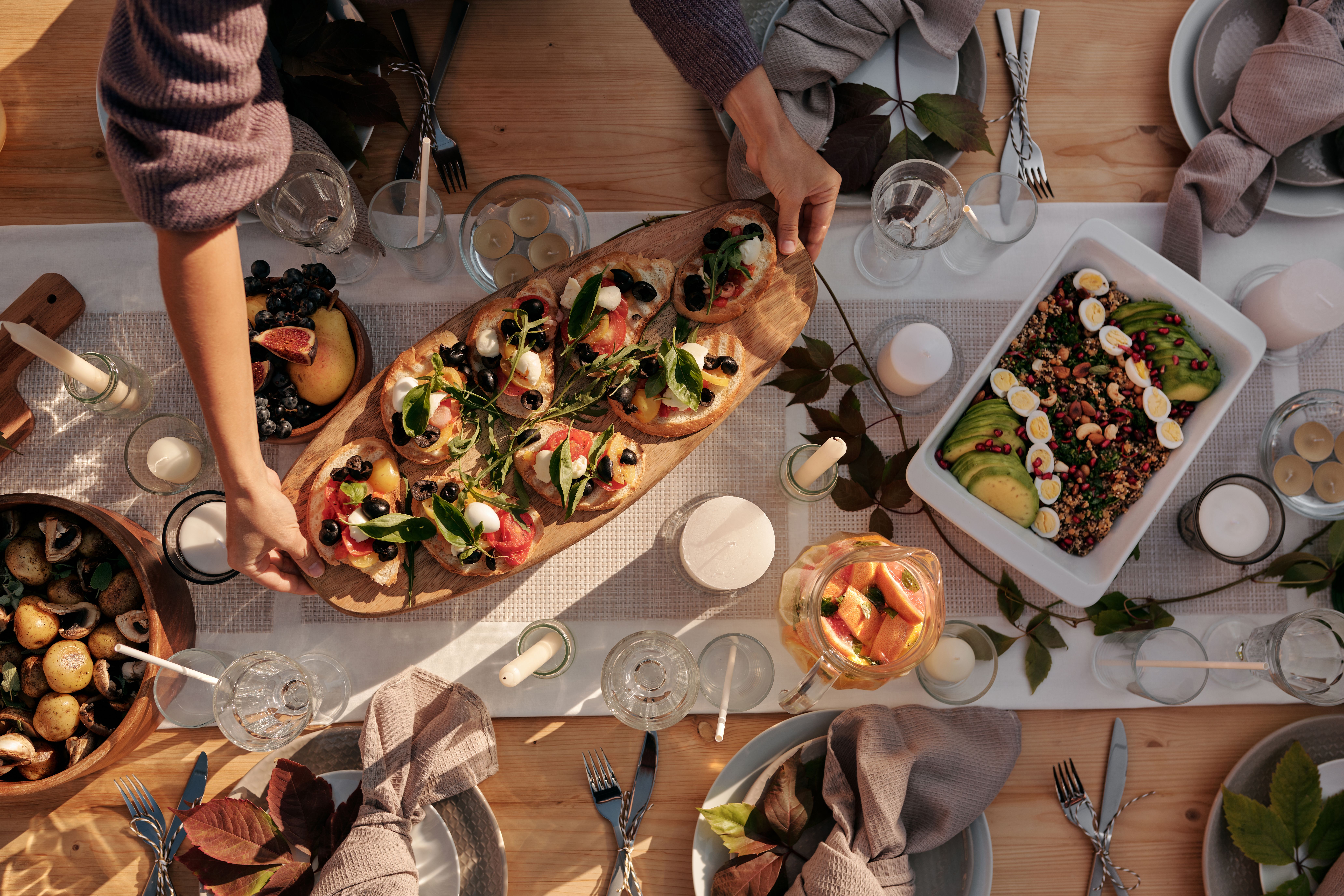
| Outdoor or rustic venue | Buffet or family style |
| Under 40 guests | Family style |
Timing matters more than people expect
A buffet line moves about 100 guests through in 30–40 minutes with two service lines, longer with one. Plated service for 100 takes 45–60 minutes but everyone eats simultaneously, which matters if you have speeches scheduled. If your reception runs short, plated protects your timeline.
The compromise most caterers will quote
Plated appetizer and salad, buffet mains, plated dessert. You get the formality where guests are seated and paying attention, and the savings on the labor-heavy main course. It typically lands 15% below a fully plated dinner. Pairs well with a passed cocktail hour, and the appetizer piece counts barely change between passed and stationary service.
Food safety costs money too
Buffets carry a real operational constraint: perishable food can't sit out indefinitely. The USDA's buffet food safety guidance requires hot items held at 140°F or above and cold at 40°F or below, with a two-hour ceiling at room temperature — one hour above 90°F.
In practice that means chafing dishes, sternos, ice wells, and staff replenishing in batches rather than putting everything out at once. Reputable caterers price this in. If a quote comes back suspiciously low, ask how they're holding temperature — a self-catered or under-staffed buffet at an outdoor summer wedding is where things actually go wrong.
Questions to ask before you sign
- Is the service charge gratuity, or is a tip expected on top?
- How many servers are included, and for how many hours?
- What's the overtime rate per hour, per person?
- Is there a cake cutting fee? Is it waived if we order dessert from you?
- Are rentals included, or billed separately?
- What's your final headcount deadline, and can it go down as well as up?
- Do vendor meals count against our guest count?
- How is food held at temperature for a buffet?
Question 7 catches people out — photographers, the DJ, and the planner all eat, usually at a reduced rate, and it's rarely mentioned upfront.
Plated service is the less forgiving of the two here — the count you give the caterer is the count you pay for. Set your RSVP deadline with two clear weeks before their cutoff.
The short version: if the tone of your event allows a buffet, take it — you'll serve more food for less money, and the savings scale directly with your guest count. If you need a plated dinner for formality or timeline reasons, that's a legitimate reason to spend the money. Just don't choose plated because you think it will use less food. It won't save you anything on the ingredients, and the labor is where the bill lives.
For a smaller event, the same logic holds at a smaller scale — the 50-guest breakdown walks through what self-catering the same menu would cost instead.
People Also Asked
Explore common questions related to this blog.