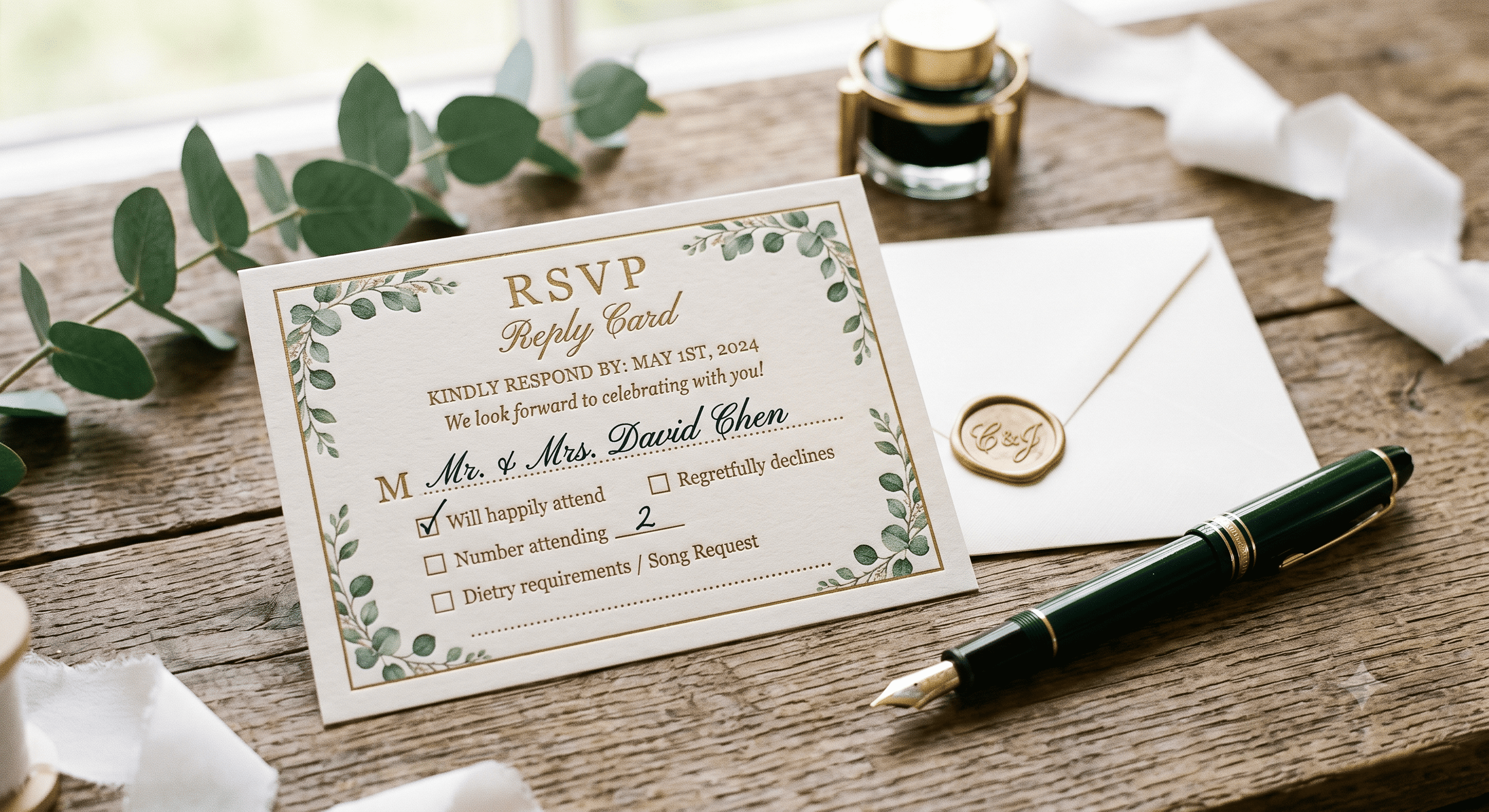
Here's the mistake almost everyone makes: asking for the meal choice per household instead of per person.
"The Chens — 2 attending — chicken." Great. Which Chen wanted the fish? You'll find out at 8pm on the night, when one of them is sitting in front of a plate they didn't order and your caterer has no spare.
Ask per person. That one change prevents most of what goes wrong here. The rest of this is the detail around it.
Heads up: some links in this post are Amazon affiliate links — if you buy through them, Eventic earns a small commission at no extra cost to you.
Preferences and allergies are two different questions
This is the distinction that matters more than any other, and combining them into one "dietary requirements" box is how allergies get missed.
A preference is vegetarian, vegan, no pork, no beef, doesn't like fish. If it's overlooked, someone has a disappointing dinner.
An allergy or medical restriction is coeliac disease, a nut allergy, shellfish anaphylaxis. If it's overlooked, someone goes to hospital.
The FDA recognises nine major food allergens — milk, eggs, fish, crustacean shellfish, tree nuts, peanuts, wheat, soybeans and, since 2023, sesame. Those are the ones your caterer's kitchen is set up to handle carefully, and the ones you need reported precisely rather than as a general note.
So use two fields:
Dietary preference: ___ No restrictions ___ Vegetarian ___ Vegan ___ Pescatarian ___ Halal ___ Kosher
Allergies or medical dietary needs (we'll pass these to the kitchen): ______________________
Naming the kitchen in that second field is deliberate. It signals the information is going somewhere real, which gets you specific answers instead of "I'm a bit funny with dairy."
Do you even need meal choices?
Depends entirely on service style:
| Service style | Ask for meal choice? | Ask for allergies? |
|---|---|---|
| Plated, multiple entrées | Yes — per person, on the RSVP | Yes |
| Plated, single set menu | No | Yes |
| Buffet | No | Yes |
| Family style | No | Yes |
| Food stations / grazing | No | Yes |
| Cocktail reception | No | Yes |
Allergies: always. Meal choice: only if the kitchen is plating individual selections. If you're doing a buffet and asking guests to pick an entrée, you're collecting data nobody will ever use — and every extra RSVP field costs you response rate. Nothing gives guests the ick faster than a four-page form for a party.
How to word it on the RSVP
For a plated dinner, with two named guests pre-filled:
Marcus Ellery — Entrée: ___ Braised short rib ___ Herb chicken ___ Wild mushroom risotto (v) Priya Raghavan — Entrée: ___ Braised short rib ___ Herb chicken ___ Wild mushroom risotto (v)
Allergies or medical dietary needs: ______________________
Pre-filling the names does two jobs at once: it gets you per-person answers, and it quietly confirms exactly who's invited. There are more RSVP wordings that handle guest counts and plus-ones cleanly if that's the part you're stuck on.
For a buffet or family-style event, one line is enough:
Dinner is served family-style. Please tell us about any allergies or dietary needs so we can make sure there's something good for everyone: ______________________
Three rules for the wording itself:
- Name the actual dishes. "Beef / Fish / Veg" tells a guest nothing. "Braised short rib / pan-seared salmon / wild mushroom risotto" gets a considered answer and fewer changes later.
- Mark the vegetarian and vegan options. Guests shouldn't have to guess whether the risotto has parmesan in it. It does, usually.
- Never make allergies a dropdown. Free text only. Real restrictions don't fit in your list.
Tracking it without losing your mind
Meal counts are the part of the guest list that goes stale fastest — people change their minds, plus-ones get confirmed, someone becomes vegetarian in October.
Track it per person, in the same place as everything else:
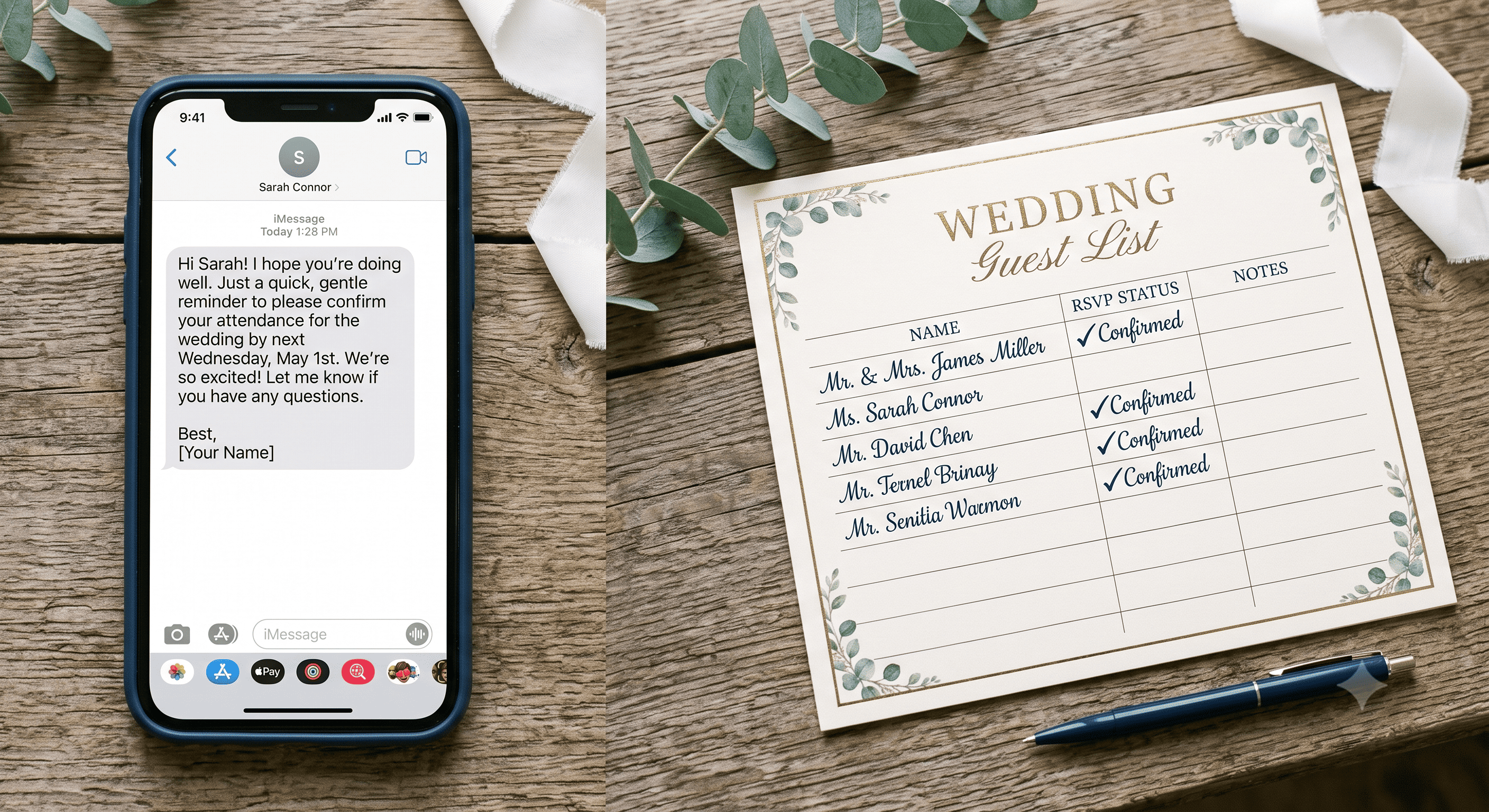
| Guest | Household | Attending | Entrée | Allergy / medical | Told caterer |
|---|---|---|---|---|---|
| Marcus Ellery | Ellery | Yes | Short rib | — | ✓ |
| Priya Raghavan | Ellery | Yes | Risotto (v) | Sesame — severe | ✓ |
| Dev Sharma | Sharma | Yes | Chicken | — | ✓ |
| Anjali Sharma | Sharma | Yes | Chicken | Coeliac | ✓ |
That "told caterer" column is worth more than it looks. Allergy information that lives only in your spreadsheet has helped nobody.
If your invitations are digital, collecting this at the same moment guests confirm attendance saves you a second round of chasing entirely — the responses land as structured data rather than as forty text messages you have to interpret. If you're on paper cards, transcribe each one into the list the day it arrives, not in a batch at the end. Batching is where the transcription errors happen.
Whichever way you collect it, it belongs in the one list that everything else points at — a separate "meals" spreadsheet will drift out of sync with your attendance list within a week. It always does.
The guest with six restrictions
You'll get one. No gluten, no dairy, no nightshades, no soy, low FODMAP, and they don't eat anything that was in a fryer.
Don't try to solve it in the RSVP form. Do this instead:
- Message them directly: "Thank you for the details! I'm passing these to our caterer — can I put them in touch with you if they have questions?"
- Forward it to the caterer as-is. Don't summarise it, don't simplify it. Let the professionals judge what's workable.
- Tell the guest what the plan is once you know. Someone with complex needs is usually braced to be an inconvenience; a short "you're sorted, here's what they're making" is a genuinely kind message to receive.
Most caterers handle this constantly and would much rather know four weeks out than four hours out.
The day-of part everyone forgets
You collected all this. Now the server needs to know which plate goes where.
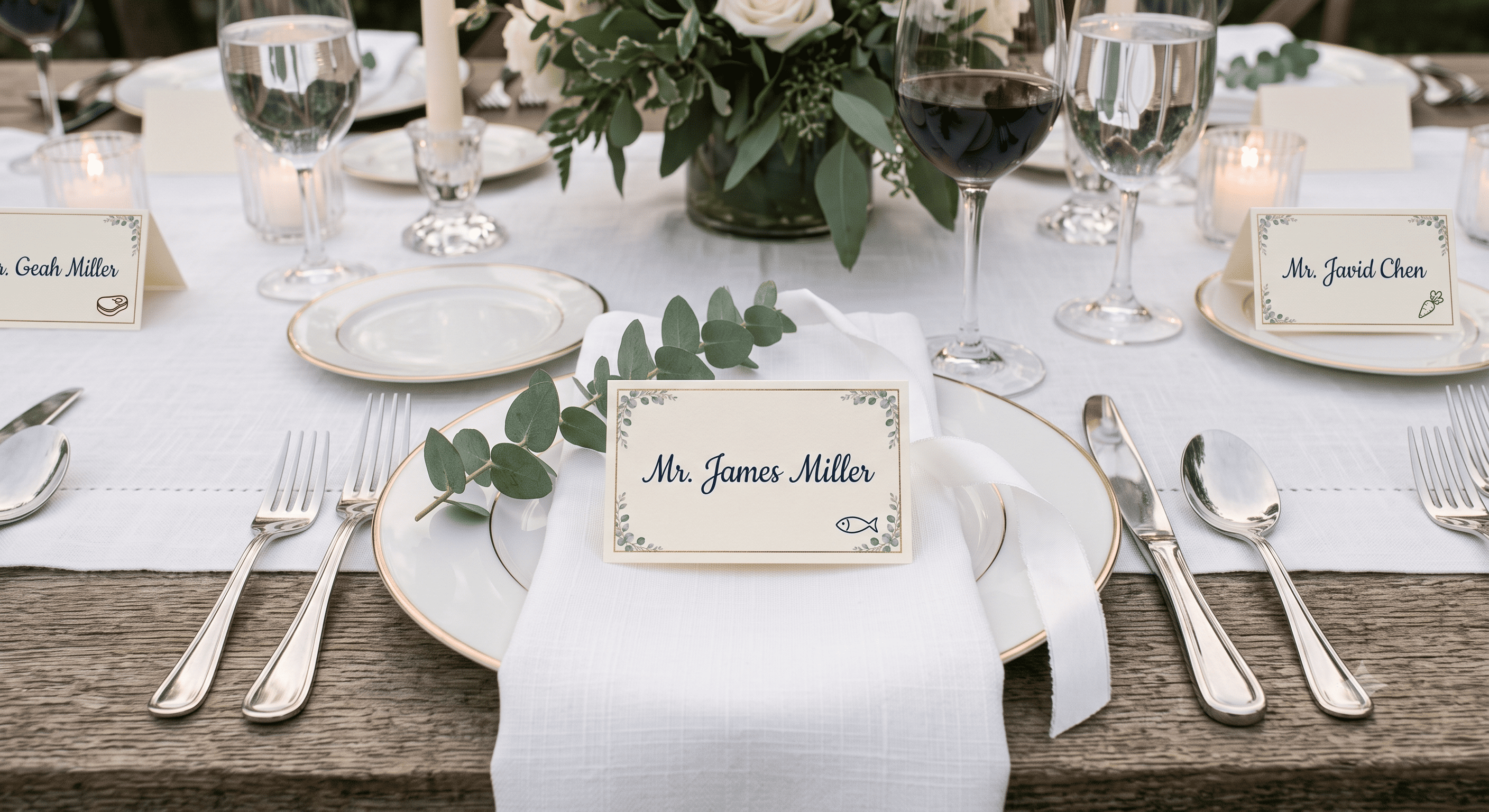
The standard solution is a discreet meal indicator on the place card — a small symbol, a coloured dot, or a printed letter in the corner. Ask your caterer what system they use; many have one and will tell you exactly what to put on the cards. If you're making them yourself, small meal-choice stickers for place cards do the job for a few dollars and save your servers reading a seating chart mid-service. Not glamorous. Genuinely prevents the wrong plate landing.
Print a separate allergy sheet for the kitchen too — table number, guest name, restriction. One page. Hand it over with the final numbers.
Getting the answers on time
None of this works if half the RSVPs come in after your caterer's cutoff. Set the reply deadline two to three weeks before the kitchen needs final numbers, because the meal choices are usually the last thing to settle. And when someone confirms attendance but leaves the entrée blank — which happens constantly — a short individual message clears it up faster than another mass reminder; the follow-up wording is worth borrowing rather than improvising.
One small thing that pays for itself: ask your caterer for their allergy form early, before you finalise the RSVP. Some have a specific format they want the information in, and matching it now means you're not retyping forty rows into their template the week before.
People Also Asked
Explore common questions related to this blog.