Most people pick their RSVP date the same way they pick a password — something that looks about right, entered quickly, never thought about again. Then three weeks later the caterer calls asking for final numbers and there are nineteen households who haven't replied.
Your RSVP deadline isn't a nice round date. It's a calculation, and it only runs in one direction: backwards from the moment somebody needs a number from you.
Heads up: some links in this post are Amazon affiliate links — if you buy through them, Eventic earns a small commission at no extra cost to you.
The calculation
Three questions, in this order:
- When does your caterer or venue need final numbers? Ask them. It's usually 7–14 days before the event, and it's in your contract.
- Subtract two to three weeks. That gap is your chase window, and you will use every day of it.
- That date is your RSVP deadline. Print it. Don't round it to a prettier Friday.
Worked example. Wedding on November 14. Caterer needs the count by November 1. Subtract three weeks → RSVP deadline October 11. Invitations go out around September 20, which gives guests three weeks to reply and gives you three weeks to chase the ones who don't.
The chase window is the part people cut, and it's the part that saves you. Roughly a quarter to a third of any guest list will blow past the deadline. If your deadline is the caterer's deadline, you have zero days to fix that, and you'll be guessing on twenty people at an average of $292 per guest, which is what The Knot's 2026 study found couples spent last year. Guessing high wastes money. Guessing low is worse.
Standard timelines by event type
| Event | Send invitations | RSVP deadline | Notes |
|---|---|---|---|
| Local wedding | 6–8 weeks before | 3–4 weeks before | Save-the-dates 6–8 months out |
| Destination wedding | 3 months before | 6–8 weeks before | Save-the-dates 8–12 months out — guests need to book flights and leave |
| Micro-wedding (under 30) | 4–6 weeks before | 2–3 weeks before | Small lists move faster; you can chase everyone personally |
| Engagement party | 4–6 weeks before | 2 weeks before | |
| Bridal or baby shower | 4–6 weeks before | 2 weeks before | Host often needs numbers for favours and games |
| Rehearsal dinner | 4 weeks before | 2 weeks before | Can piggyback on the wedding RSVP if the same people |
| Milestone birthday party | 4–6 weeks before | 2 weeks before | |
| Casual house party | 2–3 weeks before | 3–5 days before | |
| Holiday party (Nov/Dec) | 6 weeks before | 3 weeks before | December calendars fill absurdly early — send earlier than feels necessary |
Two adjustments to make to any row in that table:
Holiday season, add two weeks to everything. People book December in October. An invitation arriving November 20 for a December 12 party is competing with four other things they've already said yes to.
Anyone who needs to fly, add a month. Not because they reply slowly, but because they genuinely can't answer until they've checked fares and leave.
What if you're already running late?
It happens constantly. Venue changed, the printer took three weeks, the guest list argument lasted until August.
Compress in this order:
- Shorten the guest reply window first, not your chase window. Three weeks to reply becomes ten days. Guests who were going to reply quickly still will; guests who were going to be slow were going to be slow either way.
- Send digitally. Post costs you 3–5 days each direction. A link arrives instantly, and if you're behind, that week is the whole difference.
- Say you're behind. "We know this is short notice — please reply by the 20th if you can." Honesty gets faster answers than a formal deadline does.
- Skip straight to phone calls for the top 20 households. Family, wedding party, anyone travelling. Don't wait for them to reply to a card.
If it's genuinely last-minute, collecting replies without building anything — a form link or a QR code on a digital invite — takes about ten minutes to set up, which matters when you've got eleven days.
Making the deadline mean something
A deadline nobody enforces trains people not to respect the next one.
Put a reason next to the date. "Kindly reply by October 11 so we can confirm numbers with our caterer" outperforms a bare date, because it converts an arbitrary request into an actual constraint. There are more deadline phrasings that read well on a card if you want the formal versions.
Set it slightly earlier than you need. Not a fake deadline — a buffered one. If the caterer needs numbers on November 1 and you tell guests October 11, you've built in your own margin without lying to anyone.
Send a reminder before the deadline, not just after. A single message four or five days out — "quick reminder, replies close Saturday!" — pulls in a meaningful chunk of the people who were always going to reply and simply hadn't. This is the cheapest win available and almost nobody does it. Digital invites make it a two-minute job, since the tool already knows who hasn't responded.
Then follow up individually. Three to four days after the date passes, personally, one message each. The wording that actually gets answers is worth copying rather than improvising, especially for the awkward cases.
And have a stop date. Decide now: after one follow-up and one final check, non-responders are marked as not attending. Emily Post is unambiguous that replying is the guest's obligation, and you're allowed to close the list rather than keep it open indefinitely out of politeness.
The dates you should actually write down
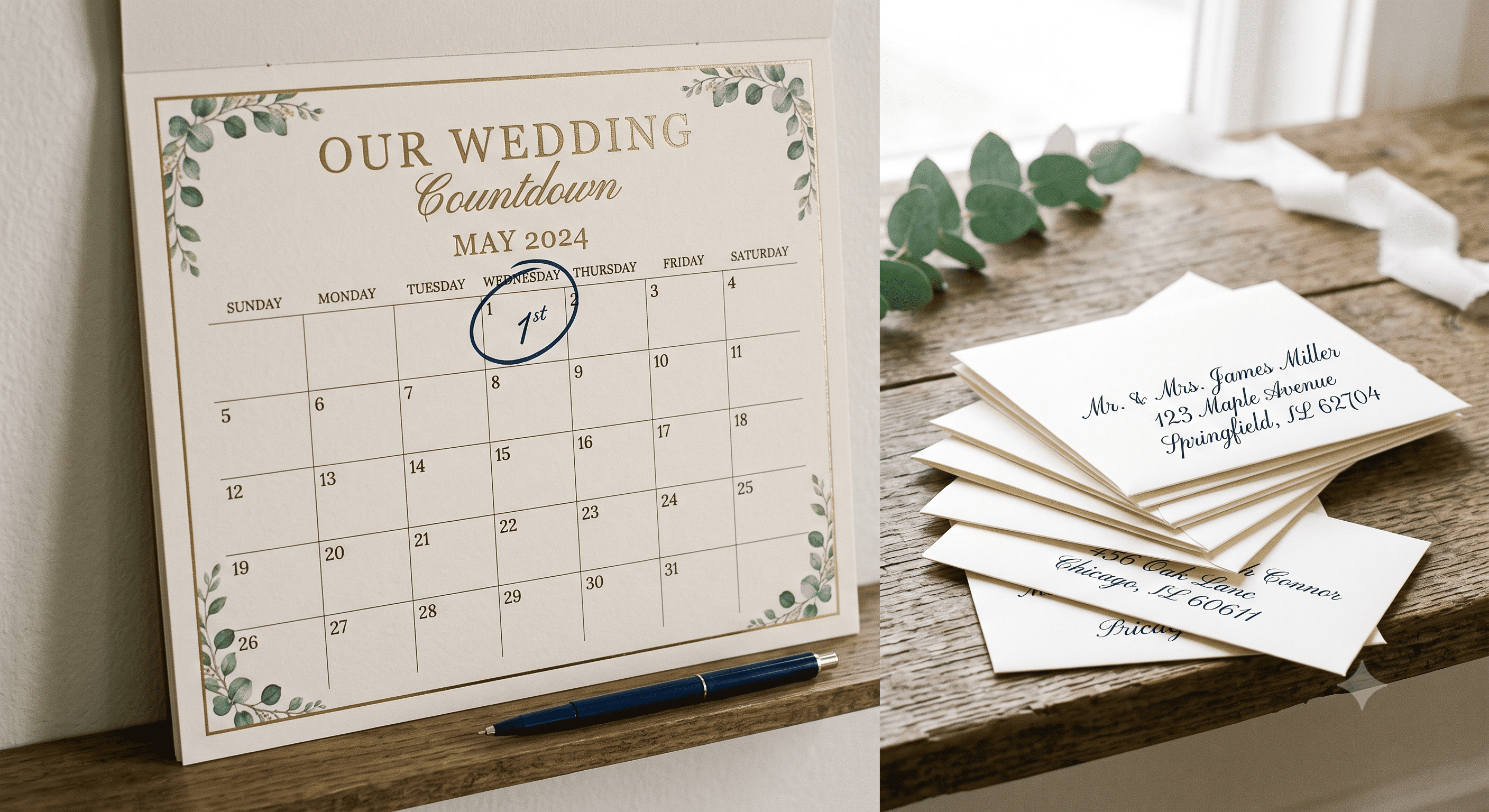
Put all six of these in your calendar the day you book the venue. If you keep a paper planner for this, the front page is the right place for them — the value isn't the notebook, it's having the whole chain visible in one glance instead of scattered across a phone.
- Save-the-dates sent
- Invitations sent
- Reminder message (5 days before deadline)
- RSVP deadline
- Follow-up round (3–4 days after deadline)
- Final numbers to caterer
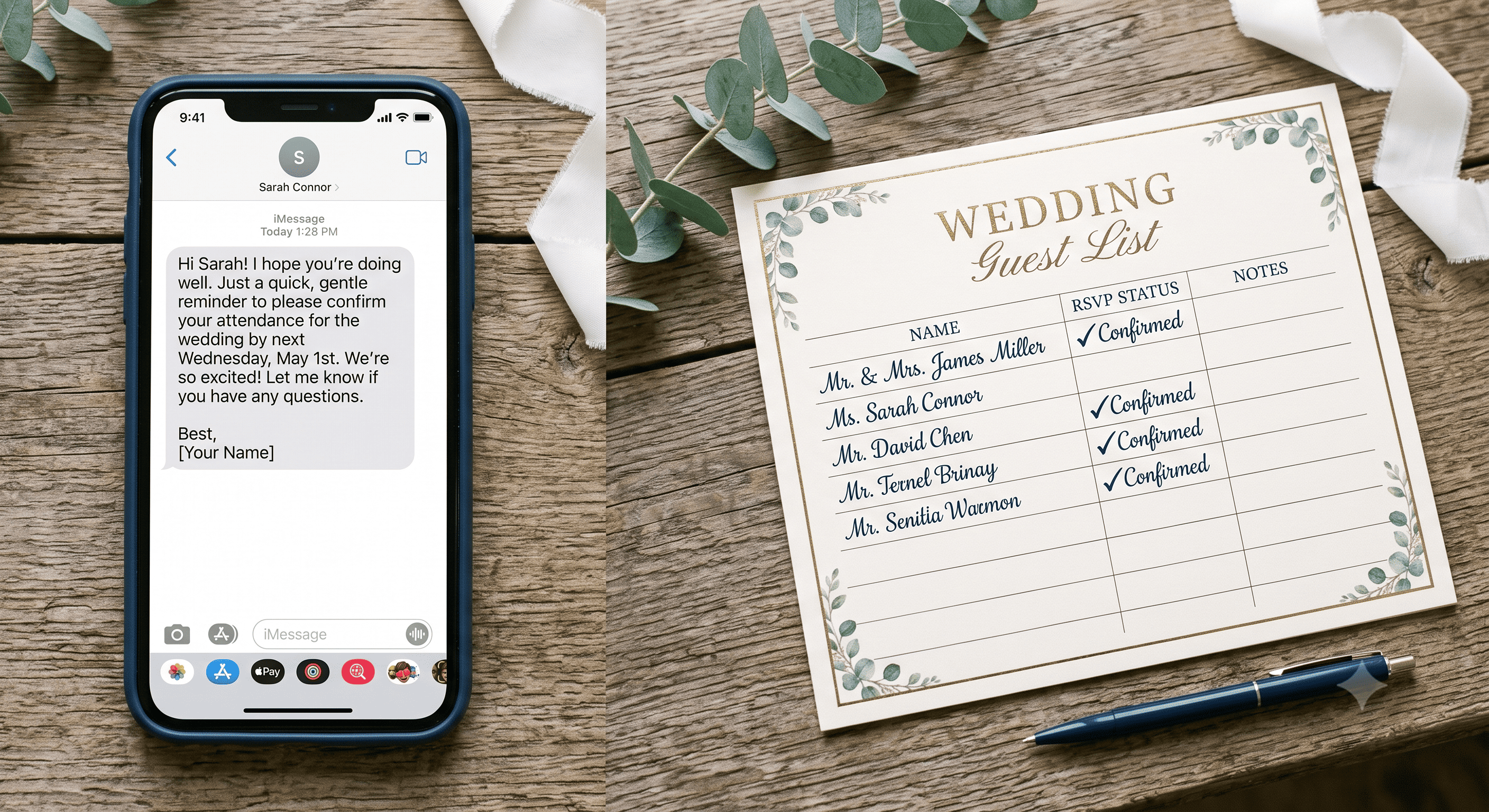
The tracking side of it — statuses, meal counts, who's been chased — belongs in one list you actually maintain, not spread across the calendar.
Go look at your catering contract right now and find the final-numbers date. It's in there, it's specific, and almost nobody reads it until it's too late to matter. Everything else on this page depends on that one number.
People Also Asked
Explore common questions related to this blog.