Disclosure: This post contains affiliate links. If you buy through them, we earn a small commission at no extra cost to you. Eventic makes digital invitations, so we have a commercial interest here — we've tried to give you the real picture anyway.
Short answer: yes, seed paper grows — reliably, under the right conditions. The problem is that most guests never plant it.
That's the gap between how seed paper is marketed and what actually happens. The paper works. The behavior it depends on usually doesn't. Here's what to expect before you spend $3–$7 per invitation.
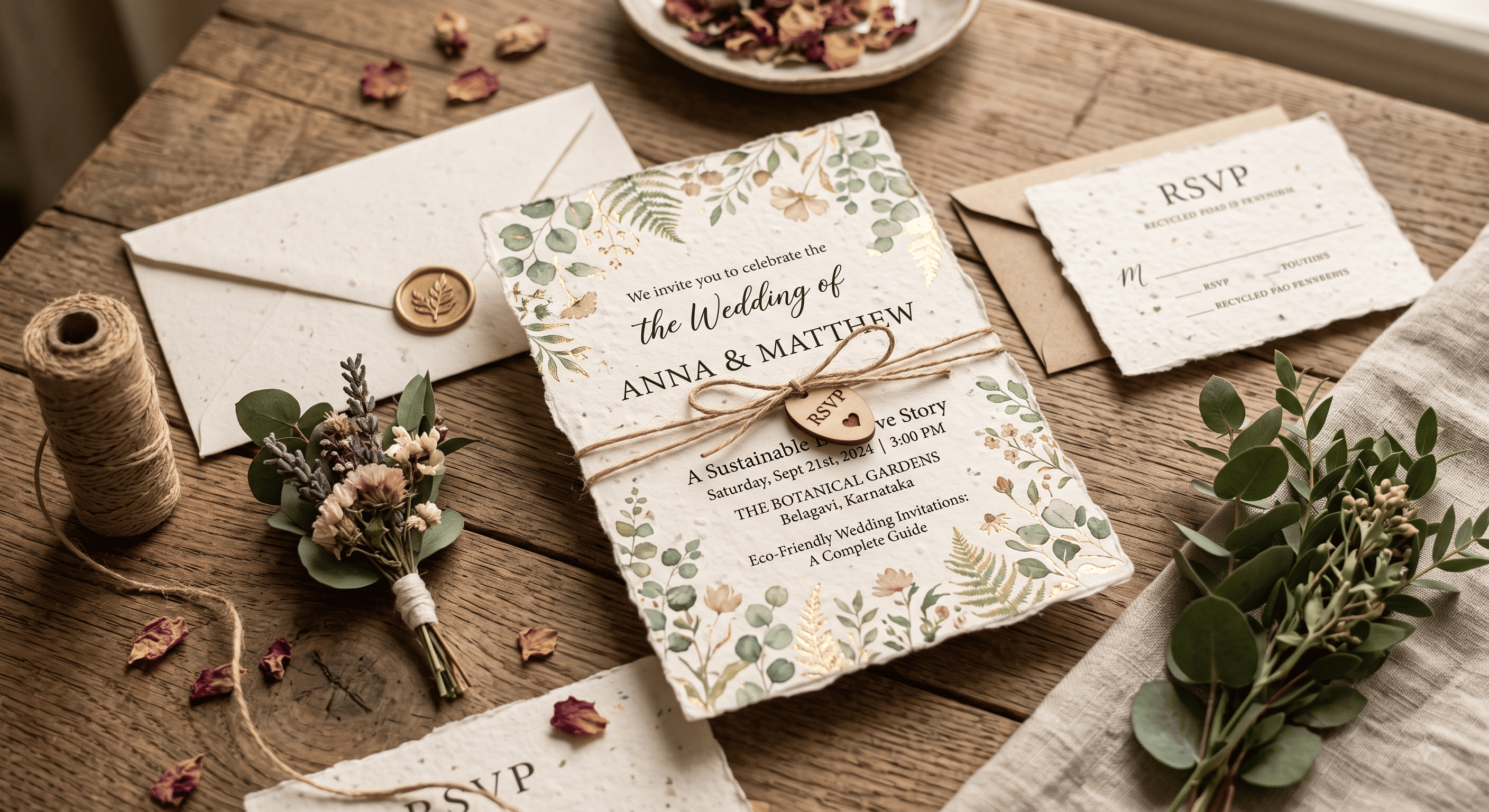
What seed paper actually is
Handmade paper, typically 75–100% post-consumer recycled pulp, with wildflower or herb seeds embedded during production. Plant it, and the paper composts while the seeds germinate.
The paper itself is a legitimately good material — no virgin pulp, no trees, biodegradable. That part isn't in question. For where it sits among the other options, the full eco-invitation guide compares it against recycled cardstock, letterpress, and digital.
Do they actually grow?
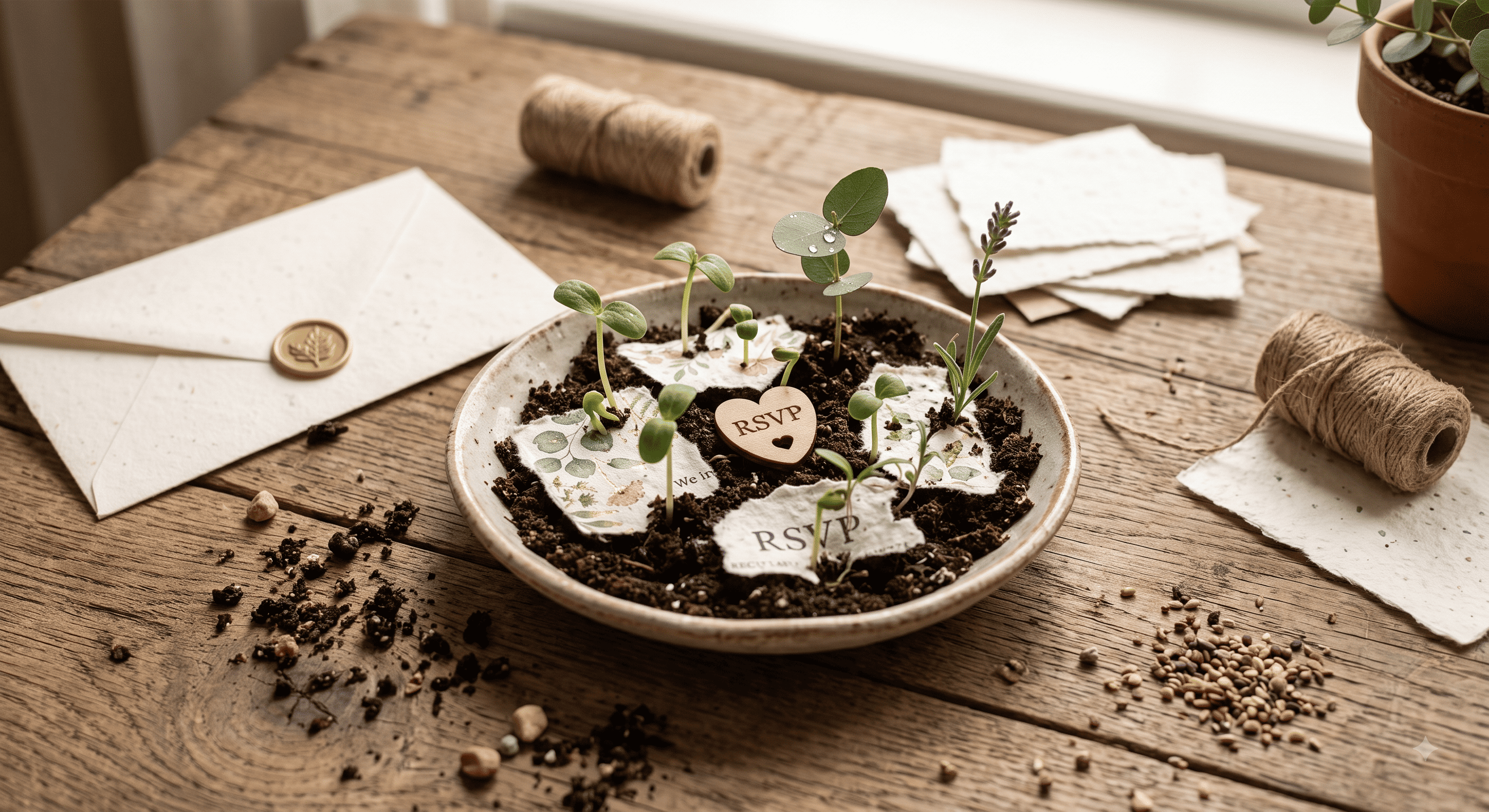
Yes, when planted properly. Manufacturers report sprouts within 7–10 days, with wildflowers blooming in 8–12 weeks.
What it needs
- Soil, lightly compressed, with about ⅛ inch covering the paper
- Constant moisture for the first 10 days — this is the step people skip
- Full sun, or a bright windowsill
- Spring planting in most climates; fall where the ground freezes hard
Shelf life is shorter than you'd think
Germination rates start declining after about 18 months to 2 years, and drop off noticeably by year three or four. Seed paper stored in a warm or humid place degrades faster.
This matters for wedding timelines. If you order invitations eight months before the wedding and guests hold them another few months as a keepsake, you're already a year in before anything reaches soil.
The honest caveat
Every germination figure available comes from manufacturers testing their own product. Independent data essentially doesn't exist. Reputable makers do test consistently, and there's no particular reason to doubt them — but "high germination rates" is a vendor claim, not a verified statistic.
The real problem: nobody plants them
This is the thing worth knowing before you buy.
At a typical wedding, guests open the invitation, read it, and put it on the fridge or in a drawer. A few keep it as a memento. Some bin it. The share who soak it overnight, find a pot, cover it with an eighth-inch of soil, and keep it moist for ten straight days is small.
So the environmental case for seed paper mostly collapses to "it's recycled paper that biodegrades," which is true and fine — but that's also true of plain recycled cardstock at half the price.
Buy seed paper because it's a lovely gesture and a nice texture. Not because you're planting a meadow.
There's a fix, and it's covered further down.
The seed mix problem
Here's the part almost nobody discusses.
A University of Washington study examined 19 commercial wildflower seed mixes — including packets marketed with wedding and Earth Day branding. Every mix contained between three and thirteen invasive species, eight contained plants classified as noxious weeds somewhere in the US or Canada, and only five of the nineteen accurately listed their contents. One packet labeled "native" turned out to be 100% invasive.
That study is from 2002 and the industry has improved since — most established seed paper makers now specifically use non-invasive blends and say so. But it establishes the principle: a wildflower mix sold nationally cannot be regionally appropriate for every buyer. A blend that's harmless in Oregon may be a problem in Florida.
What to do about it
- Buy from makers who list species by name. "Wildflower blend" isn't a disclosure. "Black-eyed Susan, corn poppy, English daisy, snapdragon, sweet alyssum" is.
- Check the list against your region using the USDA's invasive species resources.
- Consider herb blends instead. Basil, oregano, and parsley grow in pots, guests actually use them, and nothing escapes into a local ecosystem.
Herb seed paper is the underrated choice here — better germination in containers, genuinely useful output, and none of the regional risk.
What it costs
| Format | Per invitation |
|---|---|
| Blank seed paper sheets (print yourself) | $1–$2 |
| Pre-printed seed paper invitations | $3–$7 |
| Seed paper with envelope and RSVP card | $5–$10 |
| Plain recycled cardstock (for comparison) | $2–$4 |
| Digital | $0–$2 |
For 100 guests, seed paper invitations run $300–$700 versus $200–$400 for recycled cardstock. You're paying a premium of roughly $150–$300 for the seeds and the handmade texture.
That's not unreasonable for something you like. It is worth being clear that you're buying an aesthetic, not an environmental upgrade over ordinary recycled paper.
Supplies, if you're printing your own
Printing yourself cuts cost significantly and removes a shipping leg. Vet the specific products before ordering — we've linked to searches rather than picking for you.
Plantable seed paper sheets — Letter-size printable sheets, roughly $1–$2 each. Check the species list before buying, and check the manufacture date if it's shown; older stock germinates worse.
Herb seed paper — Basil and similar blends. Better container germination and no regional concerns.
Recycled kraft envelopes — A7 fits standard invitation sizing. Avoid poly-lined or windowed styles.
A warning about home printing
Seed paper is thick, textured, and inconsistent. Inkjet printers handle it better than laser (heat can damage seeds), and many home printers jam on it outright. Feed sheets one at a time, and test with a single sheet before committing to 100. A failed run wastes more paper than the whole exercise saves.
Hand-stamping or calligraphy often looks better on this stock than printing does, and sidesteps the problem entirely.
How to make guests actually plant them
If you're paying for seed paper, this is how to get value from it:
Print the instructions on the invitation itself. Not a separate card that gets separated. One line on the back: soak overnight, plant under ⅛" of soil, keep moist 10 days, full sun.
Say when to plant. "Plant in spring" is more actionable than nothing, and it addresses the shelf-life problem directly.
Make the seed paper the RSVP card, not the invitation. Guests keep invitations and return RSVPs — but with a digital RSVP they keep both. Better: make the seed paper a favor at the reception, where people are receptive and it isn't competing with a keepsake instinct.
Use it for one thing, not everything. Seed paper save-the-dates plus digital invitations gets you the gesture at a fraction of the cost and waste.
When seed paper is the right call
Good fit: small guest lists, garden or outdoor weddings, favors rather than invitations, guests who garden, and anyone who simply loves the look.
Poor fit: large guest lists where the cost multiplies, formal weddings where the texture reads as casual, tight timelines where germination will have degraded, and anyone choosing it primarily for environmental reasons — where digital invitations or plain recycled stock do more for less.
Seed paper is a genuinely nice thing that's been oversold. If you like how it looks and feels, buy it — it's a good material and a warm gesture. Just print the planting instructions on it, consider an herb blend over wildflowers, and don't expect it to do environmental work that plain recycled paper wouldn't do at half the price.
People Also Asked
Explore common questions related to this blog.