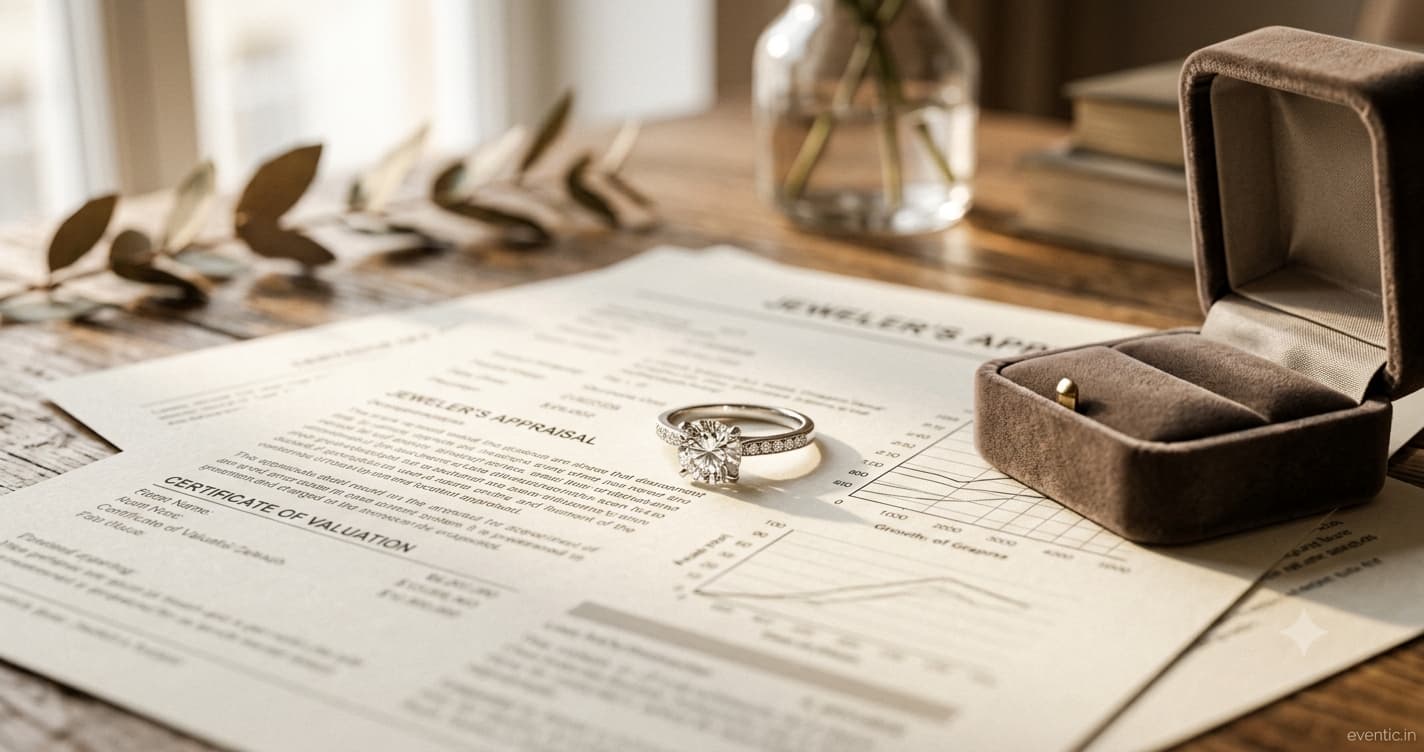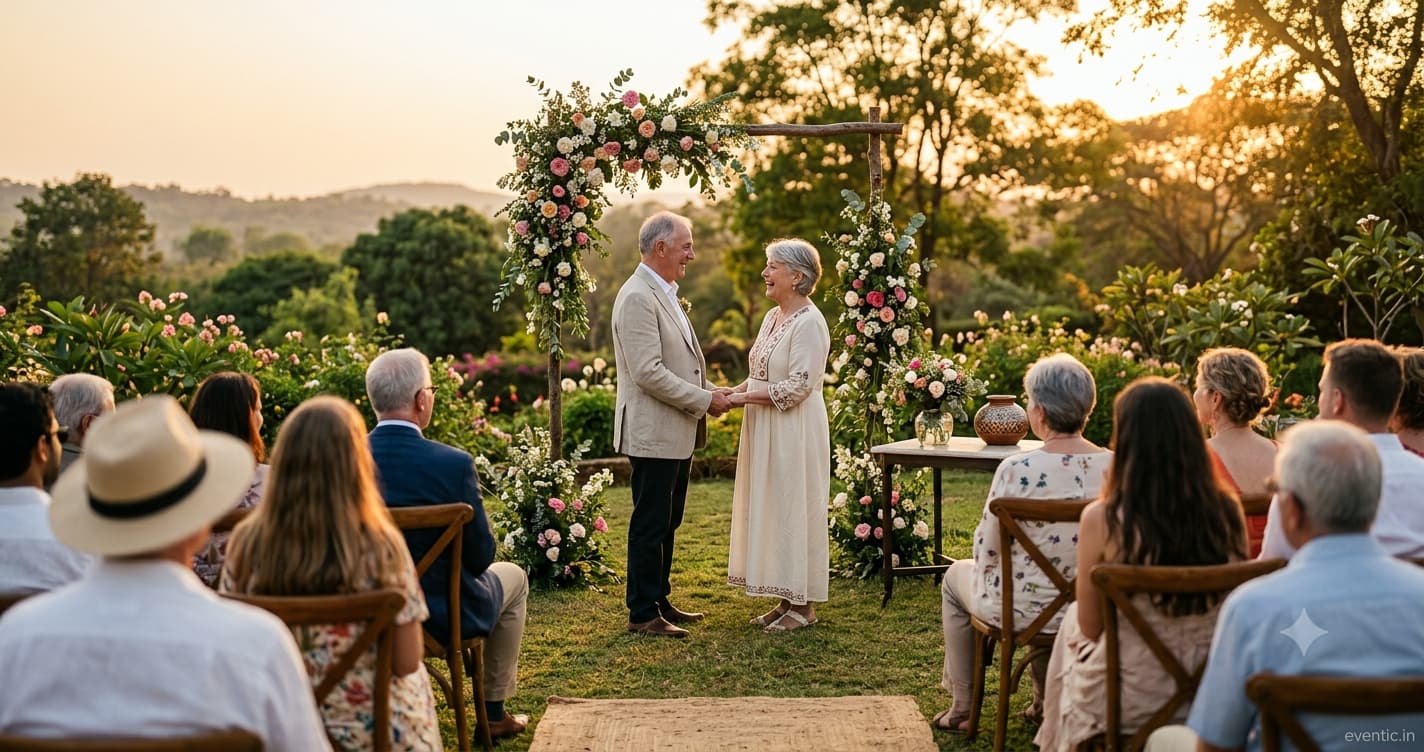
There's a specific assumption that trips people up here: "we're already married, so this doesn't count as a real wedding, so why would we need wedding insurance." The label doesn't matter to the venue's floor, the caterer's deposit terms, or the guest who trips near the dance area. Those risks don't know or care that it's your 25th anniversary rather than your first wedding.
The risk doesn't change just because the paperwork already happened
A vow renewal or second wedding usually involves the same practical components as any wedding: a rented venue with its own liability requirements, vendor deposits that are non-refundable regardless of the occasion's legal significance, alcohol served to a room full of celebrating guests, and a physical space where someone could genuinely get hurt. None of that risk profile shifts based on whether there's a marriage license involved. A slip-and-fall at a 30th anniversary vow renewal is exactly as real a liability exposure as one at a first wedding with the same venue and guest count.
Where the risk profile can genuinely differ is scale — a lot of vow renewals and second weddings run smaller and less elaborate than a full first wedding, with correspondingly smaller deposits and lower total exposure. That's a legitimate reason the insurance decision might land differently, but it's a budget-and-deposit-size question, not a "this doesn't really count" question.
Does "wedding insurance" even apply, technically?
This is worth checking directly rather than assuming either way. Some carriers' wedding-specific insurance products are built and priced around first-time legal marriages, and their terms or eligibility requirements may specifically restrict "wedding insurance" branding to that scenario. Other carriers don't distinguish at all and will happily sell the same wedding-branded policy for a vow renewal or second wedding without any special handling required.
If a specific carrier's wedding product turns out not to apply, the fix is simple: shop for "special event insurance" or "one-day event insurance" instead, since that's genuinely the same underlying coverage structure sold under a broader label that explicitly includes anniversary parties and vow renewals as eligible event types. You're not settling for a lesser product by going this route — you're just using the correctly labeled version of the identical coverage.
What to actually insure, given the smaller scale many of these events run at
If your vow renewal is genuinely modest — a backyard gathering, a small group of close family, minimal non-refundable spend — the math here runs similar to what applies for micro weddings and elopements: size the decision to your actual deposits and liability exposure, not to the emotional significance of the event. A vow renewal with a $4,000 venue deposit and a catered dinner for 40 has real financial exposure worth insuring, the same as a first wedding at that scale would. A vow renewal that's just a ceremony in a backyard with cake afterward and no vendor deposits of consequence may have very little to insure at all.
Liability still matters, maybe more than people expect
Vow renewals and milestone anniversary celebrations often skew toward an older guest demographic than a typical first wedding, which is worth thinking through honestly in terms of liability risk — a slip-and-fall injury, for instance, carries real financial and medical stakes regardless of the occasion, and some venues and event planners have noted that guest injury risk doesn't correlate with how "big" or "small" an event is billed as, only with the physical realities of the space and the number of people moving through it. If alcohol's being served without a licensed vendor handling it — common at smaller, more casual vow renewals hosted at home — host liquor liability coverage matters here exactly as much as it does at any first wedding with a similar setup.
What it typically costs
Pricing follows the same structure as any wedding or event insurance policy: driven mainly by total event budget, guest count, and alcohol involvement, not by whether it's technically a "second" wedding. A modest vow renewal with a small guest list and limited deposits will generally price toward the lower end of the standard range — the cost breakdown for wedding insurance generally applies here just as it would for a first wedding of comparable scale.
When it's genuinely fine to skip it
If your vow renewal has no meaningful non-refundable deposits, isn't at a venue requiring proof of liability coverage, and involves no alcohol service beyond something casual and self-managed among close family, there may genuinely be very little here worth insuring — the same logic that applies to a low-key elopement. This isn't a case where insurance is secretly essential and everyone's just missing it; for a sufficiently small, low-stakes celebration, skipping it is a reasonable, defensible call.
The parts of planning that don't change either way
Whether it's called a wedding, a vow renewal, or a milestone anniversary party, the actual planning tasks around insurance stay the same: check whether your venue requires proof of liability coverage, add up your actual non-refundable deposits before deciding on cancellation coverage, and confirm host liquor liability is included if you're serving alcohol without a licensed vendor. None of that changes based on what the event is called — only the scale of what you're protecting typically does.
Symbolic-only ceremonies and what changes, if anything
Some vow renewals are entirely symbolic — no officiant performing a legally recognized ceremony, no paperwork of any kind, just a couple and their guests marking an anniversary with a ceremony-style moment. From an insurance standpoint, this changes essentially nothing about the liability and cancellation considerations already covered above. The legal status of the ceremony itself has no bearing on whether your venue requires proof of insurance, whether your caterer's deposit is non-refundable, or whether a guest could be injured on the dance floor. If anything, framing it clearly as "an event with a venue, vendors, and guests" rather than getting caught up in whether it's legally a wedding helps cut through any confusion about whether insurance even applies — it does, based on what's actually happening at the event, not based on what paperwork is or isn't being filed afterward.
What blended families and adult children sometimes ask about
A detail that comes up more than people expect with vow renewals specifically: sometimes adult children from a couple's original wedding, or from prior relationships, are heavily involved in planning or paying for the event — organizing it as a gift for their parents, say. If that's the situation, it's worth being clear about whose name the insurance policy should be under, since that's typically whoever's financially exposed to the vendor deposits and would be the one filing a claim if something went wrong. This is a straightforward administrative question to sort out early with whichever carrier you choose, rather than something that needs to complicate the planning process — most carriers can list a policyholder who isn't the celebrating couple themselves, if that's who's actually carrying the financial risk.
Multi-day celebrations tied to a vow renewal
Some milestone anniversary celebrations aren't a single event but a small string of them — a family dinner one night, the ceremony and reception the next day, maybe a farewell brunch the morning after for out-of-town guests. If that's the shape of your celebration, check specifically what window your policy's coverage actually spans. Standard event policies often default to covering the core event plus a defined setup and breakdown period, commonly 24 to 48 hours, which may or may not stretch to cover every adjacent gathering in a multi-day celebration. If a separate dinner or brunch involves its own venue, its own deposits, or its own liability exposure, it's worth asking your carrier directly whether that needs to be added as a separate covered event or whether it falls naturally within your existing policy's window — rather than assuming one policy automatically wraps around everything happening across several days.
If there's one habit worth carrying over from a first wedding, it's this: whatever you learned about vendor deposits, venue requirements, and liability the first time around applies again, in full, the second time — the celebration might feel entirely different emotionally, but the underlying logistics haven't changed at all, and treating them with the same care pays off exactly the same way it did before.
Twenty-five years in, the flowers might be simpler and the guest list might be shorter, but the venue's still a venue, the deposit's still non-refundable, and the guy who's had one too many is still the guy who's had one too many. The insurance conversation doesn't get to skip itself just because you've already done this once before.
People Also Asked
Explore common questions related to this blog.
Generally no — carriers are insuring the event itself (the venue, the deposits, the liability), not verifying your marital history. The application process is typically the same as for any wedding or event policy.
Not automatically more important in a formal sense, but worth thinking about honestly — any event with a meaningful number of guests moving through a physical space carries real slip-and-fall and general injury risk, regardless of the guest list's age range.
Yes, generally, though this pulls in the same considerations covered in the destination wedding guide — confirm the carrier covers international venues, and consider travel insurance separately for the trip itself if guests are traveling internationally.