Heads up: some links in this post are Amazon affiliate links — if you buy through them, Eventic earns a small commission at no extra cost to you.
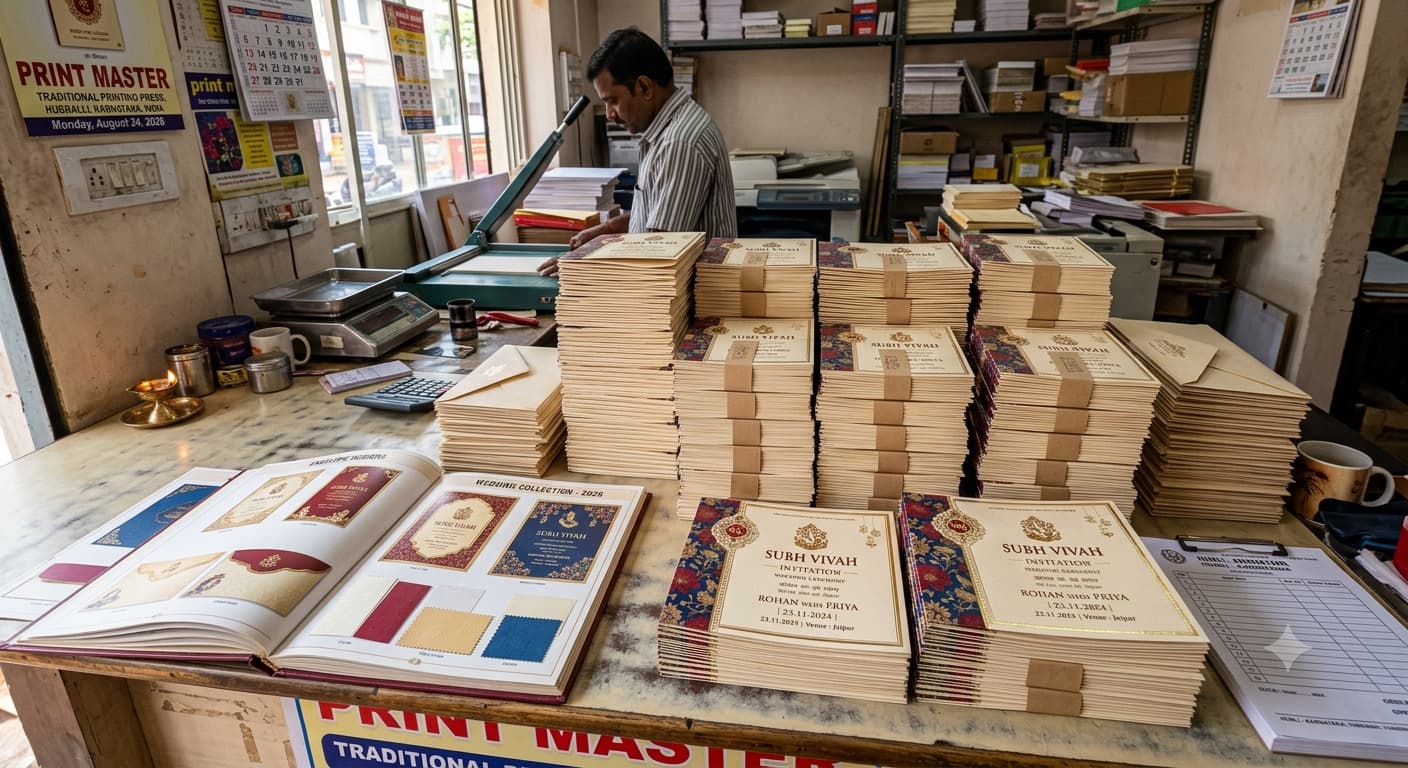
I'll confess something. The first wedding I helped plan, we printed 500 cards for a 320-person guest list because "extra rakhte hain, kya pata." Three hundred and eighty of them are still in a suitcase in Nagpur.
That was about ₹19,000 of paper that did nothing. And it's not even the most expensive mistake on this list.
Invitations are a small line in a wedding budget and a wildly inefficient one, mostly because the decisions get made fast, emotionally, and in front of a sample book. Here are the nine that cost the most, roughly in order of damage. The full cost picture across every format is in our invitation cost guide for India.
1. Counting guests instead of households
What it costs: ₹15,000–₹40,000
The single biggest one. You do not send a card to every person — you send one per family. A 400-person guest list is usually 140–160 households.
Couples routinely print 400 cards for 400 guests and hand three to the same family at the same house.
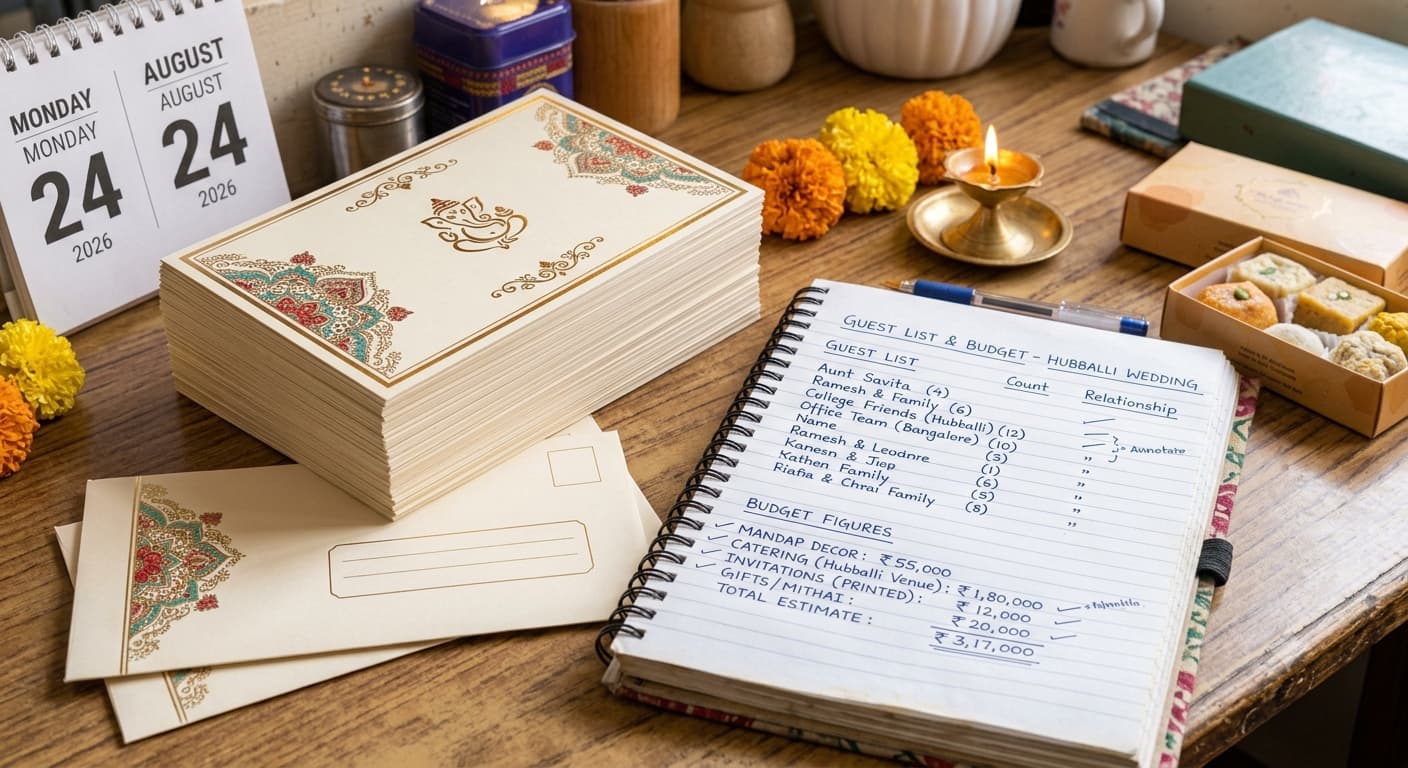
The fix: rebuild your list as households before you order anything. One row per family, with the number of people attending in a second column. That column becomes your catering headcount; the row count becomes your print quantity. Two numbers, two jobs.
2. Over-ordering "just in case"
What it costs: ₹8,000–₹20,000
The suitcase in Nagpur. Extra cards feel like insurance and function like waste.
The fix: order 10% over your household count — not 50%. If you genuinely run short, most printers can do a small top-up run, and even at a bad rate, 30 extra cards costs less than 150 unused ones. Keep 15 blank envelopes aside for last-minute names instead.
3. Printing a separate card for every function
What it costs: ₹10,000–₹25,000
Five functions, five cards, five sets of printing charges, all in one envelope that guests will look at once.
The fix: one main card plus a single schedule insert listing every function with its date, time and venue. Cleaner to read, and it cuts the insert count from five to one. If particular functions have a genuinely different guest list — sangeet for friends, ceremony for family — print the main card and send those guests a function-specific digital invite instead of another printed insert.
4. Paying for foiling nobody sees
What it costs: ₹5,000–₹15,000
Foiling looks incredible under showroom lighting. Under a tubelight in a living room, partial foil on a busy design mostly disappears.
The fix: foil one element with room around it — the Ganesh motif, the names, the border. Not all three. You'll pay roughly a third of the full-foil rate for something that reads better anyway, because contrast is what makes metallic finishes visible.
5. Approving the proof without a second reader
What it costs: ₹5,000–₹12,000 in reprints
A surname spelled two ways. A muhurat time that's 30 minutes off. The reception venue's old address.
The fix: three people read the PDF proof — one of them from the other family, one of them elderly. Read it out loud. Check the date against the calendar and the muhurat against your priest's note, not against memory. Reprints are always full price and always urgent.
6. Leaving the courier bill out of the budget
What it costs: ₹6,000–₹15,000, unplanned
Outstation guests are usually 20–30% of the list. At ₹40–₹120 per envelope, that's a real number that never appears in anyone's initial estimate.
The fix: count outstation households at the list stage and price the postage in. India Post speed post handles this cheapest by a wide margin; private couriers cost around triple for the same envelope. And for guests you're couriering to anyway — people you're not meeting in person — ask honestly whether a digital invite plus a phone call would land better than a card arriving nine days late in a bent envelope.
7. Ordering before the guest list is final
What it costs: ₹4,000–₹10,000
Cards printed, then two more families get added, then a chachi's whole side. Now you're doing a 40-card top-up run at a bad rate, in a different paper batch, in a slightly different shade.
The fix: the list gets locked by both families before the order goes in. Not "mostly final." Locked, with a written cutoff date that both sets of parents agreed to. This is a conversation, not a logistics step, and it's worth having properly.
8. Buying the card and forgetting the sweets box
What it costs: ₹20,000–₹60,000, discovered late
Nobody hands a bare card to close family. The box of mithai or dry fruit that goes with it runs ₹350–₹1,200, and if you're doing that for 60 households, it's a bigger line than the printing itself.
The fix: decide the box list before the card list. Sixty boxes at ₹600 is ₹36,000, and knowing that number early often changes what you're willing to spend per card. Many families discover they'd rather have simpler cards and better boxes — which is the correct instinct, because the box is what people actually remember receiving.
Worth knowing: buying empty mithai gift boxes at ₹40–₹90 each and filling them from a local halwai usually costs 30–40% less than buying pre-packed boxes from the same shop, for identical sweets. It costs you an afternoon of packing, which is exactly the kind of trade most families are happy to make once someone points it out.
9. Treating digital as the cheap option instead of the smart one
What it costs: the wrong ₹40,000
Two versions of this mistake. Going fully printed because digital feels less respectful — and going fully digital, then spending the "savings" on nothing in particular while three elderly relatives quietly feel skipped.
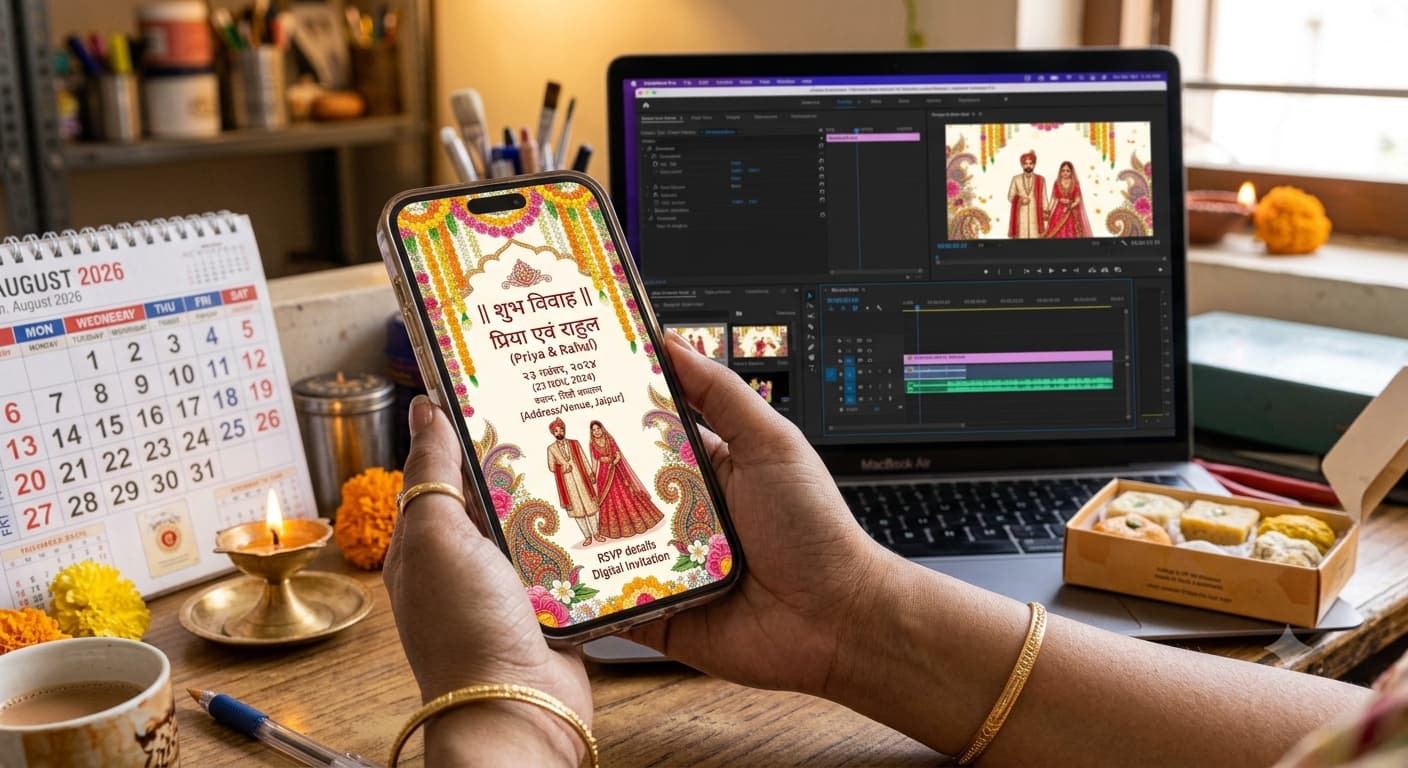
The fix: the hybrid, deliberately. Sixty to eighty printed cards for the people who'd notice the absence — grandparents, the parents' close circle, the family priest, business relationships. A digital invite for the rest of the list, who'll read it on their phone in fourteen seconds regardless of what it cost you.
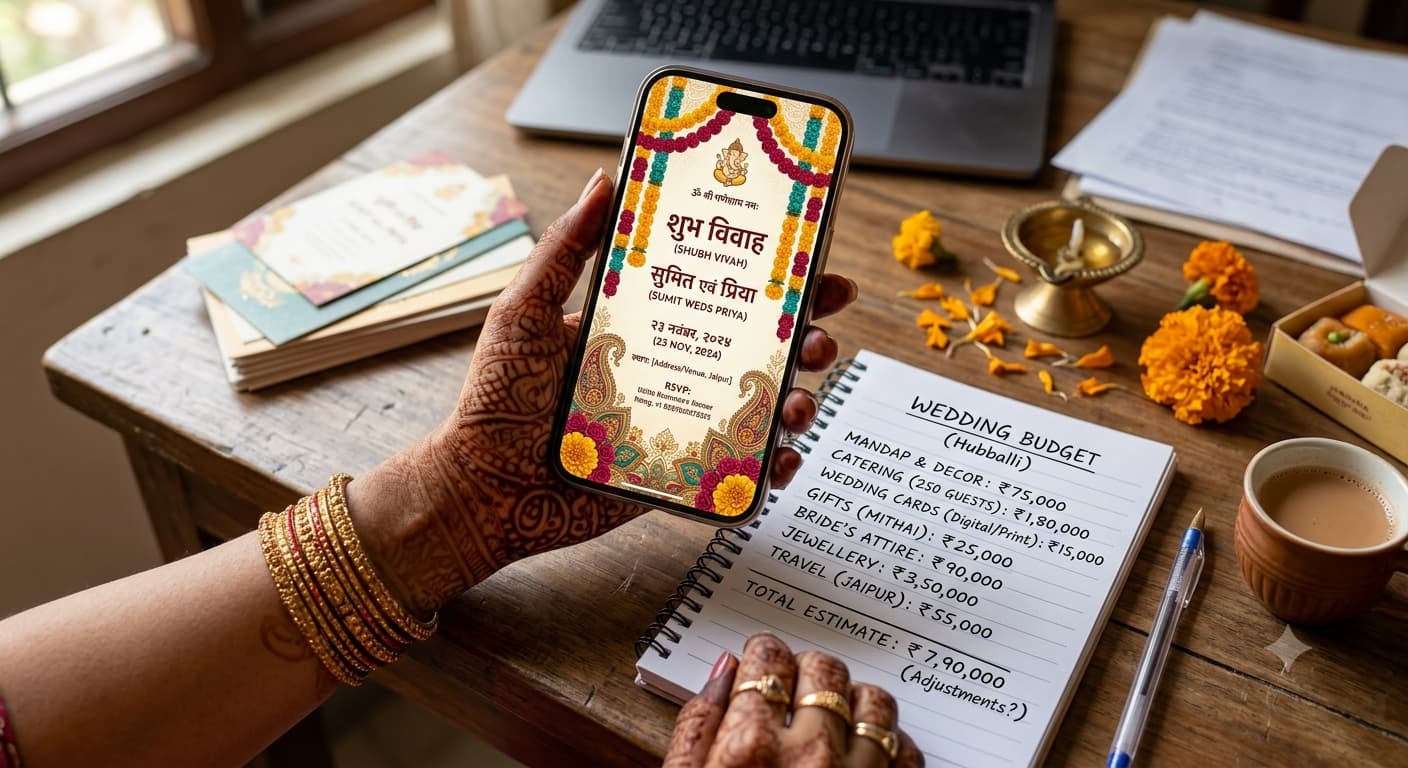
That approach usually lands around ₹38,000 against ₹78,000 for the fully printed version of the same wedding, and the full cost comparison shows the maths line by line. The digital half doesn't have to be cheap-looking either — the wedding template gallery covers every function, so mehendi and sangeet don't end up looking like they came from three different weddings. If you want the free-versus-paid side compared honestly, we did that here.
The five-minute check that prevents most of this
Before you place any order, write down these five numbers:
| Number | Yours |
|---|---|
| Households (not guests) | ___ |
| Of those, outstation | ___ |
| Households getting a sweets box | ___ |
| Total budget for invitations including boxes and courier | ₹___ |
| Date the guest list is locked | ___ |
If you can't fill all five in, you're not ready to visit a card shop. That's the whole test. A ₹200 wedding planning notebook is genuinely useful here for one reason — the household list needs to live somewhere both families can see it, and a WhatsApp thread is not that place.
If you'd rather have the numbers do the arguing for you, run the totals through the wedding budget calculator and take the printout to the shop. Sample books are designed to make you spend more; a number on paper is the only defence that works.
If you take one thing from this list: fix the household count first. Every other mistake here costs thousands. That one costs tens of thousands, and it takes an afternoon with a spreadsheet to solve.
People Also Asked
Explore common questions related to this blog.