Disclosure: This post contains affiliate links. Eventic makes digital invitations, so we have an obvious stake in your answer here. We've quoted the etiquette authorities accurately, including where they disagree with us.
The honest answer: traditional etiquette says yes, digital wedding invitations are inappropriate. And traditional etiquette is right about roughly half of its reasoning.
What actually reads as tacky isn't the medium. It's the execution. A beautifully designed digital invitation with proper wording lands better than a cheap printed one with a typo — and a generic template with visible ads reads badly regardless of what it's printed on.
Here's what the etiquette authorities actually say, which parts still hold, and how to decide for your own wedding.
What Emily Post actually says
The Emily Post Institute is clear on this. Their published guidance states that because of the personal nature of a wedding invitation, it's preferable to send each guest a printed invitation unless the circumstances are highly unusual.
Their reasoning rests on a formality test: if you'd be comfortable extending the invitation over the phone, email is acceptable. You wouldn't phone-invite someone to your wedding, so email doesn't clear the bar.
Lizzie Post, co-president of the Institute, has expanded on this in interviews — that a mailed invitation carries weight for an event this significant, that the formality of the invitation reflects the formality of the event, that guests keep invitations as keepsakes, and that a digital invitation can easily be lost in an inbox.
Those are real arguments, and dismissing them would be the easy move. Let's take them one at a time instead.
(For fairness: the Emily Post Institute sells paper goods, and we sell digital invitations. Neither of us is a neutral party here. Judge the arguments, not the source.)
Where the traditional position holds up
The multigenerational point is the strongest one
If a meaningful share of your guest list is over 75, or not comfortable with email and smartphones, a digital-only invitation creates genuine exclusion. Some guests won't see it. Some will see it and not know what to do. A few will be quietly hurt.
This isn't a preference question. It's an access question, and it's the one argument that should override cost, convenience, and environmental considerations every time.
The answer isn't paper for everyone. It's paper for them.
The keepsake point is real, but narrow
Some guests do keep invitations. Realistically, that's parents, grandparents, the couple, and occasionally a sibling — maybe six to ten people out of a hundred.
Printing 100 invitations so that eight get kept is an odd solution to that problem. Printing eight is a better one.
The "lost in the inbox" point was true in 2014
It's less true now. A well-built digital invitation sends reminders, tracks who's opened it, and lets you follow up with the specific people who haven't responded. That's substantially better visibility than a paper invitation, where your only signal is silence.
The formality point conflates two different things
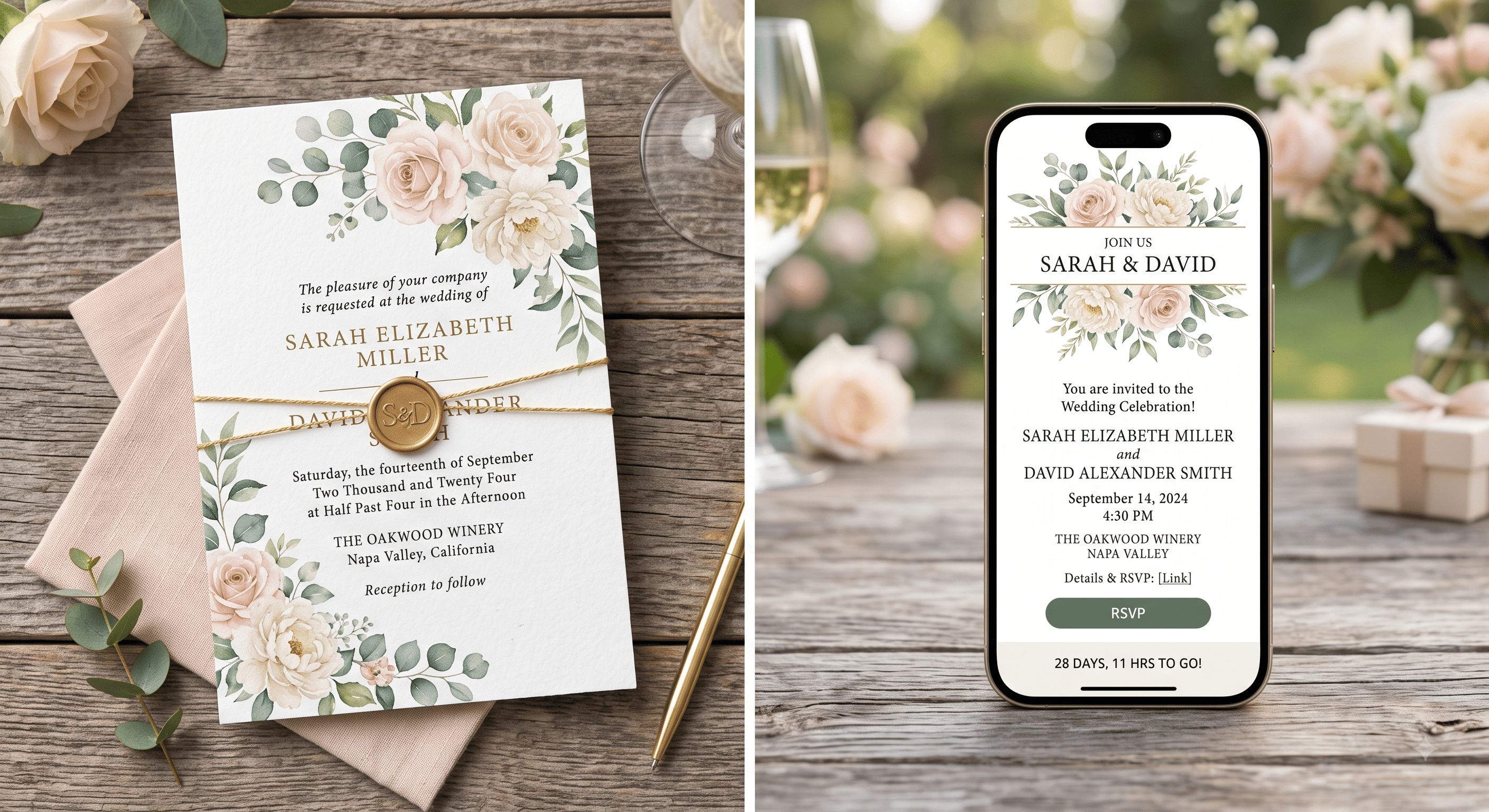
The Post formality test measures whether a medium is casual. A phone call is casual because it's improvised and unrecorded. A designed invitation page with formal third-person wording, a considered typeface, and a proper RSVP is not improvised.
The guidance was written when "digital invitation" meant a plain email or a free service with advertisements in the footer. Those genuinely are informal. A custom-designed invitation is a different artifact, and the rule hasn't caught up.
That said — the rule exists because most digital invitations really are the casual kind. Which brings us to the actual issue.
What actually reads as tacky
Almost none of it is about paper versus screen.
Tacky:
- A free template with the platform's ads or branding on it
- Casual wording for a formal wedding ("Hey! We're getting hitched!")
- Typos, especially in names
- A group email where every guest can see every address
- Registry or gift information on the invitation itself — a rule Emily Post is firm on, and correct about
- Sending it three weeks out
- No clear RSVP mechanism
- Different quality between the invitation and the rest of the day
Not tacky:
- A well-designed digital invitation with formal wording
- Digital save-the-dates, which nearly every etiquette source permits
- Digital invitations for a casual or small wedding
- A hybrid — printed for some guests, digital for the rest
- Digital RSVP on a printed invitation, which Emily Post explicitly endorses
The pattern: effort reads as respect, and its absence reads as indifference. Guests can tell the difference between a couple who chose digital thoughtfully and one who couldn't be bothered. Neither has anything to do with paper.
If wording is where you're worried about getting it wrong, the eco-friendly wording examples include formal registers that hold up on screen, and the wording generator drafts them from your details.
When digital is genuinely fine
| Situation | Verdict |
|---|---|
| Save-the-dates | Fine, universally |
| Casual or outdoor wedding | Fine |
| Small wedding (under 40) | Fine |
| Second marriage | Fine |
| Destination wedding | Fine — travel details change |
| Short engagement | Fine, and often better |
| Young guest list | Fine |
| Showers, rehearsal dinners, engagement parties | Fine |
| Elopement reception | Fine |
| Tight budget | Fine, and nobody's counting your money but you |
When to print, or at least print some
| Situation | Recommendation |
|---|---|
| Black-tie or formal reception | |
| Many guests over 75 | Print for them |
| Traditional families with strong expectations | Print, or hybrid |
| Cultural contexts where physical invitations carry weight | |
| Very small guest list | Print — it's cheap at 20 |
| You want the keepsake | Print a few |
The hybrid, which is what we'd actually recommend
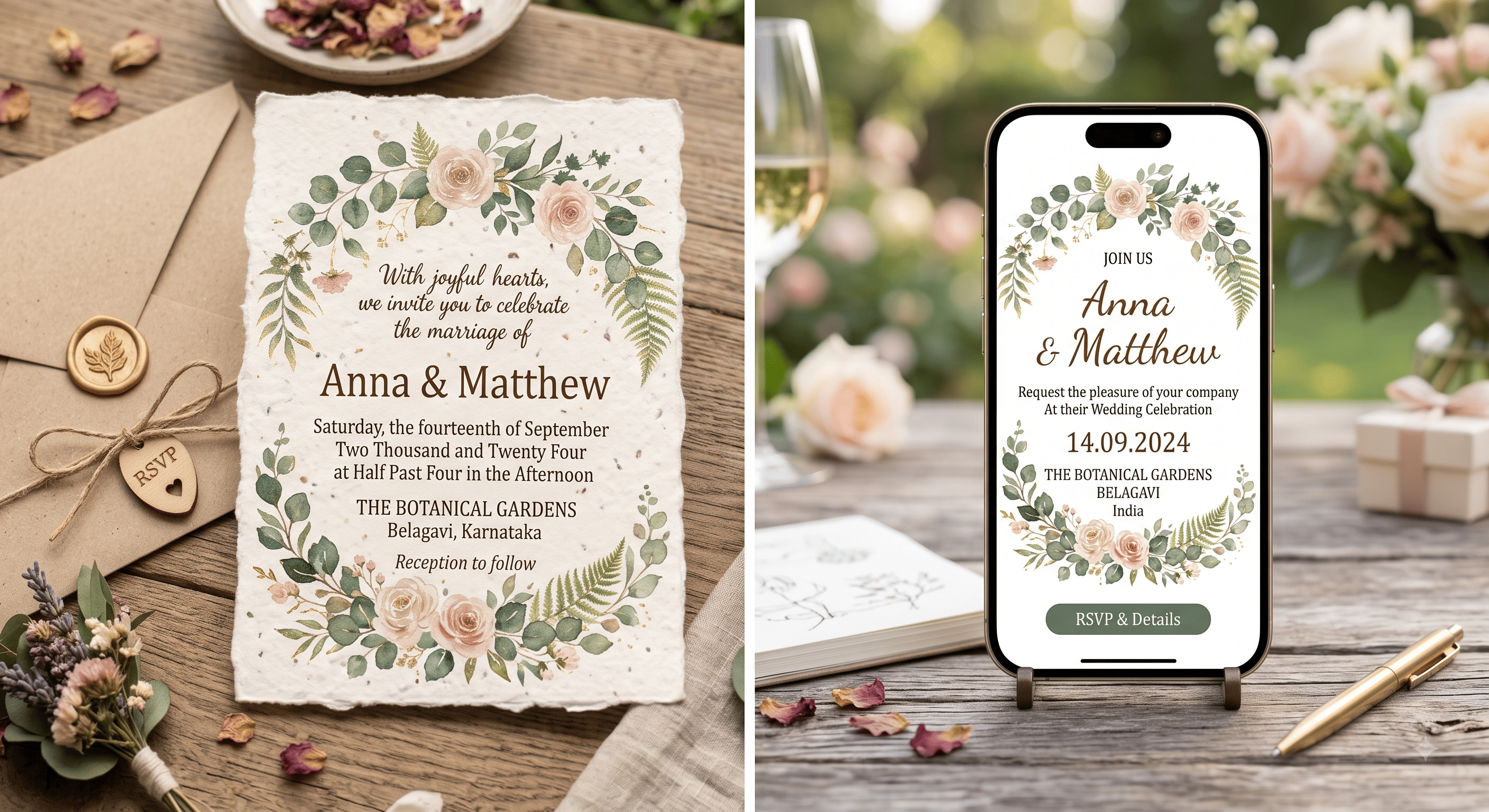
Digital for the bulk of your list. Printed for the guests who need or expect paper — grandparents, older relatives, anyone without email — plus a handful of keepsakes for parents and yourselves.
This satisfies every legitimate objection above. Nobody is excluded. Keepsakes exist. Formality is preserved for the people who care about it. And you've cut roughly 90% of the printing, cost, and address collection.
It's also, notably, the option nobody argues against. The etiquette case is against digital-only, not against digital.
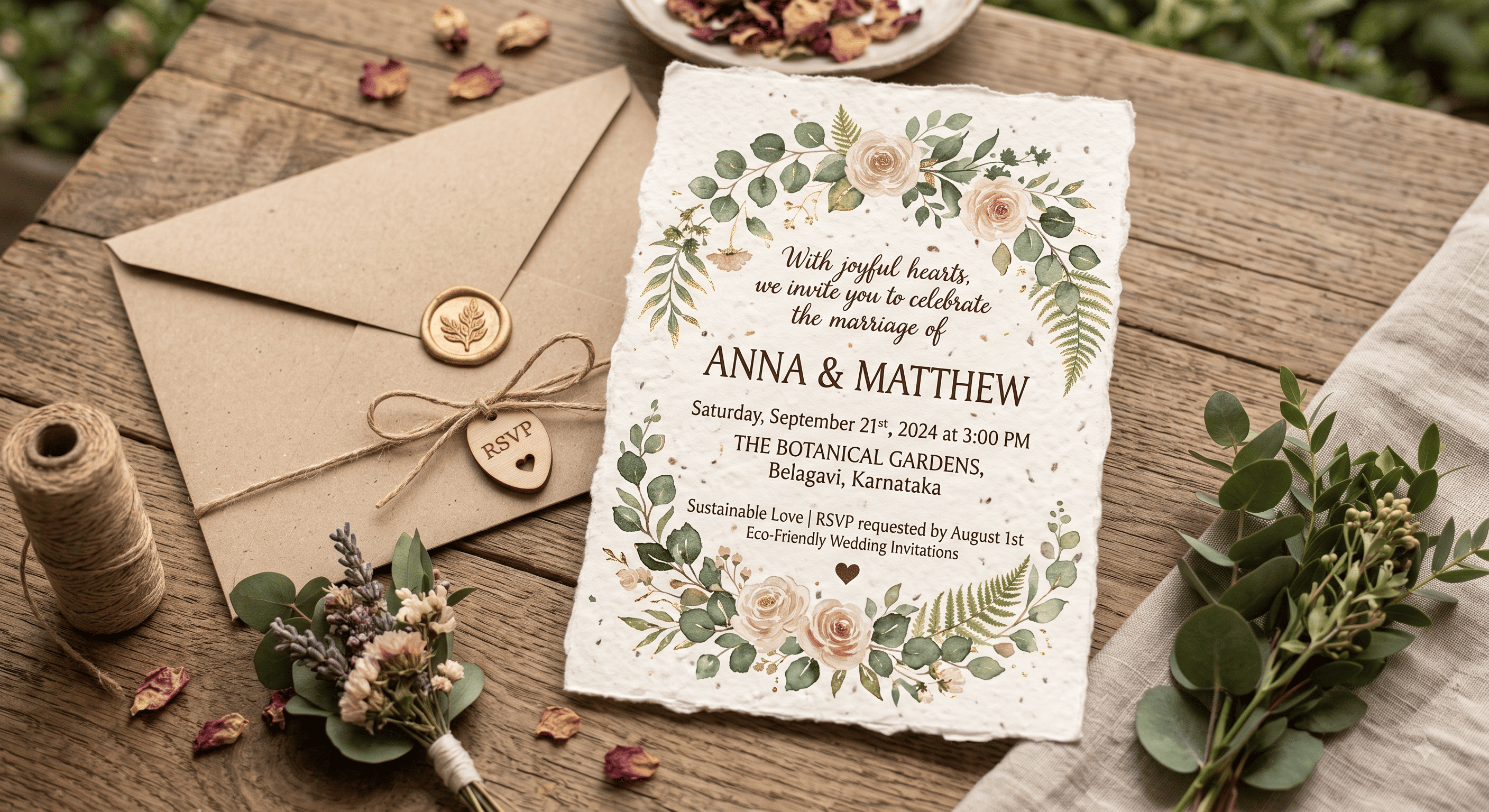
For the ten or so you're printing, 100% post-consumer recycled cardstock and recycled kraft envelopes are the sensible stock — at that quantity, hand-addressing them is realistic and looks considerably better than any home print run.
The practical case people underrate
Setting etiquette aside entirely, digital does one thing paper can't: it tells you who's coming.
RSVP tracking that updates itself, reminders to the specific people who haven't replied, and a headcount you can trust. That headcount is the input to nearly every other decision you'll make — the bar and drink quantities alone shift by hundreds of dollars depending on whether your number is real or a guess.
Couples consistently report the RSVP chase as the worst part of planning. Paper doesn't help with it.
Part of the objection is unfamiliarity rather than taste. Older guests aren't confused by digital — they're confused by an instruction nobody ever explained to them.
How to make a digital invitation that isn't tacky
- Match the formality of your wedding. Formal event, formal wording — third person, spelled-out dates, no exclamation marks.
- Send individually, never as a group email with visible addresses.
- Send 8–10 weeks out, same as paper. Timing signals seriousness more than material does.
- Proofread names, especially unusual spellings. This is where digital invitations most often go wrong.
- Include everything — venue, timing, dress code, travel, RSVP deadline.
- No registry information on the invitation. Put it on a details page.
- Use a platform without visible ads. This single factor accounts for most of the "digital looks cheap" reputation.
- Call anyone who hasn't responded. Not tacky. Considerate.
If your wedding is formal and your guest list spans generations, print for the people who need paper and send everyone else digitally. If it's casual, small, or short-notice, send digitally and don't give it another thought.
The couple whose invitation guests remember isn't the one who printed. It's the one who got the details right.
People Also Asked
Explore common questions related to this blog.