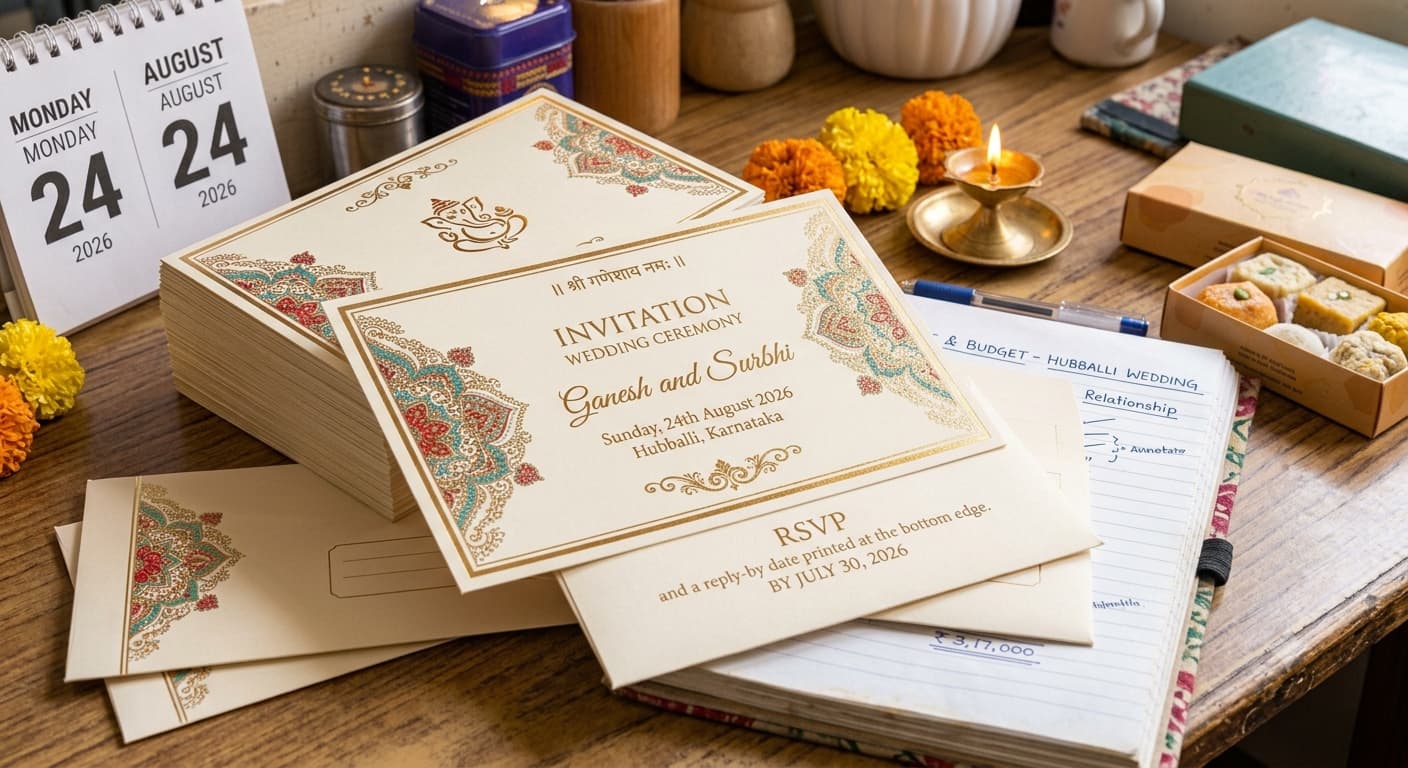
RSVP stands for répondez s'il vous plaît, a French phrase meaning "please reply." When it appears at the bottom of an invitation, the host is asking you to tell them whether you're coming — before the event, not on the day.
That's the whole answer. But the reason you're probably here is the part nobody explains: what you're actually supposed to do about it. So let's cover that too.
The full form, and how to say it out loud
| Full form | Répondez s'il vous plaît |
| Language | French |
| Literal translation | Reply, if it pleases you |
| What it means on an invitation | Please let me know if you're coming |
| Pronunciation | ray-pon-day seel voo PLEH |
| Also written as | R.S.V.P. · rsvp · "RSVP by 20 November" |
Small piece of trivia that regularly wins arguments: the French mostly don't use it anymore. It reads as stiff and old-fashioned there, and modern French invitations tend to just state a reply-by date instead. The abbreviation survived in English-speaking countries and then spread through India, and it's now printed on wedding cards in a language most of the people reading it don't speak. Language is strange like that.
One more thing, because it's a pet peeve of every etiquette writer alive: "please RSVP" is technically redundant. The s'il vous plaît already means please. You're saying "please please reply." Nobody actually minds, and you'll see it on half the invitations you receive — just know that if someone points it out at a wedding, they're not wrong, they're only insufferable.
What RSVP means when you're the guest
If a card says RSVP, three things are being asked of you:
- Reply either way. Yes and no are both useful answers. Silence is the only genuinely rude option, and it's the most common one.
- Reply by the date given. If there's a deadline printed, that's when the host has to hand a number to a caterer. It's not decorative.
- Reply for the people actually named on the invitation. If it says your name only, that's the guest list. Two extra cousins is not an RSVP, it's a plot twist.
The most common misunderstanding, and it's genuinely widespread: RSVP does not mean "reply only if you're coming." That's a different instruction — "regrets only" — and if the host wanted that, they'd have written it. If you see RSVP, you reply either way.
Not sure what to actually type? That's the next question most people have, and there are ready-made accept and decline replies for every situation over here, including the awkward ones where you're saying no to family.
What RSVP means when you're the host
Flip sides and RSVP stops being etiquette and becomes arithmetic. That number determines the catering order, the seating chart, the return gifts, the venue capacity, and roughly how much money you're about to spend per head.
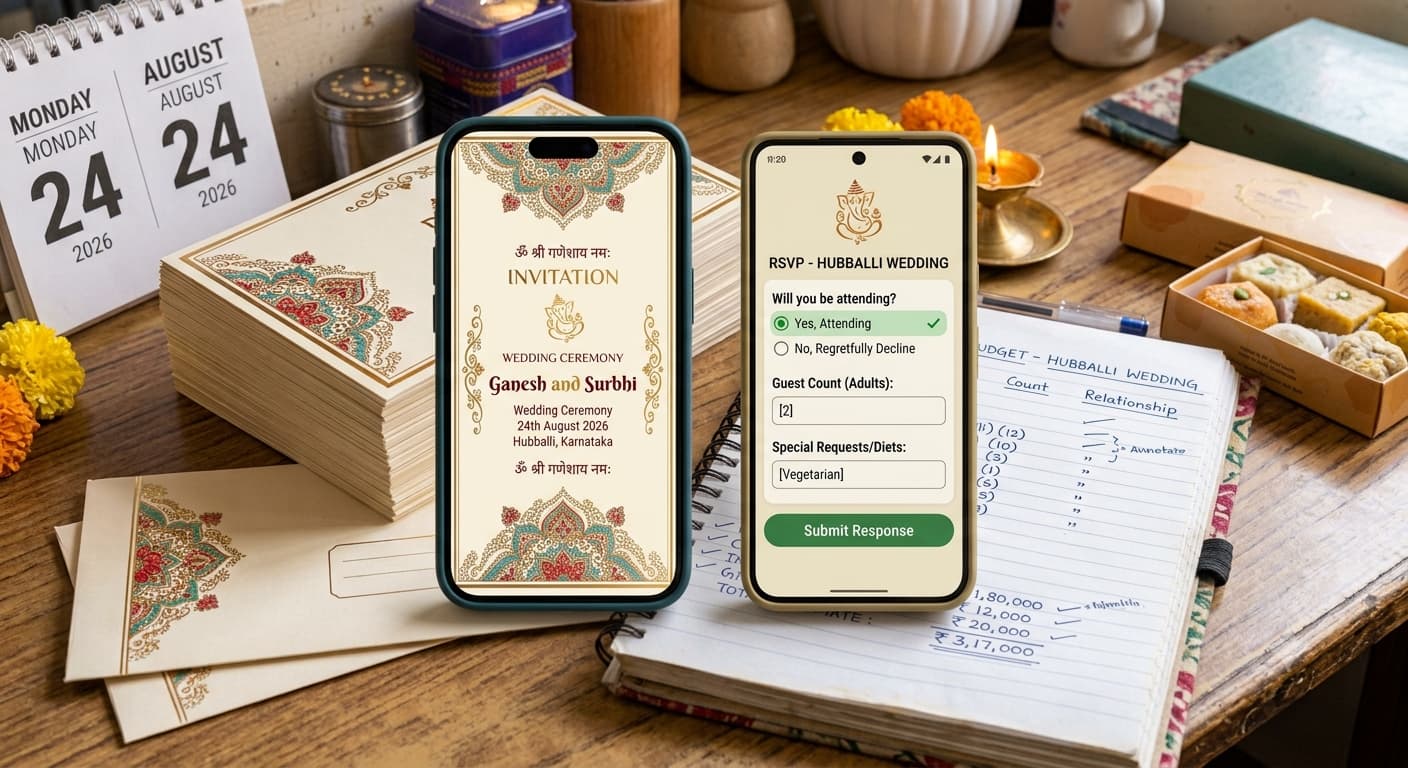
Which is why the way you ask matters more than most people realise. A vague "RSVP" with a phone number underneath gets ignored. A clear line with a date, a method and a single tap gets answered. The difference between those two versions of the same invitation is usually 20 to 30 percent of your guest list.
If you're writing your own invitation right now, the wording that actually gets replies is collected here with thirty examples — formal card lines, casual WhatsApp versions, and the specific phrasings that reduce follow-up chasing.
RSVP methods, ranked by how well they actually work
| Method | Response rate | Honest verdict |
|---|---|---|
| Online RSVP link | Highest | One tap, works on a phone, replies land in one place. The default now. |
| WhatsApp reply | High | Great in India, terrible for record-keeping — responses scatter across 60 chats. |
| Phone number on the card | Medium | Older guests love it. Everyone else finds calling a stranger mildly terrifying. |
| Medium-low | Ends up in Promotions. Fine as a backup, poor as the primary. | |
| Printed reply card + stamp | Lowest | Beautiful. Genuinely lovely. Also: be honest, when did you last post anything? |
That table is the whole argument for digital RSVPs in one image. If you want responses in a single dashboard instead of scattered across your DMs, a free RSVP link does that job — guests tap yes or no, and you get a running headcount instead of a spreadsheet you update at midnight.
RSVP का मतलब — the Hindi meaning
Because a very large share of the people asking this question are holding an Indian wedding card:
RSVP का फुल फॉर्म है "Répondez s'il vous plaît" — एक फ्रेंच वाक्य जिसका मतलब है "कृपया उत्तर दें।" शादी के कार्ड पर यह इसलिए लिखा जाता है ताकि मेज़बान को पता चल सके कि आप आ रहे हैं या नहीं।
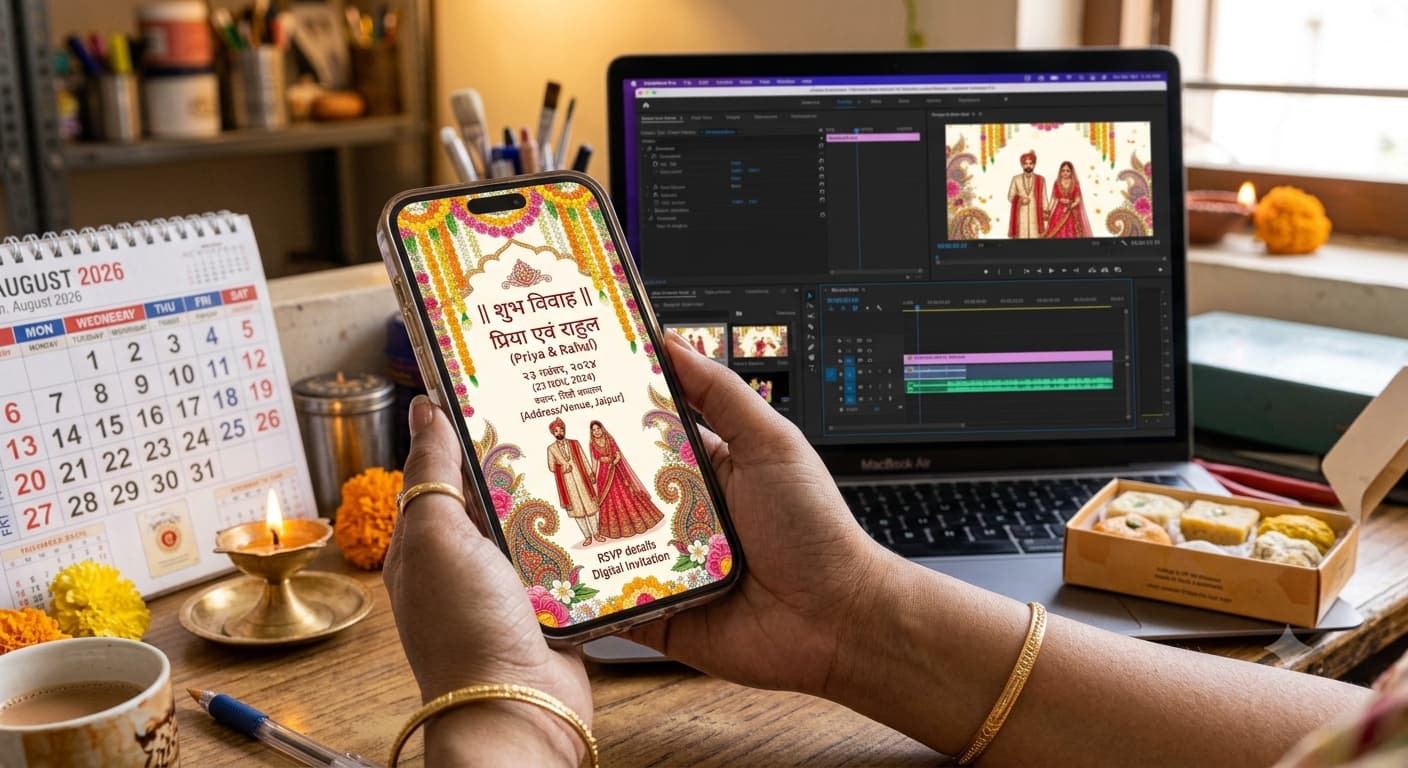
Indian cards usually print RSVP alongside a name and mobile number — that's the person handling the guest list, not the couple. Reply to that number, reply for the people the card names, and reply early. Families are ordering food for hundreds of people based on a count somebody is guessing at.
There's a full breakdown in Hindi, including what to reply on WhatsApp and what to do when the card lists three different numbers, in the dedicated guide to RSVP on shaadi cards.
The deadline question everyone gets wrong
Hosts set RSVP deadlines too late, and guests treat them as suggestions. Both things are true simultaneously.
As a rough guide: two to four weeks before the event for most gatherings, three to four weeks for a wedding with a catering headcount. Send invitations six to eight weeks out and you've built yourself a comfortable window. Send them ten days out and you'll spend the last week on the phone.
Multi-day Indian weddings need a longer runway — guests are booking flights and blocking four days off work, so six to eight weeks minimum before the first function. The full timeline, including what to do when you've already left it too late, covers the destination and multi-function versions.
What to do when people just… don't reply
Roughly one in five will ignore the RSVP. It's not a reflection of how much they like you. It's a reflection of how many notifications a human receives in a day.
The move is not another group message. Group reminders have a response rate somewhere near zero, because everyone assumes someone else is being addressed. One short, direct, individual message to the specific person, naming them, asking a yes-or-no question. That converts. There's a full three-touch sequence with copy-paste scripts in the guide to chasing guests who haven't RSVP'd, including how to handle the relative who says "haan haan aa jayenge" and then doesn't.
One last thing, aimed at anyone who's currently ignoring an invitation on their phone: reply now. It takes eleven seconds, the host has been refreshing their list for a week, and future-you will absolutely forget.
Quick answers to the RSVP questions people actually ask
People Also Asked
Explore common questions related to this blog.