Quick answer: Tulsi Vivah 2026 is on Saturday, 21 November 2026, the day after Dev Uthani Ekadashi. The Dwadashi tithi runs from 6:31 AM on 21 November to 4:56 AM on 22 November (New Delhi). Most families perform the wedding in the evening, around sunset, after the Ekadashi fast has been broken. Some families hold it on Ekadashi itself, 20 November, and the ritual can be done any day until Kartik Purnima. Short version: Saturday evening, sugarcane ready, chunri ironed.
Every November the family WhatsApp group asks the same question, usually at 11 pm: "Tulsi Vivah kab hai?" Here's the clear answer, with timings and sources. It's part of our complete guide to Dev Uthani Ekadashi 2026 and the start of the wedding season.
Someone always forwards a panchang photo, someone else forwards a different one, and nobody is sure which is right. So below you'll find the date, the day, the exact tithi, the best time for the puja, and the reason some homes celebrate a day earlier.
Tulsi Vivah 2026 date, day and time
| Details (New Delhi) | |
|---|---|
| Date | 21 November 2026 |
| Day | Saturday (Shanivar) |
| Tithi | Kartik Shukla Dwadashi |
| Dwadashi begins | 6:31 AM, 21 November |
| Dwadashi ends | 4:56 AM, 22 November |
| Day before | Dev Uthani Ekadashi, Friday 20 November |
These timings are from Drik Panchang's Tulsi Vivah page for New Delhi. Other panchangs differ by a minute or two, and timings shift slightly for your city. The date, though, is the same nearly everywhere: Saturday, 21 November.
What's the best time to do Tulsi Vivah on 21 November?
Tulsi Vivah is traditionally done in the evening, in the pradosh period around sunset, just like many real weddings. On 21 November, sunset in north India is around 5:25 PM, so most families start the puja between 5:30 PM and 8 PM.
There's also a practical reason to wait for the evening. If you fasted on Ekadashi, your parana window in Delhi is 1:11 PM to 3:18 PM on the 21st. Break the fast, rest, then get the mandap ready. Nobody wants a hangry kanyadaan.
Why do some families do Tulsi Vivah on 20 November?
Because tradition gives more than one valid day. Many families, especially in parts of north India, marry the tulsi on the evening of Dev Uthani Ekadashi itself, right after waking the Lord. Others, especially in Maharashtra and Gujarat, do it on Dwadashi, the next day. Drik Panchang also notes that some scriptures place it on Kartik Shukla Navami, and that the five days from Prabodhini Ekadashi to Kartik Purnima are considered auspicious for the ritual.
So if your mother-in-law does it on Friday and your mother on Saturday, they're both right. Follow your family's custom. If you're unsure which date your family's panchang follows for the fast itself, our Hindi guide to Dev Uthani Ekadashi 2026 explains the 20 and 21 November difference.
What happens at a Tulsi Vivah?
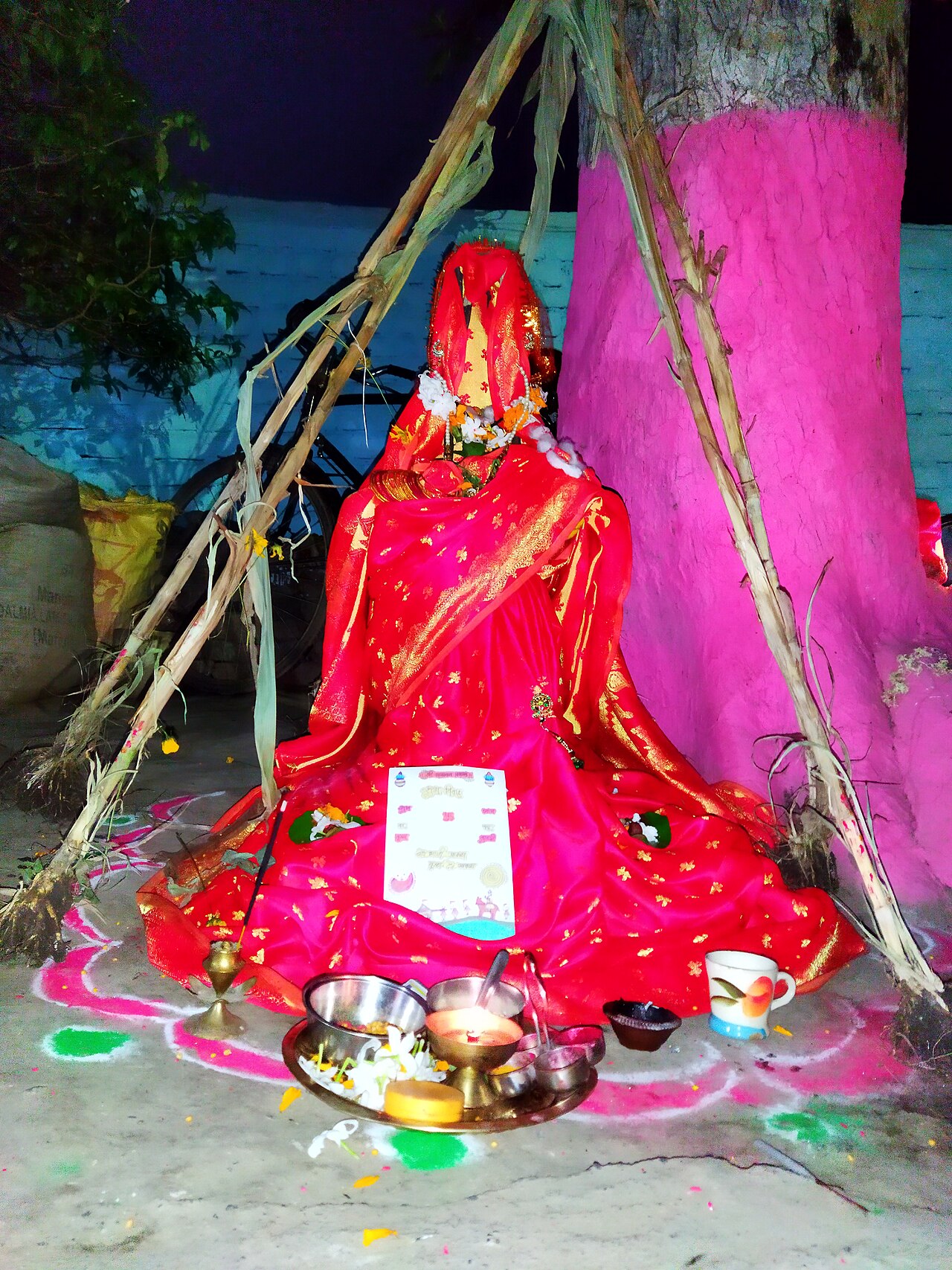
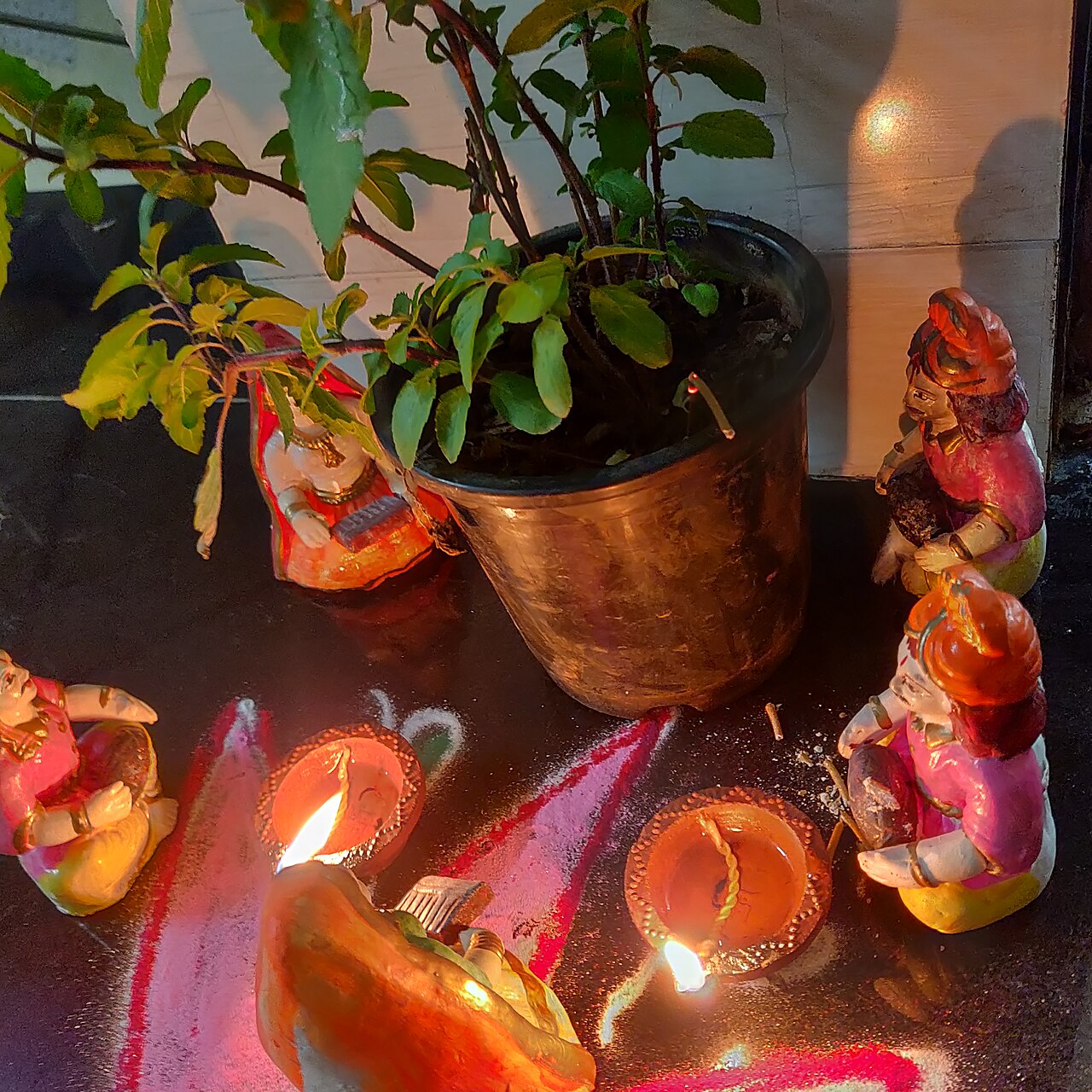
It's a wedding, done properly. The tulsi plant is the bride: she's dressed in a red chunri or small saree, with bangles, bindi and a garland. A mandap of four sugarcane stalks is tied over her pot. The groom is Lord Vishnu in his Shaligram form, or a Vishnu or Krishna idol, seated beside her.
The family does haldi and tilak for both, ties the gathbandhan, and someone lifts the Shaligram and walks around the tulsi seven times for the pheras while everyone sings mangal geet. There's a kanyadaan, an aarti, and prasad of sugarcane, singhara, sweet potato and sweets. In Maharashtra, families often sing mangalashtak and throw akshat, just like at a human wedding.
Why is Tulsi married to the Shaligram?
The story goes back to Vrinda, a devoted wife whose husband, the asura Jalandhar, became unbeatable because of her devotion. Lord Vishnu tricked her to end Jalandhar's reign, and in grief and anger she cursed him to become stone: the Shaligram. She became the tulsi plant, and Vishnu promised to marry her every year. Tulsi Vivah is that promise kept.
It's also why tulsi leaves are part of almost every Vishnu puja, and why the plant sits in a place of honour in so many Indian homes.
Tulsi Vivah and the start of the shaadi season
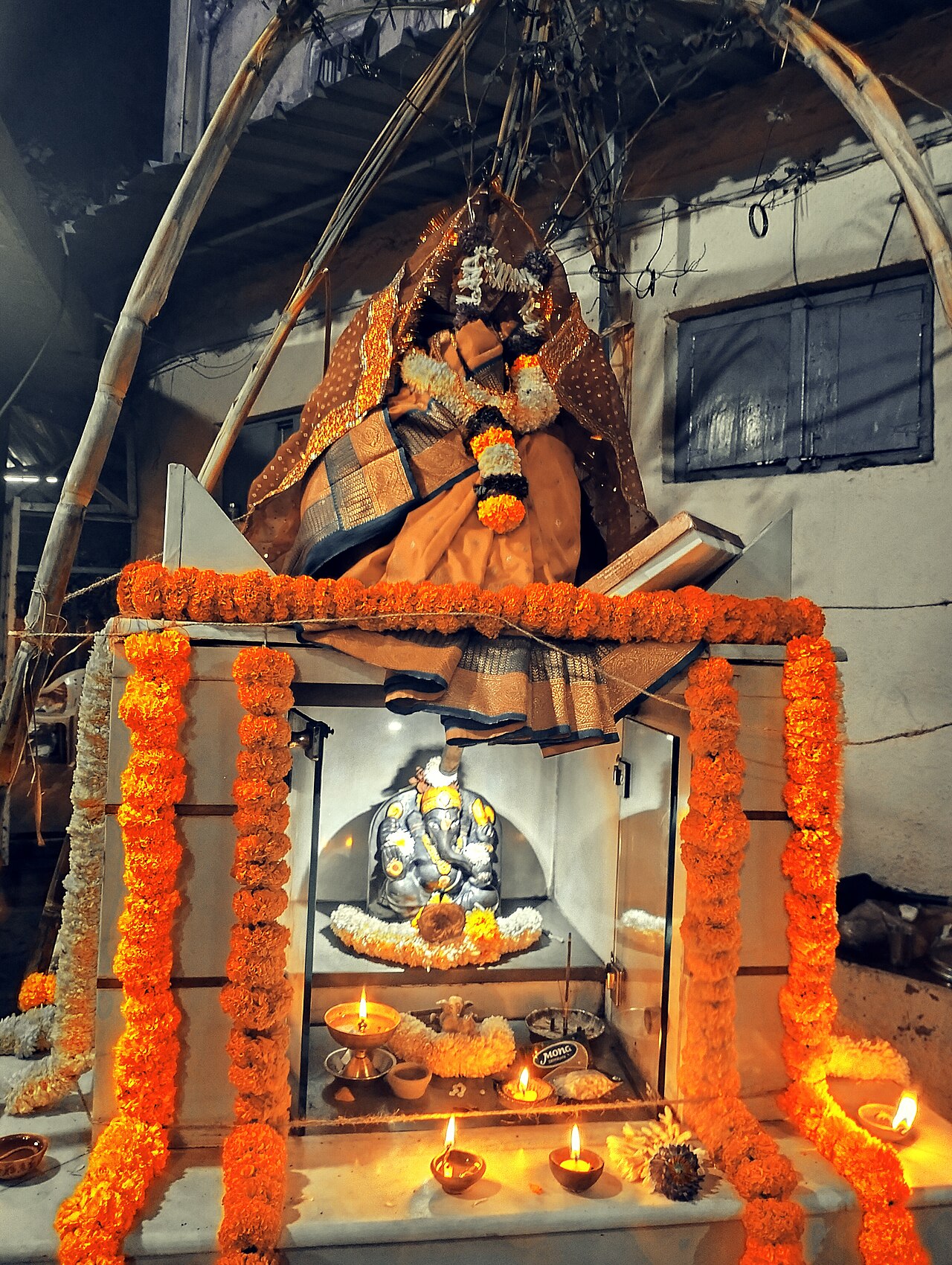
Tulsi Vivah is treated as the first wedding of the year after Chaturmas. Once Tulsi and Shaligram are married, families start fixing their own dates. This year the very first vivah muhurat falls on the same day, 21 November, followed by 24, 25 and 26 November. Our earlier report on Tulsi Vivah 2026 and the remaining wedding muhurats has the full list for November and December.
Getting ready: what to do before Saturday
- Thursday: buy sugarcane, singhara, shakarkand, amla and flowers before the market rush. Pluck any tulsi leaves you need.
- Friday: keep the Dev Uthani Ekadashi fast, draw the Lord's feet, and do the evening puja.
- Saturday morning: clean the angan and make the rangoli.
- Saturday afternoon: break the fast in the parana window, then dress the tulsi and build the mandap.
- Saturday evening: the wedding, aarti and prasad.
The full samagri list and the step-by-step ritual are in our Tulsi Vivah puja vidhi at home. Inviting neighbours and relatives? A quick, warm message goes a long way. Here's a sample you can send today:
सादर आमंत्रण । शनिवार, 21 नवंबर को संध्या 6 बजे हमारे घर तुलसी विवाह है। आप सपरिवार पधारकर शोभा बढ़ाएँ।
Photos: तुळशी विवाह by Kunal B. Tiwalkar, Tulsi Vivaah ceremony by Aditya Bendre and Tulsi Vivah Celebration by आर्या जोशी, CC BY-SA 4.0, via Wikimedia Commons.


Tulsi Mata ki jai. May the sugarcane be sweet, the pheras be smooth and the prasad last long enough for the neighbours' kids.
People Also Asked
Explore common questions related to this blog.
Get trusted event guides in your Google feed.