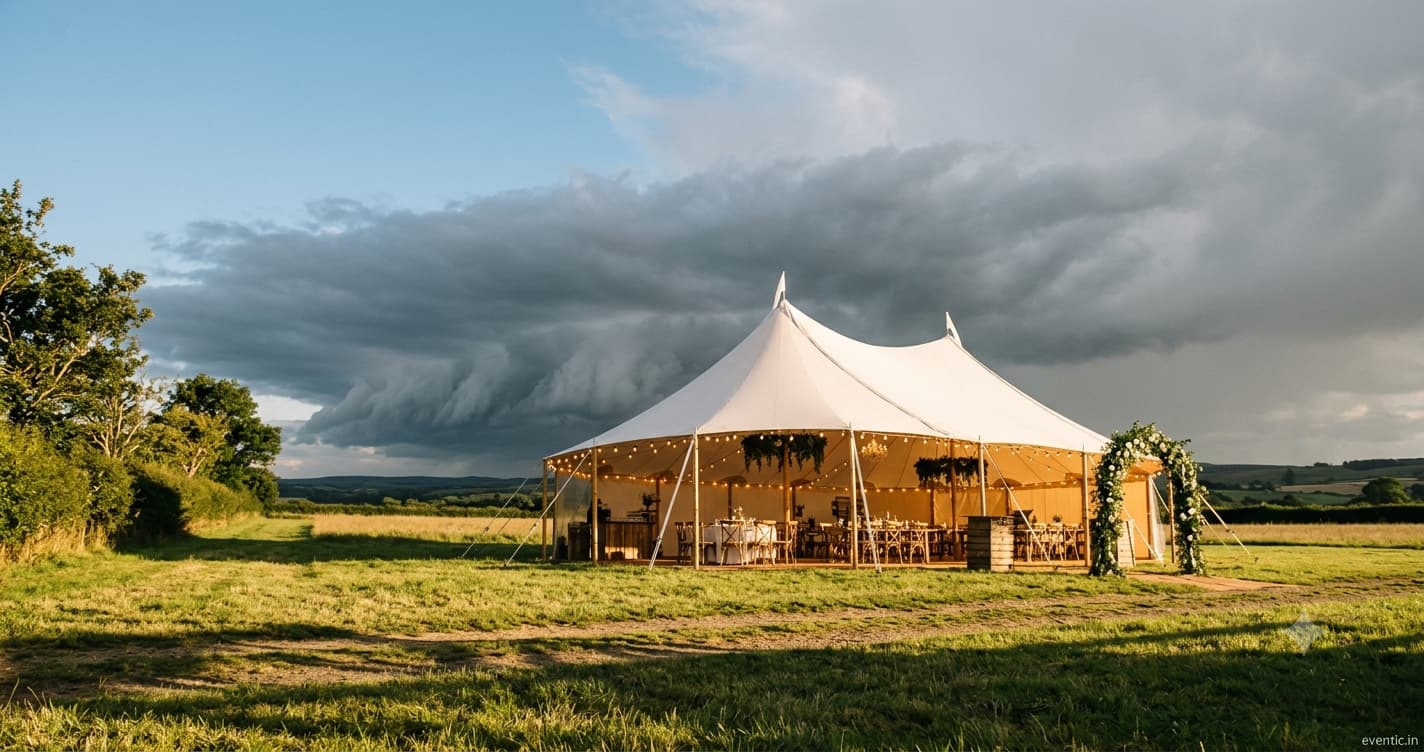
A tent feels like a solution to the weather problem. It isn't, not entirely — it's a partial answer to one specific risk (rain falling directly on your guests) that quietly introduces a few new ones of its own, and most couples don't find that out until they're deep into vendor contracts for tent rental, flooring, and staking.
The weather clause almost nobody reads closely enough
This is the single most important thing to understand about outdoor wedding insurance, and it surprises people because the marketing around wedding insurance leans hard on "protects you from bad weather" without spelling out what "bad" actually means contractually.
Most cancellation policies define covered weather as conditions severe enough to prevent the wedding from happening at all, or severe enough that the couple, key wedding-party members, or a majority of guests genuinely cannot reach the venue. Hurricanes, tropical storms, and blizzards typically qualify. A regular summer thunderstorm that rolls through for twenty minutes generally does not — insurers have been explicit about this distinction for years, precisely because it's the scenario that generates the most confused claims. If a storm is bad enough to trigger a state of emergency declaration, coverage is usually more straightforward; a localized severe storm that isn't part of a broader declared emergency is more of a judgment call the insurer makes based on the specific facts.
What this means practically for an outdoor wedding: insurance is not a plan for "it might rain, so we're covered either way." It's a plan for the more extreme end of what weather can do — the hurricane bearing down on your date, the blizzard that shuts down every road to the venue. For the more common "there's a 40% chance of rain" scenario, your actual answer is a tent, a backup indoor space, or both — insurance doesn't step in for that tier of weather risk, and no policy anywhere is written to.
Tents introduce their own liability, separate from weather
Here's the part that's easy to miss: a rented tent is itself a structure, and structures carry liability exposure that has nothing to do with rain. Collapse of a temporary structure — a tent coming down due to wind, improper staking, or structural failure — is a specifically named risk in a lot of event liability policies, separate from general bodily injury or property damage coverage. If your tent rental company is reputable, they should carry their own liability coverage for installation and structural failure, but that's their coverage protecting their liability, not necessarily yours as the host if a guest is hurt inside a tent that's technically fine but poorly configured (too many chairs for the space, a walkway that wasn't kept clear, string lights improperly secured to the tent frame).
Ask your tent rental company directly for their certificate of insurance and confirm what it actually covers — structural failure of their equipment is usually on them; general event liability for what happens inside the tent during your event is usually on you, through your own wedding liability policy.
What actually gets covered for an outdoor setup
A standard combined wedding policy applied to an outdoor or tented wedding typically covers the same core things as any other wedding: liability for guest injury or property damage, and cancellation for genuinely severe, named weather events or other covered reasons like vendor failure or sudden illness. Some carriers offer specific add-ons worth asking about for outdoor events — coverage for rented equipment (the tent itself, flooring, generators) against damage, and, in some cases, "site unusable" language that goes beyond just weather to cover a venue's grounds becoming unusable for reasons like unexpected flooding or a fallen tree.
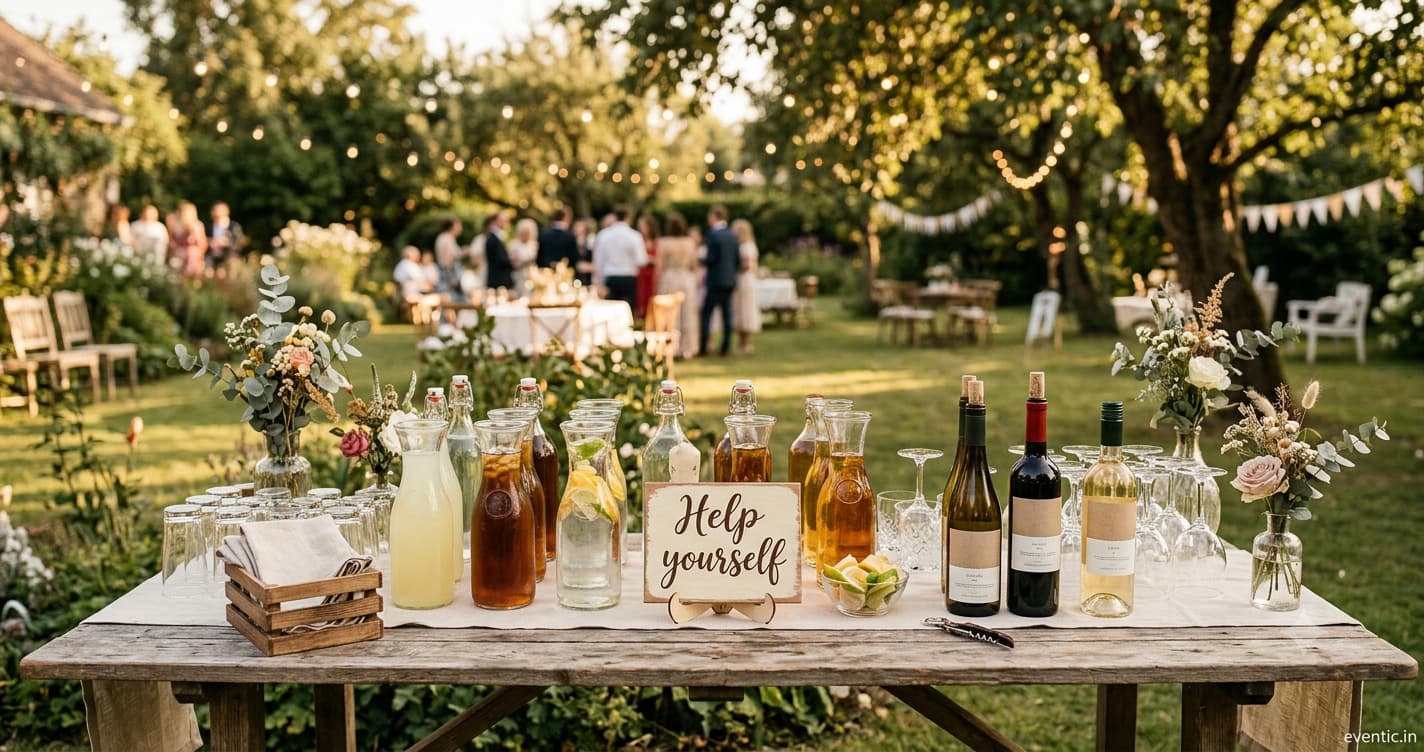
For the full cost picture across all coverage types, the cost breakdown applies the same way here as it does to any wedding — outdoor and tented setups don't automatically cost more to insure, though guest count and alcohol service (a near-constant at outdoor receptions) still move the number the same way they would anywhere else. If alcohol's part of your outdoor reception, host liquor liability deserves its own look, since outdoor bars are almost always self-serve or family-run rather than licensed catering setups.
Hurricane season deserves its own separate conversation
If your wedding falls between roughly June and November in a coastal region, you're not just dealing with generic "outdoor weather risk" — you're dealing with a specific, statistically elevated season where named storms are a real possibility, not an edge case. That's enough of a distinct risk profile that it's worth reading the dedicated hurricane-season breakdown rather than treating it as just another flavor of "outdoor weather," because the timing and buying-window considerations are genuinely different when a named storm is statistically likely rather than just generically possible.
Backyard weddings are outdoor weddings, with one extra layer
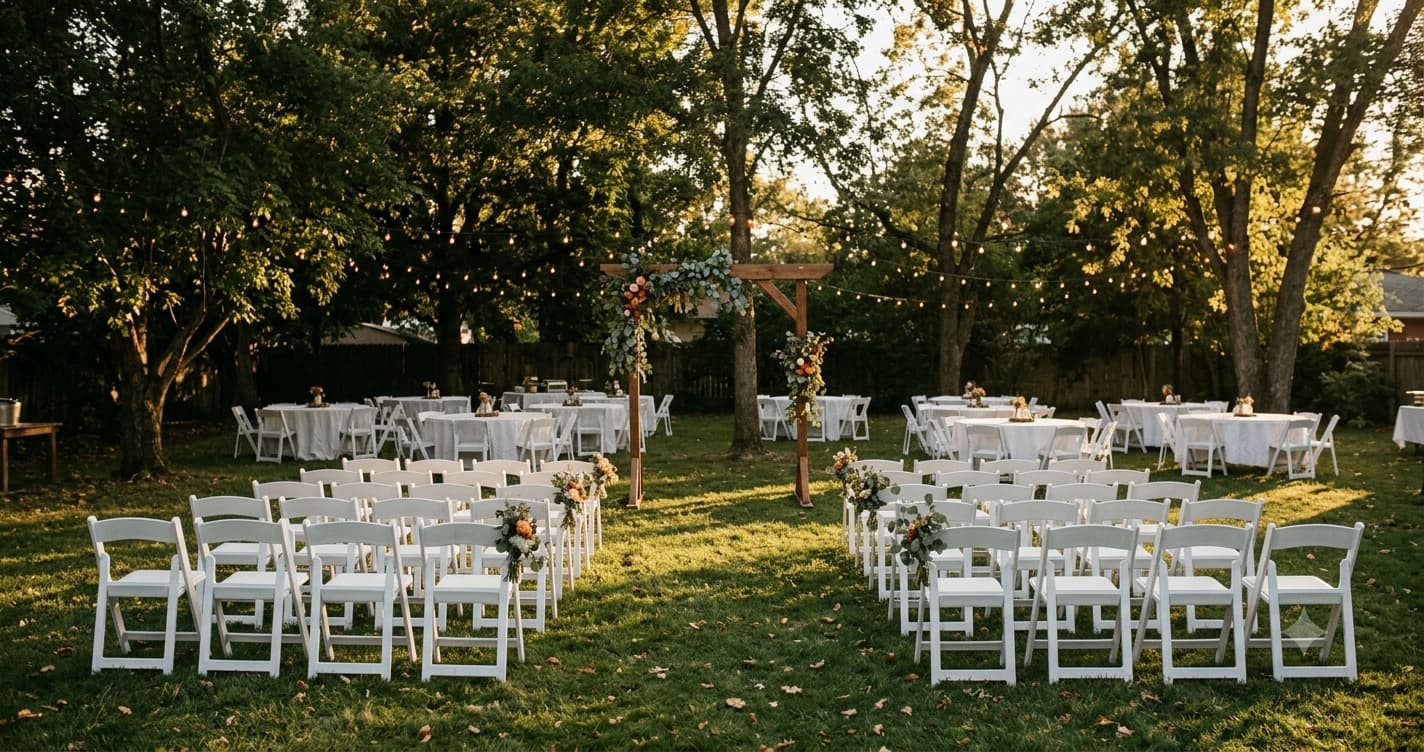
If your outdoor wedding is happening on private property rather than at a dedicated outdoor event venue, everything above still applies, plus the additional considerations specific to private-property weddings — no venue insurance floor beneath you at all, host liability resting entirely on you and whoever owns the property. The backyard and DIY wedding guide covers that layer in more depth; this article is really the weather-and-structure half of what becomes a fuller risk picture once you add "and it's also someone's actual backyard" on top.
A few things worth doing regardless of insurance
Insurance is the financial backstop, not the actual weather plan. A few things that matter more day-to-day: have a genuine rain contingency identified before you sign any vendor contracts, not scrambled together the week of — a tent alone often isn't enough if wind or lightning makes an outdoor tent unsafe rather than just wet. Ask your tent company directly what wind speed their structure is rated for and what their protocol is if severe weather is forecast close to your date. And build in a little schedule slack around your rain-contingency trigger point — deciding "we move everything indoors" needs to happen early enough in the day to actually execute, not as a last-minute scramble two hours before the ceremony.
Ground-level risks that have nothing to do with weather at all
Weather gets all the attention in this conversation, but a lot of the actual liability exposure at outdoor weddings comes from far more mundane sources: uneven or soft ground that becomes a tripping hazard once heels and dress shoes are involved, extension cords and cabling for lighting or a sound system running across walkways, generators positioned somewhere guests might wander near, and string lighting or draping that wasn't properly secured to the tent frame or nearby structures. None of this requires a single drop of rain to become a real injury risk, and it's exactly the kind of thing standard event liability coverage is built to address regardless of what the weather does on the day.
A practical walk-through worth doing, separate from the insurance conversation entirely: the week before the wedding, physically walk the site at the time of day the event will actually happen, checking for uneven patches, low-hanging branches, cabling that needs to be taped down or rerouted, and lighting that needs restringing. This costs nothing and catches a surprising number of the actual, mundane risks that liability claims tend to come from — far more often than dramatic weather events do.
Choosing a tent company that's actually covered
Not every tent rental company carries the same quality or amount of insurance, and price alone isn't a reliable signal of which ones do. When comparing quotes, ask each company directly for their certificate of insurance before booking, and confirm it specifically addresses structural liability — collapse, wind damage during setup and the event itself, and property damage caused by their equipment — not just a generic small-business liability policy that might not clearly extend to structural failure of a large temporary installation. A company that's genuinely experienced with weddings and larger events should have this documentation ready without hesitation; reluctance or vagueness here is worth treating as a red flag about how seriously they take their own risk management, which tends to correlate with how carefully they'll handle the actual setup too.
Outdoors is beautiful and it's also, structurally speaking, a wedding with one extra layer of variables. The insurance conversation doesn't remove that layer — it just makes sure the financial side of a genuinely bad outcome isn't also riding entirely on hope.
People Also Asked
Explore common questions related to this blog.
Generally no — that's the exact scenario a tent and a contingency plan are meant to solve, not insurance. Cancellation coverage is for weather severe enough to prevent the event entirely, not ordinary rain that a tent handles fine.
That's typically the tent rental company's liability, covered under their own equipment and structural coverage — confirm this is the case with their certificate of insurance before assuming either way.
Not automatically — a standard combined liability and cancellation policy covers most outdoor scenarios. What changes is reading the weather-clause language carefully and, if you're in hurricane season, considering the timing questions that come with that specifically.