At most weddings, nobody thinks twice about the bar until something happens at the bar. And when something does happen — a guest who'd clearly had enough gets behind the wheel, or a fight breaks out because someone's had four too many — the question that gets asked afterward is "who was serving the alcohol," and the honest answer at a lot of weddings is: whoever the couple asked to help out that day.
Host liquor liability vs. regular liquor liability — these are not the same thing
This is the distinction that trips people up, and it matters because the two products are priced and sold completely differently.
Host liquor liability is built for individuals hosting a one-time private event — you, planning your wedding — where alcohol is served but not sold. Nobody's handing over cash for drinks; you bought the alcohol and you're giving it to your guests as part of the celebration. This is almost always the version couples need, and it's usually bundled into a standard wedding liability policy for a modest add-on cost.
Liquor liability (sometimes called commercial liquor liability) is built for businesses — bars, caterers, professional bartending services — that sell or serve alcohol as part of their regular operations. It's priced differently, often starting around $275 for a short-term event policy, because it's underwriting a business's ongoing risk, not a one-off private party.
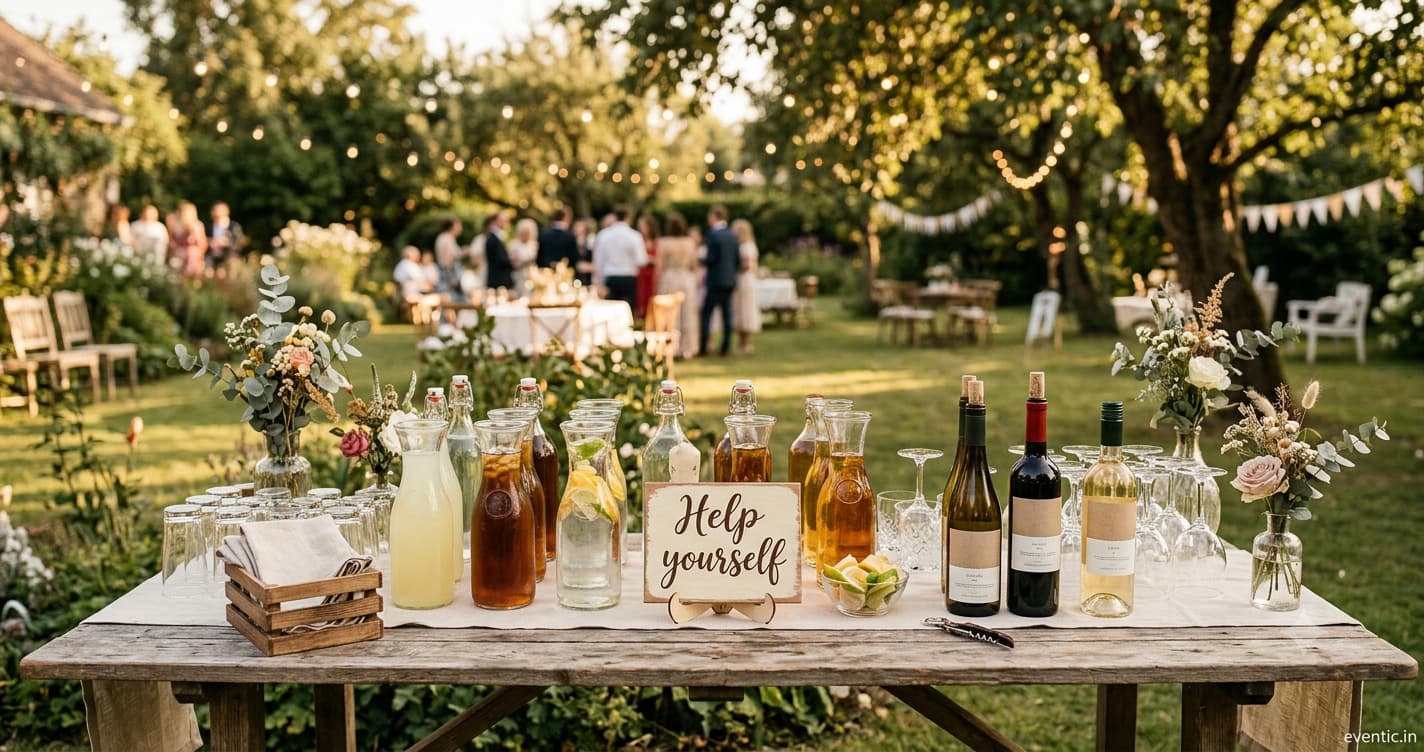
If you've hired a licensed catering company or a professional bar service, they should already carry their own liquor liability coverage as a cost of doing business — ask for their certificate of insurance to confirm rather than taking their word for it. If you or a relative is buying the alcohol and setting up a self-serve bar, or a friend is "playing bartender" for the evening as a favor, none of that is a licensed business serving drinks — which means the liability sits with you, the host, and host liquor liability is the product built for exactly that scenario.
Why this matters more than people assume
The legal concept behind this coverage is sometimes called social-host liability, or in some jurisdictions, dram shop liability — the idea that whoever provided alcohol to a visibly intoxicated person can, in certain circumstances, bear some responsibility if that person then causes harm to themselves or someone else. A guest who's overserved at your wedding and gets into a car accident on the way home isn't a hypothetical horror story; it's the specific, real-world scenario this coverage exists to address, and it's a genuinely different kind of exposure than a guest simply tripping on the dance floor.
It's also worth understanding that this risk doesn't disappear just because you're not the one physically pouring the drinks. If a family member is running the bar as a favor, or you've set out a few kegs and a cooler and told people to help themselves, the liability generally still traces back to whoever's hosting and providing the alcohol — which is you.
What it typically costs
Host liquor liability coverage for a wedding generally runs in the $88–$250 range as a standalone add-on, according to figures reported across several insurance-comparison sources, with some carriers offering it starting closer to $115 for a short-term event policy. In practice, most couples never see this as a separate line item — it's folded into the price of a standard combined wedding liability policy the moment you check the box indicating alcohol will be present. For the full breakdown of what a combined policy runs overall, the cost guide covers the bigger picture; this is just the piece that specifically depends on your bar setup.
What actually changes the price
A few specific factors move this number more than others:
- Self-serve vs. hosted bar. A fully self-serve setup with no one monitoring consumption can register as slightly higher risk than a hosted bar where someone's at least nominally keeping an eye on things, even if that someone isn't a licensed bartender.
- Guest count. More guests generally means more total alcohol consumed and more statistical exposure, which nudges the premium.
- Duration of the open bar. A cocktail hour is a different risk profile than an open bar running for six hours straight.
- Whether hard liquor is involved, versus beer and wine only. Some carriers price these differently, since the risk profile isn't identical.
The one thing worth doing regardless of coverage
Buying the insurance doesn't replace basic precautions, and honestly, the precautions matter more day-to-day than the policy does — the policy is what protects you if something goes wrong despite the precautions, not a substitute for taking them. A few things that meaningfully reduce actual risk, separate from the insurance conversation: cutting off the bar an hour or so before the event ends rather than right up until the last song, having a designated person (even if it's just a friend, not a hired bartender) keep a general eye on obviously overserved guests, and making sure ride-share options or a designated-driver plan is genuinely easy for guests to use rather than just mentioned once on the wedding website.
If you're trying to figure out roughly how much alcohol you'll need in the first place — which is also useful context for sizing your liability conversation, since a wedding serving five cases of wine to 40 guests is a different risk picture than one serving an open bar of hard liquor to 200 — this breakdown of how much alcohol to plan for a party is a genuinely useful starting point before you even get to the insurance quote.
What it doesn't cover
Host liquor liability covers claims arising from alcohol served at your event — it does not extend to alcohol-related incidents that happen somewhere else entirely unrelated to your wedding, and it doesn't cover intentional acts (a fight that was deliberately started, as opposed to an accident). It's also not a substitute for the broader liability policy it's usually bundled into; on its own, it addresses alcohol-specific claims, not a guest slipping on a wet floor for reasons that have nothing to do with drinking. For the fuller list of what wedding insurance generally excludes across the board, the exclusions guide is worth reading alongside this one.
If you're hosting at home or somewhere unlicensed
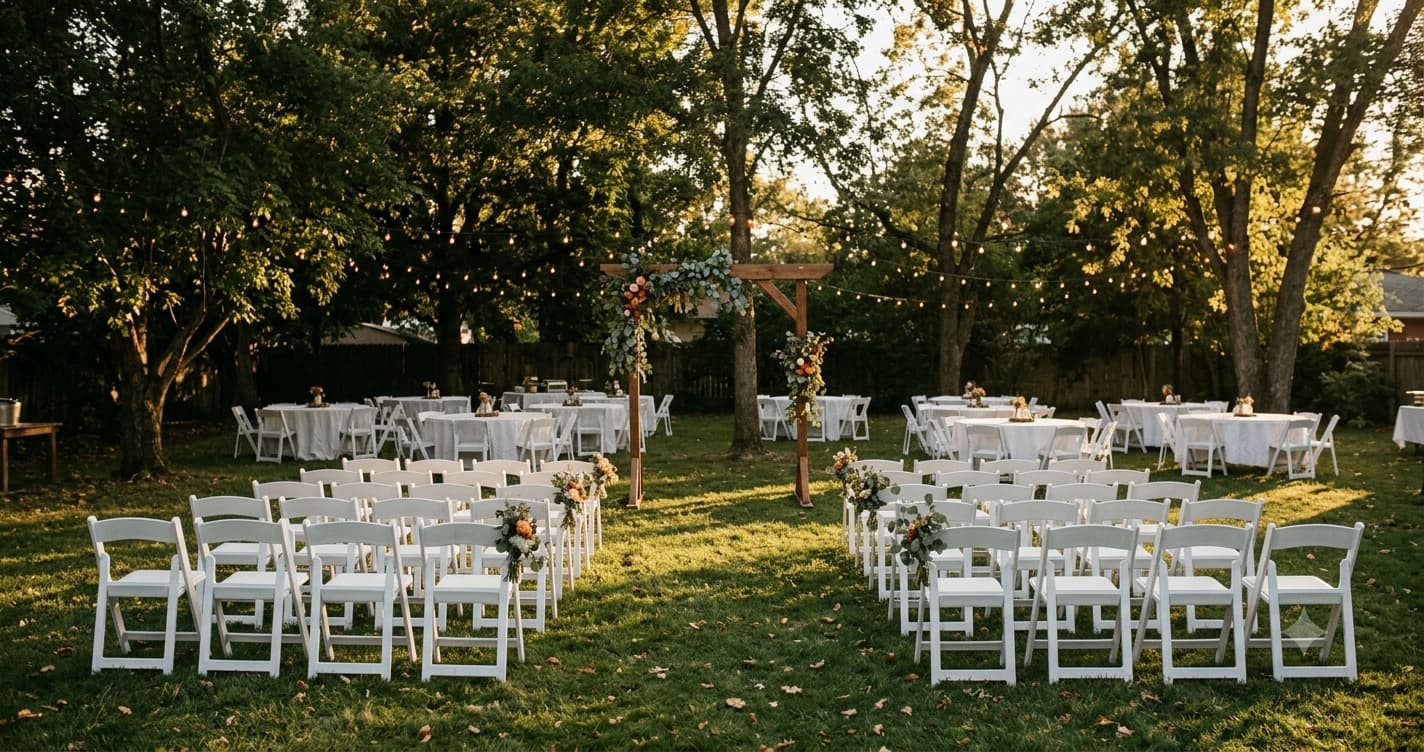
This coverage matters most precisely in the situations where it's easiest to assume you don't need it — a backyard wedding, a private estate, a rented house. There's no venue liability floor underneath you at any of these locations, which means the alcohol-specific risk isn't being absorbed by anyone else's policy the way it might be at a hotel with its own established liability coverage and house rules about service. The backyard and DIY wedding insurance guide covers the broader liability picture for exactly this kind of setup, and this article is really the alcohol-specific half of that same conversation. The same logic applies to outdoor and tent weddings, where a bar is often set up under a rented tent with even less built-in infrastructure than a backyard has.
Are the standard liability limits actually enough?
Most wedding liability policies default to $1 million per occurrence, sometimes with a $2 million aggregate limit across the whole event. For the overwhelming majority of weddings, that's more than adequate — the actual claims that materialize from alcohol-related incidents, while genuinely serious when they happen, rarely approach those figures. But it's worth understanding what "per occurrence" and "aggregate" actually mean before assuming the number on your policy is bigger than it needs to be: per occurrence caps what's paid for any single incident, while the aggregate caps the total across every incident during the coverage period. If your wedding is large, involves a genuinely high-volume open bar over many hours, or you're simply the type of planner who prefers extra headroom, some carriers offer higher limits — $2 million or more per occurrence — for a modest additional premium.
There's also a broader insurance concept worth knowing about even if it rarely comes into play for a single wedding: umbrella liability coverage, which some people already carry on their homeowner's or auto policies, sits on top of underlying liability limits and kicks in only after those limits are exhausted. If you already carry a personal umbrella policy for other reasons, it's worth a quick call to your regular insurance agent to ask whether it would extend to a one-day wedding liability situation — the answer varies by carrier and policy, and it's not something to assume either way without asking.
How this shows up in your venue conversation
If your venue's contract requires liability coverage, the alcohol-specific piece often gets mentioned as a separate line item on their requirements sheet, sometimes phrased as "host liquor liability required if alcohol will be served" rather than folded silently into the general liability requirement. Read this section of your contract specifically rather than assuming a general liability certificate automatically satisfies an alcohol-specific requirement — some venues want to see liquor liability called out explicitly on the certificate of insurance, not just implied by a broader general liability line. When in doubt, ask your venue coordinator directly what they need to see on the document, and confirm with your insurance carrier that the certificate they generate actually reflects it clearly.
Whoever's behind the bar that night, the liability question doesn't actually depend on how nice they are. It depends on whether anyone was carrying the right coverage before the first drink got poured.
People Also Asked
Explore common questions related to this blog.
It can, depending on the specific circumstances and how clearly the alcohol served at your event is connected to the incident. This is exactly the kind of off-site third-party claim this coverage is designed to address, though the specifics of any individual claim depend on the facts and the carrier's policy language.
Often not for the alcohol-serving piece specifically, if their coverage is confirmed adequate and current — but it's worth asking for their certificate of insurance directly rather than assuming, and you may still want general liability coverage of your own for everything else that isn't alcohol-related.
Sometimes, yes — some carriers price policies slightly differently based on what's being served, since the risk profile isn't identical across drink types.