There's a specific week in wedding planning where buying insurance is genuinely easy, and a specific week — usually much later — where it's genuinely too late for at least half of what it's supposed to do. Most couples miss the first window entirely and don't find out about the second one until they're already inside it.
The core rule: the earlier you buy, the fewer things are already "known"
Every wedding insurance policy excludes losses tied to something you already knew about before buying coverage. This single rule is why timing matters more for this purchase than almost anything else in wedding planning. A hurricane that's already been named and forecast toward your date is a known risk the moment forecasters flag it — buying cancellation insurance after that point, hoping it'll cover a storm that's already brewing, essentially never works, because insurers treat it exactly like buying homeowner's insurance after your house is already on fire.
This means the "right" time to buy isn't really about a fixed number of months before the wedding — it's about buying before any specific risk to your date has emerged, which in practice means buying as early as you reasonably can, once you have something concrete to insure.
The realistic month-by-month timeline
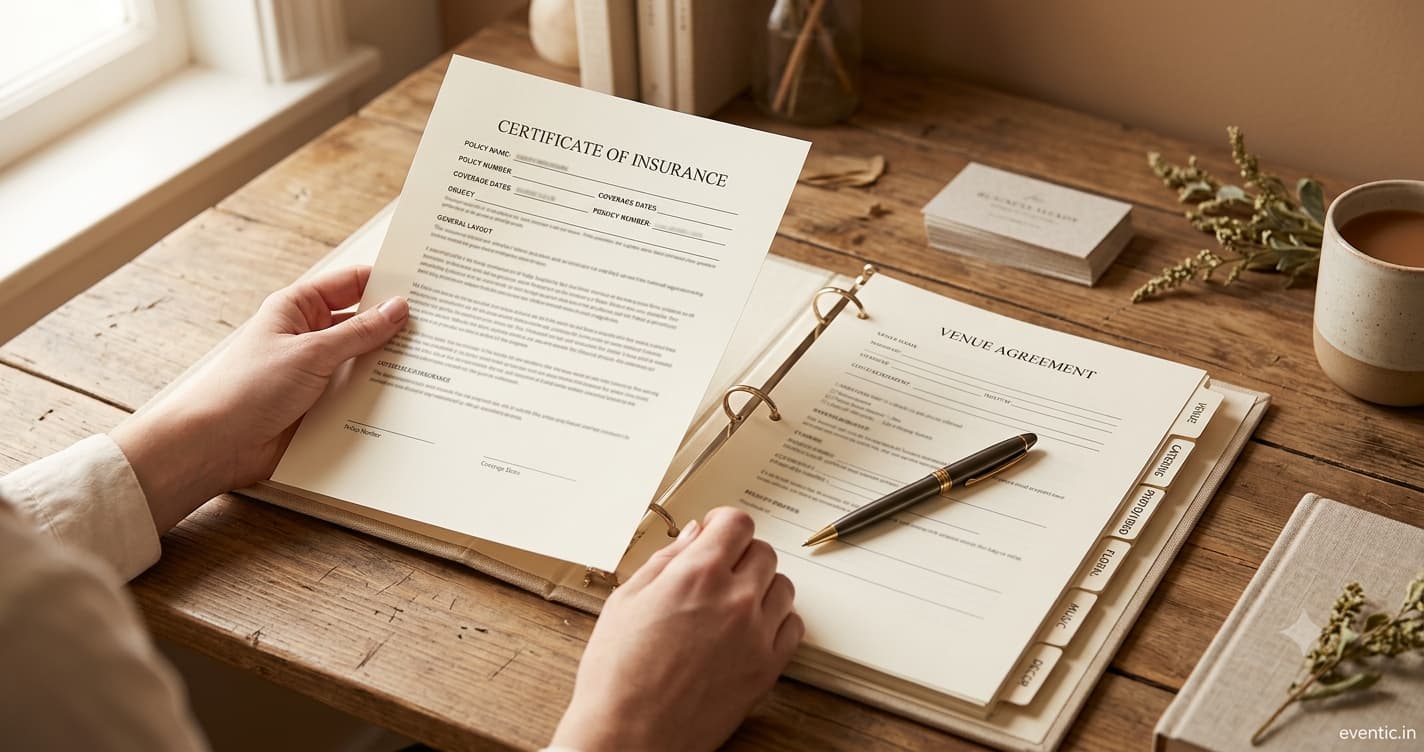
As soon as you book your venue and pay a deposit (often 9–18 months out). This is genuinely the ideal moment. You have a real budget number, a real non-refundable deposit, and — critically — nothing specific has gone wrong yet, so nothing is excluded as "already known." If your venue requires proof of liability insurance as part of the booking process, you'll likely be buying at least the liability piece right here anyway.
As you sign additional vendor contracts (6–12 months out). Each new non-refundable deposit increases the total exposure your cancellation coverage should be protecting. Some couples buy insurance sized to their venue deposit alone early on, then realize months later that their catering and photography deposits alone doubled what they'd actually lose to a cancellation. It's worth revisiting your coverage amount as more deposits accumulate, rather than assuming the number you insured on day one still reflects reality by month six.
3–6 months out, if you haven't bought it yet. Still generally fine for most standard risks — the earlier-is-better principle still applies, but you haven't lost meaningful ground yet unless something specific has already started to look shaky (a venue you've heard concerning things about, unusually early hurricane forecasting for your region and season).
Inside hurricane season, if you're getting married in an at-risk region. This is where timing gets genuinely tighter. If you're marrying between roughly June and November in a hurricane-prone area and haven't bought cancellation coverage yet, do it now rather than waiting — once a specific storm is being tracked toward your date, it's too late for that particular storm to be a covered, unknown risk.
The final weeks before the wedding. Liability insurance can often still be purchased here, sometimes within a day or two of the event, since it's not tied to advance-notice exclusions the way cancellation coverage is. Cancellation coverage bought this late is a much weaker product by definition — you're now insuring against reasons that, by virtue of being this close to the date, are statistically less likely to be totally unknown surprises (an approaching storm would already be visible on a forecast by now, for instance).
What this looks like against your broader planning checklist
Insurance rarely gets its own dedicated line in general wedding planning advice — it tends to get mentioned once, vaguely, somewhere in a giant checklist, then forgotten. If you're working from a broader month-by-month wedding planning checklist already, this is the planning guide worth cross-referencing — the insurance purchase slots in naturally right alongside "book venue" and "sign vendor contracts," which is exactly the sequencing this article is describing, just without insurance getting its usual one-line afterthought treatment.
What happens if your date changes after you've already bought a policy
If a wedding gets postponed rather than cancelled outright, most carriers allow you to transfer the existing policy to the new date, usually for a small administrative fee, rather than requiring you to buy an entirely new policy from scratch. This isn't automatic, though — you have to actually contact the carrier and request the transfer. A policy quietly expiring on the original date while everyone assumes it's "still active" for the new one is an avoidable gap that a five-minute phone call closes.
The claim-readiness argument for buying early
There's a secondary benefit to buying early that has nothing to do with exclusions: it gives you more runway to actually understand your policy before you might ever need to use it. Couples who buy insurance eight months out and never think about it again until the week before the wedding have had time to read the actual policy document, understand what documentation a claim would require, and start keeping vendor receipts organized from the beginning. The full claims-filing process goes far more smoothly for couples who bought early and had time to actually prepare, versus couples who bought late and are learning the policy's terms for the first time in the same week they're trying to file a claim.
Signs you've waited too long
A few situations mean the timing conversation has effectively already resolved itself, and not in your favor: a named storm has already been forecast for your wedding weekend, your venue has already shown signs of financial trouble you're aware of, or a member of the wedding party has already been diagnosed with a condition that might affect attendance. None of these mean insurance is worthless to buy at that point — liability coverage, for instance, is still generally available and useful regardless of timing — but the cancellation coverage specifically won't help with the exact risk you're now worried about, because that risk is no longer an unknown.
What if your engagement is short, and you're already inside the "late" window?
Not every couple gets nine to eighteen months of runway — plenty of weddings come together in three or four months, sometimes less. If you're already well into planning and haven't bought insurance yet, the right move isn't to skip it out of a sense that it's "too late now." It's to buy it as soon as you possibly can, today rather than next week, and to be realistic about what it will and won't do for you at this point. Liability coverage is still fully available and just as useful regardless of how close you are to the date — that piece of the timing conversation barely changes. Cancellation coverage is still worth having, but go in understanding that any risk which has already started to look specific or likely (a storm system already forming, a vendor who's already missed a deadline) may not qualify as a covered surprise anymore, simply because of when you're buying relative to when that risk emerged.
The practical version of this: a couple planning a wedding in six weeks should still buy insurance this week, not treat the short timeline as a reason to deprioritize it. The gap between "buying it eight months out" and "buying it six weeks out" mostly affects how much of the cancellation coverage's protective value you actually capture — it doesn't mean the purchase becomes pointless.
A simple way to keep this from falling through the cracks
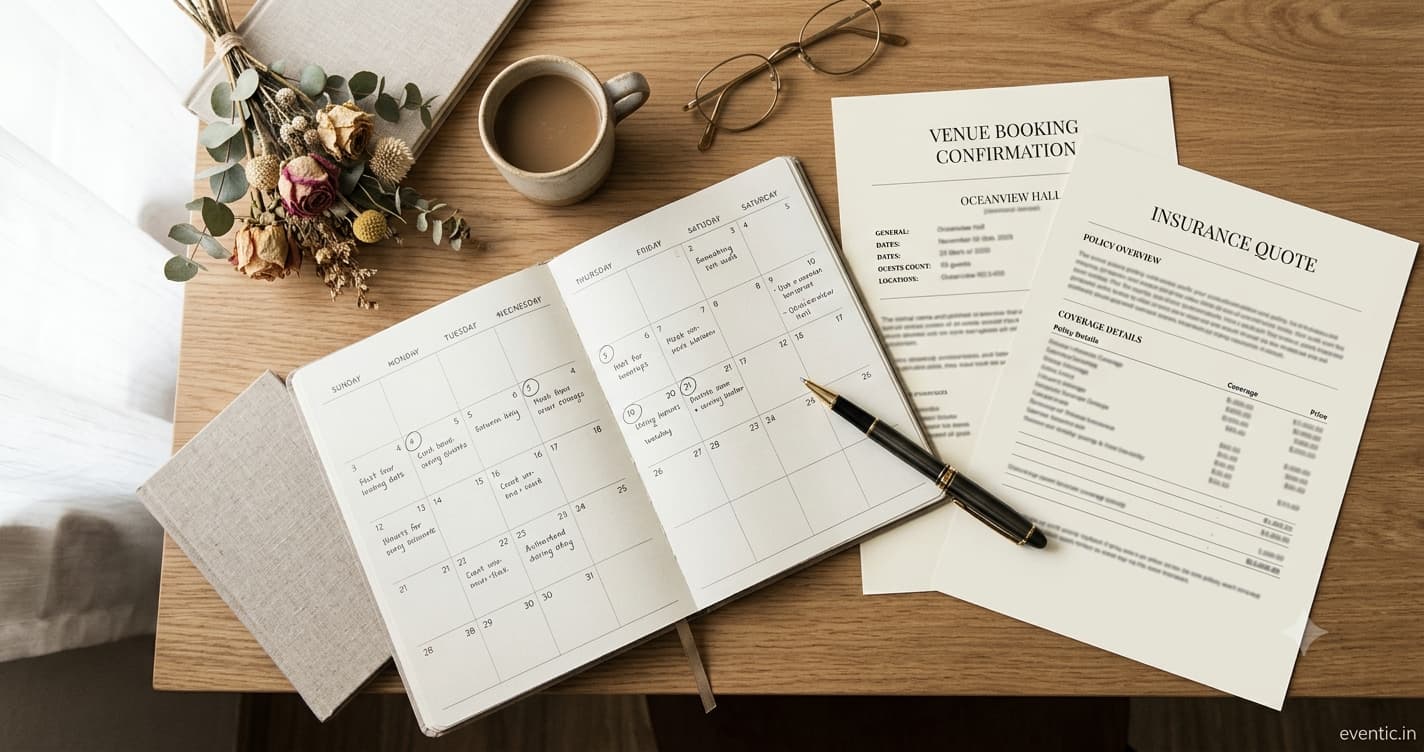
Wedding planning involves dozens of moving deadlines, and insurance is one of the easiest ones to lose track of because, unlike a dress fitting or a menu tasting, nothing forces the conversation unless your venue specifically requires proof of coverage upfront. A reliable fix: the moment you book your venue and pay the deposit, put a calendar reminder on your phone for the following week specifically labeled "buy wedding insurance," separate from your general to-do list. This tiny bit of structure is often the entire difference between a couple who buys it early, without drama, and a couple who remembers it exists three weeks before the wedding, usually because something's already gone slightly wrong.
The honest version of this article in one sentence: buy it the same week you book the venue, put a reminder in your phone to revisit the coverage amount after your next few vendor deposits, and then genuinely forget about it until either the wedding happens fine or you need to file a claim — at which point you'll be very glad you didn't wait.
People Also Asked
Explore common questions related to this blog.
Not a universal one — it varies by carrier and by coverage type. Liability coverage tends to have more flexibility close to the date; cancellation coverage effectively has a soft cutoff the moment a specific risk becomes known, which could be months out or just days, depending on circumstances.
Buy it once you have your venue deposit and a rough total budget — an exact final headcount isn't required to get an accurate quote, though updating the guest count later if it changes significantly is worth doing.
Often yes, through an endorsement or policy update — contact your carrier as new deposits accumulate rather than assuming your original coverage amount still matches your actual exposure.