Disclosure: This post contains affiliate links. If you buy through them, we earn a small commission at no extra cost to you. Eventic makes digital invitations, so we have a commercial interest here — including in the recommendation to skip pieces entirely, which we'd make anyway.
Zero-waste stationery isn't really achievable. Every option has a footprint, and anyone selling you a genuinely zero-waste wedding suite is selling you a story.
What is achievable is cutting stationery waste by 80–90% without your wedding feeling stripped down. The single biggest lever isn't which paper you choose — it's how many pieces you send at all.
A traditional suite runs to eight or nine printed items per guest. Most weddings need three.
The full list, and what's actually necessary
| Piece | Traditional | Necessary? |
|---|---|---|
| Save-the-date | Printed and mailed | Digital |
| Invitation | Printed and mailed | Depends |
| RSVP card | Printed | Skip — digital RSVP |
| RSVP envelope | Printed, stamped | Skip |
| Details / info card | Printed | Skip — wedding website |
| Directions card | Printed | Skip |
| Envelope liner | Decorative | Skip |
| Belly band or ribbon | Decorative | Skip |
| Ceremony program | Printed per guest | One shared sign |
| Menu card | Printed per place setting | One per table, or a sign |
| Place card | Printed per guest | Seating chart sign |
| Table number | Printed | Reusable |
| Favor tag | Printed per guest | Skip |
| Thank-you card | Printed and mailed | Keep this one |
That's nine pieces you can cut without anyone noticing. The ones guests actually register are the invitation, the seating information, and the thank-you.
Piece by piece
Save-the-dates
Send these digitally. Nearly every etiquette source permits it, including traditional ones — they're informal by nature and their only job is to communicate a date.
This is the easiest win in the whole cluster. If you print nothing else digitally, print not these.
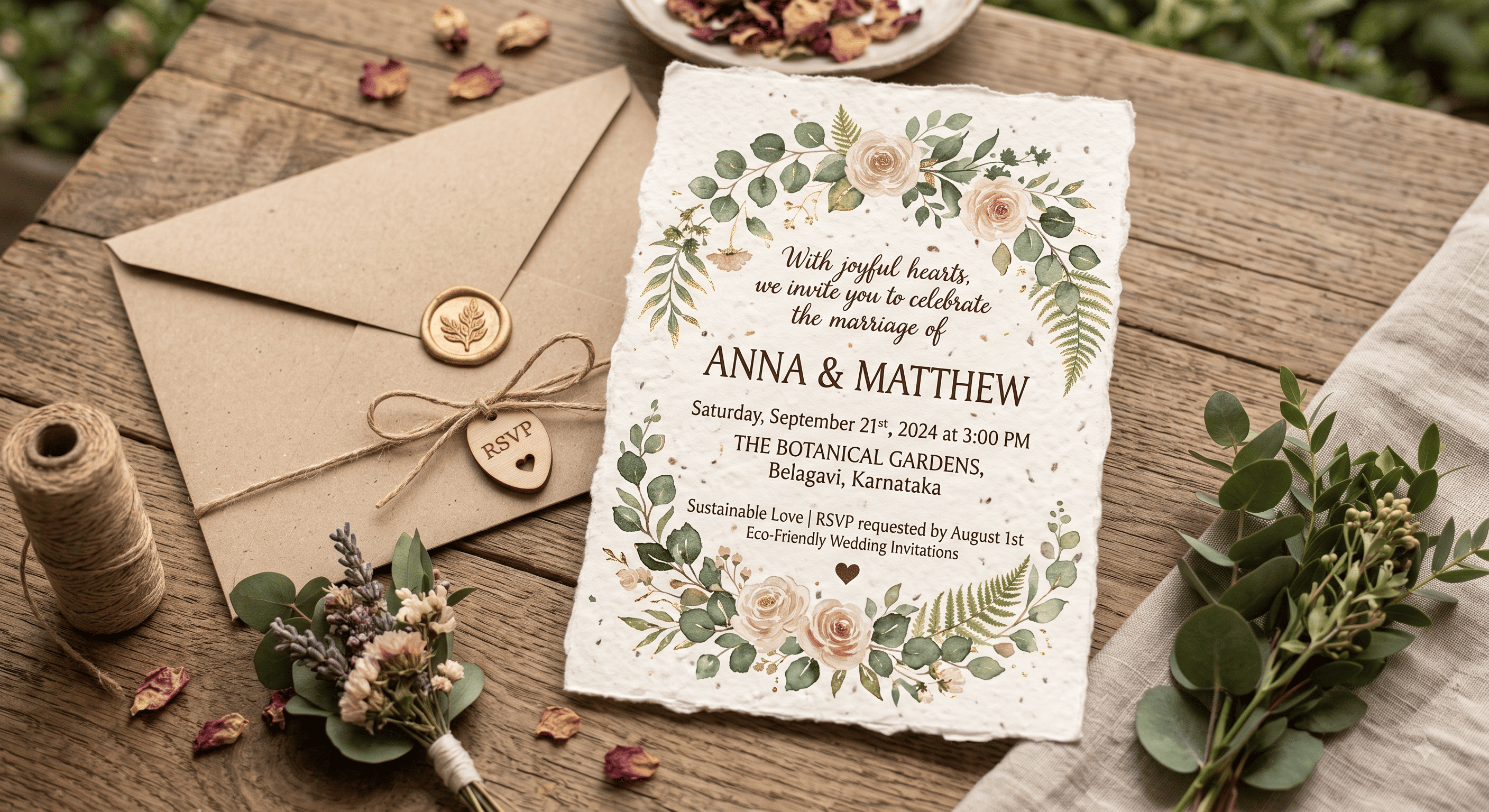
If you want something physical, seed paper save-the-dates work well here specifically because they arrive nine to twelve months out, when there's still time for guests to plant them. The seed paper breakdown covers germination and what to check first.
Invitations
The decision that gets the most attention and matters less than the ones around it.
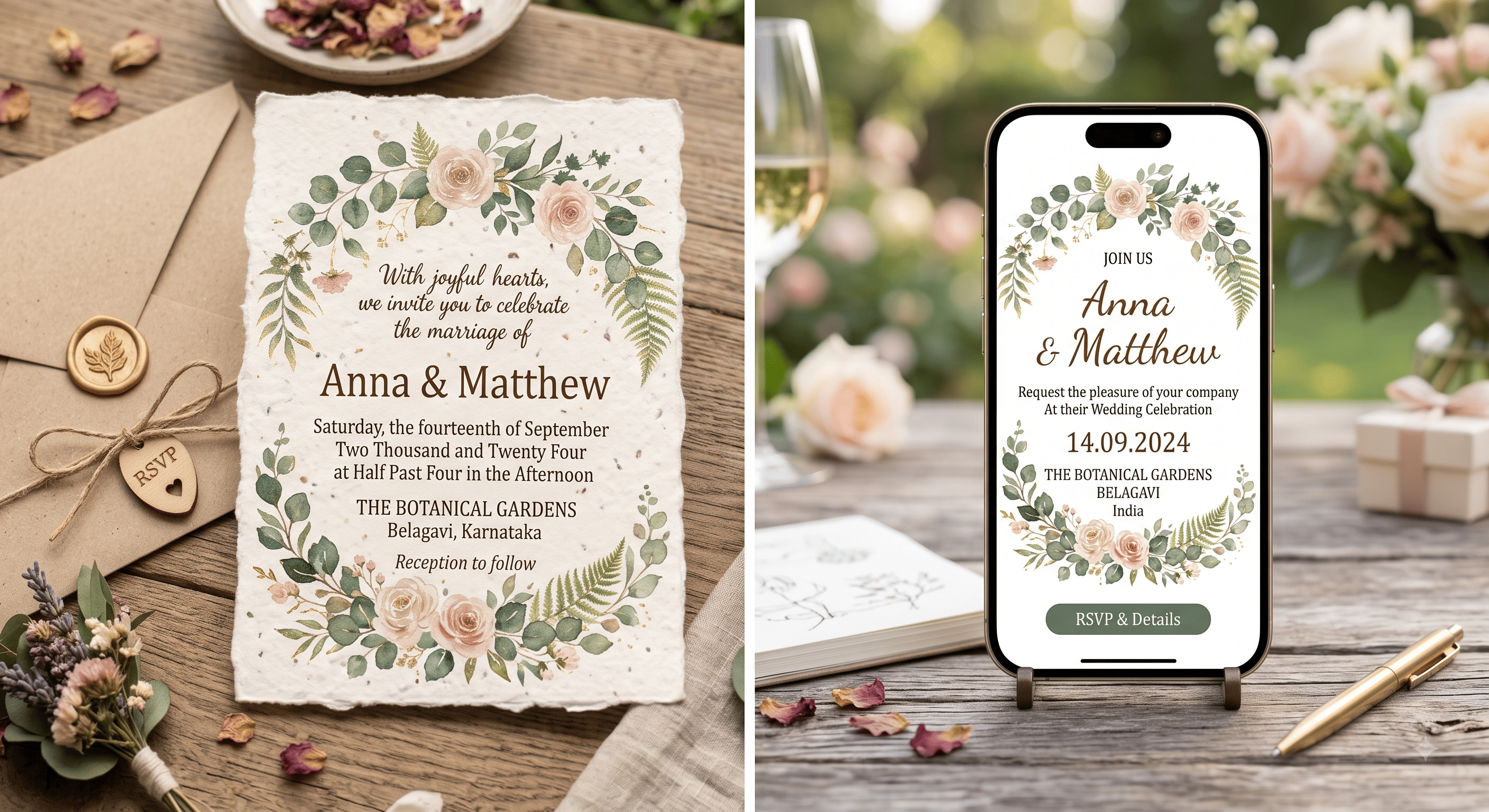
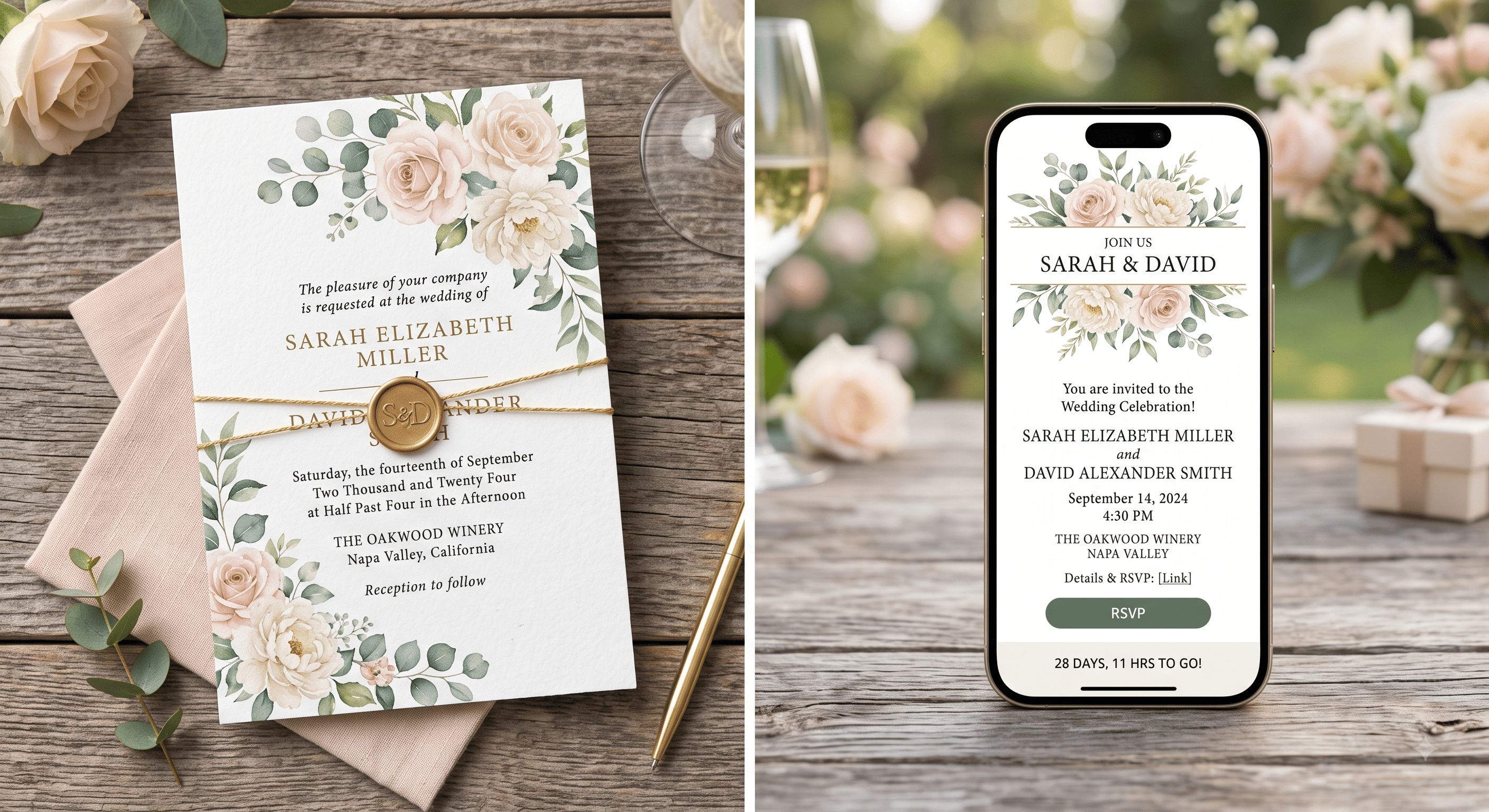
The hybrid is what we'd recommend to most couples: digital for the guest list, printed for the ten or so people who need or want paper — grandparents, anyone not comfortable online, parents, and yourselves. Nobody is excluded, keepsakes exist, and you've cut 90% of the printing.
If your wedding is formal or your families have strong expectations, the etiquette question is worth reading before deciding.
RSVP cards and envelopes
Skip entirely. A digital RSVP is better than a paper one in every measurable way — it updates itself, sends reminders to the people who haven't replied, and gives you a number you can trust.
Emily Post explicitly endorses adding an email RSVP option even to printed invitations, so this isn't a compromise on etiquette. It also removes two printed pieces and 100 return stamps.
The headcount is worth getting right for its own sake: catering quantities scale directly off it, and "about 90" is not a number a caterer can work with.
Details, directions, and info cards
Replace with a wedding website. Travel, accommodation, dress code, parking, timings, dietary forms — all of it lives better online, where you can update it when something changes.
This alone removes two to three printed pieces per guest.
Ceremony programs
One large printed sign at the entrance instead of 100 individual programs. Guests read it walking in, and it doesn't end up under 100 chairs.
If you want something guests hold, print on a light recycled stock and put out half as many as you have guests — couples share, and unclaimed programs are pure waste.
Menus
One per table, not one per place setting. Or a single chalkboard or framed sign at the entrance. An eight-person table needs one menu, not eight.
Place cards and seating charts
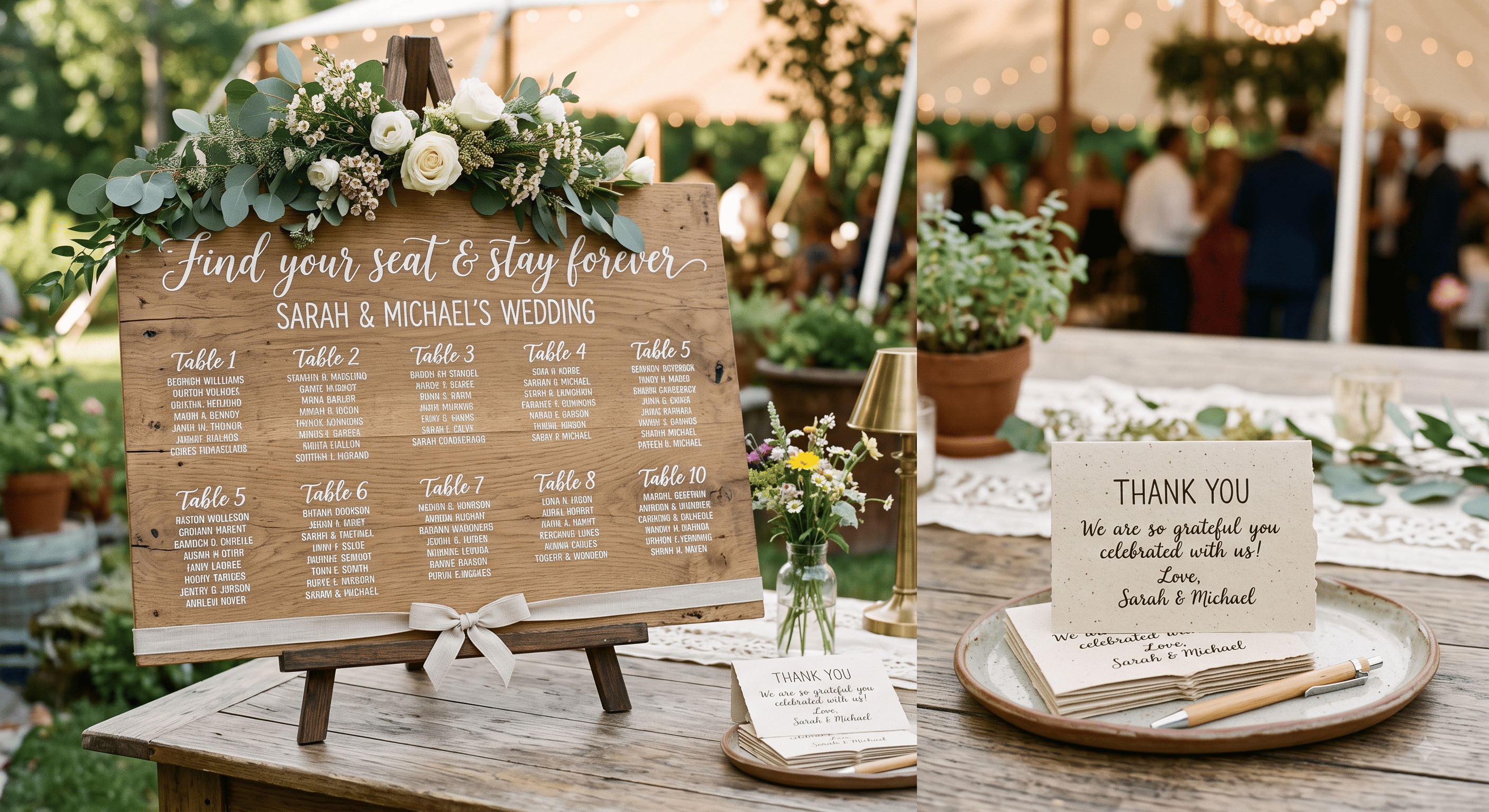
One seating chart sign replaces every individual place card. Guests find their table, sit down, and nothing goes in the bin.
If you want place cards for a formal seated dinner, write names on something that isn't paper — a leaf, a small stone, a sprig of rosemary, a wine cork. Compostable, doubles as decor, and looks considerably better than cardstock in most photos.
Table numbers
Reuse or rent. Wooden or acrylic table numbers cost nothing extra and get used again by someone else. Ask your venue — most have a set already.
Signage
Chalkboards, acrylic, and reusable wooden boards over printed foamboard, which is unrecyclable and goes straight to landfill. Never print a sign with the date on it — undated signage can be resold or passed on. Dated signage is landfill the day after.
Thank-you cards
Keep these physical. This is the one piece worth printing.
A handwritten thank-you does something a message can't, and the recipients keep them. You're also writing 40–80 of them, not 100, since it's one per gift rather than one per guest.
Use recycled stock, write something specific to each person, and don't buy a matching printed set — plain quality cardstock and your own handwriting is better than anything from a printer.
Where the waste actually is
Worth keeping in proportion. Across a whole wedding, stationery is a small share of the total footprint — guest travel and catering dominate by a wide margin, as the carbon comparison sets out with the numbers.
Within stationery, though, the ranking is clear:
- Number of pieces sent — by far the largest factor
- Mailing — more than half the footprint of anything posted
- Paper weight — heavy cardstock weighs three times what light stock does
- Embellishment — foil, glitter, and lamination make paper unrecyclable
- Paper type — recycled versus virgin, roughly a 40% difference
- Ink — the smallest factor, despite getting the most marketing attention
Note that the two things most marketed as eco choices — seed paper and soy inks — sit at the bottom of that list. Sending three pieces instead of nine beats every material decision combined.
Supplies for the pieces you do print
For the thank-yous, the handful of keepsake invitations, and any signage. Vet the specific products yourself — these are category searches.
- 100% post-consumer recycled cardstock — For invitations and thank-yous. Look for the stated PCW percentage, not "eco" branding.
- Blank recycled thank-you cards — Buying blanks and handwriting them beats a printed set, and costs less.
- Recycled kraft envelopes — A7 for invitations, A2 for thank-yous. Avoid poly-lined or windowed.
- Reusable chalkboard sign — Replaces programs, menus, and directional signage. Resells easily afterwards.
- Wooden table numbers — Undated, so they get a second life.
- Custom return address stamp — Handles envelopes without a printer, reusable for thank-yous.
- Natural jute twine — Compostable, unlike ribbon, if you're tying anything.
What to do with leftovers
Every wedding ends with unused stationery. Options, in order of preference:
- Extra invitations — keep two, offer the rest on a wedding resale group. Blank stock especially.
- Signage without dates — sells readily secondhand.
- Programs and menus — recyclable if plain, landfill if laminated or foiled. Another reason to skip embellishment.
- Place cards on leaves or stone — compost or return them to the garden.
- Table numbers — resell, or leave with the venue.
Anything foiled, glittered, or plastic-coated goes to landfill regardless of the paper underneath. That's worth knowing at the point of ordering, not the day after.
A realistic zero-waste-ish suite
For 100 guests:
| Piece | Approach | Printed items |
|---|---|---|
| Save-the-date | Digital | 0 |
| Invitation | Digital + 10 keepsakes | 10 |
| RSVP | Digital | 0 |
| Details | Wedding website | 0 |
| Programs | One sign | 1 |
| Menus | One per table (12 tables) | 12 |
| Seating | One chart | 1 |
| Table numbers | Reusable | 0 new |
| Thank-yous | Handwritten, recycled | ~60 |
| Total | ~84 printed items |
Versus roughly 800 for a traditional suite. Around 90% less, and the only thing a guest would notice missing is a program they'd have left on their chair.
Cost: roughly $80–$150, against $900–$1,500 for a full traditional suite.
The shortcut, if you only do one thing: send your save-the-dates, invitations, and RSVPs digitally, and print your thank-yous. That's most of the reduction, most of the cost saving, and nothing anyone will miss.
If you want the full picture of paper options for the pieces you do print, the eco-friendly invitation guide compares recycled, seed paper, and letterpress side by side — and digital invitations handle the rest.
People Also Asked
Explore common questions related to this blog.