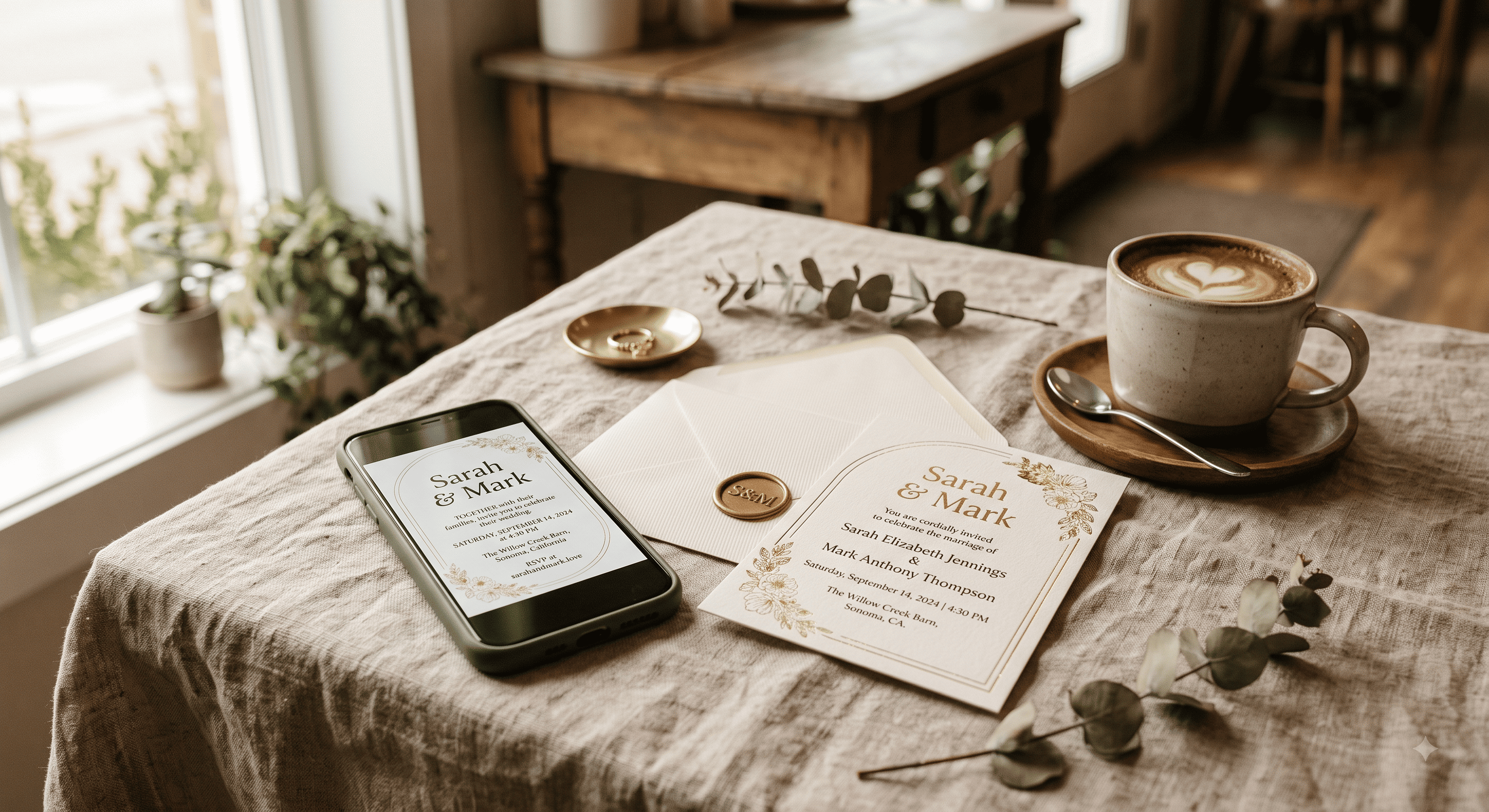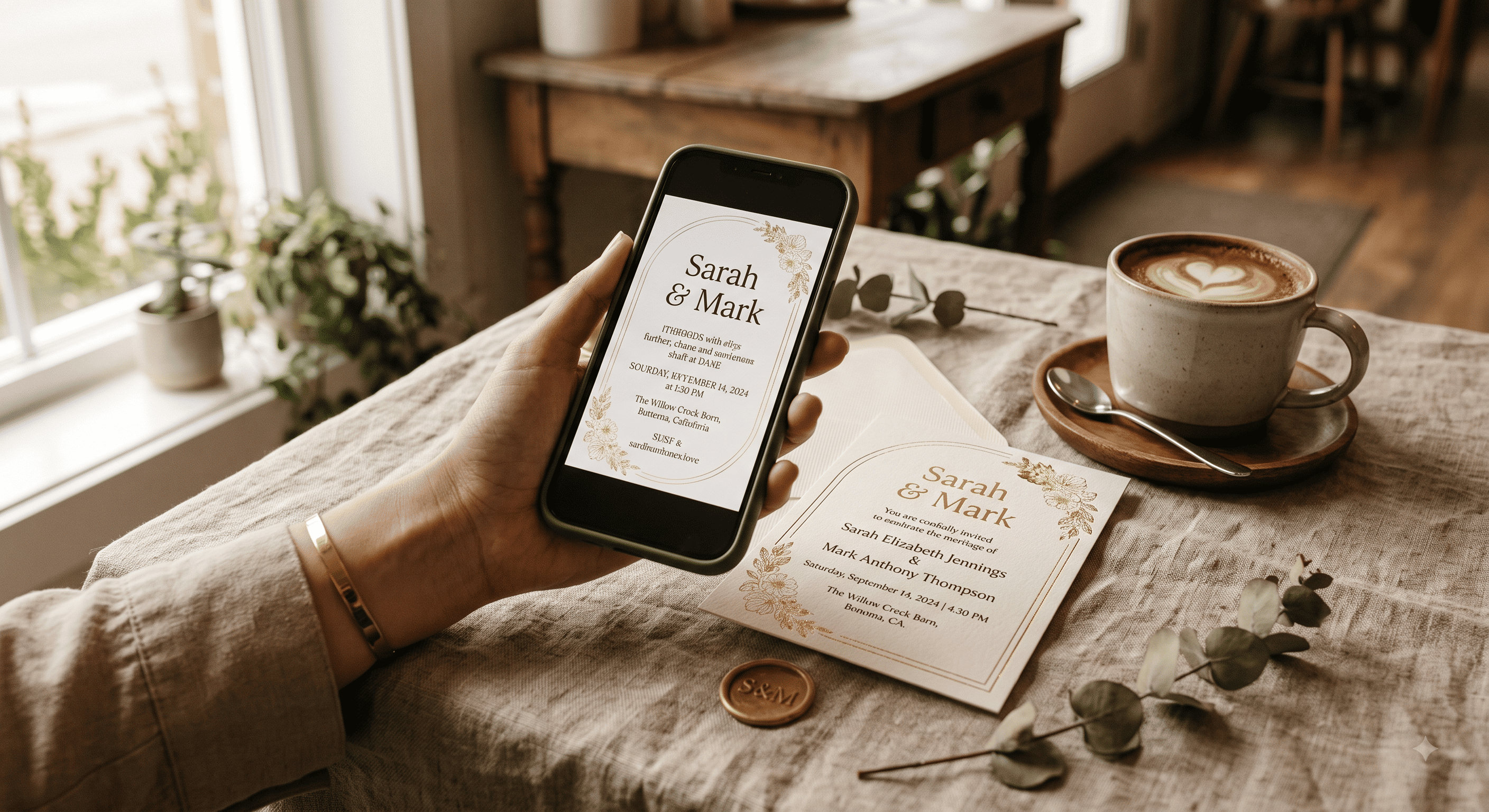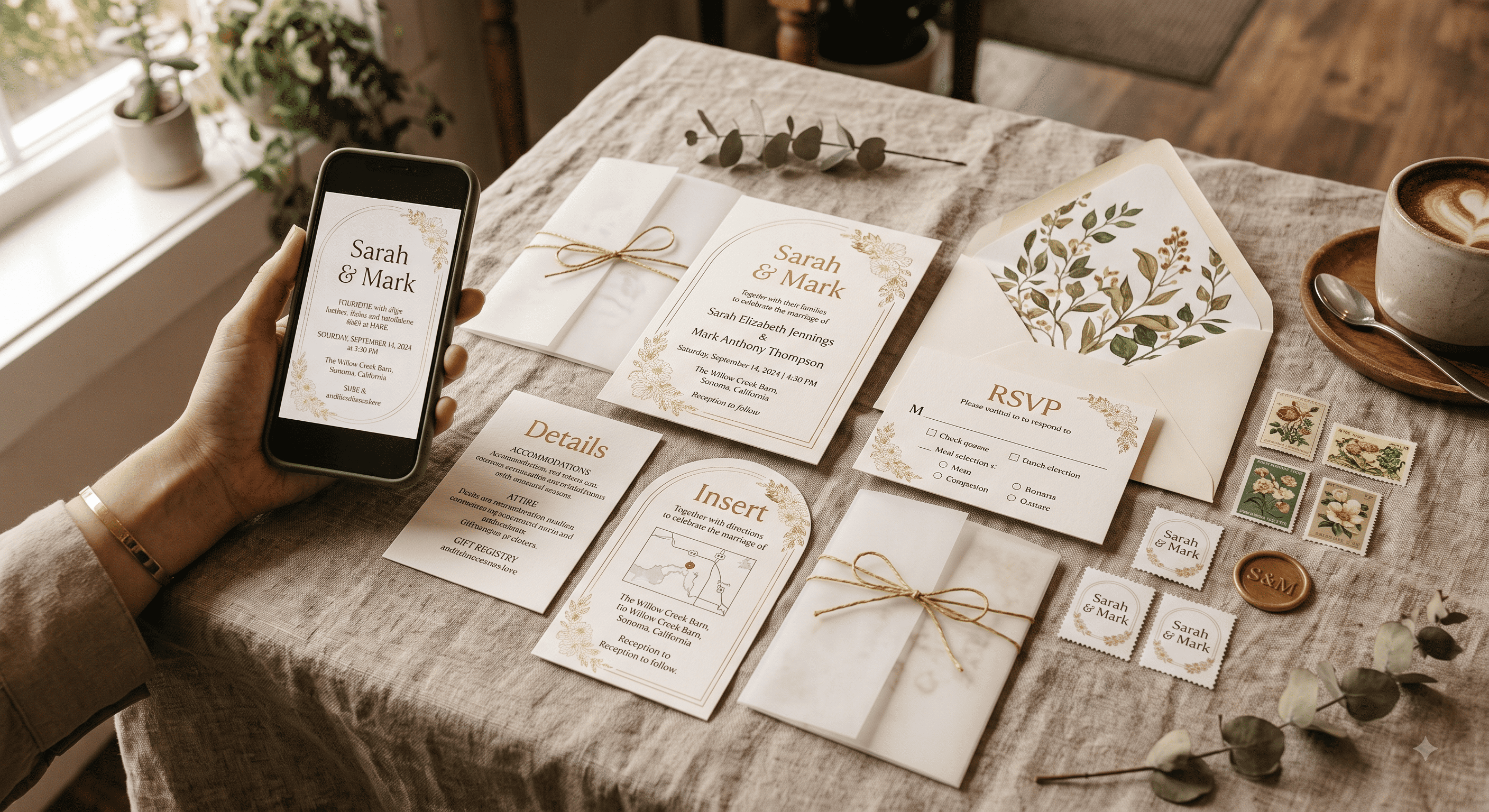
A couple I know budgeted $400 for invitations. They spent $1,180. Nothing went wrong — no disaster, no reprint. The quote was for the invitation cards. Then came the envelopes, the RSVP cards, the reply stamps, the details insert, the calligrapher for 140 outer envelopes, and the extra postage because the assembled suite weighed more than one ounce.
That gap between "the quote" and "the total" is the entire point of this article. Here's what each route actually costs in 2026.
Printed invitations: the full stack
Costs below assume a 100-guest wedding, which is roughly 65 households — you invite people, but you mail to addresses, and forgetting that is how couples over-order by 40%.
| Line item | Realistic 2026 range (65 suites) | Notes |
|---|---|---|
| Invitation cards | $150–$600 | Digital press; letterpress or foil starts near $700 |
| Envelopes (outer + inner) | $30–$120 | Inner envelopes are optional and mostly ceremonial |
| RSVP card + reply envelope | $60–$180 | The line most couples forget entirely |
| Details/insert card | $50–$150 | Directions, hotels, dress code |
| Outbound postage | $50–$95 | Heavier or square suites cost more — check the USPS retail price calculator before you finalise the shape |
| Reply postage | $45–$70 | You pay for guests to reply to you |
| Addressing (calligraphy) | $0–$450 | $0 if you do it yourself over four evenings |
| Reprints for errors | $0–$200 | Budget something. There's always something. |
| Total | $385–$1,865 | Mid-range couples land around $700–900 |
Two traps in that table. Square envelopes and anything over an ounce get charged more to mail, and it applies to every single piece. And "cheap" invitations bought as a bundle often exclude the RSVP set entirely, which is where the price doubles quietly.
Digital invitations: the full stack
| Line item | Realistic 2026 range | Notes |
|---|---|---|
| Free tool, watermarked | $0 | Fine for casual events. Not for a wedding — see below |
| Paid template/platform | $12–$120 | One-time or annual; the sane middle |
| Per-guest send fees | $0–$150 | Some platforms charge per recipient. Check before you build |
| Custom design (optional) | $75–$400 | A designer adapting your look to screen dimensions |
| Small print run for older guests | $40–$120 | 15–25 cards, plain stock, no envelope suite |
| Postage for that run | $12–$20 | Or hand-deliver and pay nothing |
| RSVP tracking | Usually included | Included with most invite tools; standalone tools exist |
| Total | $12–$690 | Most couples land at $60–$180 |
So the honest headline isn't "digital is free." It's that the mid-range digital wedding costs about what the cheapest printed option costs, and the hybrid version — digital for most, paper for a few — usually lands under $200 all in.
Where the savings are actually big
Postage and labour, not printing.
Postage is the one nobody forecasts. Out and back on 65 households puts you near $120 before anyone has replied, and reply cards trickle in for six weeks with no way to nudge the stragglers. Every chase is a phone call.
Labour is the invisible cost. Addressing 65 outer envelopes, stuffing four pieces into each, sealing, stamping, sorting — that's an honest eight to twelve hours, usually spread over evenings when you'd rather be doing anything else. If you've never done it, ask someone who has. The answer comes with a facial expression.
Where digital costs you more than you expect
- Per-recipient pricing. A platform at $0.80 a send looks free until you multiply by 140. Read the pricing page before you build anything.
- Design time. A beautiful digital invitation takes as long to make as a printed one. You're saving on production, not creation.
- Two versions. If you do a hybrid, you're paying for a small print run and the digital build. Still cheap, but not zero.
- Rush printing. Deciding at week four that you do need paper after all means paying express rates.
Which to pick, by budget
Under $150 total: Digital, with 15 printed cards for the older tier. This is the highest-value option on the list and it's not close. Most guests won't clock the difference.
$150–$500: Digital invitations plus a proper small print run on nice stock, or budget printed invitations with digital RSVPs. Both work. The second gets you the paper ritual; the first gets you better tracking.
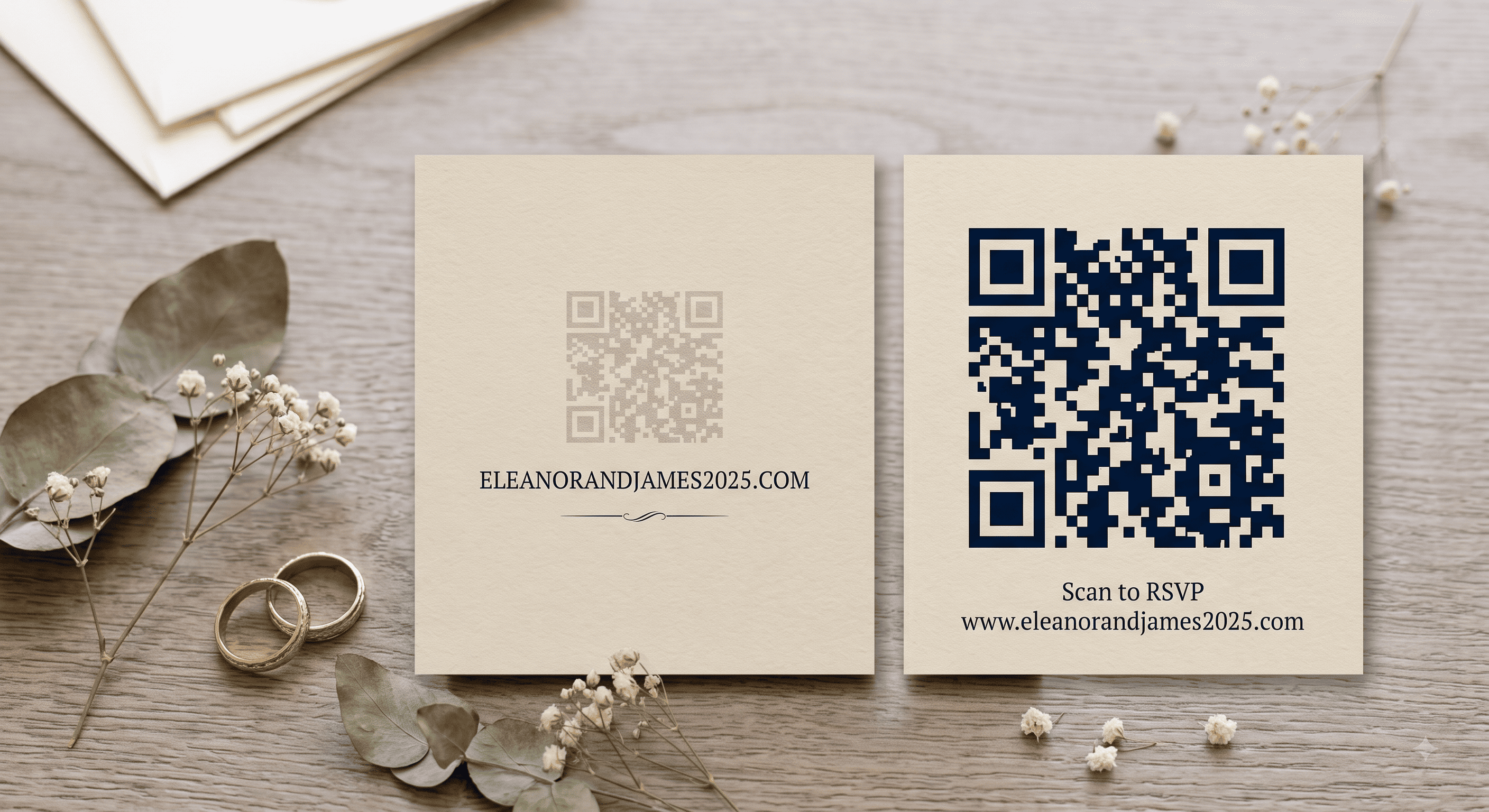
$500–$1,200: Full printed suite, digital RSVP. Print the invitation, skip the reply card and reply stamps, and send guests to an online RSVP instead — that alone saves $100–$250 and cuts the response chase to nearly nothing. Put a QR code on the card so guests don't have to type a URL; our guide to QR code wedding invitations covers sizing and placement so the codes actually scan.
$1,200+: Letterpress, foil, calligraphy, the whole thing. If the paper matters to you, spend it there — just still take the digital RSVP. There's no prize for the reply-card stamps.
Heads up: some links in this post are Amazon affiliate links — if you buy through them, Eventic earns a small commission at no extra cost to you.
If you're printing the small run yourself, heavyweight matte cardstock at 110lb or above is what separates "printed at home" from "printed properly" — anything lighter feels like a flyer the moment someone picks it up.
The RSVP maths nobody runs
Reply cards cost you twice: printing plus return postage. On 65 households that's $105–$250 committed before a single guest replies. Around 25–35% of them will still not reply, because a card sitting on a fridge is easy to forget.
Online RSVPs cost nothing per response, arrive instantly, and can be nudged. Meal counts attach to names automatically instead of being transcribed from handwriting at 1am. Eventic's RSVP tracking puts responses and meal choices in one list, and The Knot and Zola do the same bundled with their wedding websites — the tool matters less than the switch itself.
Then set the deadline four weeks out, not two. Guests treat any deadline as a suggestion, so build in the buffer. Expecting otherwise is delulu behaviour and your caterer will confirm it.
One last thing before you order anything: count households, not guests. Then subtract the ones you'll hand-deliver. Most couples buy 20 too many invitations, and there is no resale market for cards with your names on them.
People Also Asked
Explore common questions related to this blog.